Tag: Tobacco Cessation

  • Action Planning

    Healthylife® QuitWell™

    Part 4

    Women writing in notebook.

    Remember, an “okay” plan today beats a “great” plan tomorrow. Use this template to write out your quit plan. By this point, you probably know most of your expected triggers during the day. Write both your planned urge tamer/response to the trigger and another idea to try, in case you need it.

    Chart to help with Action Planning.

    © American Institute for Preventive Medicine

  • Help Someone Quit Smoking

    Tobacco Cessation

    Image of note with 'Quit Smoking' written on it.

    Nagging does no good. Sarcasm has no beneficial effect. Threats, harassment, yelling, and pleading leave the object of your attention feeling demeaned and resentful. So, how can you truly help someone kick the cigarette habit?

    If someone close to you has decided to quit, here’s how you can help.

    *  Let the smoker know you support his or her efforts and that you care about the person whether or not he or she is successful in quitting.

    *  Offer to baby-sit, prepare meals, or do other favors to help reduce stress for the other person for the first few days after he or she has decided to quit.

    *  Don’t tell the other person what to do. You can suggest ways to make quitting easier, but don’t nag or dictate.

    *  Sincerely praise the quitter’s efforts. Comment on how much more in control he or she is.

    Page from A Year of Health Hints book by the American Institute for Preventive Medicine. www.HealthyLife.com. All rights reserved.

    © American Institute for Preventive Medicine

  • Moving Through Stages

    Healthylife® QuitWell™

    Part 1

    Image of couple walking down a paved trail.

    Over the next few weeks, as you move through the QuitWell™ program, you might notice yourself moving back and forth between the stages as different factors affect your thinking. For example, a stressful day at work can make you feel like you’ve taken a step backward. Don’t let that stop you! This guide will give you tools to work through challenges and be better prepared for future ones.

    You can try out nearly all the activities in this guide, though pay special attention to the activities highlighted for your stage of change. Look for the tips throughout the guide that help you fit an activity to your stage of change. This will help you feel good about where you are at and help you feel more confident about the future. When you feel yourself moving forward in the stages of change, you can go back to these activities and do them again, using the tips for your new stage of change.

    In a few words, describe how you are feeling right now about quitting. What brought you here? What stage of change do you feel fits you best right now?

    © American Institute for Preventive Medicine

  • Relaxation Techniques

    Healthylife® QuitWell™

    Part 4

    A couple resting on sofa with their dog.

    We will teach you four skills to relax:

    *Relaxation Reflex:Getting rid of muscle tension.

    *Mental Imagery:Thinking of calm, restful places.

    *Deep Natural Breathing:Feeling relaxed by breathing in more oxygen.

    *Spend Time with Animals:Feeling relaxed, happy and secure.

    These relaxation strategies are not designed to take your stress away. Done correctly, they will help you calm your body and mind so that you can think more logically, see major problems as manageable challenges, and get through a tough day.

    If something helps you-even a little-add it to your quitting tool kit. Remember, you will probably need a lot of strategies to be successful in the long run. One strategy may work on Monday morning, but you’ll need another tool on Friday afternoon!

    © American Institute for Preventive Medicine

  • What Motivates You?

    Healthylife® QuitWell™

    Part 1

    Image of women with no smoking sign.

    You’ve probably heard a lot of reasons why you should quit, but the best reasons are your own. Making lifestyle changes to fit with your own values and reasons makes your successes more meaningful. It can also be easier to overcome challenges along the way.

    You can do this activity at all stages of change, even if you aren’t planning to quit right now or have already quit. If you don’t feel like anything is motivating you right now, that is OK. You can return to this activity in the future. If you have already quit, think about why you want to stay quit.

    Here are some common reasons for quitting. Start a ‘Why Quit’ list. If any of these ring true for you, add them to your list.

    *  Avoid major health problems in the future

    *  Be able to breathe more easily

    *  Better circulation, especially to fingers and toes

    *  Easier, deeper sleep

    *  Good feeling when waking up

    *  A younger, brighter, more lively look

    *  In order to have surgery (many surgeons require you to quit first)

    *  Pregnancy/new baby (as a mother, partner, or grandparent)

    *  Keep new home or car clean

    *  Be healthier for loved ones

    *  Save money

    *  Smoking/chewing/vaping no longer fits a current or desired lifestyle

    *  Worried about known and unknown long term risks

    *  More healthy years with family & friends

    *  Pride in accomplishing something you set out to do

    *  Freedom from being “owned” by an addiction and a tobacco company

    *  Better sense of taste & smell

    *  More energy

    © American Institute for Preventive Medicine

  • Altering Triggers

    Healthylife® QuitWell™

    Part 4

    A morning cup of coffee.

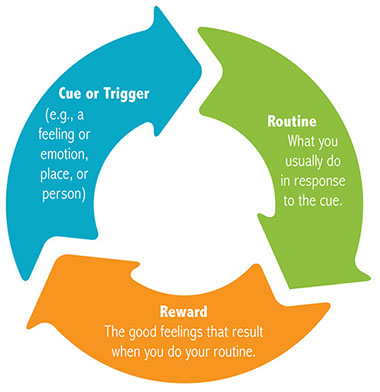
    Actions, especially habits, are linked. For example, you may light up a cigarette without thinking when you start your car, end a meal, drink coffee, or hear your alarm clock. If you dip or use other forms of tobacco/nicotine, you may have similar triggers.

    Altering triggers can help you break your automatic habits.

    Scrambling

    Scramble your routine to stop the triggers before they happen.

    1. Change your morning routine.

    2. Change your work area and the times of the day you do things.

    3. Change the route you take to work.

    4. Change the way you talk on the phone.

    5. Take a walk with a water bottle instead of a coffee break.

    6. Sit in a new place at the dining room or kitchen table.

    7. What other ways can you change your routines?

    © American Institute for Preventive Medicine

  • How Smoking Hurts The Body

    Healthylife® QuitWell™

    Part 1

    Concept image of doctor with icons of different human organs.

    Heart Disease

    Smoking is the greatest risk factor for heart disease. A smoker’s chance of having a heart attack is 3 times that of a non-smoker. High blood pressure is a major cause of stroke and a prime risk factor for heart disease. High blood pressure is more severe in smokers. People with high blood pressure can lower their risk of heart disease by 50% when they quit.

    1. Carbon monoxide reduces oxygen going to the heart.

    2. The heart works harder to move  the oxygen through the body. Breathing speeds up.

    3. Nicotine causes the blood vessels to constrict. Blood pressure goes up. The heart becomes more stressed.

    4. A greater amount of cholesterol forms on the blood vessel walls.

    5. Over time, less oxygen puts strain on the heart and heart cells die.

    Cancer

    Cigarette smoke has been proven to contain cancer-causing agents (carcinogens) and co-agents (co-carcinogens). The parts of the body that come into direct contact with smoke are more likely to develop cancer: lungs, mouth, trachea, esophagus, and larynx. The breakdown products in smoke also affect other organs that do not come into direct contact with smoke:  the pancreas, kidney, and bladder.

    Chronic Bronchitis

    Chronic bronchitis can make it very hard to breathe. This is because the lining of your bronchial tubes (the tubes that air goes through to get to your lungs) becomes inflamed and irritated. While acute (temporary) bronchitis caused by a cold or virus usually goes away within a few weeks, excess mucus and lung damage can mean months and months of coughing and breathlessness.

    1. Cigarette smoke paralyzes hair like fibers (cilia) that line and clean the bronchial tubes.

    2. Excess mucus is produced in the tubes. The result is a mucus plug.

    3. Chronic coughing is the way a smoker removes the plug so oxygen can get in.

    Emphysema

    Emphysema can also make it very difficult to breathe. This problem develops in a different way than chronic bronchitis:

    1. Oxygen enters the blood stream through air sacs in the lungs. The ‘tars’ from cigarette smoke gather on the lung walls and burst the sacs.

    2. These heavy tars also make the lungs longer and less able to stretch.

    3. Breathing becomes difficult.

    © American Institute for Preventive Medicine

  • Negative Reinforcement

    Healthylife® QuitWell™

    Part 4

    Women wearing a rubber band around wrist.

    If you are punished for doing something, you are less likely to keep doing it. If a person threw a bucket of water in your face each time you walked around the block, you would take fewer walks.

    Urge Zapper

    1. Place a stretchy band on your wrist.

    2. Snap your wristband whenever you have an urge to use tobacco/nicotine.

    Tobacco Consequence Control

    When you get an urge, think of something you want to avoid-shortness of breath, cancer, heart disease, or letting someone down. What do you want to avoid?

    As the urge goes away, reward yourself by thinking of something you are looking forward to with quitting-feeling in control, breathing more easily, or having more money. What do you look forward to?

    Butt Bottle Revival

    1. Keep your butt bottle where you can see it.

    2. Open it up and smell.

    3. Add water to highlight the foul odor.

    © American Institute for Preventive Medicine

  • Secondhand Smoke

    Healthylife® QuitWell™

    Part 1

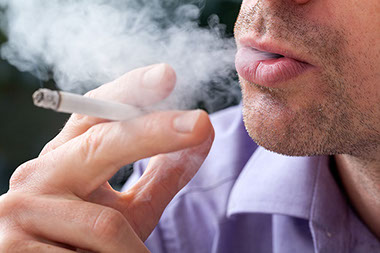
    Image of cigarette and smoke.

    Secondhand smoke is the smoke that occurs when a cigarette, pipe, or cigar is lit. The secondhand smoke going into the room from the end of a burning cigarette is not filtered. People breathing in secondhand smoke are breathing in this smoke, as well as what the smoker blows into the room. Secondhand smoke puts non-smoking bystanders (maybe your loved ones) at risk for the same health problems as the smoker.

    Some of the toxins found in secondhand smoke are tar, nicotine, carbon monoxide, carbon dioxide, methane, nitrogen dioxide, cadmium, benzpyrene, ammonia, hydrogen cyanide, acetone, pyridine, and formaldehyde. Although secondhand smoke becomes mixed with the air, there are safety risks for both the smoker and non-smokers, as well as pets who breathe these vapors in.

    Infants & Children

    Children of smokers are at a higher risk for respiratory infections, tonsillitis, pharyngitis, and middle ear infections. Asthma can become more severe. Children of smokers are also much more likely to start smoking.

    Pets

    Your beloved fur ball can develop serious health problems, including nose and lung cancers, from secondhand smoke. Secondhand smoke can also cause respiratory illness in cats and dogs and make skin conditions worse. Thirdhand smoke, or the smoke residue that settles on surfaces, can be especially damaging to cats. When cats lick their fur to clean themselves, they lick the toxins from smoke. This makes cats more than twice as likely to develop malignant lymphoma, a type of cancer.

    Protect Your Loved Ones

    To protect others from secondhand smoke, avoid smoking in enclosed spaces that you share with others, like your house or car. If you are going to smoke, go outside and make sure windows are closed to the house near the area you are smoking. Avoid using a “smoking room” in the house or smoking in an attached garage-smoke will still get into the rest of the house.

    © American Institute for Preventive Medicine

  • Why Does It Matter If I Quit?

    Healthylife® QuitWell™

    Part 1

    Man smoking, while half his body in vanishing into smoke.

    Tobacco and nicotine products can affect many areas of your life.

    *  If you aren’t sure if you want to quit, read this section to learn more about how tobacco/nicotine use may be affecting your current and future life. Think about how important each of these reasons is to you. This may change over time, or if you start noticing impacts in your life.

    *  If you are ready to quit, consider adding these to your list of reasons you are making this change. Building a longer and stronger list of reasons you are choosing to make this change can help when the going gets tough.

    *  If you have already quit and are trying to stay quit, this information can help you talk yourself through a craving or tough situation. It may reinforce your decision and help you feel good about the change you have made.

    © American Institute for Preventive Medicine