Tag: Tobacco Cessation

  • Break Down Barriers

    Healthylife® QuitWell™

    Part 2

    Image of smiling man with thumbs up.

    Maybe you don’t feel like you have time to read the QuitWell™ program or answer the questions in each section. The tips on time management in this section can help. Other barriers may seem to be unchangeable until a powerful motivator enters the picture. More information or skills to get through a challenge can also help you overcome what felt impossible in the past.

    Be Open to Powerful Motivators

    Have you ever started a new relationship or made a new friend and suddenly you want to spend all your time with that person? You may even get into a new hobby in order to spend more time with them. Or, maybe you got concerning test results and want to improve before your next visit to the doctor. Or, maybe you just found out you are going to be a parent or grandparent.

    These are examples of powerful motivators. They usually seem to come out of nowhere or when you are least expecting them. Some seem to knock you off your feet and you can’t ignore how powerful they are. Others you may not notice unless you are paying attention. These may be negative and scary or joyous and exciting. As you think about quitting and look at your barriers, try to be open to power motivators.

    Do you feel any powerful motivators in your life right now?

    What could be a powerful motivator in the future? Imagine what it would take to suddenly make nearly all the barriers on your list seem less important.

    © American Institute for Preventive Medicine

  • I Quit & Want To Stay Quit

    Healthylife® QuitWell™

    Part 1

    Image of cigarette being broken in half.

    The maintenance phase of quitting starts after you have been quit for about six months. At this point, your tobacco/nicotine free lifestyle has started to feel more normal and routine. It can take years to feel like tobacco/nicotine is truly in the past, though. In this phase, you may not be thinking of your old habit on a daily basis, but reminders are still all around you. Your new habits are still young.

    What do you enjoy about being tobacco/nicotine free?

    What challenges have you overcome to get here?

    If you have quit before and relapsed, what tripped you up?

    Stress is one of the most common triggers for relapse. This guide has many tools for responding to things that happen to you. While it may not be possible to control what happens in your life, you can control your response.

    Deepen your motivation, understand your barriers (even if you already overcame them), and build a supportive team you can lean on when the going gets tough.

    © American Institute for Preventive Medicine

  • No Ifs, Ands, Or Butts About It. Be Tobacco Free.

    Tobacco Cessation

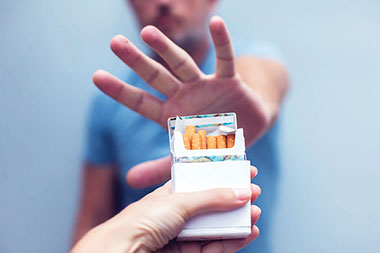
    Image of crushed cigarettes.

    Not using tobacco is one of the best choices you can make for your health.

    Have you seen the commercial of a frail woman putting in dentures, placing a wig on her head, speaking with a voice box, and tying a scarf around a hole in her throat? She had surgery that removed cancer in her throat. Not a pretty sight. And a reminder that tobacco use can and does cause serious health problems.

    Be smart, don’t start.

    If you don’t smoke, don’t even think about trying it. Nicotine is a powerful addiction. If you do use tobacco, get help to quit.

    *  Use a nicotine replacement product, such as a patch, gum, or lozenges. Use as directed.

    *  Ask your doctor about prescribed medicines that  can help you quit.

    *  Take part in a stop smoking program.

    *  Throw away all your tobacco and tobacco items.

    *  When the urge to smoke, dip or chew tobacco hits you, breathe deeply through your mouth and slowly exhale through your mouth. Repeat four more times.

    *  Get rid of familiar tobacco triggers.

    *  Try sugarless gum, mints, and toothpicks to keep your mouth busy.

    *  Put the money you used to spend on cigarettes in a “ciggy” bank so you can reward yourself later.

    *  Put a rubber band on your wrist. Snap it when the urge to smoke, dip or chew strikes.

    *  Talk to a nonsmoking friend for support.

    *  Make a list of the positive changes you’ve noticed since quitting.

    *  Renew your commitment to quit daily.

    *  Don’t give up if you relapse. Most people try several times before they finally quit.

    Bidis – Not a Safe Alternative

    Bidis are thin brown cigarettes made in India and other Southeast Asian countries. They are filled with tobacco flakes and dust and rolled in dried tendu or temburni leaves (plants native to Asia). These unfiltered cigarettes may be tied with a string at one or both ends. To mask the poor quality of tobacco used, flavors are often added. These include cherry, chocolate, mango, and vanilla.

    Bidis are cheaper and easier to buy than regular cigarettes, but have serious health risks.

    *  One bidi produces more than three times the carbon monoxide than one cigarette.

    *  Smoke from an unfiltered bidi has three to five times the amount of nicotine as a regular cigarette. This increases risk for nicotine addiction.

    *  One bidi releases three to five times more tar than a regular cigarette.

    *  Bidi smoke contains more deadly chemicals, such as ammonia than the smoke of one regular cigarette.

    *  Smoking bidis increases the risk for:

    *  Lung cancer, oral cancer, stomach cancer, and cancer of the esophagus

    *  Heart attack and coronary heart disease

    *  Chronic bronchitis and emphysema

    In India, the majority of bids are made by women and children and in their homes. Exposure to particles and dust in the process leads to many health problems. These include:

    *  Asthma

    *  Lung cancer

    *  Tuberculosis

    *  Skin problems

    *  Eye problems

    Resources

    American Lung Association

    800.LUNG.USA (586.4872)

    www.lungusa.org/tobacco

    National Cancer Institute’s Smoking Quitline

    877.44U.QUIT (448.7848)

    www.cancer.gov/cancertopics/smoking

    National Network of Tobacco Cessation Quitlines

    800.QUIT.NOW (784.8669)

    Smokefree Women

    www.women.smokefree.gov

    U.S. Department of Health & Human Services

    www.smokefree.gov

    www.surgeongeneral.gov/tobacco

    Action Step

    If the thought of quitting this very moment makes you crave another cigarette, don’t fret. Start with an action plan. Write down the top reasons you want to quit and set a date. Tell others so they can encourage you.

    Page from Ways to Well-Being book by the American Institute for Preventive Medicine. www.HealthyLife.com. All rights reserved.

    © American Institute for Preventive Medicine

  • Smokeless Tobacco & Your Health

    Healthylife® QuitWell™

    Part 1

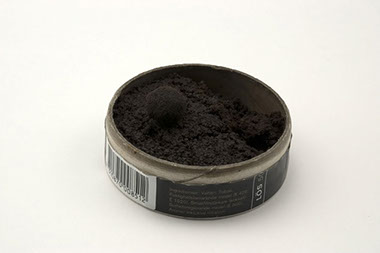
    Image of chewing tobacco.

    Smokeless tobacco includes chewing tobacco, which may also be called oral tobacco or spit tobacco. Smokeless tobacco also includes both moist and dry snuff, snus, and dissolvable tobacco products. Smokeless tobacco is not a safe form of tobacco, even if that is often how it is marketed by tobacco companies. Smokeless tobacco carries many serious risks.

    Smokeless tobacco can cause cancers of the:

    *  Mouth, tongue, cheek & gums

    *  Esophagus

    *  Pancreas

    Smokeless tobacco can also cause:

    *  Sores in the mouth called leukoplakia that can become cancer

    *  Stained teeth

    *  Bad breath

    *  Gum disease, cavities, tooth decay, and tooth loss

    *  Bone loss around the teeth

    *  Heart disease

    *  High blood pressure

    *  Increased risk of heart attack and stroke

    *  Pregnancy complications and low birth weight

    © American Institute for Preventive Medicine

  • Review & Prepare 5

    SleepWell® Program

    Week 2

    Image of women on computer.

    Answer the following.

    *  How did your sleep this week compare to the first week?

    *  What changes did you made to my sleep environment?

    *  What changes did you make to your eating habits?

    *  What Changes did you make to your exercise habits?

    *  What changes will you continue?

    *  What is one S.M.A.R.T. goal you have for next week?

    © American Institute for Preventive Medicine

  • Buddy System

    Healthylife® QuitWell™

    Part 3

    Image of 3 friends talking over tea and coffee.

    Who could support you in your effort to quit? Having someone to hold you accountable-and who you want to share success with-can be a powerful part of your quit plan. Support from others can help:

    *  Motivate you and lift you up when you stumble.

    *  Hold you accountable.

    *  Give you new ideas and inspiration-especially if they have gone through quitting themselves.

    *  Make activities more fun, like taking a walk together instead of a smoke break.

    Start With One Person

    1. Choose a buddy-someone you will talk to daily. This person should be someone you trust and who you can be completely honest with.

    2. Let them know what you are trying to do.

    3. Ask them if they would be willing to support you. If they are, thank them!

    4. Let them know how to help you. This may change over time.

    5. Share your feelings and actions truthfully with your buddy. If you don’t, you are losing out on the benefits of an accountability buddy.

    6. Thank this person often. Let them know the impact they are having on your lifestyle change.

    Involving Others

    Even when someone wants to help you, they may not know how. You have probably experienced this already, like when someone gives you cliché advice or says “just one won’t hurt.”

    Be specific when you tell others how to help you. These are suggestions for those people who want to help you. Read over the list and choose the ones you think will be most helpful. Write these down and show your list to the people who want to help.
    © American Institute for Preventive Medicine

  • Identify S.M.A.R.T. Goals

    Healthylife® QuitWell™

    Part 3

    Hand writing on a notepad with colored pencils all around.

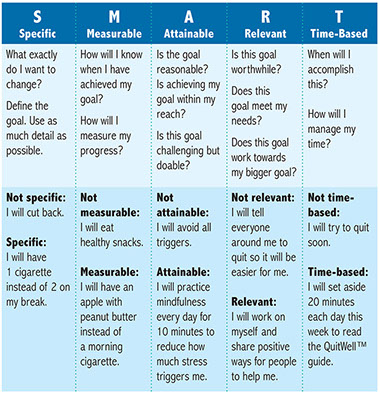
    Think of the actions you take on a daily basis as small steps towards your bigger goal. This guide will give you many ideas for small steps, such as putting your cigarettes in a different place or buying one tin of chew at a time. Identify your next step and use the S.M.A.R.T. tool to improve the chances of reaching your goal.

    SMART goal chart.

    S.M.A.R.T. in Action

    Before: “I want to cut back.”

    S.M.A.R.T. Goal: “Today I will put 12 cigarettes in an empty pack instead of the 15 I usually have. I will keep my emergency pack of substitutes (gum, toothpicks) with me and will leave my cigarettes behind. I will cut back by 1 cigarette each day this week.”

    Practice Goal-Setting

    Strengthen your goal using the S.M.A.R.T. tool. Start with a simple statement about what you want to do. Next, write how your goal will be specific, measurable, attainable, relevant, and time-based.

    © American Institute for Preventive Medicine
  • Non-Smoking Zones

    Healthylife® QuitWell™

    Part 4

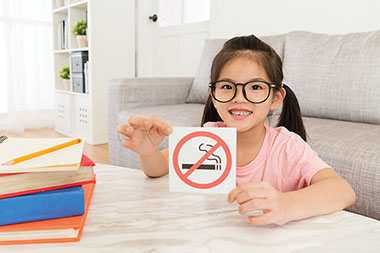
    Child holding no smoking sign.

    Go to the places where you usually did not smoke/use tobacco-or where tobacco/nicotine is not allowed. Spend time with people who don’t use tobacco/nicotine.

    *  Go to the movies

    *  Visit a non-smoking friend

    *  Spend time with children

    *  Volunteer

    List places that are easier for you to be tobacco/nicotine free.

    © American Institute for Preventive Medicine
  • Smoking & Your Health

    Healthylife® QuitWell™

    Part 1

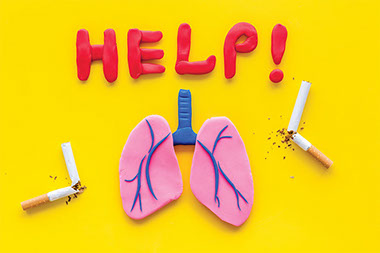
    The word "Help" spelled out in clay, as well as lungs and cigarettes.

    Smoking is the number one cause of premature, preventable deaths in the United States. According to the Centers for Disease Control and Prevention (CDC), more than 480,000 Americans die each year due to smoking. Many of those are from cancer, heart disease, stroke, and lung disease. Very few, if any, smokers go through their lives without having harmful effects. Smoking affects more than just your lungs-every part of the body is damaged.

    Smoking can also cause:

    *  Chronic obstructive pulmonary disease

    *  Aortic aneurysm

    *  Diabetes

    *  Osteoporosis (brittle bones)

    *  Rheumatoid arthritis

    *  Macular degeneration (age-related)

    *  Cataracts

    And contributes to:

    *  Airway infections

    *  Impaired immune responses

    *  Miscarriage

    *  Pregnancy complications

    *  Low birth weight, cleft lip/palate, and risk of SIDS

    *  Erectile disfunction

    *  Frequent colds and a weakened immune system

    After You Quit

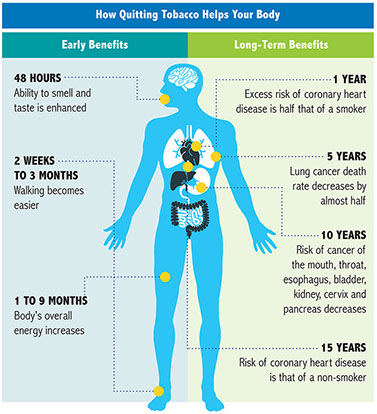
    As soon as you stop smoking, your body responds. Changes in your body start happening right away.

    Chart showing how quitting tobacco helps your body.

    © American Institute for Preventive Medicine
  • Review & Prepare 6

    SleepWell® Program

    Week 3

    Image of man sleeping.

    Look at your pattern of sleep over the past week. Compare it to your sleep patterns over the past few weeks of tracking.

    Answer the following:

    *  I fall asleep more quickly now.

    *  I have more daytime energy.

    *  I wake up fewer times during the night.

    *  If or when I do wake up, I am able to fall asleep again more quickly.

    *  Changes I made to my bedtime and waking routines.

    *  Changes I made to what I do in bed or in the bedroom.

    *  Are you ready for another week of attention to your sleep?

    Shift Your Bedtime

    If you think your sleep has improved during the past week, you can begin to shift your bedtime earlier. Do this gradually. Only make a shift when your sleep quality is high. This means:

    *  You are able to fall asleep within 15 minutes of getting into bed.

    *  You are rarely waking up during sleep.

    *  If you do wake up, you are able to go back to sleep within 15 minutes.

    *  You stay asleep until your planned wake time.

    *  You wake feeling refreshed.

    If your sleep quality has not improved, maintain the original schedule for another week. When you are ready, shift your bedtime 15 minutes earlier. Keep the same wake time. This will give you more time to sleep as your body becomes trained to sleep in bed.

    © American Institute for Preventive Medicine