Tag: Tobacco Cessation

  • Breaking Bad Habits

    WELL-BEING

    Close-up image of a person breaking a cigarette in half.

    Bad habits may be hard to change, but it can be done. Smoking, for example, can be stopped. So can alcohol abuse.

    If you could only … but why don’t you? Scientists at the NIH study what happens in your brain as habits form. They come about through repetition. Brushing your teeth in the morning is a good habit. Reaching for a cigarette-bad habit.

    Habits trigger pleasure centers in your brain. First, focus on becoming more aware of your bad habits. Then try these strategies to counteract them:

    *  Avoid tempting situations. If you don’t buy candy bars, it won’t be as easy to eat one.

    *  Prepare mentally. Think about how you want to handle it and mentally practice what you plan.

    *  Enlist support. Ask friends, family, and coworkers to support your efforts to change.

    *  Replace unhealthy bad habits with healthy ones. Exercise or try a new hobby.

    *  Reward yourself for small steps.

    © American Institute for Preventive Medicine

  • Casual Smokers At Risk

    MEDICAL NEWS

    Image of a person placing on a nicotine patch.

    People who smoke just a few cigarettes a day are exposed to the same serious health risks as heavier smokers, breaking a common myth that social or casual smoking is somehow safe or that they can easily quit.

    Casual smokers who smoke between 1 and 4 cigarettes a day, are tripling their risk of dying of heart disease and lung cancer, according to Dr. Robin J. Mermelstein, a clinical psychologist and director of the Center for Health Behavior Research at the University of Illinois at Chicago who specializes in smoking cessation counseling. Light smokers represent about 7 million of the U.S. smoking population.

    For light smokers looking to quit and stay smoke-free, Dr. Mermelstein offers the following advice:

    *Think about the reasons you smoke.It will give you a clearer path to quitting. Does smoking relieve stress? Is it a large part of your social life?

    *Get your head in the game.Get support products like nicotine replacement therapy and online help. Customized online support services provide encouragement to help you break your behavioral and psychological link to cigarettes and is proven effective in helping smokers quit.

    *Choose nicotine replacement that’s right for you.Lighter smokers may be less likely to use nicotine replacement therapy to help them quit, which means they could be setting themselves up for failure. Nicotine replacement therapies are clinically proven to reduce the physical withdrawal symptoms like cigarette cravings and can double a smoker’s chance of quitting successfully.

    For light smokers or heavier smokers, research shows the most successful approach to quitting is a combination of medicine, such as nicotine replacement patches, that can help reduce the physical cravings of nicotine, and behavioral strategies that help smokers cope with those triggers to light up. Your employer may offer some of these options.

    © American Institute for Preventive Medicine
  • Great American Smokeout

    MEDICAL NEWS

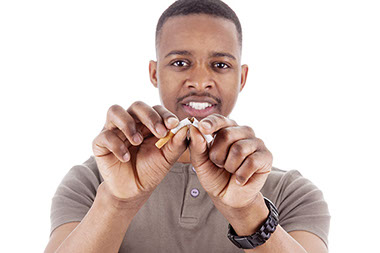
    Image of a man breaking a cigarette in half.

    Every year, on the third Thursday of November, the American Cancer Society asks tobacco users to make a plan to quit on this day, or plan in advance and then quit smoking that day.

    Earlier this year, the Surgeon General’s office released The Health Consequences of Smoking-50 Years of Progress. The report showed that adult smoking rates have fallen from about 43% in 1965 to about 18% today, but more than 42 million American adults and more than 3.5 million middle and high school students continue to smoke.

    Get help to quit

    Quitting tobacco is not easy. Nicotine is as addictive as cocaine or heroin.

    *  Use a nicotine replacement product, such as a patch, gum, or lozenges. Use as directed.

    *  Ask your doctor about prescribed medications that can help you quit.

    *  Take part in a non-tobacco use program  and events at work or in your community.

    *  Use the “Get Help to Quit” resources listed on this page.

    Ready, set, go…

    *  Set a quit date. The CDC advises doing this within 2 weeks.

    *  Write down the top reasons you want to quit.

    *  Tell others so they can encourage you. Ask others not to smoke around you.

    *  Get rid of tobacco products and related items from your home, car, and workplace. This includes matches, lighters, and ashtrays.

    *  Avoid drinking while you’re quitting cigarettes. Drinking alcohol can trigger cravings for a cigarette.

    *  When you get the urge to smoke, dip, or chew, take a deep breath through your mouth. Slowly exhale through pursed lips. Repeat 5-10 times.

    *  Have sugarless gum or mints or drink water.

    *  Hold a pen, stress ball, or other small object to keep your hands busy.

    *  Put the money you used to spend on tobacco products in a “ciggy” bank.

    *  Don’t give up if you relapse. Most people try several times before they succeed!

    Get help to quit

    American Lung Association

    800.LUNG.USA (586.4872)

    www.lungusa.org/tobacco

    National Cancer Institute’s Smoking Quitline

    877.44U.QUIT (448.7848)

    www.cancer.gov/cancertopics/smoking

    National Network of Tobacco Cessation Quitlines

    800.QUIT.NOW (784.8669)

    Smokefree Women

    www.women.smokefree.gov

    U.S. Department of Health & Human Services

    www.smokefree.gov

    © American Institute for Preventive Medicine

  • Harmful Hookahs

    WELL-BEING

    Image of a hookah.

    Despite warnings from the CDC that hookah smoking can be just as dangerous as cigarettes, many young adults believe that using the water pipes is not harmful to their health, according to a UCLA School of Nursing study.

    Researchers visited three Southern California hookah lounges and asked patrons between the ages of 18  and 30, “Do you believe smoking a hookah is harmful  to your health?”

    Fifty-seven percent said they thought that it was not. When asked why they thought hookahs were not harmful, 47% said they believed that the smoke gets filtered through water, and 35% said they thought that fruit used to flavor the tobacco would detoxify tobacco’s harmful chemicals. Still others, 16%, said they assumed hookahs are not harmful because the tobacco is not addictive and does not contain nicotine.

    Unfortunately, none of those beliefs is true.

    © American Institute for Preventive Medicine

  • Kick Cigarettes Out Of Your House

    SELF-CARE CORNER

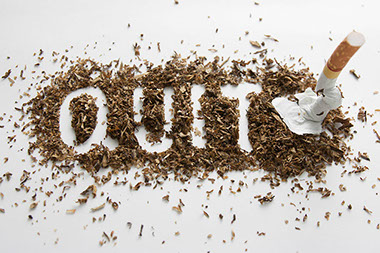
    Image of the word "Quit" spelled within a pile of tobacco with a crused cigarette.

    You know that smoking can cause health problems, including heart disease and cancer. But if you smoke inside your home, you could be hurting everyone who lives with you. Anyone who is around cigarette smoke is exposed to secondhand smoke.

    *  Secondhand smoke contains more than 4,000 chemicals. Many of these have been proven to cause cancer and irritate the lungs.

    *  Secondhand smoke can trigger asthma attacks and they happen more often and with more severity in children.

    *  Children whose parents smoke have more ear infections, bronchitis and pneumonia.

    You and your family can be healthier if you don’t allow any smoking in your home. And don’t allow guests to smoke in your home or around your children. If your children regularly visit another home, such as a child care provider, make sure no one smokes in that home.

    If you need help quitting, call 1-800-QUIT-NOW or visitsmokefree.govfor free resources.

    Source: Asthma and Allergy Foundation of America

    © American Institute for Preventive Medicine

  • Want To Quit? Start Here

    WELL-BEING

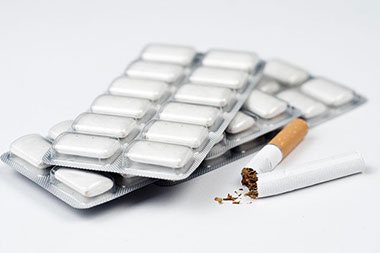
    Image of broken cigarette and nicotine gum.

    There’s no one right way to quit smoking. Some people find that they just quit on their own. Others use medical treatments to help. If you’re thinking about quitting, you have several options:

    *  Attend support groups or counseling

    *  Get your doctor’s advice and support

    *  Choose medicines that contain nicotine and help with nicotine addiction, including patches, gum, lozenges, inhalers and nasal spray. Some are available in stores and others need a prescription.

    *  Find a prescription medicine that doesn’t contain nicotine and still helps a person quit smoking.

    *  Go cold turkey: stop completely, all at once, without any help.

    *  Slowly decrease the amount of cigarettes smoked each day until you stop altogether.

    Counseling and medicine together may be more helpful than using just one method. Sometimes, you may need to try a few different approaches to find the one that works for you.

    Get free quitting help by phone

    If you’d like to talk with someone about quitting, call 1-800-QUIT-NOW (1-800-784-8669). This service is FREE and may include support and advice, a quit plan, free or discounted medications and other resources.

    Free quitting help online

    For those with a computer or tablet, help with quitting is just a few clicks away. Smokefree.gov offers a number of resources to help people quit smoking. There are tools and tips, information and support throughout the process of quitting.

    Source: Centers for Disease Control and Prevention, National Institutes of Health

    Reasons to quit smoking

    Quitting smoking isn’t easy. But, it means you will start to become healthier within just minutes of quitting. Take a look at the benefits of quitting:

    *  20 minutes after quitting: Blood pressure and heart rate gets lower.

    *  12 hours after quitting: Carbon monoxide levels in the blood go back to normal.

    *  2 weeks to 3 months after quitting: Lungs start to work better and blood circulation gets better.

    *  1 to 9 months after quitting: Lungs can handle mucus and recover from infections more easily. This means less coughing and shortness of breath.

    *  1 year after quitting: The risk of a heart attack drops dramatically. The increased risk of heart disease is cut in half.

    *  2 to 5 years after quitting: Risk of a stroke is now the same as a non-smoker.

    *  5 years after quitting: Risk of several cancers is slashed in half. This includes cancers of the bladder, mouth, throat and esophagus.

    *  10 years after quitting: Risk of lung cancer decreases by half. Risk of cancer of the voice box and pancreas drop.

    *  15 years after quitting: The risk of heart disease drops to that of a non-smoker.

    Don’t forget about benefits to your appearance. Yellowed teeth and fingers can become a thing of the past, as well as bad breath and smoke odors on clothes and in hair. Tobacco also causes wrinkling of the skin and tooth loss, so quitting can mean better skin and a brighter smile.

    It’s never too late to quit. Quitting at any age can extend a person’s life, reduce or eliminate health problems, and lower the risk of dying from smoking-related diseases.

    Source: American Cancer Society

    © American Institute for Preventive Medicine
  • After You Quit Smoking

    WELL-BEING

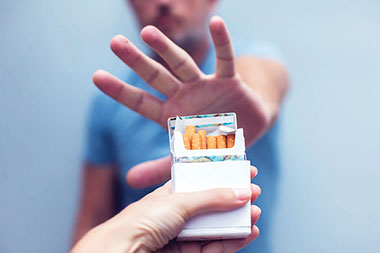
    Hand refusing cigarettes.

    No matter what your age is, or how long you’ve smoked, you can reap benefits of quitting today!

    Here’s what happens in your body after you quit:

    *  12 hours later, carbon monoxide in your blood drops to normal levels.

    *  2 weeks to 3 months later, your circulation improves and your lungs work better.

    *  1 year later, your risk of developing heart disease is slashed in half.

    You’ll also lower your risk for lung cancer when you quit. And the health benefits continue the longer you stay smoke-free. Visitsmokefree.govto start your quit journey!

    © American Institute for Preventive Medicine