Tag: tools

  • Be More Tech-Savvy

    WORK LIFE

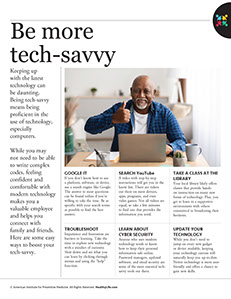
    Man on laptop with thumbs up.

    Keeping up with the latest technology can be daunting. Being tech-savvy means being proficient in the use of technology, especially computers.

    While you may not need to be able to write complex codes, feeling confident and comfortable with modern technology makes you a valuable employee and helps you connect with family and friends. Here are some easy ways to boost your tech-savvy.

    Google it

    If you don’t know how to use a platform, software, or device, use a search engine like Google. The answer to most questions can be found online if you’re willing to take the time. Be as specific with your search terms as possible to find the best answer.

    Search YouTube

    A video with step-by-step instructions will get you in the know fast. There are videos out there on most devices, apps, programs, and even video games. Not all videos are equal, so take a few minutes to find one that provides the information you need.

    Take a class at the library

    Your local library likely offers classes that provide hands-on instruction on many new forms of technology. Plus, you get to learn in a supportive environment with others committed to broadening their horizons.

    Troubleshoot

    Impatience and frustration are barriers to learning. Take the time to explore new technology with a mindset of curiosity. Slow down and see what you can learn by clicking through menus and using the “help” function.

    Learn about cyber security

    Anyone who uses modern technology needs to know how to keep their personal information safe online. Password managers, updated software, and email security are some of the most essential tech-savvy tools out there.

    Update your technology

    While you don’t need to jump on every new gadget or device available, keeping your technology current will naturally keep you up-to-date. Newer technology is more user-friendly and offers a chance to gain new skills.
    © American Institute for Preventive Medicine

  • Get Grilled On Safety Tips

    HEALTHY EATING

    Man grilling food outside.

    Metal grill brushes pose dangers

    If you’ve ever used a grill, you know that it needs to be cleaned. Many people reach for a metal wire grill brush to remove stuck-on food and debris. But this could be a dangerous mistake.

    The American Medical Association says that wire grill brushes were responsible for more than 1,600 emergency room visits in just one year. These brushes have metal bristles that can break off and stick to the grill. They may be too small to see, so you don’t know they’re there. When you cook food on your grill, the tiny bristles can stick to the food.

    If someone accidentally swallows one of these metal bristles, they can be seriously injured. The bristles can cut the inside of the mouth, throat or tonsils. This could require emergency surgery.

    If you use a wire brush to clean the grill, be sure to wipe the grill off with a cloth afterward. Check the underside of the grill and lid for any bristles too.

    You can also avoid using wire brushes altogether. Instead, soak the grill parts in soapy water and clean with a sponge or a paint scraper. Some people use a ball of aluminum foil to scrape the grill.

    Be safe with your grill

    *  Propane (gas) and charcoal grills should only be used outside. Never use them inside a garage, barn or other building.

    *  Keep the grill well away from your deck railings, tree branches and house.

    *  Don’t let children or pets near the grill.

    *  Open the gas grill lid before lighting it.

    *  Keep charcoal fluid out of reach of children and pets.

    *  Do not add charcoal fluid or other flammable liquids to a fire. Use it only to get the grill started.

    *  Let charcoal cool completely before throwing it away.

    Source: National Fire Protection Association

    © American Institute for Preventive Medicine
  • Get Ready To Garden

    WELL-BEING

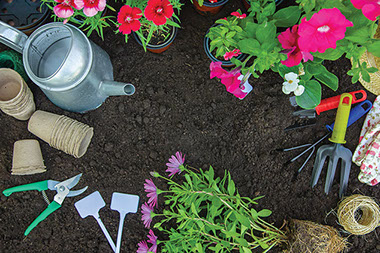
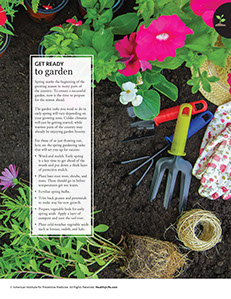
    Gardening tools on dirt with flowers ready to plant.

    Spring marks the beginning of the growing season in many parts of the country. To ensure a successful garden, now is the time to prepare for the season ahead.

    The garden tasks you need to do in early spring will vary depending on your growing zone. Colder climates will just be getting started, while warmer parts of the country may already be enjoying garden bounty.

    For those of us just thawing out, here are the spring gardening tasks that will set you up for success:

    *  Weed and mulch. Early spring is a key time to get ahead of the weeds and put down a thick layer of protective mulch.

    *  Plant bare-root trees, shrubs, and roses. These should go in before temperatures get too warm.

    *  Fertilize spring bulbs.

    *  Trim back grasses and perennials to make way for new growth.

    *  Prepare vegetable beds for early spring seeds. Apply a layer of compost and turn the soil over.

    *  Plant cold-weather vegetable seeds such as lettuce, radish, and kale.

    © American Institute for Preventive Medicine
  • Master Food Prep

    Healthylife® Weigh

    Part 3

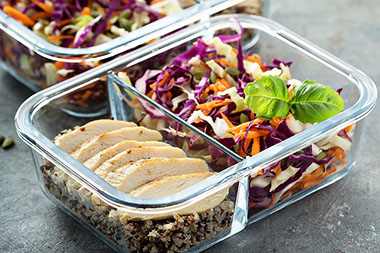
    Healthy meal prep with quinoa and chicken.

    Food preparation does not need to take a lot of time. The more you prepare food, the better you will get at being efficient in the kitchen!

    1. Make double batches of dinner meals. Freeze individual portions in airtight containers. Label with the date and what it is.

    2. Buy pre-cut vegetables, either fresh or frozen.

    3. Keep a supply of foods on hand that can be stored for weeks or months, such as brown rice, quinoa, whole grain pasta, frozen and canned vegetables, beans, tuna, oils, and spices.

    4. Cut up fruits and vegetables and store them in individual bags or containers for easy, grab-and-go snacks. Dry anything you have washed by laying it on a towel. This will help prevent mold.

    5. Freeze berries or sliced and peeled bananas. They can be easily added to smoothies or pancakes.

    Tips for Nibbling Cooks

    Be aware of how much you eat while cooking. A taste here and there can help you check for flavor, such as when seasoning a soup. Too many nibbles can add up to a lot of extra eating in your diet.

    *  Have a small snack before you start cooking, like a piece of fruit or raw veggies and hummus.

    *  Chew sugar-free gum with xylitol, which does not cause tooth decay.

    *  Brush and floss your teeth before you cook.

    *  Sip water every time you are tempted to snack on the meal you are preparing.

    *  Sit down when you eat. Use utensils for all items you eat.

    © American Institute for Preventive Medicine
  • Set Yourself Up For Success

    Healthylife® Weigh

    Part 5

    Man running along hiking trail.

    Create a consistent routine for yourself. Reduce the number of excuses you can make. Tips for creating an exercise habit:

    *Seize your moment.Be aware of when your motivation to exercise is high. You may prefer mornings over evenings. Or, the opposite. Plan to exercise when you are more likely to be physically and mentally on board with it.

    *Get ready ahead of time.Pack a bag with clothes, shoes, deodorant, hair ties, a water bottle, a small towel, and other supplies you’ll need. When exercise comes up on your calendar, all you have to do is grab the bag.

    *Get ready for round 2 ahead of time.Have several days’ worth of workout clothes clean and ready to go. Store workout clothes together so it is easy to re-fill your gym bag. Make it easier to repeat your habit.

    *Commit to repeating your routine.Join a recreational sports team, sign up for a class, or pay for a personal training package. Even if you are not feeling up to it one day, having it on the schedule may get you there.

    *Be accountable to someone.Commit to meeting a friend for exercise at a certain time. Get a workout buddy and swap shoes. If you don’t show up, they won’t be able to work out either! Or, commit to logging your workout on social media or with a friend.

    *Be patient.It may take time to find an activity you like. It may take even longer to feel like it is a normal part of your day to exercise. Keep going. You’ll get there!

    © American Institute for Preventive Medicine
  • Arm Yourself With A Vegetable Scrubber

    HEALTHY EATING

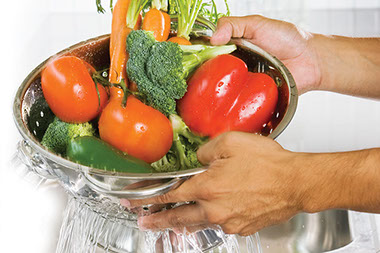
    Image of vegetables being washed in a scrubber.

    A University of Nebraska-Lincoln food safety specialist said it is important to properly wash fresh produce before eating to reduce harmful microorganisms that could cause foodborne illness.

    Wash produce with running water and then let that water go down the drain. Do not just soak the produce, said Julie Albrecht, UNL Extension food safety specialist at the Institute of Agriculture and Natural Resources.

    If there is something on the outside of a food, soaking it could allow the microorganisms to spread to other parts of the food or to other produce in the same sink. Running water washes the microorganisms down the drain.

    “It’s really just about preventing cross contamination,” Albrecht said. “Always use a colander or strainer so the water goes through the produce instead of just letting produce sit in water.”

    It is important to wash all fresh produce, even ones with rinds that are not eaten, Albrecht said. Bacteria could be living on the surface and then spread to the inside of the fruit when the rind is cut.

    Scrub foods with tough surfaces, such as melons and potatoes, with a vegetable scrubber.

    Immediately refrigerate fresh produce after cutting it. Most fruits and vegetables can be stored at 40ºF or below, which is cold enough to prevent microorganisms from growing.

    “Once you cut something or peel it, keep it cold, refrigerate it. Do not let it sit out at room temperature because microorganisms grow best around temperatures of 80 to 100. Plus, your food will be crisper and of a better quality,” Albrecht said.

    Leafy vegetables and tomatoes have been linked to foodborne illness outbreaks in recent years, so take extra care to wash them and keep them cold, Albrecht said.

    Be sure to also wash hands, surfaces, and utensils before handling raw produce.

    While shopping, only buy the best-looking produce that will stay fresh the longest. “Pick high-quality produce with no bumps or scratches at the peak of ripeness or maybe a little under ripe,” Albrecht said. “And make sure there is no mold, especially on berries.”

    © American Institute for Preventive Medicine