Many common household items contain chemicals. Not all chemicals are bad for your health, but some can be harmful. To keep yourself and your family healthy, it’s best to take steps to reduce or avoid chemicals that could be unsafe.
Did you know possible toxic substances can be found in cleaning products, furniture, carpet and shower curtains? Here’s how to avoid unsafe levels of toxins:
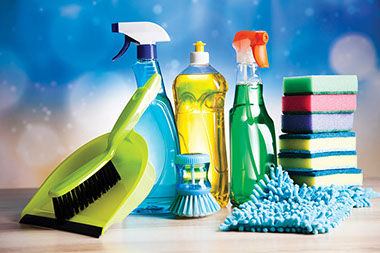
*Read labels carefully.Many cleaning products have warnings and directions for how to use them. Follow these carefully. For instance, if it says, “use in a well-ventilated area,” you should be sure to open a window to the outside.
*Be aware of odors.If something gives you a headache, sore throat or makes you cough, this may be a sign that you shouldn’t use it anymore.
*Protect your skin.Wear gloves when using cleaning products and wash your hands after cleaning. Don’t let children use products with any chemicals in them like bleach, ammonia or strong cleaning ingredients.
*Get checked for lead.If you live in a home built before 1980, ask your local health department how you can get your home and water checked for lead. You can’t see, smell or taste lead. Lead is harmful to the brain and affects children’s development. Find out if your home is at risk and take steps to get it removed, if needed.
*Avoid pesticides whenever possible.Contact professional pest control companies for insect problems.
*Choose fragrance-free products when possible.Many fragrances contain chemicals that disrupt hormone functions in the body. Also, some people are sensitive to fragrances.
*Replace old nonstick pans that look worn or scratched.They may contain chemicals that can get into your food.
*Look for cleaning products that have the Environmental Protection Agency’s “Safer Choice” label.For more information, visitwww.epa.gov/saferchoice/products.
If someone in your home may have ingested a poisonous product, call The American Association of Poison Control Centers at (800) 222-1222.
Remove dust for a healthier home
Did you know household dust often contains chemicals and toxins from your home? A good way to reduce your exposure to them is to keep dust down. Try these tips:
* Choose non-toxic or “Safer Choice” cleaning products. White vinegar is an effective non-toxic cleaner for many surfaces.
* Use a damp rag without chemicals to dust.
* Clean floors with a damp mop or a steam-only mop.
* Vacuum floors regularly and use a vacuum with a high efficiency particulate air (HEPA) filter.
* Open windows to bring in fresh air whenever possible.
* Change furnace and air filters regularly.
* Wash hands often.
Source: National Institutes of Health, Environmental Protection Agency