Tag: toys

  • Getting Kids To Donate Old Toys

    FAMILY LIFE

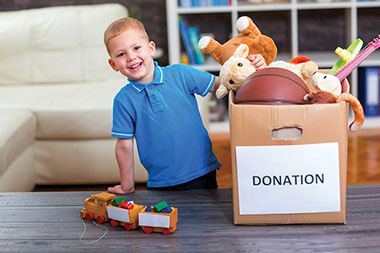
    Image of happy child placing toys in donation box.

    After the holidays, many families find their house overrun with toys. If your kids received new toys as gifts and have old toys they don’t use anymore, consider donating the toys to families in need.

    Unfortunately, it’s not always easy to do this. Many parents find that children struggle to give up old toys. Even if they haven’t touched it in months, they may be unwilling to give the toy away.

    The American Academy of Pediatrics suggests these tips to get kids on board:

    *Make giving a part of family life.Try volunteering for a local charity as a family throughout the year. Talk to the kids about causes you support.

    *Talk to the kids about ways to give.Talk to your child about local charities that could use their old toys. A church nursery, children’s shelters, a child care center, and children’s hospitals are just a few options.

    *Ask for the kids’ help.Take some time to sort through old toys with your child. Try the “give one, keep one” approach so they can decide for themselves what stays and what goes.

    *Only donate toys that are safe, not broken, and clean.

    Tips for teaching gratitude to kids

    *Do small things for friends or neighbors.Have your children bring fresh food to a neighbor who lives alone, or help them rake leaves without asking for anything in return.

    *Talk to them about what they are thankful for each day.This can help parents too.

    *Say “thank you” to others whenever appropriate.This helps them learn by following your example.

    *Send thank-you notesand teach kids to send them after receiving birthday or holiday gifts.

    *Have them do age-appropriate chores.This gives kids an idea of all the work it takes to keep a household running.

    © American Institute for Preventive Medicine
  • Prevent Kids From Choking

    FAMILY LIFE

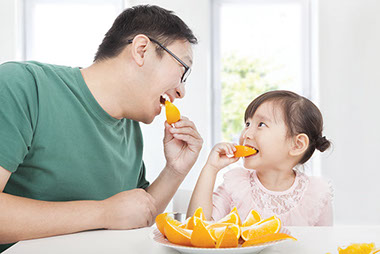
    Image of father and daughter eating oranges.

    Food-not toys-are the most common culprit of choking accidents in kids under 5. The reasons have a lot to do with a child’s anatomy.

    “Young children have underdeveloped swallowing mechanisms, immature teeth and narrow airways, which put them at a higher risk for choking on food,” said Dr. Nina Shapiro, a professor of head and neck surgery at the UCLA School of Medicine. “Plus, the diameter of a child’s airway is about the size of their pinky, so high-risk foods can easily block their tiny airways and prevent their ability to breathe.”

    The list of high-risk foods for children under age 5 years includes many kid favorites:

    *  Cheese sticks

    *  Chewing gum

    *  Chunks of meat or cheese

    *  Chunks of peanut butter

    *  Chunks of raw vegetables

    *  Dried fruit

    *  Grapes

    *  Hard or sticky candy and lollipops

    *  Hot dogs

    *  Nuts

    *  Popcorn

    *  Seeds such as pumpkin seeds and sunflower seeds

    Here are some tips:

    *  Vegetables should be cooked and cut into small pieces.

    *  Hot dogs and cheese sticks should be cut lengthwise, then widthwise, and then into the shape of small moons.

    *  Grapes should be peeled and cut in half or quarters.

    *  Nut butters should be spread thinly onto crackers or bread.

    *  Young children should always be attended to by an adult when they eat and only eat developmentally appropriate foods.

    *  Children should sit up straight and not play or run while eating.

    If a child does choke and is unable to breathe, call 911 and perform the Heimlich maneuver. Even if the child seems to choke but then coughs and appears fine, the object may have become lodged, and the child should see a doctor.

    © American Institute for Preventive Medicine