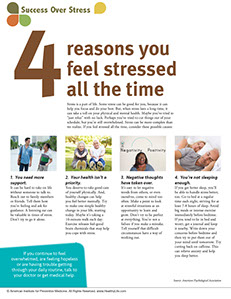
With demanding jobs, caring for family, and worries about everyday events, many people feel stressed on a daily basis. Here are some things to remember:
1.You can’t avoid all stress, all the time.Although we’d like to live stress-free lives, it’s normal to deal with stress from time to time. Even the most relaxed person will likely deal with stress sometimes, and our bodies are equipped to deal with small amounts of it. Rather than worry about stress, learn how to cope with it when it does arise.
2.Stress doesn’t have to be a bad thing.A small amount of stress can help you be at your best, such as before a job interview or a speech. And, stress can help you out of dangerous situations. Adrenaline kicks in to help you survive in situations where you may need to flee. Your pulse speeds up, your brain kicks into high gear, and your muscles are ready to perform. This is known as the “fight or flight” response, and it can save your life.
3.When you’re stressed all the time, your health may suffer.Though some stress is part of life, feeling stressed too often can take its toll. If you’re dealing with high levels of stress every day, or the source of stress doesn’t go away, this may become “chronic” stress. Chronic stress puts you at a higher risk of health problems, such as heart disease, diabetes, immune system problems, and more.
Learn how to manage stress
Look into these healthy ways to manage stress in your life:
* Make time for exercise. Just 30 minutes a day of walking has been shown to improve mood and help people cope with stress.
* Recognize when you’re feeling stressed, and take action. If you feel stress, take a walk, try deep breathing exercises, or call a trusted family member or friend.
* Be open with your doctor. If stress is causing sleep problems, substance abuse issues, depression, anxiety, or other issues, tell your doctor. There are treatments available that can help you feel better.
* Step out of your comfort zone. Have never taken a yoga or tai chi class? A relaxing activity like this could be just what you need to cope with stress.
Source: National Institute of Mental Health