SELF-CARE CORNER

Triglycerides are a type of lipid, or fat, in your blood. Everyone has some triglycerides. But high triglycerides, when combined with high “bad” cholesterol and low “good” cholesterol, could be bad for heart health.
How do I know my triglyceride levels?
High triglycerides have no signs or symptoms. The only way to know whether you have high triglycerides is through a blood test.
Ask your doctor how often you should get this test. Most adults need a cholesterol or “lipid” test at least every four to six years. But if you have a family history of heart disease or other risk factors, your doctor may recommend the test more often.
If your cholesterol tests shows that triglyceride levels are high, you may be able to bring them down by making some lifestyle changes.
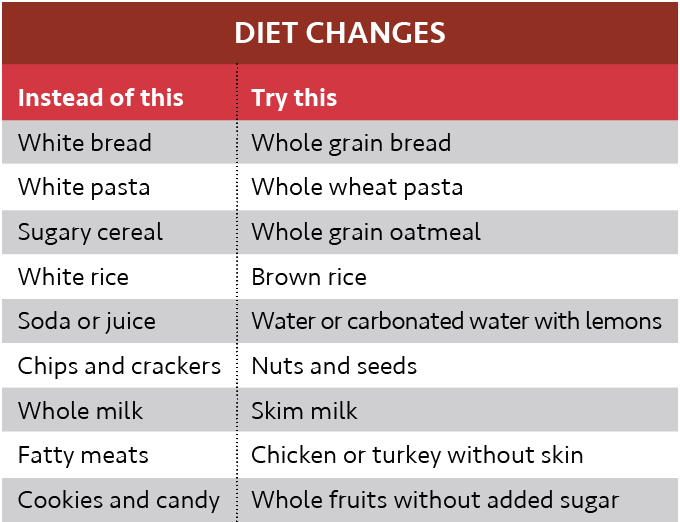
Heart healthy changes are key
Talk to your doctor about your triglyceride levels. Your doctor may recommend making certain diet and exercise changes to improve your heart health. If you have diabetes, ask your doctor how you can keep blood sugar levels under good control.
Exercise and weight loss
Exercise is great for overall health, and it can lower your triglycerides. Try to walk or do another exercise you enjoy for 30 minutes, five days a week.
Even a small amount of weight loss can improve triglyceride levels. Losing just 5 percent of your weight can boost your health and lower heart disease risk. Ask your doctor or nutritionist for tips on how to lose excess weight.
Limit or Avoid Alcohol
Your doctor may also recommend you limit or avoid alcohol to lower your triglyceride levels.
Prescription Medicine
In addition to making lifestyle changes, prescription medicines may also be recommended to bring triglycerides down.
Sources: Centers for Disease Control and Prevention, National Lipid Association
© American Institute for Preventive Medicine