WELL-BEING
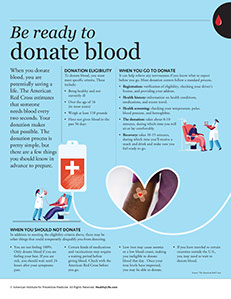
When you donate blood, you are potentially saving a life. The American Red Cross estimates that someone needs blood every two seconds. Your donation makes that possible. The donation process is pretty simple, but there are a few things you should know in advance to prepare.
Donation eligibility
To donate blood, you must meet specific criteria. These include:
* Being healthy and not currently ill
* Over the age of 16 (in most states)
* Weigh at least 110 pounds
* Have not given blood in the past 56 days
When you go to donate
It can help relieve any nervousness if you know what to expect before you go. Most donation centers follow a standard process.
*Registration:verification of eligibility, checking your driver’s license, and providing your address.
*Health history:information on health conditions, medications, and recent travel.
*Health screening:checking your temperature, pulse, blood pressure, and hemoglobin.
*The donation:takes about 8-10 minutes, during which time you will sit or lay comfortably.
*Recovery:takes 10-15 minutes, during which time you’ll receive a snack and drink and make sure you feel ready to go.
When You Should Not Donate
In addition to meeting the eligibility criteria above, there may be other things that could temporarily disqualify you from donating.
* You are not feeling 100%. Only donate blood if you are feeling your best. If you are sick, you should wait until 24 hours after your symptoms pass.
* Certain kinds of medications and vaccinations may require a waiting period before giving blood. Check with the American Red Cross before you go.
* Low iron may cause anemia or a low blood count, making you ineligible to donate blood that day. Once your iron levels have improved, you may be able to donate.
* If you have traveled to certain countries outside the U.S., you may need to wait to donate blood.
Source: The American Red Cross
© American Institute for Preventive Medicine