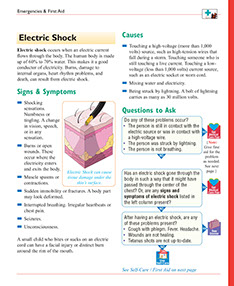
Electric shock occurs when an electric current flows through the body. The human body is made up of 60% to 70% water. This makes it a good conductor of electricity. Burns, damage to internal organs, heart rhythm problems, and death, can result from electric shock.
Signs & Symptoms
* Shocking sensations. Numbness or tingling. A change in vision, speech, or in any sensation.
* Burns or open wounds. These occur where the electricity enters and exits the body.
* Muscle spasms or contractions.
* Sudden immobility or fractures. A body part may look deformed.
* Interrupted breathing. Irregular heartbeats or chest pain.
* Seizures.
* Unconsciousness.
A small child who bites or sucks on an electric cord can have a facial injury or distinct burn around the rim of the mouth.
Causes
* Touching a high-voltage (more than 1,000 volts) source, such as high-tension wires that fall during a storm. Touching someone who is still touching a live current. Touching a low-voltage (less than 1,000 volts) current source, such as an electric socket or worn cord.
* Mixing water and electricity.
* Being struck by lightning. A bolt of lightning carries as many as 30 million volts.
Treatment
Contact with electricity from a high-voltage wire or being struck by lightning needs emergency medical care. Contact with electricity from a low-voltage current needs emergency medical care if any signs or symptoms are present. A person who does not have any symptoms should still see a doctor to check for possible internal injuries.
To Avoid Being Harmed by Lightning
* Heed weather warnings.
* Take shelter in a building, if you can.
* Stay in your car (if it is not a convertible) rather than out in the open.
* If you are caught outside, avoid tall trees, open water, metal objects, and high ground. Crawl into a low-lying place or curl up on the ground, head to knees with your head touching the ground.
Questions to Ask
Self-Care / First Aid
Beware! Do not put yourself in danger to give first aid. Do not touch the person until power is shut off.
* If the source is a high-voltage wire or lightning, call 9-1-1!
* It is safe to touch a person struck by lightning.
* If the source is a low-voltage current, remove the fuse or switch off the circuit breaker to the electrical outlet.
* If you can’t shut off the source, with dry feet and hands, use a board, wooden stick, rope, etc. to get the person away from the source.
* If it is safe for you to touch the person, check for a response. Give CPR, as needed.
* Unless it is absolutely necessary, don’t move the person. He or she could have a traumatic injury, especially to the head or neck.
* Check for burns. Cover burned areas with dry, sterile dressings.
* Give first aid for Shock, if needed.
Prevention
* Stay clear of fallen wires. Inform the police, electric company, etc.
* Install ground-fault circuit-interrupters (GFCIs) in wall outlets of bathrooms, kitchens, etc. With GFCIs, when an electrical appliance falls into water, the current is instantly cut off.
* Don’t turn electrical switches on or off or touch an electric appliance while your hands are wet, while standing in water, or when sitting in a bathtub.
* Replace worn cords and wiring.
* Cover all electric sockets with plastic safety caps.
* Before you do electrical repairs, remove the fuse from the fuse box or switch off the circuit breaker. Don’t just turn off the appliance or light switch.