Tag: unsaturated

  • Be Fussy About Fat

    Nutrition

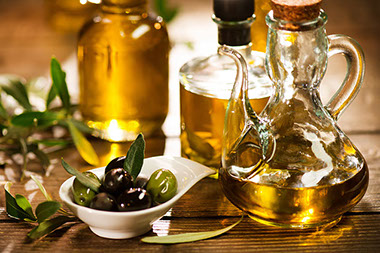
    Image of oilve oil and green olives in a clear bowl.

    Know the Fats to Choose & the Fats to Lose.

    Fact:

    Fat in foods serves up health benefits you can’t live without. Your body needs fat to:

    *  Make and repair body cell membranes.

    *  Get fat-soluble vitamins A, D, E and K and linoleic acid. This essential fatty acid is needed for normal growth.

    *  Help maintain healthy skin, eye sight, and promote brain development in babies.

    *  Delay the onset of hunger, which can keep you from eating the next snack or meal too soon.

    Fats contain different types of fatty acids. Some are better for your health than others.

    Monounsaturated and polyunsaturated fatty acids are the healthiest ones. They have been shown to lower the risk for heart and artery diseases. These are in:

    *  Olive, canola, flaxseed, peanut, sesame, sunflower, soybean, and safflower oils

    *  Fatty fish, such as salmon and tuna

    *  Nuts, such as almonds, pistachios, and walnuts; nut butters such as almond and peanut butter

    Saturated fatty acids are mostly in foods from animals and some plants. They may contribute to clogged arteries. These are in:

    *  Beef, veal, lamb, pork

    *  Butter, solid shortening, and lard

    *  Dairy products made from whole and 2% milk

    *  Cheese, cream, ice cream

    *  Coconut, coconut oil, palm oil, palm kernel oil, and cocoa butter

    Trans fatty acids, also called trans fats, are found mostly in processed foods. During food processing, fats undergo a chemical process called hydrogenation to make the product more stable. Trans fats are the least healthy fats because they raise cholesterol, increasing the risk of heart disease. These are in:

    *  Vegetable shortenings and partially hydrogenated margarines

    *  Some packaged foods, such as crackers, cookies, and snack foods

    *  Foods made with or fried in hydrogenated or partially hydrogenated oils

    Action Step

    Choose foods that have zero grams of trans fat per serving and that do not list hydrogenated or partially hydrogenated oils in the ingredients.
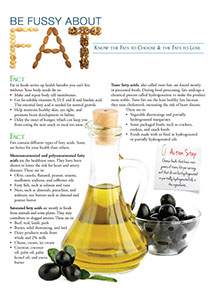
    Page from Ways to Well-Being book by the American Institute for Preventive Medicine. www.HealthyLife.com. All rights reserved.

    © American Institute for Preventive Medicine
  • Befriend Healthy Fats

    Healthylife® Weigh

    Part 2

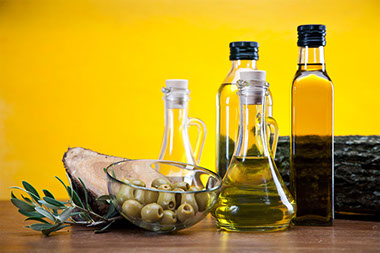
    Bottles of olive oil.

    Fats and oils do not have a separate section on MyPlate. Many foods that are sources of healthy fats are part of other groups. For example, nuts and seeds are part of the protein group. Avocados are part of the vegetable group.

    Fat has 9 calories per gram, making it a concentrated form of energy. Fat has more than twice the calories per gram that protein and carbohydrates have. That means there is a lot of energy (calories) in just one spoonful! It is important to select fats that are giving you the most nutritional value for those calories.

    Fats:

    *  Provide energy, especially long-term energy

    *  Transport fat-soluble vitamins (A, D, E, and K)

    *  Help the body make hormones

    *  Help you feel satisfied and full longer

    *  Make up cell structures in body tissues

    *  Cushion vital organs

    *  Support healthy skin and hair

    Chooseplant-based sources of fat most often. Healthy choices are nuts, seeds, nut and seed butters, canola oil, olives, olive oil, and avocado. These foods contain more unsaturated fats (monounsaturated and polyunsaturated fats). Salmon is also a good source of healthy omega-3 fats. While some research suggests that coconut and coconut oil contain a healthy form of saturated fat, there is still much debate in the scientific community about any health benefits.

    Even with healthy fats… Appropriate serving sizes for these foods are small. A small amount will help you feel full and provide many nutrients!

    Limitanimal sources of fat (red meat, processed meats, butter, whole-milk dairy). These foods contain more saturated fat. Saturated fat raises low-density lipoprotein (LDL) (“bad” cholesterol). This increases the risk for heart disease, especially when combined with a higher sugar diet.

    Avoidtransfats in any amount.Transfats are made when manufacturers add hydrogen to vegetable oil. This process gives foods a longer shelf life and adds flavor.Transfats raise your LDL cholesterol and lower your high-density lipoprotein (HDL) (“good” cholesterol). Eatingtransfats increases your risk of developing heart disease, stroke, and type 2 diabetes. Avoid products that contain “hydrogenated oils” or “partially hydrogenated oils.” These ingredients are not considered safe by the U.S. Food and Drug Administration (FDA).

    © American Institute for Preventive Medicine