Tag: vaccines

  • Vaccines & Autism: The Facts

    MEDICAL NEWS

    Young child and teacher.

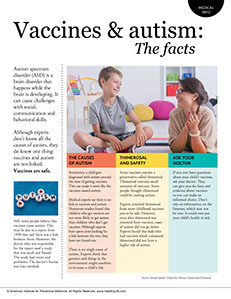
    Autism spectrum disorder (ASD) is a brain disorder that happens while the brain is developing. It can cause challenges with social, communication and behavioral skills.

    Although experts don’t know all the causes of autism, they do know one thing: vaccines and autism are not linked. Vaccines are safe.

    Still, some people believe that vaccines cause autism. This may be due to a report from 1998 that said there was a link between them. However, the doctor who was responsible for the report used a study that was small and flawed. The study had errors and problems. The doctor’s license was later revoked.

    The causes of autism

    Sometimes, a child gets diagnosed with autism around the time of getting vaccines. This can make it seem like the vaccines caused autism.

    Medical experts say there is no link to vaccines and autism. Numerous studies found that children who get vaccines are not more likely to get autism than children who don’t get vaccines. Although experts have spent years looking for a link between the two, they have not found one.

    There is no single cause of autism. Experts think that genetics and things in the environment might combine to increase a child’s risk.

    Thimerosal and safety

    Some vaccines contain a preservative called thimerosal. Thimerosal contains small amounts of mercury. Some people thought thimerosal could be causing autism.

    Experts removed thimerosal from most childhood vaccines just to be safe. However, even after thimerosal was removed from vaccines, cases of autism did not go down. Experts found that kids who had vaccines which contained thimerosal did not have a higher risk of autism.

    Ask your doctor

    If you ever have questions about your child’s vaccines, ask your doctor. They can give you the facts and evidence about vaccines so you can make an informed choice. Don’t rely on information on the Internet, which may not be true. It could even put your child’s health at risk.

    Source: Autism Speaks, Centers for Disease Control and Prevention
    © American Institute for Preventive Medicine

  • Immunizations: Your Best Shot Against Infectious Diseases

    Healthy Travel

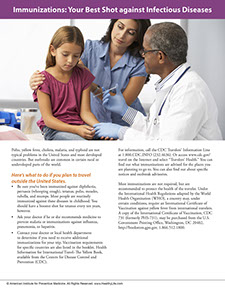
    Image of mother comforting young daughter as she gets a shot.

    Polio, yellow fever, cholera, malaria, and typhoid are not typical problems in the United States and most developed countries. But outbreaks are common in certain rural or undeveloped parts of the world.

    Here’s what to do if you plan to travel outside the United States.

    *  Be sure you’ve been immunized against diphtheria, pertussis (whooping cough), tetanus, polio, measles, rubella, and mumps. Most people are routinely immunized against these diseases in childhood. You should have a booster shot for tetanus every ten years, however.

    *  Ask your doctor if he or she recommends medicine to prevent malaria or immunizations against influenza, pneumonia, or hepatitis.

    *  Contact your doctor or local health department to determine if you need to receive additional immunizations for your trip. Vaccination requirements for specific countries are also listed in the booklet, Health Information for International Travel-The Yellow Book, available from the Centers for Disease Control and Prevention (CDC).

    For information, call the CDC Travelers’ Information Line at 1.800.CDC.INFO (232.4636). Or accesswww.cdc.gov/travelon the Internet and select “Travelers’ Health.” You can find out what immunizations are advised for the places you are planning to go to. You can also find out about specific notices and outbreak advisories.

    Most immunizations are not required, but are recommended to protect the health of the traveler. Under the International Health Regulations adapted by the World Health Organization (WHO), a country may, under certain conditions, require an International Certificate of Vaccination against yellow fever from international travelers. A copy of the International Certificate of Vaccination, CDC 731 (formerly PHS-731), may be purchased from the U.S. Government Printing Office, Washington, DC 20402,http://bookstore.gpo.gov, 1.866.512.1800.

    Page image from A Year of Health Hints book by the American Institute for Preventive Medicine. www.HealthyLife.com. All rights reserved.

    © American Institute for Preventive Medicine
  • Immunization Schedule

    Medical Exams

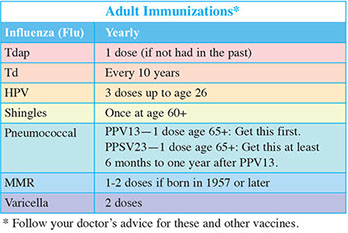
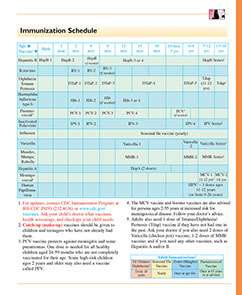
    1.  For updates, contact CDC Immunization Program at 800.CDC.INFO (232.4636) orwww.cdc.gov/vaccines. Ask your child’s doctor what vaccines, health screenings, and checkups your child needs.

    2.  Catch-up vaccines should be given to children and teenagers who have not already had them.

    3.  PCV vaccine protects against meningitis and some pneumonias. One dose is needed for all healthy children aged 24-59 months who are not completely vaccinated for their age.

    Vaccines for Traveling Abroad

    Before you travel to other countries, find out if you need certain vaccines. Get information from the CDC Travelers’ Information Line. Call 800.CDC.INFO (232.4636) or use thewww.cdc.gov/travelWeb site. Discuss your needs with your doctor.

    Page from the Healthier at Home book by the American Institute for Preventive Medicine. www.HealthyLife.com. All rights reserved.

    © American Institute for Preventive Medicine

  • Immunize Or Your Health Care Costs Could Rise

    Medical Exams

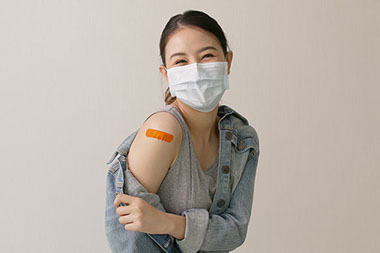
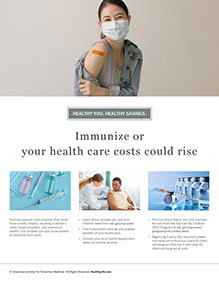
    Women wearing face mask, smiling, showing bandage on arm where she got a vaccine.

    Vaccines prevent many diseases that could have a costly impact, resulting in doctor’s visits, hospitalizations, and premature deaths. Sick children can also cause parents to lose time from work.

    *  Learn about vaccines you and your children need fromcdc.gov/vaccines.

    *  Find if and which vaccines are covered benefits of your health plan.

    *  Contact your local health department about its vaccine services.

    *  Find out about free or low-cost vaccines for kids from the Vaccines for Children (VFC) Program atcdc.gov/vaccines/programs/vfc/index.html.

    *  Beginning in early fall, read local papers and store ads to find out where flu shots will be given. Find out if and when flu shots will be given at work.

    ays to Well-Being book by the American Institute for Preventive Medicine. www.HealthyLife.com. All rights reserved.

    © American Institute for Preventive Medicine
  • Infant Immunization

    Pediatric Care

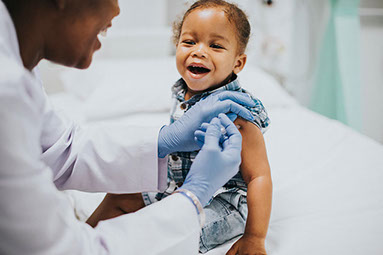
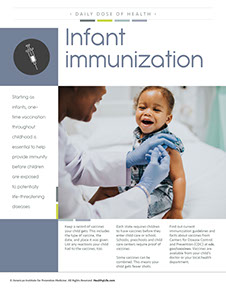
    Young child getting a vaccine from doctor.

    Starting as infants, one-time vaccination throughout childhood is essential to help provide immunity before children are exposed to potentially life-threatening diseases.

    Keep a record of vaccines your child gets. This includes the type of vaccine, the date, and place it was given. List any reactions your child had to the vaccines, too.

    Each state requires children to have vaccines before they enter child care or school. Schools, preschools and child care centers require proof of vaccines.

    Some vaccines can be combined. This means your child gets fewer shots.

    Find out current immunization guidelines and facts about vaccines from Centers for Disease Control and Prevention (CDC) atcdc.gov/vaccines. Vaccines are available from your child’s doctor or your local health department.

    A Year of Health Hints book by the American Institute for Preventive Medicine. www.HealthyLife.com. All rights reserved.

    © American Institute for Preventive Medicine
  • Save By Staying Healthy

    Medical Care

    An ounce of prevention is worth more than a pound of cure. The healthier you are, the less you will need to pay for medical care. Also, the state of your health is one of the main factors in setting the cost of health and life insurance.

    Don’t send money up in smoke.

    Cigarette smoking is bad for your health. It’s bad for your wallet, too. A person who smokes two packs a day spends over $3,000 a year just on cigarettes. Hundreds of dollars more are spent on extra dental and medical costs. The cost of health, life, and disability insurance is about 30% higher for persons who smoke.

    Weight does matter.

    Obesity is a leading cause of preventable death. Losing weight can lower the risk for type 2 diabetes, heart disease, and other chronic diseases. These can cost you and your employer a lot of money to treat. Obese persons who buy health insurance on their own may have to pay more. Insurance companies may even turn them down.

    Be fit at little or no cost.

    Take part in fitness programs at work. Join a mall walkers program. Walk with a friend. Follow along with fitness programs on TV. Or, if you have a stationary bike, ride it while you watch TV. Being active every day is a huge investment in your health.

    Look at your genes.

    Find out what health problems both sides of your family have or had. Start with your parents, brothers, and sisters. Then find out about ones your grandparents, uncles, aunts, and first cousins have or had. Once you know what health problems run in your family, talk with your doctor. He/she can suggest ways to lower your risk of getting them.

    Don’t back quacks.

    Find out about products and treatments that don’t work or could cause harm fromwww.quackwatch.organdwww.fda.gov. Don’t waste money on things that don’t help.

    Be savvy about AD-vice.

    Check with your doctor before you follow advice from Web sites and ads that promote products. Many are costly and give little or no benefit.

    Detect to protect.

    Have screening tests and exams that can help detect health problems in early stages when they are easier and less costly to treat. Follow your doctor’s advice.

    Money well spent.

    If you have no health insurance or your health plan does not pay for screening tests or doctor visits, it is still important to have them. Paying for these now could save you thousands in medical costs in the future. Tests may cost less than you think.

    Know thy “health self.”

    The more you know about your health problems, the easier it is to make informed choices about how to take care of them. Find out what you need to do from your doctor. Get reliable facts, too, from trusted sources.

    Follow your doctor’s treatment plan.

    This helps to improve your health. It helps keep problems from getting worse. For example, keeping blood pressure under control can reduce the risk of having a stroke or a heart attack.

    A shot in the arm for your health.

    Get vaccines, as needed, to prevent illnesses. This applies to children, as well as adults. The Centers for Disease Control and Prevention give guidelines for vaccines every year. Find out what they are atwww.cdc.gov/vaccines. Also, if you plan to travel to other countries, find out what vaccines you should get. Find out fromwww.cdc.gov/travel.

    Know about the Vaccines for Children (VFC) Program.

    Your children may be able to get free or low-cost vaccines. Find out fromwww.cdc.gov/vaccines/programs/vfc/default.htm.

    Cover image to the Healthy Savings book by the American Institute for Preventive Medicine. www.HealthyLife.com. All rights reserved.

    © American Institute for Preventive Medicine