Tag: variety

  • Reach For A Rainbow Of Fruits & Veggies

    Nutrition

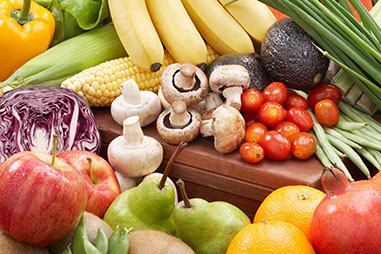
    Image of various fruits and veggies.

    Pick, buy, and eat nature’s healthy foods.

    Fruits and veggies contain essential vitamins, minerals, antioxidants, and fiber that may help protect you from chronic health problems, including stroke, certain cancers, and heart diseases. Health experts agree that half your daily intake of food should be fruits and veggies. Sadly, studies show that most people don’t eat enough colorful foods from nature.

    Put some color into your meals and snacks.

    Fruits and veggies are nature’s art, but their real beauty comes from what’s inside. The more colorful the foods on your plate, the more beneficial nutrients you will receive. For example:

    *  Lentils, artichokes, and chick peas are high in fiber.

    *  Spinach and asparagus have folate, a B vitamin.

    *  Sweet potatoes, pumpkin, and carrots are rich with Vitamin A.

    *  Strawberries, oranges and tomatoes are high in Vitamin C.

    *  Potatoes, bananas, prunes, dried peaches, and apricots are high in potassium.

    Grab and go tips:

    *  Keep a bowl of fresh fruits on the counter.

    *  Keep cut and ready-to-eat veggies front and center in the fridge. Examples are avocados, bell peppers, broccoli, carrots, cauliflower, celery, cucumbers, and grape or cherry tomatoes.

    *  Buy fresh fruits in season.

    *  Stock fruits that are dried, frozen, and canned (in water or 100% fruit juice).

    *  Choose packaged fruits without added sugars.

    *  Include a tangerine, banana or grapes with lunch.

    *  Add cut-up fruit to tossed salads.

    *  Keep packages of dried fruit in your desk drawer – pineapple, bananas, cherries, figs, dates, cranberries, blueberries, raisins, etc.

    *  Stock the freezer with frozen juice bars (100% juice).

    *   Experiment with different textures, such as crunchy apples, creamy bananas, and juicy oranges.

    Action Step

    Under clean, running water, gently rub fruits to remove dirt, bacteria and chemicals. Produce with nooks and crannies – broccoli, cauliflower, and lettuce – should be soaked for 1 to 2 minutes in clean water.
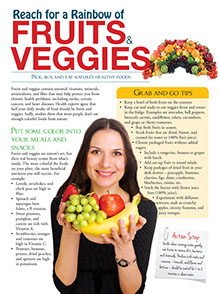
    Page from Ways to Well-Being book by the American Institute for Preventive Medicine. www.HealthyLife.com. All rights reserved.

    © American Institute for Preventive Medicine
  • Meet Your Protein Needs

    HEALTHY EATING

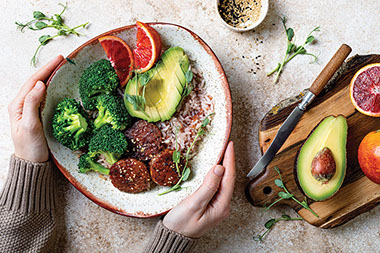
    Hands holding tempeh buddha bowl. Marinated tempeh in marinade with rice, steamed broccoli, avocado.

    Protein is an essential nutrient necessary for growth and for the body to function properly. Every single cell in your body contains protein.

    Eating enough protein ensures your body has all the building blocks it needs to keep you strong and healthy. But, how much is enough? Too little protein puts you at risk for a deficiency, and too much protein may create an imbalance in your diet.

    Calculate your needs

    The amount of protein you need depends on your height, weight, sex, age, and activity level. In addition, there are certain times of life when protein needs are higher. Children, teens, pregnant women, and anyone healing from an injury require extra protein for growth and repair.

    The average, healthy adult can use this formula to determine their baseline protein needs.

    *  Divide your body weight in pounds by 2.2 (this converts it to kilograms).

    *  Multiply that number by 0.8 -1.

    *  This number range gives you a rough estimate of your daily protein needs.

    Eat a variety

    Protein is made up of amino acids, the building blocks your body uses to create the specific proteins each cell requires. Different foods contain different amino acids, so eating a variety of protein-containing foods will ensure you get all the amino acids your body needs.

    In particular, if you eat a vegetarian or vegan diet, aim to consume as many different protein sources as possible.

    High protein foods

    It’s easy to meet your protein needs if you choose a serving of protein-containing food at each meal and some snacks each day.

    © American Institute for Preventive Medicine
  • Move Outside The Exercise Box

    BE FIT

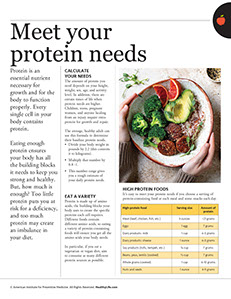
    Family dancing around.

    The more you move, the stronger your body will be and the better your heart, lungs, and other organs function. Any movement that gets your heart rate up counts as physical activity.

    At home

    *  Walk the dog.

    *  Play a family game of catch or frisbee.

    *  Add in some squats or lunges while you work in the kitchen.

    *  Do some light bodyweight exercises while you watch TV.

    At work

    *  Park farther away to get more walking time.

    *  Take the stairs.

    *  Set a timer for a five-minute movement break every 30 to 90 minutes.

    *  Walk at lunch or go up and down the stairs a few times.

    The weekend

    *  Choose a hobby that gets you moving, like an outdoor activity.

    *  Plan social gatherings that include movements like hiking or active games.

    *  Put on some music and make chore time fun and full of movement.

    *  Go sightseeing or choose a family outing that includes a long walk or hike.

    © American Institute for Preventive Medicine

  • Choose A Variety Of Foods

    Healthylife® Weigh

    Part 2

    Group of happy friends preparing food.

    No one food has all the nutrients needed to sustain life and promote well-being. You need to eat a variety of foods to get all of the nutrients your body needs. Some foods provide more nutrients than others. Food can be a source of pleasure, but its main purpose is to provide nutrients that your body cannot make.

    Choose foods that are nutrient dense. This means they give you a lot of nutrients per calorie. Examples are:

    *  Fruits and vegetables

    *  Whole grains

    *  Fat-free or low-fat dairy foods and drinks

    *  Seafood, lean meats, and eggs

    *  Beans, nuts, and seeds

    Some foods contain ingredients that may harm you or are difficult for your body to digest. Limit foods and beverages high in saturated fat, added sugars, or sodium. To do this, choose fewer of these foods:

    *  Sugar-sweetened drinks and desserts

    *  Refined grains (bread, chips, and crackers)

    *  Red meat and high-fat dairy and cheese

    *  Highly processed meats and cheeses

    Everything you eat or drink does not have to be nutrient dense. One meal won’t make or break your health. The trends in your diet are more important.

    © American Institute for Preventive Medicine
  • Eat The Rainbow!

    Healthylife® Weigh

    Part 2

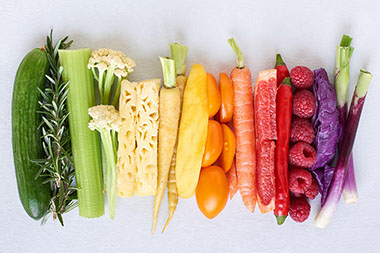
    Rainbow spectrum of healthy fresh fruit and vegetables.

    Choose a variety of colors when selecting fruits and vegetables. Different colors represent different phytonutrients. Phytonutrients are plant chemicals that have antioxidant and anti-inflammatory qualities. Every time you eat is an opportunity to strengthen your body and prevent disease.

    Red

    *  Improved memory

    *  A healthy heart

    *  Improved digestion

    *  Examples

    –  Tomatoes

    –  Beets

    –  Radishes

    –  Red peppers

    –  Red onions

    –  Rhubarb

    –  Cherries

    –  Red apples

    –  Red grapes

    –  Red pears

    –  Raspberries

    –  Strawberries

    –  Watermelon

    Orange/Yellow

    *  Good vision in low light

    *  A healthy heart

    *  Strength to fight off colds & illness

    *  Healthy skin

    *  Improved circulation

    –  Apricots

    –  Cantaloupe

    –  Nectarines

    –  Peaches

    –  Yellow apples

    –  Yellow pears

    –  Carrots

    –  Sweet potatoes

    –  Yellow peppers

    –  Yellow potatoes

    –  Yellow summer squash

    –  Sweet corn

    –  Yellow tomatoes

    –  Butternut squash

    White

    *  A healthy heart

    *  Lower risk for stroke

    *  Lower risk for some cancers

    –  Brown pears

    –  White peaches

    –  Cauliflower

    –  Kohlrabi

    –  Onions

    –  Garlic

    –  Potatoes

    –  White corn

    –  White nectarines

    Green

    *  Good vision in low light

    *  Strong bones & teeth

    *  Organ health

    –  Green apples

    –  Green grapes

    –  Green pears

    –  Honeydew

    –  String beans

    –  Spinach

    –  Broccoli

    –  Sugar snap peas

    –  Brussels sprouts

    –  Green cabbage

    –  Green onions

    –  Green peppers

    –  Cucumbers

    –  Leafy greens

    –  Lettuce

    –  Peas

    –  Asparagus

    –  Zucchini

    Blue/Purple

    *  Improved memory

    *  Healthy aging

    –  Blackberries

    –  Blueberries

    –  Dried plums

    –  Pitted prunes

    –  Purple asparagus

    –  Purple cabbage

    –  Eggplant

    –  Plums

    © American Institute for Preventive Medicine

  • Meal And Snack Ideas

    Healthylife® Weigh

    Part 3

    Family eating dinner together at home.

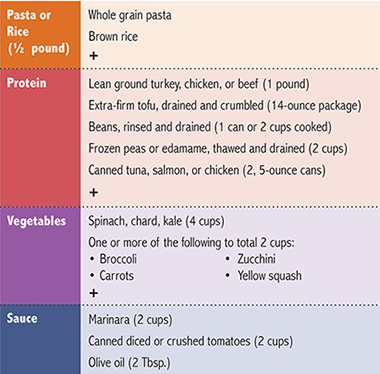
    Below are ideas for basic meals and snacks. Use these ideas to start building your meal plan.

    Meal Idea: Pasta or Rice Dinner

    Choose ingredients from the chart below. This recipe makes four servings.

    Chart of meal ideas, pasta or rice dinner.

    Directions:

    1. Cook pasta or rice according to package directions and drain.

    2. Cook protein choice as needed.

    3. Cook veggies by steaming, grilling, roasting, sautéing, or adding to boiling pasta water in the last few minutes of cooking.

    4. In a large pot, heat sauce over medium heat. If using spices, add them now. Add protein and veggies to heat through. Toss with hot cooked pasta or rice and serve.

    For a casserole, follow the directions above. Then, pour into a 9 x 13-inch baking pan and bake for 40-60 minutes until the top is golden brown.

    Meal Idea: Salad

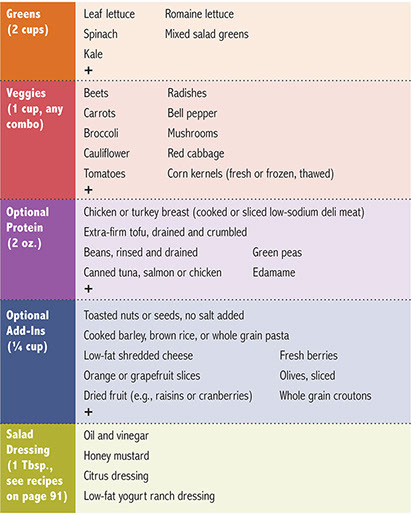
    Choose ingredients from the chart below. This salad recipe serves one person.

    Chart of meal ideas, salad.

    Directions:

    Toss ingredients together when ready to eat. Or, prepare a salad ahead of time in a container, keeping very moist ingredients (like tomatoes and dressing) separate. When you are ready to eat, toss and empty onto a plate or in a large bowl.

    Salad Dressing

    Salad dressing can be a healthy choice for your salad. Use healthy, unsaturated fats in salad dressing to:

    *  Help you feel full and more satisfied.

    *  Help your body get the benefits of other vitamins in your salad, like fat-soluble vitamins A, D, E, and K.

    *  Add flavor. Dressings are a great place for herbs, spices, and other powerful flavors to make your salad POP!

    *  Help you eat vegetables that you don’t like plain.

    Tips for Selecting a Dressing at a Restaurant:

    *  Ask for oil-based dressings, such as olive oil and balsamic vinegar.

    *  Ask for dressing on the side. Toss your salad with half the dressing provided and put the rest to the side. Most restaurants offer much more dressing than you need for your salad.

    *  If you are worried you may use too much dressing, ask for a half-size salad or order another vegetable as a side dish.

    *  On bottled dressings, look for ones made without added sugars.

    Make Your Own Salad Dressing

    Use 1-2 Tbsp. of the dressing on your salad. Store leftovers in a sealed jar.

    *  Oil and vinegar dressing: 3 Tbsp. olive oil, 2 Tbsp. red wine vinegar,  1/8 tsp. salt (a dash), ¼ tsp. black pepper. Serving size: 1 Tbsp.

    *  Honey mustard dressing: 6 Tbsp. mustard, ½ Tbsp. fresh lemon juice or cider vinegar, 1½ Tbsp. honey, 1 tsp. olive or canola oil, 1/8 tsp. salt  (a dash), ¼ tsp. black pepper. Serving size: 2 Tbsp.

    *  Citrus dressing: 2 Tbsp. lime, lemon, or orange juice; 3-4 Tbsp. canola or olive oil, 1/8 tsp. salt (a dash), ¼ tsp. black pepper. Serving size: 1 Tbsp.

    *  Creamy low-fat ranch dressing: 1 (6-ounce) container plain nonfat or  low-fat yogurt, 1/3 cup low-fat mayonnaise, 2 Tbsp. white vinegar, 1 Tbsp. dried dill, ¼ tsp. garlic powder, 1/8 tsp. salt (a dash). Serving size: 2 Tbsp.

    Meal Ideas: Stir-Fry

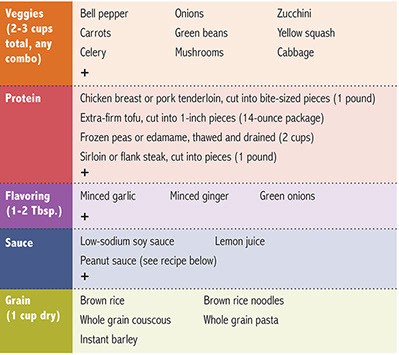
    Choose ingredients from the chart below. This recipe makes four servings.

    Chart of meal ideas, stir-fry.

    Peanut Sauce:In a small bowl, stir together ¼ cup peanut butter, 1/3 cup water, ¼ cup low-sodium soy sauce, 2 Tbsp. cider vinegar, and 4 tsp. sugar.

    Directions

    1. Cook grains. Follow package directions and set aside.

    2. If using meat: In a large skillet over medium heat, cook meat or poultry in 1 tablespoon canola or olive oil. Set aside.

    3. Add veggies to skillet, starting with harder veggies (these take longer to cook). Cook to desired softness. Add flavoring (garlic, ginger, or green onions). If adding tofu, peas, or edamame, add that now.

    4. Add sauce and cook for 1-2 more minutes. Stir in cooked meat.

    5. Serve over cooked grains.

    Meal Ideas: Soup

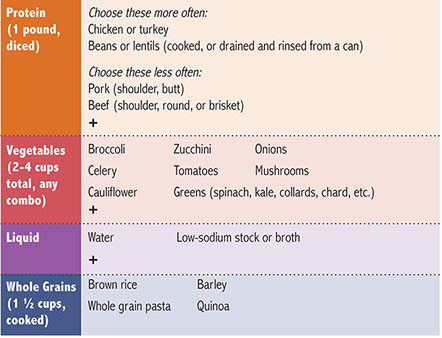
    Choose ingredients from the chart below. This recipe makes four servings.

    Chart of meal ideas, soup.

    Directions

    1. If using meat: Heat 1 Tbsp. of canola or olive oil in a soup pot. Add meat and cook for 5 minutes. If not using meat, skip this step.

    2. Add chosen vegetables and sauté for 5 minutes. If using frozen vegetables, thaw in the microwave first.

    3. Add liquid and beans or lentils (if using) and bring to a boil. Once boiling, reduce heat and simmer for 25-30 minutes. Stir occasionally.

    4. Add grains and seasonings. Cook for an additional 5 minutes.

    Snack Ideas: Trail Mix

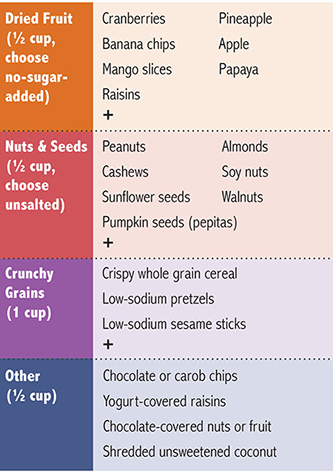
    Choose ingredients from the chart below. This recipe makes four servings.

    Chart of snack ideas, trail mix.

    © American Institute for Preventive Medicine
  • Scramble Your Daily Behaviors

    Healthylife® Weigh

    Part 4

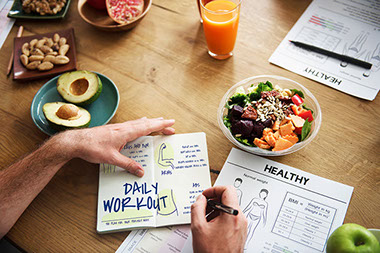
    Person writing in fitness notebook with healthy snacks on table.

    Changing how you go about your day can help get rid of eating cues and prepare you to establish new, healthy habits. Examples:

    *  Change the order of morning events: get up, shower, brush hair, eat breakfast, brush teeth, read paper, walk dog.

    *  Change the order of work events: take off coat, talk with co-workers, organize desk, review appointments or assignments, open email,  make calls.

    *  Alter driving routine: wear gloves, turn on/off radio, raise/lower volume, try listening to a new station, open/close windows, take a new route to work.

    *  Develop new telephone behavior. Stand instead of sit, hold phone with your opposite hand to your opposite ear, talk in a different room, walk as you talk.

    Be realistic.Allow time to establish a new habit. Some new habits are picked up quickly. Others may take several weeks or months of practice.

    Be consistent.Practice your new behaviors every day. This is how your new behavior will become a reliable habit.

    © American Institute for Preventive Medicine
  • Types Of Physical Activity

    Healthylife® Weigh

    Part 5

    Group of people doing power exercise at fitness studio.

    All exercise helps with stress management, heart health, and weight management. The more intense the activity, the more calories you burn.

    Combine different forms of physical activity to get the most benefit. This guide breaks physical activity into three categories:

    1. Cardio Training

    2. Resistance Training

    3. Stretching & Rehabilitation

    © American Institute for Preventive Medicine

  • Go With The Grain

    HEALTHY EATING

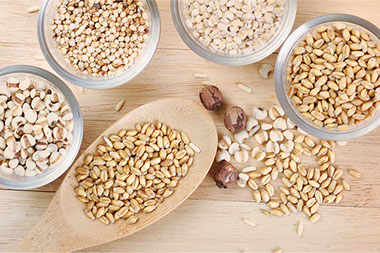
    Image of different grains.

    With one look down the grocery store aisle or a quick glance at a restaurant menu, it’s clear that whole-grain options are popping up everywhere. From quinoa to buckwheat and farro to freekeh, the number of grain possibilities is growing, leaving home cooks and diners puzzled by how to choose the right one and know how to prepare it.

    Not only do whole grains provide an array of health benefits, they can also be an excellent base for hearty dishes that taste great and are remarkably filling. Whether featured in a salad, formed into a patty as a vegetarian burger option, warmed up for breakfast, or used as the base of a thick stew, grains are extremely versatile and can be enjoyed as part of breakfast, lunch, dinner or dessert.

    Although cooking with grains can seem like a daunting task, the chef instructors at Le Cordon Bleu encourage home cooks to soak their long-cooking grains, whether for a few hours or overnight, to minimize the cooking time. This also ensures that any resin left on the grain that can cause a bitter taste will get washed off.

    They also suggest these cooking tips:

    *  Whole-grain options can be customized for each meal of the day. Make a big batch of steel-cut oats on Sunday evening and eat it for breakfast throughout the week. Add quinoa to lunchtime salads-add the dressing in advance so the grain fully absorbs the flavors of the dish. For dinner, add wheat berries or barley to soups for a hearty, filling meal.

    *  Resist the urge to stir grains as they are cooking. Stirring causes whole grains, especially rice, to become sticky and clump together, making it difficult to prepare a fluffy, flavorful dish.

    *  After they are cooked, whole grains stay fresh for several days in the refrigerator. You can cook a large pot of brown rice or quinoa at the beginning of the week and use it in dishes throughout the week to save cooking time.

    © American Institute for Preventive Medicine
  • Meatless Meals (Try It)

    HEALTHY EATING

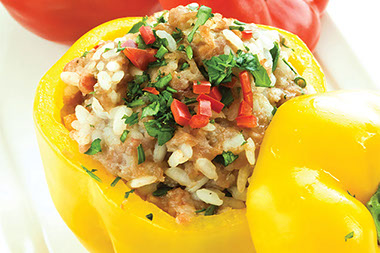
    Image of yellow and red peppers stuffed with rice and other vegetables.

    You don’t have to become a vegetarian to enjoy a meatless meal. Try working more meatless meals into your week, suggests the Recipe Doctor, Elaine Magee, MPH, RD, author of Food Synergy.

    *  Substitute a soy “meat” product for the meat ingredient in casseroles, stews, tacos, and chili.

    *  Break out a can of beans. They make great meal replacers because they’re super satisfying, with high amounts of protein and fiber. In a nice vegetable stew bursting with beans, you might not notice the meat is missing.

    *  Try a veggie potpie featuring potatoes, peas, mushrooms, and any other vegetables with vegetarian gravy and pie crust.

    *  Make Mexican dishes (burritos, nachos, enchiladas, for example) featuring beans and veggies instead of beef and chicken.

    *  Stir-fry Chinese cuisine with veggies and tofu and serve over rice or noodles.

    *  Stuff bell peppers with a mixture of rice with spices and vegetables plus vegetarian sausage, tofu, or beans to make the dish more satisfying.

    *  Layer lasagna with veggies instead of meat. Spinach replaces ground beef.

    *  A grilled Portobello mushroom can stand in for a burger on a bun.

    © American Institute for Preventive Medicine