Tag: vision

  • Cataracts Can Be Treated

    MEDICAL NEWS

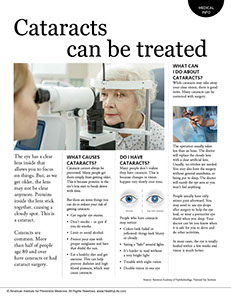
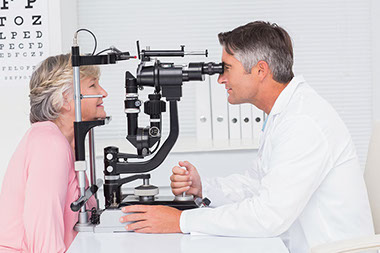
    Elderly women getting her eyes checked by a doctor.

    The eye has a clear lens inside that allows you to focus on things. But, as we get older, the lens may not be clear anymore. Proteins inside the lens stick together, causing a cloudy spot. This is a cataract.

    Cataracts are common. More than half of people age 80 and over have cataracts or had cataract surgery.

    What causes cataracts?

    Cataracts cannot always be prevented. Many people get them simply from getting older. This is because proteins in the eye’s lens start to break down with time.

    But there are some things you can do to reduce your risk of getting cataracts:

    *  Get regular eye exams.

    *  Don’t smoke – or quit if you do smoke.

    *  Limit or avoid alcohol.

    *  Protect your eyes with proper sunglasses and hats that shield the sun.

    *  Eat a healthy diet and get exercise. This can help prevent diabetes and high blood pressure, which may cause cataracts.

    Do I have cataracts?

    Many people don’t realize they have cataracts. This is because changes in vision happen very slowly over time.

    People who have cataracts may notice:

    *  Colors look faded or yellowed; things look blurry or cloudy

    *  Seeing a “halo” around lights

    *  It’s harder to read without a very bright light

    *  Trouble with night vision

    *  Double vision in one eye

    What can I do about cataracts?

    While cataracts may take away your clear vision, there is good news. Many cataracts can be corrected with surgery.

    The operation usually takes less than an hour. The doctor will replace the cloudy lens with a clear artificial lens. Usually, no stitches are needed. You may also have the surgery without general anesthesia, or being put to sleep. The doctor will numb the eye area so you won’t feel anything.

    People usually have only minor pain afterward. You may need to use eye drops after surgery to help the eye heal, or wear a protective eye shield when you sleep. Your doctor can let you know when it is safe for you to drive and do other activities.

    In most cases, the eye is totally healed within a few weeks and vision is much better.

    Sources: American Academy of Ophthalmology, National Eye Institute

    © American Institute for Preventive Medicine

  • Clear Facts On Eye Drops

    SELF-CARE CORNER

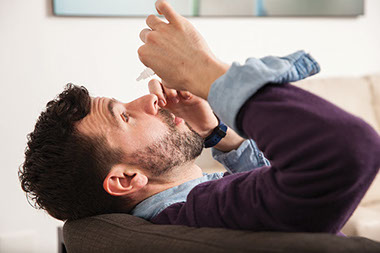
    Image of man placing eye drop in eye.

    Staring at a computer, dry winter air, cold temperatures, allergies, medications. A number of things can make eyes red, dry or uncomfortable.

    Many people turn to a bottle of eye drops for quick relief. But, if you use eye drops often, there are a few things you should know.

    Seeing red

    Redness relief eye drops contain an ingredient that shrinks blood vessels in the eye, giving you that bright-eyed effect. But, these drops can be harmful if you overuse them.

    Using redness drops frequently can cause a “rebound” effect, making the redness even worse. Then you feel like you have to use the drops more and more to control the redness.

    Don’t use redness relief drops on a regular basis. If your eyes are often red, you should see an eye care professional to get to the root cause.

    Artificial tears

    Artificial tear eye drops are generally safe to use regularly. They don’t contain any active ingredients. Instead, they are designed to mimic your own tears. These work well for occasional dryness or discomfort.

    Keep an eye on preservatives

    Many eye drops contain preservatives. These keep germs from growing in the drops. They allow you to use the same bottle of drops for a longer period of time.

    Some people find that the preservatives in eye drops make their eyes itchy or irritated. If you notice any burning or stinging after using eye drops, even artificial tears, stop using them.

    Preservative-free eye drops are available. These work well for people who are sensitive to preservatives. They are usually in small single-use vials that come in a pack. You use the vial once and throw it away.

    Eye health red flags

    The best way to keep eyes healthy is to see your eye health professional regularly. Ask your optometrist or ophthalmologist how often they should see you. It will depend on your age, any health issues and your eye health history.

    Call your eye professional right away if you notice:

    *  Pain or itching in the eye

    *  Redness that won’t go away

    *  Dry eyes that aren’t relieved with artificial tears

    *  Changes in vision, such as not seeing as well

    *  Cloudy or blurry vision

    *  Floaters or other spots in your vision

    Source: American Academy of Ophthalmology

    © American Institute for Preventive Medicine

  • Is Lasik Right For You?

    SELF-CARE CORNER

    Female getting her eyes examied.

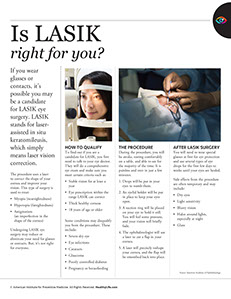
    If you wear glasses or contacts, it’s possible you may be a candidate for LASIK eye surgery. LASIK stands for laser-assisted in situ keratomileusis, which simply means laser vision correction.

    The procedure uses a laser to correct the shape of your cornea and improve your vision. This type of surgery is used to treat:

    *  Myopia (nearsightedness)

    *  Hyperopia (farsightedness)

    *  Astigmatism (an imperfection in the shape of the cornea)

    Undergoing LASIK eye surgery may reduce or eliminate your need for glasses or contacts. But, it’s not right for everyone.

    How to qualify

    To find out if you are a candidate for LASIK, you first need to talk to your eye doctor. They will do a comprehensive eye exam and make sure you meet certain criteria such as:

    *  Stable vision for at least a year

    *  Eye prescription within the range LASIK can correct

    *  Thick healthy corneas

    *  18 years of age or older

    Some conditions may disqualify you from the procedure. These include:

    *  Severe dry eye

    *  Eye infections

    *  Cataracts

    *  Glaucoma

    *  Poorly controlled diabetes

    *  Pregnancy or breastfeeding

    The procedure

    During the procedure, you will be awake, resting comfortably on a table, and able to see for the majority of the time. It is painless and over in just a few minutes.

    1.  Drops will be put in your eyes to numb them.

    2.  An eyelid holder will be put in place to keep your eyes open.

    3.  A suction ring will be placed on your eye to hold it still. You will feel some pressure, and your vision will briefly fade.

    4.  The ophthalmologist will use a laser to cut a flap in your cornea.

    5.  A laser will precisely reshape your cornea, and the flap will be smoothed back into place.

    After LASIK surgery

    You will need to wear special glasses at first for eye protection and use several types of eye drops for the first few days to weeks until your eyes are healed.

    Side effects from the procedure are often temporary and may include:

    *  Dry eyes

    *  Light sensitivity

    *  Blurry vision

    *  Halos around lights, especially at night

    *  Glare

    Source: American Academy of Ophthalmology

    © American Institute for Preventive Medicine

  • Keeping An Eye Out For Cataracts

    SELF-CARE CORNER

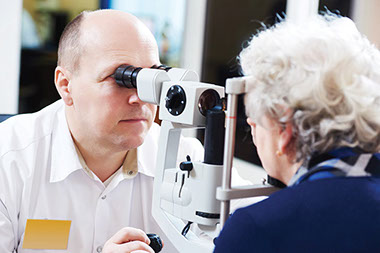
    Eye doctor examining patients eye.

    Most people will have cataracts by the age of 80. But they don’t have to mean loss of vision. They are treatable.

    What is a cataract?

    A normal lens inside the eye is clear. Cataracts happen when the proteins in the eye’s lens start to break down. Then they clump together. This causes cloudiness and problems with your vision.

    Cataracts may occur with normal aging. But they can also happen after an eye injury or if you had eye surgery.

    Signs of cataracts

    People often notice changes in vision when cataracts start to form. These changes include:

    *  Blurry or distorted vision

    *  Being sensitive to light

    *  Seeing a “halo” around lights

    *  Seeing double

    *  Trouble seeing at night or in dimly lit rooms

    *  Seeing colors as dull or yellow-tinted

    Prevention

    The best way to help prevent cataracts is with eye sun protection. Wear sunglasses that block out 100 percent of UV rays when you’re outside during the day. Not all sunglasses offer 100 percent UV protection. Check the packaging to be sure. Wear a wide-brimmed hat to keep sun off your face.

    Smoking increases the risk for cataracts, so quit smoking. Get help quitting if you need it.

    Finally, get a dilated eye exam regularly. Ask your eye care specialist or doctor how often you need one.

    Seeing a doctor

    If you think you might have cataracts, talk to a doctor. You may need an eye exam from an optometrist or ophthalmologist. During the exam, your eye care specialist can perform tests to look for cataracts.

    Treatment options

    If your doctor finds cataracts, don’t panic. There are ways to treat them.

    First, your doctor may recommend new glasses or contacts for mild symptoms. You may also find that using brighter lights or a magnifying lens is helpful for reading or working.

    If your cataracts are interfering with life, you may need surgery. Cataracts surgery involves putting a new artificial lens in the eye. It is a safe surgical procedure and works well for most people.

    Sources: American Academy of Ophthalmology, National Eye Institute

    © American Institute for Preventive Medicine

  • Keeping An Eye Out For Retinal Detachment

    SELF-CARE CORNER

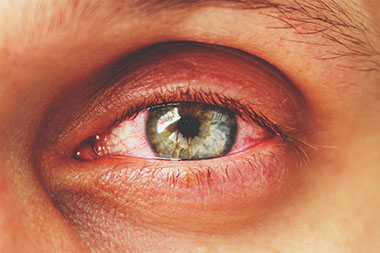
    Close up of eye.

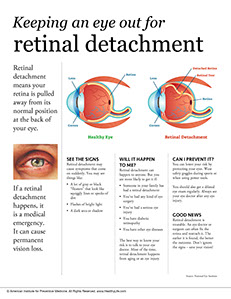
    Retinal detachment means your retina is pulled away from its normal position at the back of your eye. If a retinal detachment happens, it is a medical emergency. It can cause permanent vision loss.

    See the signs

    Retinal detachment may cause symptoms that come on suddenly. You may see things like:

    *  A lot of gray or black “floaters” that look like squiggly lines or specks of dirt

    *  Flashes of bright light

    *  A dark area or shadow

    Will it happen to me?

    Retinal detachment can happen to anyone. But you are more likely to get it if:

    *  Someone in your family has had a retinal detachment

    *  You’ve had any kind of eye surgery

    *  You’ve had a serious eye injury

    *  You have diabetic retinopathy

    *  You have other eye diseases

    The best way to know your risk is to talk to your eye doctor. Most of the time, retinal detachment happens from aging or an eye injury.

    Can I prevent it?

    You can lower your risk by protecting your eyes. Wear safety goggles during sports or when using power tools.

    You should also get a dilated eye exam regularly. Always see your eye doctor after any eye injury.

    Good news

    Retinal detachment is treatable. An eye doctor or surgeon can often fix the retina and reattach it. The earlier it is found, the better the outcome. Don’t ignore the signs – save your vision!

    Source: National Eye Institute

    © American Institute for Preventive Medicine

  • Shopping Around For Contact Lenses

    FINANCIAL HEALTH

    Contact case holder.

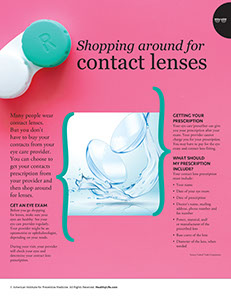
    Many people wear contact lenses. But you don’t have to buy your contacts from your eye care provider. You can choose to get your contacts prescription from your provider and then shop around for lenses.

    Get an eye exam

    Before you go shopping for lenses, make sure your eyes are healthy. See your eye care provider regularly. Your provider might be an optometrist or ophthalmologist, depending on your needs.

    During your visit, your provider will check your eyes and determine your contact lens prescription.

    Getting your prescription

    Your eye care prescriber can give you your prescription after your exam. Your provider cannot charge you for your prescription. You may have to pay for the eye exam and contact lens fitting.

    What should my prescription include?

    Your contact lens prescription must include:

    *  Your name

    *  Date of your eye exam

    *  Date of prescription

    *  Doctor’s name, mailing address, phone number and fax number

    *  Power, material, and/or manufacturer of the prescribed lens

    *  Base curve of the lens

    *  Diameter of the lens, when needed

    Source: Federal Trade Commission

    © American Institute for Preventive Medicine

  • Major Illness Warning Signs

    Medical Care

    It is better to prevent an illness than to get it. The next best thing is to detect and treat an illness early.

    Prevention

    *  Maintain a healthy body weight.

    *  Do regular exercise.

    *  Eat healthy.

    – Eat 5 or more servings of fruits and vegetables a day. Eat whole-grain breads, cereals, and bran. Eat kidney and other beans, peas, and soy foods, such as tofu.

    – Have 20 to 35 grams of dietary fiber a day.

    – Follow a low saturated fat diet. Strictly limit trans fats.

    – Limit cholesterol to 300 milligrams per day.

    – Eat salt-cured, salt-pickled, and smoked foods only once in a while, if at all.

    *  Limit alcohol to 2 drinks per day for men; 1 drink per day for women and persons age 65 and older.

    *  Don’t smoke or use tobacco products. Avoid secondhand smoke.

    *  Limit exposure to cancer causing agents, such as asbestos, pesticides, etc.

    *  Have X-rays only when needed.

    *  Limit your exposure to the sun, sun lamps, and tanning booths. When you are in the sun, protect your skin.

    *  Manage stress.

    *  Take the medicines your doctor prescribes.

    *  Talk to your doctor about taking vitamins, minerals, and other supplements.

    *  Have regular health screenings.

    *  Ask your doctor if there are other things you can do to lower your risk for health problems, especially if you are at a high risk for them. Examples include:

    – Breast cancer

    – Diabetes

    – Heart disease

    – High blood pressure

    – Osteoporosis

    – Stroke

    * Adults should also be screened for alcohol misuse, depression, obesity, and tobacco use. If you are at an increased risk for an illness, tests may need to be done sooner. Extra tests, such as screenings for diabetes, may also be needed. Follow your doctor’s advice.

    1. Screening guidelines vary with different health groups. For ages 40-49 and 75+, discuss your risk for breast cancer and the pros and cons of screening with your doctor. If you are at a high risk for breast cancer, seek expert medical advice about screening and prevention.

    2. Prostate-specific antigen (PSA) blood test screening guidelines vary with different health groups. Ask your doctor if and at what age you should start discussing the benefits and risks of getting PSA blood tests.

    Cancer

    When cancer first develops, there may be no pain or other signs. That’s why screening tests are important. As different types of cancers grow, warning signs may be present. These signs may be due to problems other than cancer, too. See your doctor to find out. In many cases, the sooner cancer is found and treated, the better the chances for a full recovery.

    For Bladder Cancer

    *  Blood in the urine. The color of the urine can be deep red or it can be a faint rust or smokey color.

    *  Pain when you urinate.

    *  The need to urinate often or urgently.

    For Breast Cancer

    *  A lump or thickening: In the breast; in the surrounding area; along the collar bone and below the breast; or in the underarm area.

    *  A change in the size or shape of the breast.

    *  A nonmilky or bloody discharge from the nipple.

    *  A change in the color or feel of the skin of the breast, nipple, or areola (the brown or pink area around the nipple). Dimpled, puckered, or scaly skin.

    For Colon and Rectal Cancers

    *  A change in bowel habits.

    *  Constipation. Having stools more often and/or loose stools.

    *  A feeling that the bowel does not empty all the way.

    *  Blood in or on the stool. This can be bright red or very dark in color.

    *  Stools that are more narrow than usual.

    *  Stomach bloating, fullness, and/or cramps.

    *  Frequent gas pains.

    *  Weight loss for no known reason.

    *  Constant tiredness.

    For Kidney Cancer

    *  Blood in the urine.

    *  A lump or mass that can be felt in the kidney area.

    *  A dull ache or pain in the back or side.

    *  An unexplained cough for more than 3 weeks.

    For Lung Cancer

    *  A cough that doesn’t go away. This could be a “smoker’s cough” that gets worse.

    *  Constant chest pain. Back pain in some persons.

    *  Hoarseness.

    *  Shortness of breath and wheezing.

    *  Recurring pneumonia or bronchitis.

    *  Coughing up blood.

    *  Fatigue, appetite loss and weight loss.

    *  Weakness in your shoulder, arm, or hand.

    For Ovarian Cancer

    Often, there are no early symptoms. When symptoms appear, they include:

    *  Swelling, bloated feeling, or discomfort in the lower abdomen.

    *  Feeling full even after a light meal. Loss of appetite and weight.

    *  Gas. Indigestion. Nausea.

    *  Diarrhea, constipation, or frequent urination.

    *  Bleeding from the vagina.

    Often, the cancer has spread by the time it is found.

    For Prostate Cancer

    Early prostate cancer often does not cause symptoms. When symptoms occur, they may include:

    *  A need to pass urine often, especially at night.

    *  A hard time starting to urinate, holding back urine, or not being able to pass urine.

    *  Weak or interrupted flow of urine.

    *  Pain or burning feeling when you pass urine.

    *  Pain when you ejaculate.

    *  Blood in the urine or semen.

    *  Frequent pain or stiffness in the lower back, hips, or upper thighs.

    For Testicular Cancer

    *  A lump in a testicle

    *  A feeling of heaviness in the scrotum

    *  A dull ache in the lower abdomen or groin

    *  A sudden build up of fluid in the scrotum

    *  Pain or discomfort in a testicle or the scrotum

    *  Enlarged or tender breasts

    Males aged 15 and older should do a testicular self-exam (TSE) if and as often as advised by their doctors to look for any lumps or changes in the size or shape of a testicle.

    For Throat Cancer

    *  Hoarseness or other changes in the voice

    *  A lump on the neck or feeling of a lump in the throat

    *  A cough that doesn’t go away

    *  A hard time swallowing. A feeling of fullness, pressure, or burning when swallowing.

    *  Repeated cases of indigestion and heartburn. Frequent vomiting or choking on food.

    *  Pain behind the breastbone or in the throat

    Basal and Squamous Cell Cancers

    *  Basal cell. More than 90% of all skin cancers in the U.S. are this type. It grows slowly. It seldom spreads to other parts of the body.

    *  Squamous cell. This type of skin cancer spreads more often than the basal cell type. It is still rare for it to spread, though.

    Basal and squamous cell cancers are found mainly on areas of the skin that are exposed to the sun, like the head, face, neck, hands, and arms. These skin cancers can occur anywhere, though.

    Early Warning Signs of Basal and Squamous Cell Cancers

    Small, smooth, shiny, pale, or waxy lump.

    Firm red lump.

    A lump that bleeds or develops a crust.

    A flat, red spot that is rough, dry, or scaly.

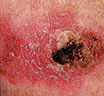
    Warning Signs of Melanoma

    The first sign can be a change in an existing mole or a new or “ugly-looking” mole. The letters “ABCDE” can identify signs.

    Skin Self-Exam

    *  Do an exam monthly, after a shower or bath. To check your skin, use:

    – A well-lit room

    – A full-length mirror

    – A hand-held mirror

    *  Locate your birthmarks, moles, and blemishes. Check for a change in the size, texture, or color of a mole. Check for a sore that does not heal.

    Check all areas.

    1.  Look at the front and back of your body in the mirror. Raise your arms and look at your left and right sides.

    2.  Bend your elbows and look carefully at the palms of your hands. Look at both sides of your forearms and upper arms.

    3.  Look at the back and front of your legs. Look between the buttocks and around the genital area.

    4.  Sit and closely examine your feet. Look at the soles and between the toes.

    5.  Look at your face, neck, and scalp. Use a comb to move your hair so you can see your scalp.

    See your doctor if you find anything unusual.

    Diabetes

    One in three people who have diabetes do not know they have it. See your doctor if you have one or more of the signs listed below.

    Signs of Diabetes:

    * Frequent urination

    * Excessive thirst

    * Extreme hunger

    * Unusual weight loss

    * Increased fatigue

    * Irritability

    * Blurry vision

    In type 1 diabetes, symptoms tend to come on quickly. With this type, the body either makes no insulin or only very small amounts.

    In type 2 diabetes, symptoms tend to come on more slowly. The body does not make enough insulin or can’t use it the right way. This type most often occurs in persons who are over age 40, are overweight, and who don’t exercise.

    Pre-diabetes occurs before type 2 diabetes. Getting diagnosed and treated for this can keep you from getting type 2 diabetes.

    Diabetes can be present without symptoms. Follow your doctor’s advice to screen for diabetes. Early detection and treatment lower the chances of diabetes complications.

    Heart Attack

    Heart Attack Warning Signs

    If heart attack warning signs occur, call 9-1-1 or your local rescue squad right away!

    See your doctor if you have one or more of these signs and symptoms:

    *  Chest discomfort. Most heart attacks involve discomfort in the center of the chest that lasts for more than a few minutes or goes away and comes back. The discomfort feels like pressure, fullness, squeezing or pain.

    *  Discomfort in other areas of the upper body. This can include pain or discomfort in one or both arms or in the back, neck, jaw, or stomach.

    *  Shortness of breath. Often, this comes with chest discomfort. But it can also come before the chest discomfort.

    *  Other symptoms. These can include breaking out in a cold sweat, nausea, or being lightheaded.

    The most common heart attack symptom for both men and women is chest pain or discomfort. But women are more likely than men to have some of the other common signs, especially shortness of breath, nausea or vomiting, and back or jaw pain.

    Lupus

    Lupus is an immune system disorder. It can affect the skin, joints, kidneys, and nervous system.

    Warning signs of lupus:

    *  Joints ache and swell for more than 3 months.

    *  Fingers get pale, numb, or ache in the cold temperatures.

    *  Mouth sores last for more than 2 weeks.

    *  Blood tests show: Anemia; low white cell count, or low platelet count; and/or protein in the urine.

    *  A rash occurs across the nose and cheeks. It lasts for more than 1 month.

    *  Skin rash (not sunburn) occurs after being in the sun.

    *  Pain lasts for more than 2 days when taking deep breaths.

    *  A seizure or convulsion occurs.

    Let your doctor know if you have or have had any of these warning signs. Having 3 or more of these signs may suggest lupus.

    Stroke

    Stroke Warning Signs

    *  Sudden numbness or weakness of the face, arm or leg, especially on one side of the body

    *  Sudden confusion, trouble speaking or understanding

    *  Sudden trouble seeing in one or both eyes

    *  Sudden trouble walking, dizziness, loss of balance or coordination

    *  Sudden severe headache with no known cause

    If stroke warning signs occur, call 9-1-1 or your local rescue squad right away!
    Cover image to the Major Illness Warnings brochure by the American Institute for Preventive Medicine. www.HealthyLife.com. All rights reserved.

    © American Institute for Preventive Medicine

  • The Importance Of Proper Eye Care

    SELF-CARE CORNER

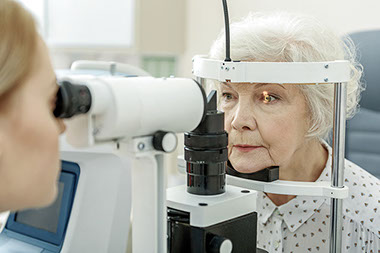
    Image of older women getting her eyes check by an eye doctor.

    Many people don’t think about their eyes until they start to hurt or develop a problem. But even if your eyes feel fine, they need proper care to keep them healthy. Follow the advice of the National Eye Institute:

    Get regular eye exams.

    Your doctor can recommend a schedule for you, depending on your age and other health factors. Many common eye diseases, such as glaucoma, diabetic eye disease and age-related macular degeneration, don’t have obvious symptoms. An eye exam can find these problems early, when they’re most treatable.

    Eat a healthy diet.

    Your eyes benefit from a diet rich in fruits, vegetables and omega-3 fatty acids. Talk with your doctor about the right diet for you.

    Keep them shaded.

    Wear sunglasses that have at least 99 percent UVA and UVB protection when you’re outside.

    Don’t smoke.

    Smoking hurts your health in many ways, including your sight. It increases your risk of eye problems that can lead to blindness. It’s never too late to quit. For free resources to help you quit, visitsmokefree.gov.

    Protect your eyes.

    Cover your face and eyes with goggles or a full-face mask when playing sports or doing work. Wear safety goggles when working with power tools and sharp objects. Follow your employer’s guidelines for wearing eye protection. Encourage your coworkers to do the same.

    Know your family history.

    If there are eye problems in your family, tell your doctor.

    © American Institute for Preventive Medicine

  • Under Pressure: What To Know About Glaucoma

    MEDICAL NEWS

    Image of eldery women getting her eyes checked.

    Glaucoma is a leading cause of blindness for people over 60, so it’s important to know what you can do about it.

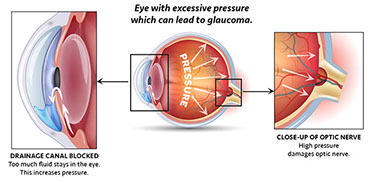
    Glaucoma happens when too much fluid builds up in the eye. This extra fluid causes pressure that damages the optic nerve. This damage cannot be undone once it happens. It can lead to loss of all or part of your vision. But, glaucoma can be managed and the damage to vision can be decreased with proper medical care.

    People at highest risk for glaucoma

    Anyone can get glaucoma. But certain groups of people may be more likely to get it, including:

    *  People with a family history of glaucoma

    *  African Americans over age 40

    *  Anyone over age 60, but Mexican Americans are especially at risk

    *  People who have high eye pressure, thin corneas or optic nerve problems

    *  People with high blood pressure that’s not well controlled

    Signs and symptoms

    Glaucoma often doesn’t have early signs and symptoms until damage has already been done. That’s why getting regular eye exams is so important. For many people, the first sign of glaucoma is loss of their peripheral (side) vision.

    Don’t assume you don’t have glaucoma because your eyes “feel fine.” Many people develop glaucoma without any symptoms.

    Illustration of eye with excessive pressure which can lead to glaucoma.

    What can you do about glaucoma?

    Glaucoma has no cure, but there are things you can do to slow it down and save your vision:

    *  If you have glaucoma, take your medicines every day. Ask your eye doctor how often you need to be seen, and stick to your appointments.

    *  Get a complete eye exam at least every 2 years or as often as recommended. This includes a dilated eye exam.

    *  Even if you don’t have glaucoma, ask your eye doctor about your risk. This includes telling your doctor about any family history of glaucoma.

    People with certain risk factors for glaucoma may be given special eye drops. These drops can lower the risk of getting glaucoma but they must be used regularly to be effective.

    If you are diagnosed with glaucoma, you and your doctor will discuss what treatment is best for you. It may depend on what type of glaucoma you have and how severe it is. Treatments may include:

    *  Eye drops that lower pressure in the eye

    *  Surgery done with a laser that helps the eye drain fluid better

    *  Traditional surgery that may include placing a new drainage tube in the eye

    Save your sight – see your eye doctor to get checked for glaucoma!

    Sources: American Academy of Ophthalmology, National Eye Institute

    © American Institute for Preventive Medicine

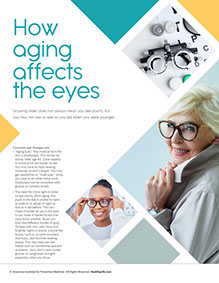
  • How Aging Affects The Eyes

    Eye Conditions

    Growing older does not always mean you see poorly. But you may not see as well as you did before. Common changes that affect your eyes are:

    *  “Aging Eyes.” The medical term for this is presbyopia (prez-bee-OH-pea-ah). This comes on slowly after age 40. Close objects or small print are harder to see. You may have to hold reading materials at arm’s length. You may get headaches or “tired eyes” while you read or do other close work. Presbyopia can be corrected with glasses or contact lenses.

    *  The need for more light in order to see clearly. With aging, the pupil in the eye is unable to open as wide or to adapt to light as fast as it did before. This can make it harder to see in the dark. It can make it harder to tell one color from another. Blues can look like different shades of gray. To help with this, add more and brighter lights in places around the house, such as at work counters, stairways, and favorite reading places. This may help you see better and can sometimes prevent accidents. Also, don’t wear tinted glasses or sunglasses at night, especially when you drive.

    Signs & Symptoms and What It Could Be

    Signs & Symptoms: Sudden loss of all or part of vision, especially in one eye with sudden weakness or numbness on one side.

    What It Could Be: Stroke

    What to Do: Get immediate care. Call 9-1-1.

    Signs & Symptoms: Vision loss after head or eye injury. Sudden vision loss or blurred vision, and seeing dark spots, or flashes of light all of a sudden.

    What It Could Be: Detached or torn retina.

    What to Do: Get immediate care.

    Signs & Symptoms: Severe pain in and above the eye. Eye redness, swollen upper eyelid. Dilated and fixed pupil. Very blurred vision, halos around lights.

    What It Could Be: Angle-closure glaucoma.

    What to Do: Get immediate care.

    Signs & Symptoms: Object or chemical in the eye.

    What It Could Be: Eye irritation or injury.

    See “Eye Irritations & Injuries” for more information.

    Signs & Symptoms: Gradual loss of side vision. Blurred vision. Halos around lights. Poor night vision.

    What It Could Be: Open-angle or chronic glaucoma.

    See “Glaucoma” for more information.

    Signs & Symptoms: Dark or blind spot in center of vision. Blurred or cloudy vision. Straight lines look wavy.

    What It Could Be: Macular degeneration.

    See “Macular Degeneration” for more information.

    Signs & Symptoms: Cloudy, fuzzy, foggy, or filmy vision. Halos around lights. Problems with glare from lamps or the sun.

    What It Could Be: Cataract.

    See “Cataracts” for more information.

    Signs & Symptoms: Pus discharge from the eye; the white of the eye and eyelid are red; crusting of the eyelid in the morning; feeling of sand in the eye

    What It Could Be: Conjunctivitis (“Pink Eye”).

    See “Conjunctivitis (Pink Eye)” for more information.

    Signs & Symptoms: Firm lump on eyelid or tender pimple on the edge of the eyelid.

    What It Could Be: Stye.

    See “Stye” for more information.

    Signs & Symptoms: Seeing spots, specks, wavy lines, or streaks of light.

    What It Could Be: Floaters and/or flashes.

    See “Floaters and/or flashes” for more information.

    Signs & Symptoms: Blurred vision when you look at close objects; headaches; eyestrain.

    What It Could Be: “Aging Eyes” or presbyopia.

    What to Do: Call eye doctor for an appointment and advice.

    Health at Home Lifetime book by the American Institute for Preventive Medicine. www.HealthyLife.com. All rights reserved.

    © American Institute for Preventive Medicine