Tag: vitality

  • Healthy Aging

    Mature Health: Over Age 50

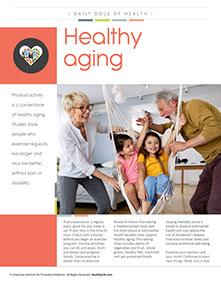
    Grandparents playing with 2 young grandkids.

    Physical activity is a cornerstone of healthy aging. Studies show people who exercise regularly live longer and may live better, without pain or disability.

    If you exercise on a regular basis, good for you! Keep it up! If not, now is the time to start. Check with a doctor before you begin an exercise program. Choose activities you can do and enjoy. Start out slowly and progress slowly. Some exercise is better than no exercise.

    Research shows that eating a Mediterranean-style diet has both physical and mental health benefits that support healthy aging. This eating style includes plenty of vegetables and fruit, whole grains, healthy fats, more fish and less processed foods.

    Staying mentally active is linked to physical and mental health and may reduce the risk of Alzheimer’s disease. Find ways to lower stress and increase emotional well-being.

    Exercise your memory and your mind. Continue to learn new things. Read. Join a club.
    Health at Home Lifetime book by the American Institute for Preventive Medicine. www.HealthyLife.com. All rights reserved.

    © American Institute for Preventive Medicine

  • Physical Health

    Healthylife® Weigh

    Part 5

    Male jogger with earphones.

    Stronger Muscles and Bones

    Muscles let you move, lift, and stretch. When you use your muscles, they get stronger so you can do everything from opening a door to smiling, chewing, and talking! Weight-bearing exercises, in particular, help bones become stronger. This helps prevent osteoporosis and fractures.

    Stronger muscles and bones will help you have good posture and keep your joints and body more naturally aligned.

    Improved Cardiovascular Health

    Heart Strength: Exercise strengthens your heart muscle. This means the heart can pump more blood per stroke and doesn’t require as many heartbeats to pump the same amount of blood. This makes your heart more efficient and lessens your risk of having a heart attack or blood clots.

    Cholesterol Levels: Exercise boosts high-density lipoprotein (HDL), or “good,” cholesterol and decreases unhealthy triglycerides. This helps to keep your blood flowing smoothly, decreasing your risk of cardiovascular disease. The more you exercise, the more your cholesterol levels will improve.

    Blood Pressure Control: Hormones that are released during exercise make blood vessels more elastic. This helps lower blood pressure.

    Improved Breathing

    Exercise improves your body’s ability to take in oxygen and transport and use oxygen throughout the body. This helps your muscles get the oxygen they need to be more efficient during exercise. With improved lung function, your ability to exercise longer (stamina) can increase! You’ll also be able to think more clearly throughout the day.

    Improved Immune System

    Exercise improves the circulation of immune cells in your blood that fight off viruses and bacteria. Exercise also helps combat damage done to cells, tissues, and organs.

    © American Institute for Preventive Medicine
  • 8 Commandments For Living Long And Living Well

    WELL-BEING

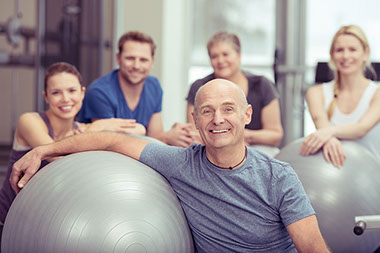
    Image of a group of people with exercise balls.

    You won’t live forever, but you can’t live like there’s no tomorrow, because tomorrow is coming. You can prepare for tomorrow today by making smart lifestyle choices or changing poor health habits-it’s never too late to do that, says Dr. Edward Creagan in his book How Not to Be My Patient: A Physician’s Secrets for Staying Healthy and Surviving Any Diagnosis. Here are Dr. Ed’s eight commandments:

    1. Form stable long-term relationships.

    2. Maintain ideal body weight.

    3. Eat a plant-based diet.

    4. Be active.

    5. No smoking.

    6. Use alcohol in moderation, if at all.

    7. Foster a sense of spirituality and a sense of connectedness to nature or your higher power or force.

    8. Find meaning and purpose in life.

    © American Institute for Preventive Medicine