Tag: vitamin D

  • Bone Up On Calcium & Vitamin D

    Nutrition

    Build and maintain healthy bones and teeth.

    Calcium and Vitamin D are two vital nutrients for bone health. They may also reduce the risk for cancer, heart disease, stroke, diabetes, and autoimmune diseases. Calcium is the most abundant mineral in the body. It is needed to support the structure of the teeth and bones. It is also important for the heart, muscles, and nerves to function properly and for blood to clot. Vitamin D is needed for calcium to be absorbed. Without enough Vitamin D and calcium, the body pulls calcium from the bones. This causes them to soften or become fragile.

    Sources for vitamin D:

    1.  Exposure to the sun’s ultraviolet B rays. Ten to 15 minutes of midday sunshine (without sunscreen) may meet daily needs.

    2.  Fish, such as salmon, tuna, and mackerel

    3.  Fortified foods, such as milk, cereals, orange juices, yogurts, and margarine

    Sources of calcium:

    The best sources of calcium are milk, yogurt, and cheese. Non dairy sources include vegetables, such as broccoli, Chinese cabbage, and kale. Some foods are fortified with calcium. These include cereals, many fruit juices, and tofu.

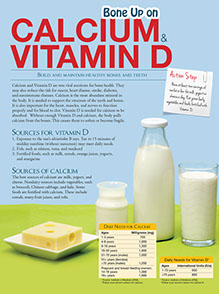
    Daily Needs for Calcium*

    Ages

    1-3 years

    4-8 years

    9-18 years

    19-50 years

    51-70 years (males)

    51+ years (females)

    >70 years (males)

    Pregnant and breast-feeding women:

    14-18 years

    19+ years

    Milligrams (mg)

    700

    1,000

    1,300

    1,000

    1,000

    1,200

    1,300

    1,000

    * Source: Institute of Medicine (IOM).

    * Follow your doctor’s advice for calcium.

    Daily Needs for Vitamin D*

    Ages

    1-70 years

    >70 years

    International Units (IUs)

    600

    800

    * Source: Institute of Medicine (IOM). The National Osteoporosis Foundation advises 400-800 IUs for adults under age 50 years; 800-1,000 IUs for adults age 50 years and older.

    * Follow your doctor’s advice for vitamin D.

    Action Step

    Have at least two servings of nonfat or low-fat milk, yogurt or cheese a day. Eat green leafy vegetables and foods fortified with Vitamin D.
    Page from Ways to Well-Being book by the American Institute for Preventive Medicine. www.HealthyLife.com. All rights reserved.

    © American Institute for Preventive Medicine

  • Mushrooms: Eat Your Fungi!

    HEALTHY EATING

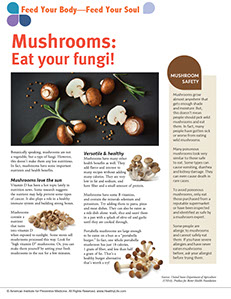
    Image of mushrooms.

    Botanically speaking, mushrooms are not a vegetable, but a type of fungi. However, this doesn’t make them any less nutritious. In fact, mushrooms have some important nutrients and health benefits.

    Mushrooms love the sun

    Vitamin D has been a hot topic lately in nutrition news. Some research suggests the nutrient may help prevent some types of cancer. It also plays a role in a healthy immune system and building strong bones.

    Mushrooms contain a nutrient that turns into vitamin D when exposed to sunlight. Some stores sell mushrooms processed this way. Look for “high vitamin D” mushrooms. Or, you can make them yourself by setting your fresh mushrooms in the sun for a few minutes.

    Versatile & healthy

    Mushrooms have many other health benefits as well. They add flavor and interest to many recipes without adding many calories. They are very low in fat and sodium, and have fiber and a small amount of protein.

    Mushrooms have some B vitamins, and contain the minerals selenium and potassium. Try adding them to pasta, pizza and meat dishes. They can also be eaten as a side dish alone: wash, slice and sauté them in a pan with a splash of olive oil and garlic until they are cooked through.

    Portabella mushrooms are large enough to be eaten on a bun as a “portabella burger.” In fact, one whole portabella mushroom has just 18 calories, 1 gram of fiber, and less than half a gram of fat. That’s a healthy burger alternative that’s worth a try!

    Mushroom safety

    Mushrooms grow almost anywhere that gets enough shade and moisture. But, this doesn’t mean people should pick wild mushrooms and eat them. In fact, many people have gotten sick or worse from eating wild mushrooms.

    Many poisonous mushrooms look very similar to those safe to eat. Some types can cause vomiting, diarrhea and kidney damage. They can even cause death in rare cases.

    To avoid poisonous mushrooms, only eat those purchased from a reputable supermarket or have been inspected and identified as safe by a mushroom expert.

    Some people are allergic to mushrooms and cannot safely eat them. If you have severe allergies and have never eaten mushrooms before, ask your allergist before trying them.

    Sources: United States Department of Agriculture (USDA), Produce for Better Health Foundation

    © American Institute for Preventive Medicine
  • Protect Your Bones

    SELF-CARE CORNER

    Image of women drinking a glass of milk.

    Bones feel solid, but the inside of a bone is actually filled with holes like a honeycomb. Bone tissues are broken down and rebuilt all the time. While some cells build new bone tissue, others dissolve bone and release the minerals inside, according to experts at NIH in Health.

    As we get older, we begin to lose more bone than we build. The tiny holes within bones get bigger, and the solid outer layer becomes thinner. In other words, our bones get less dense. Hard bones turn spongy, and spongy bones turn spongier. If this loss of bone density goes too far, it’s called osteoporosis. Over 10 million people nationwide are estimated to have osteoporosis.

    In bad accidents, it’s normal for bones to break. But if your bones are dense enough, they should be able to withstand most falls. Bones weakened by osteoporosis, though, are more likely to break.

    You can lower your risk of osteoporosis.

    Getting plenty of calcium, vitamin D, and exercise is a good start.

    *Calciumis a mineral that helps bones stay strong. It can come from the foods you eat-including milk and milk products, dark green leafy vegetables like kale and collard greens-or from dietary supplements.

    *Vitamin Dhelps your body absorb calcium. As you grow older, your body needs more vitamin D, which is made by your skin when you’re in the sun. You can also get vitamin D from dietary supplements and from certain foods, such as milk, egg yolks, saltwater fish, fortified milks and cereals, and cod liver oil.

    *Exercise,especially weight-bearing exercise, helps bones too. Weight-bearing exercises include jogging, walking, tennis, and dancing. The pull of muscles is a reminder to the cells in your bones that they need to keep the tissue dense.

    Smoking, in contrast, weakens bones. Heavy drinking does too-and makes people more likely to fall. Certain drugs may also increase the risk of osteoporosis. Having family members with osteoporosis can raise your risk for the condition as well.

    The good news

    Even if you already have osteoporosis, it’s not too late to start taking care of your bones. Since your bones are rebuilding themselves all the time, you can help push the balance toward more bone growth by giving them exercise, calcium, and vitamin D.

    © American Institute for Preventive Medicine

  • Are You Getting Enough Vitamin D?

    SELF-CARE CORNER

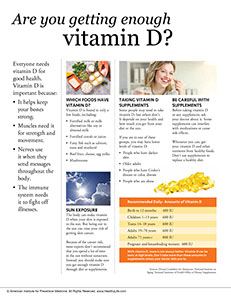
    Women holding a glass of water and a vitamin D pill.

    Everyone needs vitamin D for good health. Vitamin D is important because:

    *  It helps keep your bones strong.

    *  Muscles need it for strength and movement.

    *  Nerves use it when they send messages throughout the body.

    *  The immune system needs it to fight off illnesses.

    Which foods have vitamin D?

    Vitamin D is found in only a few foods, including:

    *  Fortified milk or milk alternatives like soy or almond milk

    *  Fortified cereals or juices

    *  Fatty fish such as salmon, tuna and mackerel

    *  Beef liver, cheese, egg yolks

    *  Mushrooms

    Sun exposure

    The body can make vitamin D when your skin is exposed to the sun. But being out in the sun can raise your risk of getting skin cancer.

    Because of the cancer risk, most experts don’t recommend that you spend a lot of time in the sun without sunscreen. Instead, you should make sure you get enough vitamin D through diet or supplements.

    Taking vitamin D supplements

    Some people may need to take vitamin D, but others don’t. It depends on your health and how much you get from your diet or the sun.

    If you are in one of these groups, you may have lower levels of vitamin D:

    *  People who have darker skin

    *  Older adults

    *  People who have Crohn’s disease or celiac disease

    *  People who are obese

    Recommended Daily- Amounts of Vitamin D

    Birth to 12 months: 400 IU

    Children 1-13 years: 600 IU

    Teens 14-18 years: 600 IU

    Adults 19-70 years: 600 IU

    Adults 71 years+: 800 IU

    Pregnant and breastfeeding women: 600 IU

    With vitamin D, more is not always better. Vitamin D can be toxic at high levels. Don’t take more than these amounts in supplements unless your doctor tells you to.

    Be careful with supplements

    Before taking vitamin D or any supplement, ask your doctor about it. Some supplements can interfere with medications or cause side effects.

    Whenever you can, get your vitamin D and other nutrients from healthy foods. Don’t use supplements to replace a healthy diet.

    Sources: Dietary Guidelines for Americans, National Institute on Aging, National Institutes of Health Office of Dietary Supplements

    © American Institute for Preventive Medicine