Tag: Vitamins & Supplements

  • Salt Can Shake Up Your Health

    Nutrition

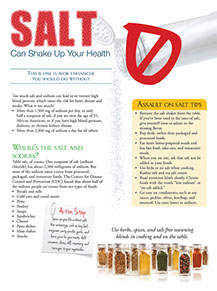
    Close up image of the top of a salt shaker.

    This is one flavor enhancer you should do without.

    Too much salt and sodium can lead to or worsen high blood pressure which raises the risk for heart disease and stroke. What is too much?

    *  More than 1,500 mg of sodium per day, or only half a teaspoon of salt, if you are over the age of 51, African American, or if you have high blood pressure, diabetes, or chronic kidney disease

    *  More than 2,300 mg of sodium a day for all others

    Where’s the salt and sodium?

    Table salt, of course. One teaspoon of salt (sodium chloride) has about 2,300 milligrams of sodium. But most of the sodium eaten comes from processed, packaged, and restaurant foods. The Centers for Disease Control and Prevention (CDC) found that about half of the sodium people eat comes from ten types of foods:

    *  Breads and rolls

    *  Cold cuts and cured meats

    *  Pizza

    *  Poultry

    *  Soups

    *  Sandwiches

    *  Cheese

    *  Pasta dishes

    *  Meat dishes

    *  Snacks

    Shake Salt Out of Your Diet

    Before refrigeration, salt served as a valuable way to preserve food. Unfortunately, in some people, high-sodium diets are linked to high blood pressure and an accumulation of fluid, called edema. (Salt is 40 percent sodium and 60 percent chlorine. Together they form sodium chloride.)

    The taste for salt is acquired, not inborn. So it’s possible to wean yourself off salt with no ill effects. We’ve already suggested you make salt-free soups. Here are some other ideas.

    *  Put away your salt shaker, and forget about using it while cooking or at the table.

    *  Use less seasoned salt, soy sauce, barbecue sauce, and other salty condiments.

    *  Buy only unsalted varieties of snack foods.

    *  Avoid foods prepared with salt brine like pickles, olives, or sauerkraut.

    *  Limit foods like smoked fish, kippered herring, anchovies, sardines, and caviar.

    *  Prepare meals from fresh ingredients instead of relying heavily on commercial products that contain salt or other sodium compounds.

    *  When dining out, ask that foods be made to order, with no salt.

    Assault on salt tips:

    *  Remove the salt shaker from the table. If you’ve been used to the taste of salt, give yourself time to adjust to the missing flavor.

    *  Buy fresh, rather than packaged and processed foods.

    *  Eat more home-prepared meals and less fast food, take-out, and restaurant meals.

    *  When you eat out, ask that salt not be added to your foods.

    *  Use little or no salt when cooking. Kosher salt and sea salt count.

    *  Read nutrition labels closely. Choose foods with the words “low sodium” or “no salt added.”

    *  Go easy on condiments, such as soy sauce, pickles, olives, ketchup, and mustard. Use ones lower in sodium.

    Action Step

    Spice up your life without salt. Use seasonings, such as bay leaf, marjoram, curry powder, garlic, and lemon juice for your meats. Add cinnamon, cloves, dill, rosemary, and tarragon to your vegetables.
    Page from Ways to Well-Being book by the American Institute for Preventive Medicine. www.HealthyLife.com. All rights reserved.

    © American Institute for Preventive Medicine
  • Eat Your Vitamins For Good Health

    HEALTHY EATING

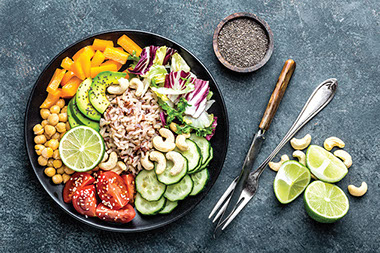
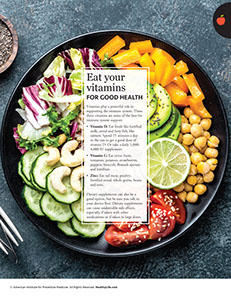
    Bowl of vegetables with rice and chickpeas.

    Vitamins play a powerful role in supporting the immune system. These three vitamins are some of the best for immune system support:

    *  Vitamin D: Eat foods like fortified milk, cereal and fatty fish, like salmon. Spend 15 minutes a day in the sun to get a good dose of vitamin D. Or take a daily 1,000-4,000 IU supplement.

    *  Vitamin C: Eat citrus fruits, tomatoes, potatoes, strawberries, peppers, broccoli, Brussels sprouts and kiwifruit.

    *  Zinc: Eat red meat, poultry, fortified cereal, whole grains, beans and nuts.

    Dietary supplements can also be a good option, but be sure you talk to your doctor first. Dietary supplements can cause undesirable side effects, especially if taken with other medications or if taken in large doses.

    © American Institute for Preventive Medicine
  • Foods With Magnesium

    HEALTHY EATING

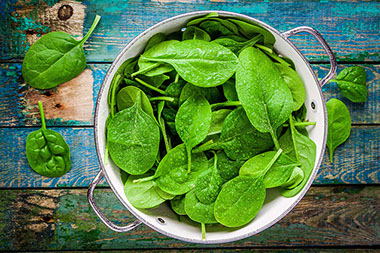
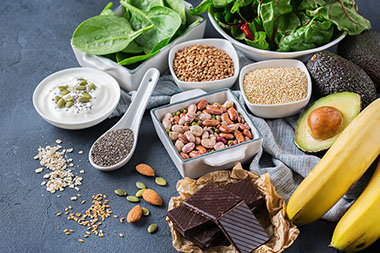
    Image of spinach.

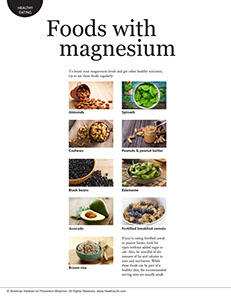
    To boost your magnesium levels and get other healthy nutrients, try to eat these foods regularly:

    *  Almonds

    *  Spinach

    *  Cashews

    *  Peanuts & peanut butter

    *  Black beans

    *  Edamame

    *  Avocado

    *  Fortified breakfast cereals

    *  Brown rice

    If you’re eating fortified cereal or peanut butter, look for types without added sugar or salt. Also, be mindful of the amount of fat and calories in nuts and nut butter. While these foods can be part of a healthy diet, the recommended serving sizes are usually small.

    © American Institute for Preventive Medicine
  • Is Sea Salt Better Than Regular Salt?

    HEALTHY EATING

    A salt bottle opened with spilled salt.

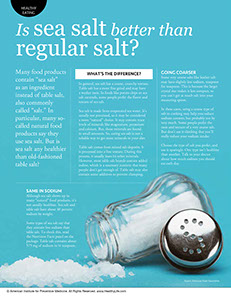
    Many food products contain “sea salt” as an ingredient instead of table salt, also commonly called “salt.” In particular, many so-called natural food products say they use sea salt. But is sea salt any healthier than old-fashioned table salt?

    What’s the difference?

    In general, sea salt has a coarse, crunchy texture. Table salt has a more fine grind and may have a weaker taste. In foods like potato chips or sea salt caramels, some people prefer the flavor and texture of sea salt.

    Sea salt is made from evaporated sea water. It’s usually not processed, so it may be considered a more “natural” choice. It may contain trace levels of minerals like magnesium, potassium and calcium. But, these minerals are found in small amounts. So, eating sea salt is not a reliable way to get more minerals in your diet.

    Table salt comes from mined salt deposits. It is processed into a fine texture. During this process, it usually loses its other minerals. However, most table salt brands contain added iodine, which is a necessary nutrient that many people don’t get enough of. Table salt may also contain some additives to prevent clumping.

    Same in sodium

    Although sea salt shows up in many “natural” food products, it’s not usually healthier. Sea salt and table salt have about 40 percent sodium by weight.

    Some types of sea salt say that they contain less sodium than table salt. To check this, read the Nutrition Facts panel on the package. Table salt contains about 575 mg of sodium in ¼ teaspoon.

    Going coarser

    Some very coarse salts like kosher salt may have slightly less sodium, teaspoon for teaspoon. This is because the larger crystal size makes it less compact, so you can’t get as much salt into your measuring spoon.

    In these cases, using a coarse type of salt in cooking may help you reduce sodium content, but probably not by very much. Some people prefer the taste and texture of a very coarse salt. But don’t use it thinking that you’ll really reduce your sodium intake.

    Choose the type of salt you prefer, and use it sparingly. One type isn’t healthier than another. Talk to your doctor about how much sodium you should eat each day.

    Source: American Heart Association

    © American Institute for Preventive Medicine
  • Magnificent Magnesium

    HEALTHY EATING

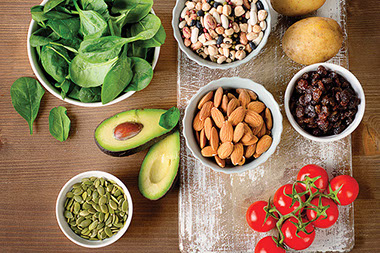
    Image of magnesium food sources.

    Magnesium plays a role in more than 300 functions in the body. It is needed for muscle and nerve function, bone health, blood sugar control and regulating blood pressure. We also need magnesium to release energy in our body.

    Long-term low levels of magnesium could be linked to certain health problems like migraine headaches, osteoporosis, type 2 diabetes and high blood pressure. This doesn’t mean magnesium can cure these diseases. It also doesn’t mean that low magnesium is the only cause. Many factors are involved with these health conditions. Researchers are still working to learn how magnesium is connected to these health conditions.

    Today’s foods & magnesium

    The recommended dietary allowance (RDA) for magnesium is 320 mg for women and 420 mg for men. Most people get their magnesium from food.

    But, some researchers believe that levels of magnesium in foods may be getting lower. Also, magnesium is not found in most processed or packaged foods. That’s why it’s recommended to get the magnesium your body needs by eating healthy foods.

    People with type 2 diabetes or digestive diseases may have a higher risk of not getting enough magnesium. In addition, certain medicines can cause depletion of magnesium. These medicines include:

    *  Loop diuretics, including furosemide and bumetanide

    *  Thiazide diuretics, including hydrochlorothiazide and ethacrynic acid

    *  Proton pump inhibitors (PPIs), including esomeprazole magnesium and lansoprazole

    If you take these medicines, your doctor may talk to you about your magnesium levels and whether you need extra magnesium.

    Should I take a supplement?

    There are many different types of magnesium supplements. Some do not absorb in the body very well. High doses of magnesium supplements can cause diarrhea, nausea, and stomach cramps. Extremely high doses can also be toxic.

    Magnesium can also interact with certain medicines. If you take any of the following medicines, do not take magnesium supplements within two hours of taking your medication:

    *  Biophosphonates like alendronate, which treat osteoporosis

    *  Antibiotics including tetracyclines and quinolones

    However, getting magnesium from healthy foods does not cause these side effects. If you’re interested in a supplement, always ask your doctor first to be sure it’s safe for you.

    Source: National Institutes of Health

    © American Institute for Preventive Medicine
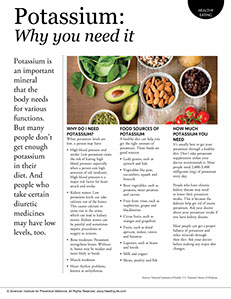
  • Potassium: Why You Need It

    HEALTHY EATING

    A varity of foods high in potassium.

    Potassium is an important mineral that the body needs for various functions. But many people don’t get enough potassium in their diet. And people who take certain diuretic medicines may have low levels, too.

    Why do I need potassium?

    When potassium levels are low, a person may have:

    *  High blood pressure and stroke: Low potassium raises the risk of having high blood pressure, especially when a person eats high amounts of salt (sodium). High blood pressure is a major risk factor for heart attack and stroke.

    *  Kidney stones: Low potassium levels can take calcium out of the bones. This causes calcium to come out in the urine, which can lead to kidney stones. Kidney stones can be painful and sometimes require procedures or surgery to remove.

    *  Bone weakness: Potassium strengthens bones. Without it, bones may be weaker and more likely to break.

    *  Muscle weakness

    *  Heart rhythm problems, known as arrhythmias

    Food sources of potassium

    A healthy diet can help you get the right amount of potassium. These foods are good sources:

    *  Leafy greens, such as spinach and kale

    *  Vegetables like peas, cucumbers, squash and broccoli

    *  Root vegetables, such as potatoes, sweet potatoes and carrots

    *  Fruit from vines, such as raspberries, grapes and blackberries

    *  Citrus fruits, such as oranges and grapefruit

    *  Fruits, such as dried apricots, melon, raisins and bananas

    *  Legumes, such as beans and lentils

    *  Milk and yogurt

    *  Meats, poultry and fish

    How much potassium you need

    It’s usually best to get your potassium through a healthy diet. Don’t take potassium supplements unless your doctor recommends it. Most people need 2,600-3,400 milligrams (mg) of potassium every day.

    People who have chronic kidney disease may need to lower their potassium intake. This is because the kidneys help get rid of excess potassium. Ask your doctor about your potassium intake if you have kidney disease.

    Most people can get a proper balance of potassium and other minerals through their diet. Ask your doctor before making any major diet changes.

    Sources: National Institutes of Health, U.S. National Library of Medicine

    © American Institute for Preventive Medicine
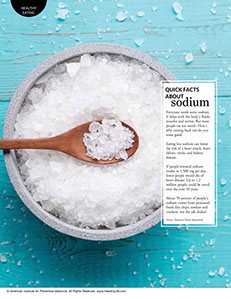
  • Quick Facts About Sodium

    HEALTHY EATING

    A bowl filled with salt and a wooden spoon.

    Everyone needs some sodium. It helps with the body’s fluids, muscles and nerves. But most people eat too much. Here’s why cutting back can do you some good:

    Eating less sodium can lower the risk of a heart attack, heart failure, stroke and kidney disease.

    If people lowered sodium intake to 1,500 mg per day, fewer people would die of heart disease. Up to 1.2 million people could be saved over the next 10 years.

    About 70 percent of people’s sodium comes from processed foods like chips, cookies and crackers, not the salt shaker!

    Source: American Heart Association

    © American Institute for Preventive Medicine
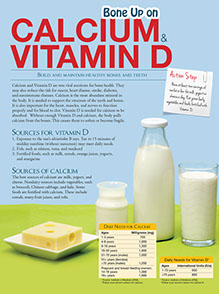
  • Bone Up On Calcium & Vitamin D

    Nutrition

    Build and maintain healthy bones and teeth.

    Calcium and Vitamin D are two vital nutrients for bone health. They may also reduce the risk for cancer, heart disease, stroke, diabetes, and autoimmune diseases. Calcium is the most abundant mineral in the body. It is needed to support the structure of the teeth and bones. It is also important for the heart, muscles, and nerves to function properly and for blood to clot. Vitamin D is needed for calcium to be absorbed. Without enough Vitamin D and calcium, the body pulls calcium from the bones. This causes them to soften or become fragile.

    Sources for vitamin D:

    1.  Exposure to the sun’s ultraviolet B rays. Ten to 15 minutes of midday sunshine (without sunscreen) may meet daily needs.

    2.  Fish, such as salmon, tuna, and mackerel

    3.  Fortified foods, such as milk, cereals, orange juices, yogurts, and margarine

    Sources of calcium:

    The best sources of calcium are milk, yogurt, and cheese. Non dairy sources include vegetables, such as broccoli, Chinese cabbage, and kale. Some foods are fortified with calcium. These include cereals, many fruit juices, and tofu.

    Daily Needs for Calcium*

    Ages

    1-3 years

    4-8 years

    9-18 years

    19-50 years

    51-70 years (males)

    51+ years (females)

    >70 years (males)

    Pregnant and breast-feeding women:

    14-18 years

    19+ years

    Milligrams (mg)

    700

    1,000

    1,300

    1,000

    1,000

    1,200

    1,300

    1,000

    * Source: Institute of Medicine (IOM).

    * Follow your doctor’s advice for calcium.

    Daily Needs for Vitamin D*

    Ages

    1-70 years

    >70 years

    International Units (IUs)

    600

    800

    * Source: Institute of Medicine (IOM). The National Osteoporosis Foundation advises 400-800 IUs for adults under age 50 years; 800-1,000 IUs for adults age 50 years and older.

    * Follow your doctor’s advice for vitamin D.

    Action Step

    Have at least two servings of nonfat or low-fat milk, yogurt or cheese a day. Eat green leafy vegetables and foods fortified with Vitamin D.

    Page from Ways to Well-Being book by the American Institute for Preventive Medicine. www.HealthyLife.com. All rights reserved.

    © American Institute for Preventive Medicine
  • Chocolate Milk May Be The Best-Kept Secret

    HEALTHY EATING

    Image of young boy drinking chocolate milk.

    Chocolate milk may be the best-kept secret for making sure kids get the calcium they need every day. Contrary to popular myths, chocolate milk is nutrient-rich, adds only a few more calories and not much caffeine, and is kids’ number-one flavor pick. Kids have a limited time to build up their “bone bank.” The calcium in chocolate milk is one way to assure timely deposits, according to the National Dairy Council.

    © American Institute for Preventive Medicine
  • Get Your Iron In The Kitchen!

    HEALTHY EATING

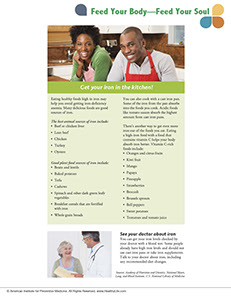
    Image of couple in the kitchen.

    Eating healthy foods high in iron may help you avoid getting iron-deficiency anemia. Many delicious foods are good sources of iron.

    The best animal sources of iron include:

    *  Beef or chicken liver

    *  Lean beef

    *  Chicken

    *  Turkey

    *  Oysters

    Good plant food sources of iron include:

    *  Beans and lentils

    *  Baked potatoes

    *  Tofu

    *  Cashews

    *  Spinach and other dark green leafy vegetables

    *  Breakfast cereals that are fortified with iron

    *  Whole grain breads

    You can also cook with a cast iron pan. Some of the iron from the pan absorbs into the foods you cook. Acidic foods like tomato sauces absorb the highest amount from cast iron pans.

    There’s another way to get even more iron out of the foods you eat. Eating a high-iron food with a food that contains vitamin C helps your body absorb iron better. Vitamin C-rich foods include:

    *  Oranges and citrus fruits

    *  Kiwi fruit

    *  Mango

    *  Papaya

    *  Pineapple

    *  Strawberries

    *  Broccoli

    *  Brussels sprouts

    *  Bell peppers

    *  Sweet potatoes

    *  Tomatoes and tomato juice

    See your doctor about iron

    You can get your iron levels checked by your doctor with a blood test. Some people already have high iron levels and should not use cast iron pans or take iron supplements. Talk to your doctor about iron, including any recommended diet changes.

    Sources: Academy of Nutrition and Dietetics, National Heart, Lung, and Blood Institute, U.S. National Library of Medicine

    © American Institute for Preventive Medicine