
Tag: volume

  • Be Kind To Your Voice

    WORK LIFE

    Man smiling.

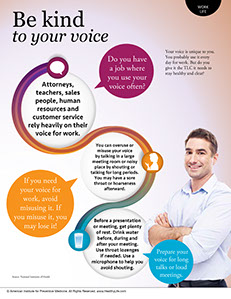
    Your voice is unique to you. You probably use it every day for work. But do you give it the TLC it needs to stay healthy and clear?

    Do you have a job where you use your voice often?

    Attorneys, teachers, sales people, human resources and customer service rely heavily on their voice for work.

    If you need your voice for work, avoid misusing it. If you misuse it, you may lose it!

    You can overuse or misuse your voice by talking in a large meeting room or noisy place by shouting or talking for long periods. You may have a sore throat or hoarseness afterward.

    Prepare your voice for long talks or loud meetings.

    Before a presentation or meeting, get plenty of rest. Drink water before, during and after your meeting. Use throat lozenges if needed. Use a microphone to help you avoid shouting.
    © American Institute for Preventive Medicine

  • Like It Loud? Your Ears Don’T

    WELL-BEING

    Image of man listening to music with headphones.

    What do a lawn mower, a motorcycle, and a music player have in common? They can all cause permanent hearing loss.

    Many people assume that only extremely loud sounds, such as gunshots, can damage the ears. But any loud noise, such as power tools, headphones turned up too loud, lawn equipment, or a concert, can lead to hearing loss. This is known as noise-induced hearing loss.

    Noise-induced hearing loss often happens gradually, so you don’t realize the damage that’s being done over time. For instance, being around loud machinery every day or listening to loud music in earphones regularly can cause hearing damage that adds up. The National Institutes of Health states that 26 million Americans between the ages of 20 and 69 have hearing loss caused by excessive noise.

    The Centers for Disease Control and Prevention (CDC) says anything over 85 decibels can damage hearing. The louder it is, the faster it can cause hearing loss if used regularly and/or for long periods. Normal conversation is 60 decibels, and a hair dryer is around 90.

    Save your hearing

    The best way to prevent noise-induced hearing loss is to avoid loud noises whenever you can. But, this may not be possible if your job requires you to be around certain equipment. If you can’t avoid it, always wear proper hearing protection. This includes earplugs and/or ear muffs that have a noise reduction rating (NRR) listed.

    If you notice you have trouble hearing, talk to your doctor.

    © American Institute for Preventive Medicine

  • Too Loud

    SELF-CARE CORNER

    Image of workers wearing proper safety glasses and headphones while working on machinery.

    Noise-induced hearing loss is the only type of hearing loss you can prevent. If you understand the hazards of noise and how to practice good hearing health, you can protect your hearing for life. Here’s how:

    *  Know which noises can cause damage (those at or above 85 decibels, such as a motorcycle).

    *  If you can’t reduce the noise or protect yourself from it, move away from the source.

    *  Wear earplugs or other protective devices when involved in a loud activity, even Zumba class (activity-specific earplugs and earmuffs are available at hardware and sporting goods stores).

    *  Be alert to hazardous noises in the environment.

    *  Protect the ears of children who are too young to protect their own.

    *  Have your hearing tested if you think you might have hearing loss.

    About sound

    Sound is measured in units called decibels. Sounds of less than 75 decibels, even after long exposure, are unlikely to cause hearing loss. But long or repeated exposure to sounds at or above 85 decibels can cause hearing loss. The louder the sound, the shorter the amount of time it takes for hearing loss to happen.

    © American Institute for Preventive Medicine