Tag: walk

  • Get Up & Move After Work

    WORK LIFE

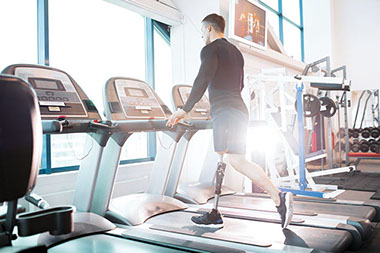
    Man with amputee leg using the treadmill.

    If you’re like many people, you may already be sitting for several hours each day at work. And this could be harming your health. Sitting for long periods is linked to health problems and even a shorter life.

    We can’t always control how much we sit at work. But we can take steps toward better health outside of those hours. Here’s what you can do to get moving in your time away from your job.

    Your prime time

    Been sitting at a desk all day? After work can be a great time to get in some activity. Some people enjoy an exercise class or going to the gym before dinner.

    But if you can’t manage one of these things, don’t give up. Even a short walk is helpful. Go after dinner if you don’t have time before then. Some exercise is always better than not doing any exercise.

    Try using your usual TV or screen time each night to go for a walk or work out to an exercise video.

    Don’t forget lunch

    Want to squeeze in more activity? You can also use your lunch break to break up your sitting time. Try taking a walk throughout your building or head outside.

    You don’t have to do all your exercise at once. Breaking up your exercise into 10-minute chunks offers health benefits. Even 10 minutes a day of activity can add two years to your life expectancy. Thirty minutes of activity a day adds four years or more.

    Try the same thing with any work break. Even a 15-minute break is long enough to get your body moving.

    What if I’m just too tired?

    If you find that you are tired every night after work, it may be time to look at your sleep habits. Are you getting seven to eight hours? If not, try to find ways to make sleep a priority.

    If you’re getting enough sleep but still feel tired, talk with your doctor. Sleep disorders and certain health issues can cause fatigue. Getting your energy back is an important step toward becoming more physically active.

    Source: National Institutes of Health
    © American Institute for Preventive Medicine
  • Quick Healthy Heart Habits

    WELL-BEING

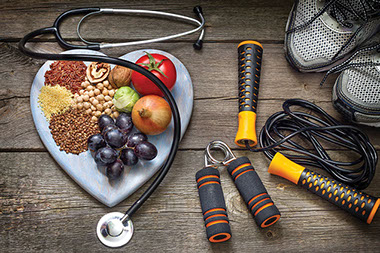
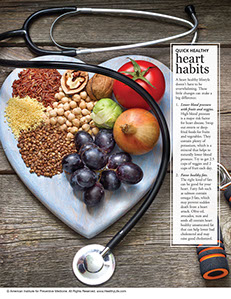
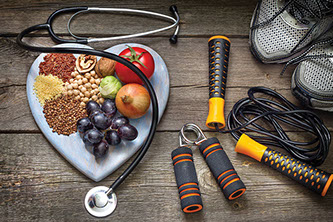
    Image of heart plate with heart healthy foods and fitness gear.

    A heart healthy lifestyle doesn’t have to be overwhelming. These little changes can make a big difference:

    1.  Lower blood pressure with fruits and veggies. High blood pressure is a major risk factor for heart disease. Swap out sweets or deep-fried foods for fruits and vegetables. They contain plenty of potassium, which is a mineral that helps to naturally lower blood pressure. Try to get 2.5 cups of veggies and 2 cups of fruit each day.

    2.  Favor healthy fats. The right kind of fats can be good for your heart. Fatty fish such as salmon contain omega-3 fats, which may prevent sudden death from a heart attack. Olive oil, avocados, nuts and seeds all contain heart healthy unsaturated fat that can help lower bad cholesterol and may raise good cholesterol.

    © American Institute for Preventive Medicine
  • Walk For Well-Being

    Fitness

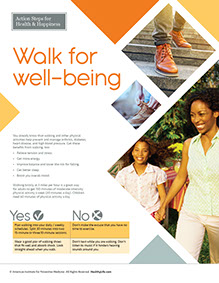
    Mother and daughter walking.

    You already know that walking and other physical activities help prevent and manage arthritis, diabetes, heart disease, and high blood pressure. Get these benefits from walking, too:

    *  Relieve tension and stress.

    *  Get more energy.

    *  Improve balance and lower the risk for falling.

    *  Get better sleep.

    *  Boost you overall mood.

    Walking briskly at 3 miles per hour is a great way for adults to get 150 minutes of moderate-intensity physical activity a week (30 minutes a day). Children need 60 minutes of physical activity a day.

    *  Plan walking into your daily / weekly schedules. Split 30 minutes into two 15-minute or three 10-minute sessions.

    *  Wear a good pair of walking shoes that fit well and absorb shock. Look straight ahead when you walk.

    *  Don’t make the excuse that you have no time to exercise.

    *  Don’t text while you are walking. Don’t listen to music if it hinders hearing sounds around you.

    Page from HealthyLife Weigh book by the American Institute for Preventive Medicine. www.HealthyLife.com. All rights reserved.

    © American Institute for Preventive Medicine
  • How To Make The Most Of Your Lunch Break

    WORK LIFE

    Image of co-workers having lunch.

    It can be tempting to skip your lunch break if you’re swamped. But taking a midday break can renew your energy and productivity through the afternoon and into the evening. Try these tips to make the most of your break:

    *Plan your afternoon.If you’re stressed about work, make a quick list of what you want to accomplish. If there’s too much to do and not enough time, determine which things are top priority and which can wait.

    *Get up from your workspace.A change of scenery can refresh you, even if it’s only for a few minutes. Staying in the same place all day can leave you feeling burned out.

    *Stop thinking about work.Take a few moments, if you can, to take a deep breath and do something you enjoy. That might be listening to a song, a quick walk outside, or having lunch with a friend.

    Lunch break naps: good or bad?

    If you get a 30 or 60 minute lunch break, should you nap during this time? The National Sleep Foundation says you can consider it. Be sure you:

    *  Keep the midday nap to 20 minutes or less.

    *  Keep it early in the day. Late afternoon or early evening naps could make it hard to fall asleep at night.

    If you find that napping interferes with your nighttime sleep, skip it. It’s more important to get good sleep at night.

    © American Institute for Preventive Medicine