Tag: walking

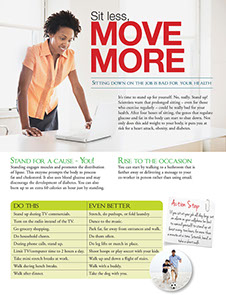
  • Sit Less, Move More

    Fitness

    Image of generational famiy running and walking at the park.

    Sitting down on the job is bad for your health.

    It’s time to stand up for yourself. No, really. Stand up! Scientists warn that prolonged sitting – even for those who exercise regularly – could be really bad for your health. After four hours of sitting, the genes that regulate glucose and fat in the body can start to shut down. Not only does this add weight to your body, it puts you at risk for a heart attack, obesity, and diabetes.

    Stand for a cause – You!

    Standing engages muscles and promotes the distribution of lipase. This enzyme prompts the body to process fat and cholesterol. It also uses blood glucose and may discourage the development of diabetes. You can also burn up to an extra 60 calories an hour just by standing.

    Rise to the occasion.

    You can start by walking to a bathroom that is farther away or delivering a message to your co-worker in person rather than using email.

    Do This

    Stand up during TV commercials.

    Turn on the radio instead of the TV.

    Go grocery shopping.

    Do household chores.

    During phone calls, stand up.

    Limit TV/computer time to 2 hours a day.

    Take mini stretch breaks at work.

    Walk during lunch breaks.

    Walk after dinner.

    Even Better

    Stretch, do pushups, or fold laundry.

    Dance to the music.

    Park far, far away from entrances and walk.

    Do them often.

    Do leg lifts or march in place.

    Shoot hoops or play soccer with your kids.

    Walk up and down a flight of stairs.

    Walk with a buddy.

    Take the dog with you.

    Action Step

    If you sit at your job all day long, set an alarm on your cellphone (on low) to remind yourself to stand up at least every two hours for more than a minute at a time. Stretch, bend, or take a short walk.
    Page image from the Ways to Well-Being book by the American Institute for Preventive Medicine. www.HealthyLife.com. All rights reserved.

    © American Institute for Preventive Medicine
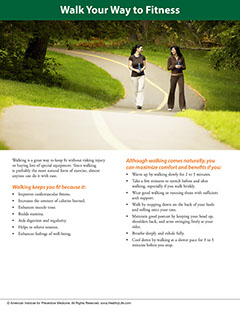
  • Walk Your Way To Fitness

    Fitness

    Image of couple power walking.

    Walking is a great way to keep fit without risking injury or buying lots of special equipment. Since walking is probably the most natural form of exercise, almost anyone can do it with ease.

    Walking keeps you fit because it:

    *  Improves cardiovascular fitness.

    *  Increases the amount of calories burned.

    *  Enhances muscle tone.

    *  Builds stamina.

    *  Aids digestion and regularity.

    *  Helps to relieve tension.

    *  Enhances feelings of well-being.

    Although walking comes naturally, you can maximize comfort and benefits if you:

    *  Warm up by walking slowly for 2 to 3 minutes.

    *  Take a few minutes to stretch before and after walking, especially if you walk briskly.

    *  Wear good walking or running shoes with sufficient arch support.

    *  Walk by stepping down on the back of your heels and rolling onto your toes.

    *  Maintain good posture by keeping your head up, shoulders back, and arms swinging freely at your sides.

    *  Breathe deeply and exhale fully.

    *  Cool down by walking at a slower pace for 3 to 5 minutes before you stop.

    Page image from A Year of Health Hints book by the American Institute for Preventive Medicine. www.HealthyLife.com. All rights reserved.

    © American Institute for Preventive Medicine
  • Step Up To A Longer Life

    WELL-BEING

    Elderly couple walking.

    Could something as simple as walking help you live longer? Some recent research says it’s possible. Here’s what to know:

    1.  Researchers had 17,000 older women wear a device each day to count their steps.

    2.  They tracked the women for four years.

    3.  Those who took between 4,400 and 7,500 steps each day were less likely to die during those four years.

    4.  Walking more than 7,500 steps is also good for your health!

    Researchers said this is helpful for people who may think that 10,000 steps is overwhelming. Try to walk 4,400 steps or more each day, and you could see some important health benefits.

    Sources: Journal of the American Medical Association, National Institutes of Health

    © American Institute for Preventive Medicine

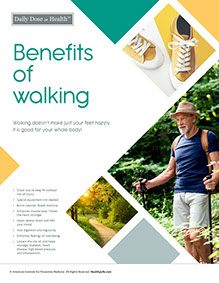
  • Benefits Of Walking

    Fitness

    Couple hiking through trees with walking sticks.

    Walking doesn’t make just your feet happy. It is good for your whole body!

    *  Great way to keep fit without risk of injury.

    *  Special equipment not needed.

    *  Burns calories. Builds stamina.

    *  Enhances muscle tone. Makes the heart stronger.

    *  Helps relieve stress and lifts your mood.

    *  Aids digestion and regularity.

    *  Enhances feelings of well-being.

    *  Lowers the risk of, and helps manage, diabetes, heart disease, high blood pressure, and osteoporosis.

    Page from HealthyLife Weigh book by the American Institute for Preventive Medicine. www.HealthyLife.com. All rights reserved.

    © American Institute for Preventive Medicine

  • Smart Ways To Exercise During Pregnancy

    Pregnancy & Prenatal Care

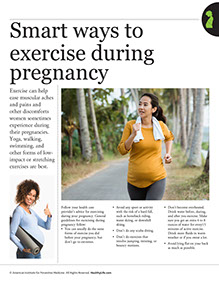
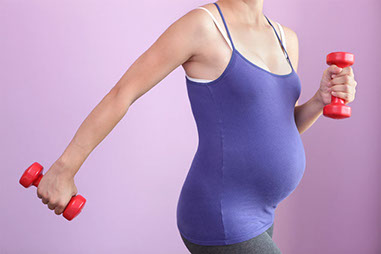
    Image of pregnant women exercising with dumb bells.

    Exercise can help ease muscular aches and pains and other discomforts women sometimes experience during their pregnancies. Yoga, walking, swimming, and other forms of low-impact or stretching exercises are best.

    Follow your health care provider’s advice for exercising during your pregnancy. General guidelines for exercising during pregnancy follow:

    *  You can usually do the same forms of exercise you did before your pregnancy, but don’t go to extremes.

    *  Check your pulse when you exercise. In general, your heart rate should stay below 140 beats a minute.

    *  Avoid any sport or activity with the risk of a hard fall, such as horseback riding and water skiing.

    *  Don’t do exercises that involve jumping, twisting, or bouncy motions.

    *  Don’t become overheated. Drink water before, during, and after you exercise. Make sure you get an extra 4 to 8 ounces of water for every 15 minutes of active exercise. Drink more fluids in warm weather or if you sweat a lot.

    *  After the 20th week of pregnancy, avoid exercises in which you lie flat on your back.

    A Year of Health Hints book by the American Institute for Preventive Medicine. www.HealthyLife.com. All rights reserved.

    © American Institute for Preventive Medicine
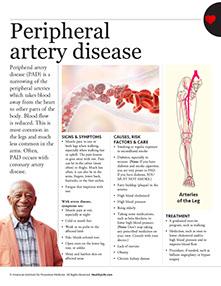
  • Peripheral Artery Disease

    Heart & Circulation Problems

    Peripheral artery disease (PAD) occurs when blood vessels outside of the heart become too narrow to supply enough oxygen to the limbs. Blood flow is reduced. This is most common in the legs and much less common in the arms. Often, PAD occurs with coronary artery disease.

    Signs & Symptoms

    *  Muscle pain in one or both legs when walking, especially when walking fast or uphill. The pain lessens or goes away with rest. Pain can be in the calves (most often) or thighs. Much less often, it can also be in the arms, fingers, lower back, buttocks, or the foot arches.

    *  Fatigue that improves with rest

    With severe disease, symptoms are:

    *  Muscle pain at rest, especially at night

    *  Cold or numb feet

    *  Weak or no pulse in the affected limb

    *  Pale, bluish-colored toes

    *  Open sores on the lower leg, toes, or ankles

    *  Shiny and hairless skin on affected areas

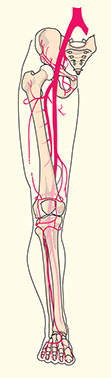
    Illustration of arteries of the leg.

    Arteries of the Leg

    Causes, Risk Factors & Care

    *  Smoking

    *  Diabetes, especially in women. {Note: If you have diabetes and smoke cigarettes, you are very prone to peripheral vascular disease. If you have diabetes, YOU MUST NOT SMOKE.}

    *  Fatty buildup (plaque) in the arteries High cholesterol

    *  High blood pressure

    *  Being elderly

    *  Taking some medications, such as beta- blockers, to lower high blood pressure. {Note: Don’t stop taking any prescribed medicines on your own. Consult with your doctor.}

    *  Agent Orange exposure

    Treatment for peripheral artery disease includes:

    *  A graduated exercise program, such as walking.

    *  Medicines, such as ones to lower cholesterol and/or high blood pressure and to improve blood flow

    *  Surgery, if needed, such as balloon angioplasty or bypass surgery

    Prevention

    *  Don’t smoke. If you smoke, quit.

    *  Do regular exercise.

    *  Get to and/or stay at a healthy weight.

    *  Follow a diet low in saturated fat and cholesterol.

    Self-Care

    *  Follow measures under “Prevention” in this topic.

    *  Follow a graduated walking program as advised by your doctor.

    *  Take medicines as prescribed.

    *  Take good care of your feet:

    – Check the feet daily.

    – Don’t walk barefoot.

    – Wear comfortable, roomy shoes. Avoid sandals and high heels.

    – Cut toenails straight across. Do not cut nails close to the skin.

    – Use an antifungal foot powder to avoid athlete’s foot.

    When to Seek Medical Care

    Contact Doctor When:

    *  You have any pain, redness, or a leg or foot wound and you have a history of diabetes or peripheral vascular disease.

    *  The pain, redness, and swelling extend up the ankle to the leg.

    *  The skin of your foot has turned grayish to black in color.

    *  Repeated muscle pain occurs in a leg when you walk and it goes away with rest.

    *  Leg pain occurs when you are at rest.

    Get Immediate Care When:

    You have all of these problems:

    *  Sudden onset of pain

    *  Rapid skin color changes: white, red, blue, grayish, or black

    *  You cannot feel sensation in your foot for the first time.

    Health at Home Lifetime book by the American Institute for Preventive Medicine. www.HealthyLife.com. All rights reserved.

    © American Institute for Preventive Medicine

  • Every Step Helps

    BE FIT

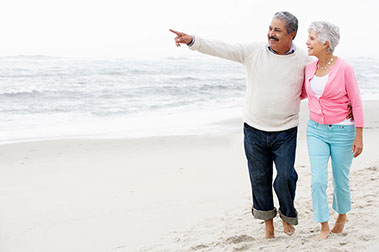
    Image of older Hispanic couple walking on the beach.

    You know exercising is great for you, but it’s hard to find time to do it. If going to the gym sounds impossible, why not walk? Research says that walking for just 30 minutes each day will improve your health. For those who are really short on time, you can even break those 30 minutes up. Walk for 10 minutes, three times a day – and you’re getting health benefits.

    The National Institutes of Health says regular exercise like walking can:

    *  Improve high blood pressure

    *  Lower your risk of heart disease

    *  Strengthen muscles and bones

    *  Improve type 2 diabetes

    *  Give you more energy

    *  Help you manage stress

    *  Reduce feelings of depression

    With exercise, every step helps. You don’t need fancy equipment or even a gym membership to get healthier – and you can start today.

    © American Institute for Preventive Medicine
  • Miles To Go

    WELL-BEING

    Image of a glass of soda.

    Would you choose that soda if you were told how many miles you needed to walk to burn off the calories?

    You’d choose a lower calorie drink if you saw signs explaining how many miles you would need to walk to burn off the calories in that sugary drink. Research at Johns Hopkins, reported in the American Journal of Public Health, found that simply showing calories is not enough to change bad eating habits.

    But when calories are tied to miles of walking, then behavior changes.

    Teens who shopped in neighborhood stores in Baltimore were presented facts on signs about various soft drinks. Researchers found that the teens who saw the signs either bought lower-sugar choices or smaller bottles.

    A typical 20-oz. soda or sports drink has 16 teaspoons of SUGAR and would take 50 minutes of RUNNING or 5 MILES of WALKING for a 110-pound adolescent to burn off the calories.

    © American Institute for Preventive Medicine
  • Practically Free Ways To Get Fit

    BE FIT

    Image of women listening to head phones while dancing.

    “Can’t afford to get fit” is one of the top excuses people give when asked why they don’t exercise. That’s about as logical as saying, “I can’t drive because I can’t afford a Mercedes.” Here are penny-wise ways to get fit from University of Alberta exercise experts:

    *  Walk. Most people walk 4,000 to 5,000 steps per day anyway. Aim to add more steps in your daily activities.

    *  Use a pedometer to help keep track of your steps. You can get one for about $10, but sometimes health fairs give them away free.

    *  Take the stairs every chance you get, even if it’s only one flight.

    *  Don’t use your children as an excuse not to exercise. Take them along for a walk or run in a stroller, wagon, or on a bike.

    *  Turn on your radio and dance up a storm for 20 to 30 minutes in the privacy of your own home.

    *  Use the lowest stair or stairs in your home and create your own step workout.

    *  Turn your canned goods into weights. Or pour sand or water into empty milk bottles to create weights.

    *  Grab a chair or the kitchen counter and do some push-ups, squats and leg lifts.

    *  Pair a favorite TV show with some sit-ups. Just hook your toes under the sofa. Stand up and jog during commercials.

    *  Got rope? Jump it for a total body workout.

    *  Check with your company wellness program, community league or local rec center for any exercise classes, walking clubs, or team sports you can join.

    *  Go for a walk or just stand by your workstation and stretch for 5 to 10 minutes every hour.

    © American Institute for Preventive Medicine