Tag: Weight Control

  • Control Portion Sizes

    Weight Control

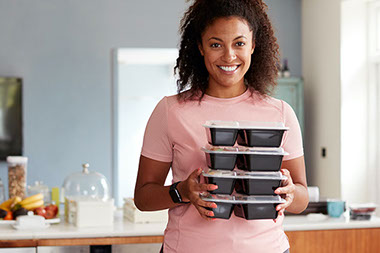
    Smiling women holding 4 pre-prepped meals.

    It’s all about portion control!

    *  First, learn how much food you need. Get a personalized MyPlate Plan atmyplate.gov/eat-healthy/what-is-myplatethat identifies how many cups, ounces, etc. of different foods you should eat for your daily needs.

    *  Use measuring cups, spoons, etc.

    *  Estimate portions. One cup of cereal is about the size of 2 hands, cupped. Three ounces of meat is about the size of a computer mouse. One Tbsp. is the size of 1 thumb.

    *  Limit second helpings, especially of foods high in fat and sugar.

    Page from HealthyLife Weigh book by the American Institute for Preventive Medicine. www.HealthyLife.com. All rights reserved.

    © American Institute for Preventive Medicine

  • New Year, New You

    Weight Control

    Smiling man.

    Take action now to reach your resolution to lose weight.

    *  Set an exercise goal you can reach. For example, by the end of this month, I will walk at least 20 minutes a day, five days a week.

    *  When you reach a goal, give yourself a nonfood reward, such as a new workout video or a new lunch bag.

    *  Substitute water for sweetened beverages.

    *  Eat fruits and veggies for snacks instead of candy, chips, and cookies.

    Action Step:Chew food slowly to give your body time to send a signal to your brain that you’ve had enough. You’ll enjoy your food more and eat less.

    Choose foods that won’t sabotage your goals.

    Page from HealthyLife Weigh book by the American Institute for Preventive Medicine. www.HealthyLife.com. All rights reserved.

    © American Institute for Preventive Medicine

  • Relaxation Reflex 2

    Healthylife® QuitWell™

    Part 4

    Image of several people doing yoga.

    This skill involves relaxing 4 basic muscle groups. Tightening and releasing the muscles produces a soothing effect which helps you relax. Taking slow deep breaths and dropping the head and shoulders forward add to the effect.

    Practice every day for about 5-10 minutes. Divide the body into 4 muscle groups. Tense each group for 5-10 seconds, then release.

    *Arms and Hands– Lift arms, bend wrists and elbows, make fists, tighten upper arms.

    *Face and Neck– Squinch eyes, nose, cheeks, and brows, stretch mouth and grit teeth, point chin down toward chest.

    *Middle Torso– Push shoulders back, tighten stomach and small of back.

    *Legs and Feet– Lift legs off floor, hold straight out, point toes toward face, tighten thighs.

    When I will try this?

    (After) How did your body feel after this activity?

    (After) How did your stress level change after this activity?

    Practice this strategy regularly. It may not help you the first time you try it, but the next time it might. As you get better at it, it may become even more helpful to you.

    © American Institute for Preventive Medicine

  • Develop Supermarket Savvy

    Weight Control

    A successful weight-control effort begins with smart food purchases. Here’s how to maneuver your way through the supermarket and also stay in control of your weight.

    *  Plan your low-fat meals and snacks in advance, then, using a list, shop only for what you need.

    *  Stay away from the aisles where pastries, potato chips, candies, or other potential problem foods are located.

    *  Shop for food after you’ve eaten, not when you’re hungry. You’ll choose food based on clear thinking, not hunger pangs.

    *  Choose fresh foods and vegetables over processed foods, which can deliver unwanted calories in the form of sauces and thickeners.

    *  Don’t try to rationalize buying high-calorie snack foods for others in the household. Having them around may very well undermine your weight-control efforts.

    *  Beware of high-calorie foods that, although advertised as “specials,” don’t do your diet any special favor.

    Selecting Snacks under 100 Calories

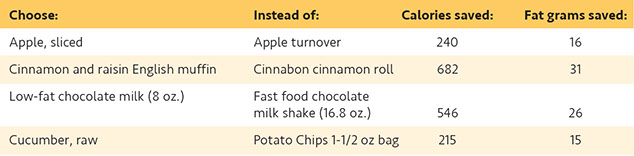
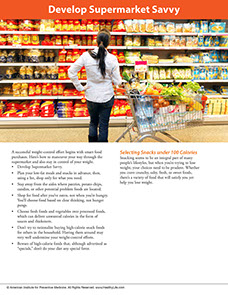
    Snacking seems to be an integral part of many people’s lifestyles, but when you’re trying to lose weight, your choices need to be prudent. Whether you crave crunchy, salty, fresh, or sweet foods, there’s a variety of food that will satisfy you yet help you lose weight. The table below lists 25 snacks that are all less than 100 calories each!

    Page from A Year of Health Hints book by the American Institute for Preventive Medicine. www.HealthyLife.com. All rights reserved.

    © American Institute for Preventive Medicine

  • Painless Ways To Eat Less Without Starving

    Weight Control

    It’s not always what you eat that determines whether or not you lose weight. Sometimes, small changes in the way you eat can help eliminate those extra pounds. Try these suggestions.

    *  Eat smaller amounts of food more often, and eat at least half of your intake earlier in the day (to increase your metabolism). You’ll burn off more calories that way. (Eat no more than six times a day-including snacks-however.)

    *  Use small plates, so portions look larger.

    *  Put less food on your fork or spoon, and take smaller bites. Chew slowly, and pause between mouthfuls.

    *  Wait 10 minutes before snacking. (The urge might pass.) Don’t prepare snacks for other people.

    *  If you feel like binge eating, put on tight clothes-it will discourage you.

    *  Choose more high-fiber and high-water foods like celery, watermelon, and plain popcorn. (You get more to eat without eating very many calories.)

    *  Mentally imagine yourself thinner–it’ll keep you going.

    *  Keep low-calorie snacks easily available.

    *  Never skip breakfast.

    *  Don’t eat anything after dinner.

    *  Brush your teeth after every meal. (You’ll be less inclined to continue nibbling.)

    *  Eat only if you feel relaxed to avoid “nervous munching.”

    *  Take the light bulb out of your refrigerator–it will cut down on “search-and-consume” forays.

    *  Drink lots of water every day, to suppress appetite.

    *  Never starve yourself all day in order to eat a special dinner. (You’ll be more likely to overeat.)

    Page from A Year of Health Hints book by the American Institute for Preventive Medicine. www.HealthyLife.com. All rights reserved.

    © American Institute for Preventive Medicine

  • Stages Of Change 2

    Healthylife® QuitWell™

    Part 1

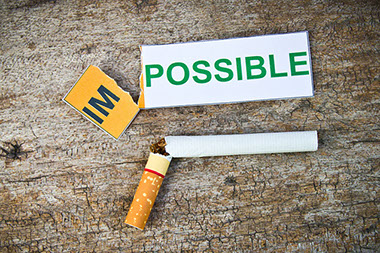
    Broken cigarette with a paper ripped to spell Possible from Impossible.

    This program does not assume you are ready to change. Or, you may be ready to make certain changes but not others. Other changes you may not have even thought of yet! The tools and strategies in this guide are designed to help you move forward through the stages of change.

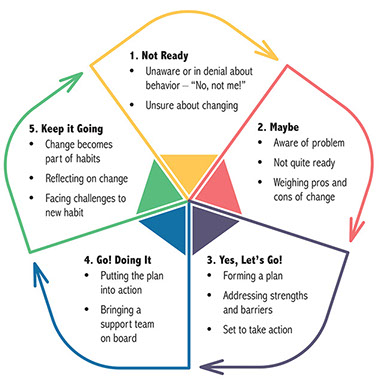
    Using the diagram below, consider which stage you are at. What best describes where you are at today?

    Diagram showing the different stages of quitting.

    © American Institute for Preventive Medicine

  • Exercise Your Calories Away

    Weight Control

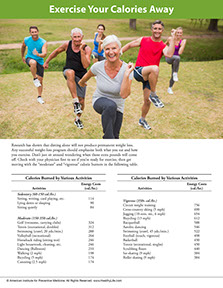
    Research has shown that dieting alone will not produce permanent weight loss. Any successful weight-loss program should emphasize both what you eat and how you exercise. Don’t just sit around wondering when those extra pounds will come off. Check with your physician first to see if you’re ready for exercise, then get moving with the “moderate” and “vigorous” calorie burners in the following table.

    Page from A Year of Health Hints book by the American Institute for Preventive Medicine. www.HealthyLife.com. All rights reserved.

    © American Institute for Preventive Medicine

  • Portion Control

    Weight Control

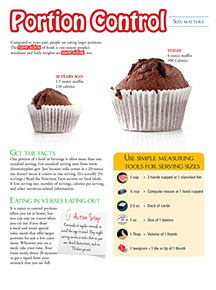
    Size matters.

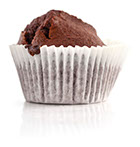
    Image of a small muffin size from 20 years ago.
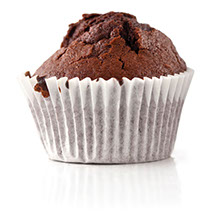
    Image of large muffin served today.

    Compared to years past, people are eating larger portions. The super-sizing of foods is one reason people’s waistlines and body weights are super-sizing , too.

    20 years ago:

    1.5 ounce muffin

    210 calories

    Today:

    4 ounce muffin

    500 Calories

    Get the facts

    One portion of a food or beverage is often more than one standard serving. Get standard serving sizes fromwww.choosemyplate.gov. Just because soda comes in a 20-ounce size doesn’t mean it counts as one serving. (It’s actually 2½ servings.) Read the Nutrition Facts section on food labels. It lists serving size, number of servings, calories per serving, and other nutrition-related information.

    Eating in verses eating out

    It is easier to control portions when you eat at home, but you can stay on course when you eat out if you share a meal and avoid special value meals that offer larger portions for just a few cents more. Wherever you eat a meal, take your time. Your brain needs about 20 minutes to get a signal from your stomach that you are full.

    Use simple measuring tools for serving sizes:

    1 cup = 2 hands cupped or 1 clenched fist

    ½ cup = Computer mouse or 1 hand cupped

    2-3 oz. =  Deck of cards

    1 oz. = Size of 1 domino

    1 Tbsp. = Volume of 1 thumb

    1 teaspoon = 1 die or tip of 1 thumb

    Action Step

    Eat meals at regular intervals to avoid the urge to snack. Buy single-serving snacks or make them on your own. Avoid distractions, such as TV when you eat.

    Page from Ways to Well-Being book by the American Institute for Preventive Medicine. www.HealthyLife.com. All rights reserved.

    © American Institute for Preventive Medicine

  • Use The L.A.D.D.E.R. Technique 2

    Healthylife® QuitWell™

    Part 5

    Image of two friends talking.

    This is a step-by-step way to become more assertive.

    L:Look at your needs, wants, rights, and feelings about the situation.

    A:Arrange a meeting that is convenient for you and the other person to talk.

    D:Define the problem clearly to the other person.

    D:Describe your feelings using “I messages.” I message statements let you take charge of your feelings. The other person is less likely to get defensive.

    E:Express your needs and desires in an assertive manner using a few clear sentences. Be aware of your eye contact, hand gestures, posture, voice, and facial expression.

    R:Reinforce your remarks by saying what positive outcomes will occur for you and the other person.

    Example:

    L:I could use support from my close co-worker while I’m quitting vaping and I don’t want him to give me a hard time.

    A:I’ll arrange to speak to him first thing tomorrow.

    D:“Jack, I’m trying to quit and can really benefit from your support. I want to be able to take breaks with you, but it’s tough for me to do that if you offer me your vape.”

    D:“I feel like I could really achieve my goal with your help. Quitting is really important to me.”

    E:“I would like to take a walk with you instead of vaping, if you will join me. Or, we’ll have to catch up after work. Standing next to you while you vape is tough for me right now.”

    R:“I love getting away from hectic stuff at work by taking a break with you. I think taking a walk will help us both clear our heads and feel more ready to tackle the rest of the day.”

    © American Institute for Preventive Medicine

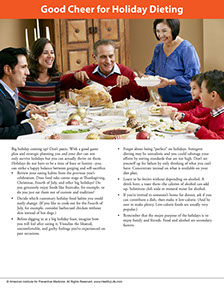
  • Good Cheer For Holiday Dieting 2

    Weight Control

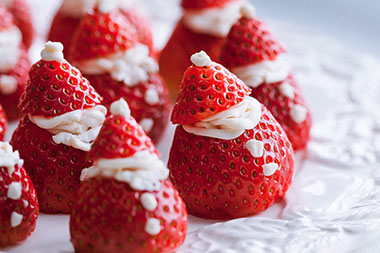
    Image of holiday inspired strawberries.

    Big holiday coming up? Don’t panic. With a good game plan and strategic planning you and your diet can not only survive holidays but you can actually thrive on them. Holidays do not have to be a time of feast or famine-you can strike a happy balance between gorging and self-sacrifice.

    *  Review your eating habits from the previous year’s celebration. Does food take center stage at Thanksgiving, Christmas, Fourth of July, and other big holidays? Do you genuinely enjoy foods like fruitcake, for example, or do you just eat them out of custom and tradition?

    *  Decide which customary holiday food habits you could easily change. (If you like to cook out for the Fourth of July, for example, consider barbecued chicken without skin instead of hot dogs.)

    *  Before digging in at a big holiday feast, imagine how you will feel after eating it. Visualize the bloated, uncomfortable, and guilty feelings you’ve experienced on past occasions.

    *  Forget about being “perfect” on holidays. Stringent dieting may be unrealistic and you could sabotage your efforts by setting standards that are too high. Don’t set yourself up for failure by only thinking of what you can’t have. Concentrate instead on what is available on your diet plan.

    *  Learn to be festive without depending on alcohol. A drink here, a toast there-the calories of alcohol can add up. Substitute club soda or mineral water for alcohol.

    *  If you’re invited to someone’s home for dinner, ask if you can contribute a dish, then make it low-calorie. (And be sure to make plenty. Low-calorie foods are usually very popular.)

    *  Remember that the major purpose of the holidays is to enjoy family and friends. Food and alcohol are secondary factors.

    Page from A Year of Health Hints book by the American Institute for Preventive Medicine. www.HealthyLife.com. All rights reserved.

    © American Institute for Preventive Medicine