Tag: Weight Control

  • Protein

    Healthylife® Weigh

    Part 2

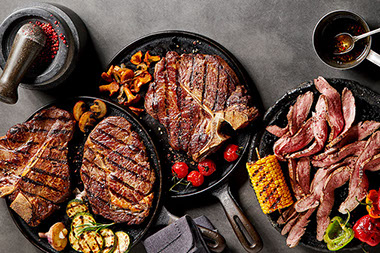
    Cooked meats and vegetables in frying pans with seasoning and garnishes.

    Protein-rich food choices make up one-quarter of MyPlate. Protein helps the body build and repair muscle tissue, fight disease, manage hunger, and perform other essential tasks. The protein group includes seafood, meats, poultry, eggs, nuts, seeds, and soy foods and beverages. Protein provides  4 calories per gram.

    Protein sources can be plant-based or animal-based. Whether you eat meat or not, make some of your choices from plant-based protein sources. Try to include at least one non-meat source of protein every day.

    Plant Protein Power

    Some plant foods are high in protein. These foods also contain fiber, vitamins, minerals, plant chemicals (phytochemicals), and other nutrients. Some, like nuts, contain healthy fats, and others, such as tempeh, contain healthy bacteria that promote gut health.

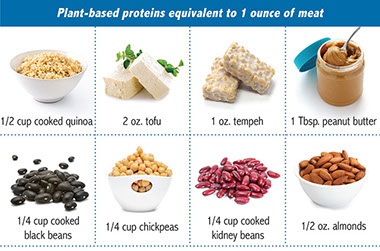
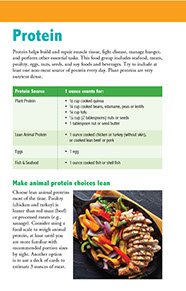
    Chart of plant-based equivalent to 1 ounce of meat.
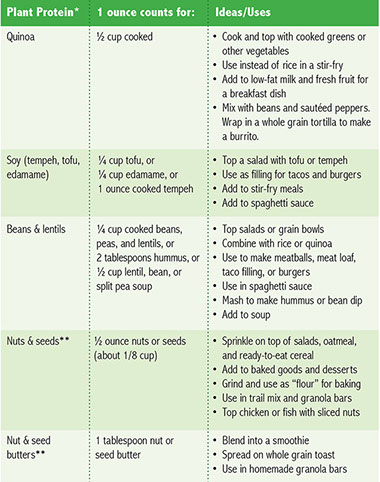
    Chart of plant protein, how much is needed to 1 ounce and ideas.

    * You can get all the protein your body needs by eating a balanced and varied diet of plant foods if you choose not to eat foods that come from animal products.

    ** Choose unsalted or low-salt nuts and no sugar added butters to reduce sodium and added sugars.

    Varieties of Seeds & Nuts

    *  Sunflower seeds

    *  Sesame seeds

    *  Flax seeds

    *  Pumpkin seeds

    *  Peanuts

    *  Cashews

    *  Almonds

    *  Walnuts

    *  Pecans

    *  Pine nuts

    *  Nut or seed butter

    Fun Fact: Peanuts are actually a legume. For planning your meals, consider them a nut. Count peanuts and peanut butter in the protein group.

    Lean Animal Protein

    Use a food scale to weigh animal protein. For deli meat and processed meats (e.g., sausage), use the nutrition facts to determine how many slices or pieces equal one ounce. For thicker cuts of unprocessed meat, estimate by comparing to a deck of cards. A deck of cards is the same size as about 3 ounces of meat. Choose lean animal proteins. Poultry (chicken and turkey) is leaner than red meat (beef) or processed meats (e.g., sausage or bacon).

    Leanest Cuts (Choose More of These)

    *  Fish

    *  Chicken breast

    *  Turkey breast

    *  Ground turkey or chicken breast (90% lean or higher)

    *  Pork tenderloin

    *  Venison (deer meat)

    Medium Fat (Choose Fewer of These)

    *  Dark meat from chicken or turkey (meat from thighs or legs)

    *  Ground beef, 90% lean or leaner

    *  Ground turkey or chicken, less than 90% lean

    *  Beef: chuck shoulder roast, top round, tenderloin, flank steak, or round steak

    Highest Fat (Limit These)

    *  Ground beef (less than 90% lean)

    *  Ribs (beef or pork)

    *  Beef brisket

    *  Sausage

    *  Bacon

    *  Bologna, pepperoni, salami

    *  Spam

    *  Hot dogs

    Lean Cooking Tips for Animal Protein

    *  Remove the skin from chicken to reduce fat. Trim visible fats from meat before cooking.

    *  Use liquid fats in cooking (canola or olive oil) instead of solid fats (butter or shortening).

    *  Poach chicken or fish in water, stock, or white wine. When roasting or broiling, place meat on a rack in a pan so that the fat drips off the meat.

    *  Place fish or chicken on foil or parchment paper. Add fresh herbs, lemon juice, and tomatoes; fold up and bake. This will help seal in flavors and juices.

    *  Tenderize leaner cuts of meat by pounding, marinating, or cooking in a pressure cooker.

    Deep frying is not a lean-cooking technique. Limit deep fried foods.

    Eggs

    One ounce counts as: 1 egg

    Eggs are a great source of protein. Eat the whole egg (including the yolk) to get many important nutrients. These include:

    *  Choline, which promotes normal cell activity and liver function

    *  Lutein and zeaxanthin, which help maintain eye health

    *  B vitamins that help with energy production in the body

    Eating just the egg white also provides protein. However, you will miss out on many important nutrients found in the yolk.

    Ideas for Adding Eggs to Your Meals and Snacks:

    Eggs can be quickly prepared on the stove or in the microwave. Add a pinch of pepper for a flavorful, on-the-go meal or snack. Eggs can be added to many dishes:

    *  Stir-fry

    *  Burritos

    *  Chili

    *  Tacos

    *  Burgers (as a topping or in place of meat)

    *  Eggs provide a filling base for vegetables. Scramble, poach, or pan-fry an egg with cooking spray. Add peppers, onions, spinach, mushrooms, tomatoes, or other colorful vegetables.

    Microwave Scrambled Eggs:Add 1 tablespoon milk per egg and whisk in a microwave-safe bowl. Microwave on high for 1 minute. Stir and cook for 1 more minute (or until done).

    Oaty Eggs Florentine:Coat a small pan with cooking spray and fry one egg. Add the cooked egg to cooked oatmeal and stir in spinach and cheese.

    Blueberry Mug Cake:Mix 1 egg with 3 teaspoons oatmeal, 10 blueberries, and a small mashed banana in a microwave safe mug. Mix in 2-3 drops vanilla extract. Microwave on high for 3 minutes. Top with low-fat yogurt.

    Fish & Seafood

    Fish and seafood are lean protein sources. Add a variety of the following choices into your weekly meal plan. If you eat animal protein, include fish at least once a week*.

    Types of Fish:Tuna, salmon, snapper, cod, flounder, haddock, halibut, perch, pollock, trout, tilapia

    Types of Seafood:Clams, lobster, oysters, scallops, shrimp, sardines, herring

    Tips for Choosing Fish:

    *  Fresh: Keep refrigerated until ready to cook. Prepare within a few days or freeze.

    *  Frozen: Thaw in the refrigerator overnight before cooking.

    *  Canned: Choose canned tuna or salmon packed in water. Drain before using. Canned fish usually costs less than fresh or frozen fish.

    *  Pouch: Choose ready-to-eat tuna that is packed in water. Get packets that don’t include mayonnaise. If needed, add a teaspoon of olive oil for moisture.

    Omega-3 Fatty Acids

    Omega-3 fatty acids are an essential fat. This means the body needs to get that type of fat from food. Omega 3-fatty acids help:

    *  Keep cells healthy, including brain cells responsible for memory

    *  Regulate blood clotting and contraction and relaxation of arteries

    *  Reduce inflammation

    *  Regulate genetic function

    Fish sources of omega-3 fatty acids:Salmon, anchovies, albacore tuna, mackerel, lake trout, halibut, sardines, oysters, and herring

    Plant-based sources of omega-3 fatty acids:Walnuts, ground flaxseeds (and oil), canola oil, soybean oil

    *  If you are planning to become pregnant or have young children, you are more sensitive to higher mercury levels found in some fish. Visitwww.epa.gov/fish-tech/epa-fda-advice-about-eating-fish-and-shellfishfor more information.

    © American Institute for Preventive Medicine

  • Sporting Events And Concerts

    Healthylife® Weigh

    Part 3

    Couple enjoying snacks at an outdoor event.

    Food courts and concession stands usually have very limited menus. Stadiums or arenas may not allow you to bring your own food or drink into the venue. Here are some tips to help you stick to your healthy goals:

    *  Eat before you go.

    *  Order water.

    *  Follow the fast food guidelines.

    *  Split a meal or snack with a friend.

    *  Choose treats wisely.

    *  Limit alcohol.

    What to do when no healthy choices are available:

    1. If you are hungry, eat something small. It may not be the healthiest choice, but it is important to listen to your body’s physical hunger cues.

    2. Drink water.

    3. Chew on sugar-free gum with xylitol.

    4. Make your next meal or snack a healthy one.

    5. Plan ways to make healthy choices for future events. If possible, eat a meal or have a healthy snack before the event. Plan to limit how much you will eat of items sold at the event.

    © American Institute for Preventive Medicine

  • Variety Bingo

    Healthylife® Weigh

    Part 2

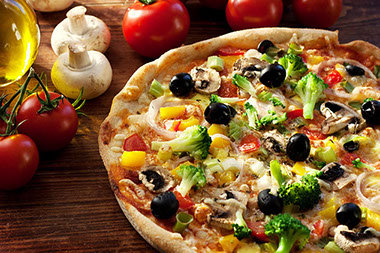
    Veggie pizza.

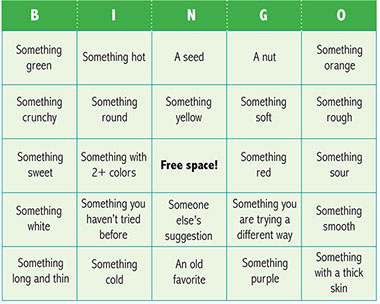
    This game is perfect for when you are making a salad, looking for pizza toppings, filling an omelet, or scoping out a buffet for healthy choices. Involve kids by having them identify different shapes, colors, textures, tastes, and experiences with their food.

    Game Rules

    1. Write down the options on pieces of paper and place them in a bowl.

    2. Have someone pull the pieces of paper out one at a time. Have them read out loud what’s on the paper.

    3. Have someone cross off the spaces that are read out loud.

    4. When someone gets an entire row, either across, down or diagonal, yell “Bingo!”

    5. Prepare a meal using the ingredients included in the Bingo! row.

    © American Institute for Preventive Medicine

  • Address Anger

    Healthylife® Weigh

    Part 6

    Women with hands on head screaming.

    Ways you can deal with anger, without eating:

    *  Count to ten at the first twinge of anger. Then count back down to zero.

    *  Take three or four slow, deep breaths. Picture the angry impulse passing you by.

    *  Take a walk until you can calm down. Or, do some other form of exercise. If you cannot exercise right away, plan to do it as soon as possible. Look forward to this opportunity to blow off some steam.

    *  If someone says or does something that bothers you, discuss it calmly or wait until you feel you can discuss it calmly. Use assertive communication tools.

    *  Distract yourself. Do a task that has to get done today or in the near future.

    *  Repeat to yourself or out loud, “I’m angry because: ____.” List what is making you angry. Ask yourself, “Are these rational thoughts?”

    *  Listen to music. Make a playlist of songs you know help to calm you down. Or, turn to a radio station that plays soothing music or music you can sing to.

    *  Help someone in need.

    © American Institute for Preventive Medicine

  • Build Support At Home

    Healthylife® Weigh

    Part 4

    Mature couple talking together on sofa.

    Talk to the people you live with about what you are doing. Let them know why you are making these changes. Ask for their support and say “thank you” for things they do that help you.

    *  Set food rules for everyone in the family to follow. This may include eating together at the table and keeping the TV off. Keep phones in another room.

    *  Keep unhealthy snacks in dark containers, out of plain sight.

    *  Encourage positive talk about new meals and snacks in the house. If a new food is disliked, talk about why. A food can be prepared in a different way.

    *  Involve others in meal planning, especially if everyone will be eating the same meals.

    *  Prepare meals together. Adults and children can learn valuable lessons in the kitchen, from math skills to building self-confidence.

    *  Be active together. Make this time more about shared family joys than weight loss. Stretch together in the morning or go for a walk after dinner. Plan family picnics that involve a hike or bike ride.

    © American Institute for Preventive Medicine

  • Eat The Rainbow!

    Healthylife® Weigh

    Part 2

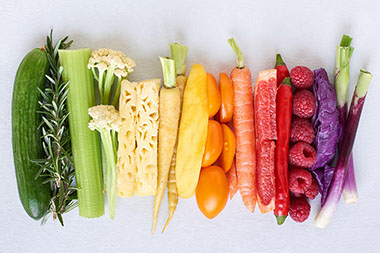
    Rainbow spectrum of healthy fresh fruit and vegetables.

    Choose a variety of colors when selecting fruits and vegetables. Different colors represent different phytonutrients. Phytonutrients are plant chemicals that have antioxidant and anti-inflammatory qualities. Every time you eat is an opportunity to strengthen your body and prevent disease.

    Red

    *  Improved memory

    *  A healthy heart

    *  Improved digestion

    *  Examples

    –  Tomatoes

    –  Beets

    –  Radishes

    –  Red peppers

    –  Red onions

    –  Rhubarb

    –  Cherries

    –  Red apples

    –  Red grapes

    –  Red pears

    –  Raspberries

    –  Strawberries

    –  Watermelon

    Orange/Yellow

    *  Good vision in low light

    *  A healthy heart

    *  Strength to fight off colds & illness

    *  Healthy skin

    *  Improved circulation

    –  Apricots

    –  Cantaloupe

    –  Nectarines

    –  Peaches

    –  Yellow apples

    –  Yellow pears

    –  Carrots

    –  Sweet potatoes

    –  Yellow peppers

    –  Yellow potatoes

    –  Yellow summer squash

    –  Sweet corn

    –  Yellow tomatoes

    –  Butternut squash

    White

    *  A healthy heart

    *  Lower risk for stroke

    *  Lower risk for some cancers

    –  Brown pears

    –  White peaches

    –  Cauliflower

    –  Kohlrabi

    –  Onions

    –  Garlic

    –  Potatoes

    –  White corn

    –  White nectarines

    Green

    *  Good vision in low light

    *  Strong bones & teeth

    *  Organ health

    –  Green apples

    –  Green grapes

    –  Green pears

    –  Honeydew

    –  String beans

    –  Spinach

    –  Broccoli

    –  Sugar snap peas

    –  Brussels sprouts

    –  Green cabbage

    –  Green onions

    –  Green peppers

    –  Cucumbers

    –  Leafy greens

    –  Lettuce

    –  Peas

    –  Asparagus

    –  Zucchini

    Blue/Purple

    *  Improved memory

    *  Healthy aging

    –  Blackberries

    –  Blueberries

    –  Dried plums

    –  Pitted prunes

    –  Purple asparagus

    –  Purple cabbage

    –  Eggplant

    –  Plums

    © American Institute for Preventive Medicine

  • Grocery Shop With Confidence

    Healthylife® Weigh

    Part 3

    Couple grocery shopping.

    Grocery stores can be wonderful places to explore new foods. The average grocery store has over 10,000 different items. Some of these foods are healthy “everyday” food choices. Add these more often to your cart. Others are “sometimes” or “once in a while” foods. Add these foods less often.

    Tips for Healthy Grocery Shopping:

    1. Choose a low-stress time to grocery shop, if possible. Make sure you have enough time to do your shopping. Stressed grocery shopping can make it harder to stick to your healthy list.

    2. Have a healthy snack before going to the grocery store. This will help you avoid buying less healthy foods on impulse.

    3. Shop the outer edges of the grocery store. This is where you will find fresh produce, dairy, eggs, meats/poultry/seafood, and frozen fruits and vegetables. Go into inner aisles for specific items on your list, but not to browse.

    4. Look for recipes or tips in the produce department. Stores often provide tips for cooking vegetables or a chart showing which fruits and vegetables are in season.

    5. Look for products locally grown or raised. Locally grown produce and livestock can be more nutritious and tasty. Nutrients and flavor can break down during storage and transport. Locally grown food may also be grown more sustainably and buying it supports the community.

    6. Sample healthy foods. Samples, such as cheese cubes or crackers with dip, can take the edge off in a portion-controlled serving. A bite-sized sweet treat can satisfy a craving and help you avoid picking up a larger version of that treat.

    7. Avoid your weak areas. Avoid an aisle that has many unhealthy foods that you have difficulty resisting. Or, keep your eyes forward when walking by these foods.

    8. Buy treats in small portions. Avoid the super-size trap of large portions of unhealthy food. Rather than buying a full tub of ice cream or a boxed brownie mix that will yield a full pan of brownies, get small-sized versions. Choose a single-serving ice cream or an individual brownie at the bakery.

    9. Read labels. Many of the healthiest foods, such as fruits and vegetables, won’t have food labels at all. If they do, they only give a snapshot of the true value of the food.

    © American Institute for Preventive Medicine

  • Keep Habits Rewarding

    Healthylife® Weigh

    Part 4

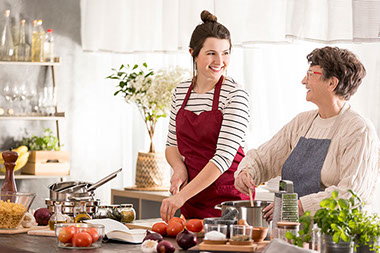
    Happy, young woman cooking dinner with grandmother.

    When you are rewarded for an action, you are more likely to repeat it. If you eat a piece of chocolate and enjoy the taste and how you feel afterwards, you are probably going to eat chocolate again.

    Managing your weight does not mean giving up rewarding feelings. If it did, it would be VERY hard for you to stick with it. People are wired to seek rewards and to stick to habits that give rewards. There are two types of rewards:

    Intrinsic Rewards

    *  Something intangible (you can’t touch it)

    *  Arise from within you

    *  Examples: a feeling or emotion, such as joy, pride, or satisfaction

    *  Feeling like you are living your values

    *  Are strong motivators

    Extrinsic Rewards

    *  Something tangible (you can touch it)

    *  Are physically received from someone else

    *  Examples: money, a trophy

    *  Get weaker over time

    Your habit change plan starts with two basic questions:

    1. What is the reward for my current habit?

    2. How can I still get the reward with a healthier habit? You may need to learn a new skill, such as time management. Or, you may need help from others.

    Example: My morning habit of rushing out the door with a cup of coffee-no breakfast-helps me be on time for work. Every time I am on time for work, I feel relieved and proud of myself. (Feeling relieved and proud is the reward for being on time for work.)

    Ideas to Keep Rewards: I could make a breakfast-to-go snack the night before and keep it next to my coffee maker. Or, I could wake up earlier to prepare a breakfast. Or, I could keep a breakfast snack at work to have once I get there.

    Plan to Keep Rewards:

    Pick a habit that is part of your everyday routine and that you want to change.

    *  Planning Step 1: What is the reward for this habit?

    *  Planning Step 2: How can I still get the reward with a healthier habit?

    Try this again for another habit.

    *  Planning Step 1: What is the reward for this habit?

    *  Planning Step 2: How can I still get the reward with a healthier habit?

    Use this tool often to change how you think about adopting healthy habits.

    © American Institute for Preventive Medicine

  • Meal Planning Basics

    Healthylife® Weigh

    Part 3

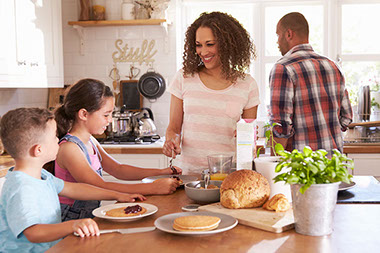
    Family at home eating breakfast in the kitchen.

    This online guide uses the terms breakfast, lunch, dinner, and snacks.

    *  Breakfast: The first time you eat upon waking

    *  Lunch: 3-4 hours later

    *  Dinner: 4-5 hours later

    *  Snacks: Small meals between breakfast, lunch, and dinner. These are optional, but snacks may help you manage hunger.

    Your work schedule, culture, travel, dietary restrictions, or preferences may mean you have a different meal schedule. Label each meal or snack in a way that makes sense to you.

    Goals for all meals and snacks:

    *  Get enough energy and nutrients.

    *  Choose foods from the main food groups.

    *  Meet, but try not to go over, your daily goals for all food groups.

    *  Avoid spikes or drops in blood sugar that can trigger overeating,  sugar cravings, mood swings, and tiredness.

    *  Include tasty foods.

    *  Build time management into the meal plan.

    Do I have to eat breakfast?

    Breakfast is an important meal that you shouldn’t skip. Eating breakfast:

    *  Gives your body energy after a long break in eating.

    *  Kick-starts your metabolism and helps you burn energy during the day.

    *  May help with memory, concentration, and focus.

    *  May lower your risk for heart disease, type 2 diabetes, and obesity.

    You don’t have to eat typical breakfast foods to get the benefits of eating breakfast. Choose foods high in protein and nutrient-dense carbohydrates. Try whole grain pancakes with yogurt and fruit. Or, re-heat leftovers from the night before.

    © American Institute for Preventive Medicine

  • Physical Health

    Healthylife® Weigh

    Part 5

    Male jogger with earphones.

    Stronger Muscles and Bones

    Muscles let you move, lift, and stretch. When you use your muscles, they get stronger so you can do everything from opening a door to smiling, chewing, and talking! Weight-bearing exercises, in particular, help bones become stronger. This helps prevent osteoporosis and fractures.

    Stronger muscles and bones will help you have good posture and keep your joints and body more naturally aligned.

    Improved Cardiovascular Health

    Heart Strength: Exercise strengthens your heart muscle. This means the heart can pump more blood per stroke and doesn’t require as many heartbeats to pump the same amount of blood. This makes your heart more efficient and lessens your risk of having a heart attack or blood clots.

    Cholesterol Levels: Exercise boosts high-density lipoprotein (HDL), or “good,” cholesterol and decreases unhealthy triglycerides. This helps to keep your blood flowing smoothly, decreasing your risk of cardiovascular disease. The more you exercise, the more your cholesterol levels will improve.

    Blood Pressure Control: Hormones that are released during exercise make blood vessels more elastic. This helps lower blood pressure.

    Improved Breathing

    Exercise improves your body’s ability to take in oxygen and transport and use oxygen throughout the body. This helps your muscles get the oxygen they need to be more efficient during exercise. With improved lung function, your ability to exercise longer (stamina) can increase! You’ll also be able to think more clearly throughout the day.

    Improved Immune System

    Exercise improves the circulation of immune cells in your blood that fight off viruses and bacteria. Exercise also helps combat damage done to cells, tissues, and organs.

    © American Institute for Preventive Medicine