Tag: Weight Control

  • Protein 2

    Healthylife® Weigh

    Menus & Recipes

    Cooked meats and vegetables in frying pans with seasoning and garnishes.

    Protein helps build and repair muscle tissue, fight disease, manage hunger, and perform other essential tasks. This food group includes seafood, meats, poultry, eggs, nuts, seeds, and soy foods and beverages. Try to include at least one non-meat source of protein every day. Plant proteins are very nutrient dense.

    Chart of plant-based equivalent to 1 ounce of meat.
    Chart of plant protein, how much is needed to 1 ounce and ideas.

    * These complete proteins contain all 9 essential amino acids. Other plant proteins contain some, but not all, of these protein building blocks. Consume a variety of sources to form a “team” of complete proteins.

    ** Choose unsalted nuts and no-sugar added butters to reduce sodium and added sugars.

    Make animal protein choices lean

    Choose lean animal proteins most of the time. Poultry (chicken and turkey) is leaner than red meat (beef) or processed meats (e.g., sausage). Consider using a food scale to weigh animal protein, at least until you are more familiar with recommended portion sizes by sight. Another option is to use a deck of cards to estimate 3 ounces of meat.

    © American Institute for Preventive Medicine

  • Stages Of Change

    Healthylife® Weigh

    Part 1

    Man expressing his success to lose weight.

    This guide does not assume you are ready to change. Or, you may be ready to make certain changes but not others. Other changes you may not have even thought of yet! The tools and strategies in this guide are designed to help you move forward through the stages of change. Using the diagram below, consider which stage you are at.

    1. Not Ready

    *  Unaware or in denial about behavior – “No, not me!”

    *  Unsure about changing

    2. Maybe

    *  Aware of problem

    *  Not quite ready

    *  Weighing pros and cons of change

    3. Yes, Let’s Go!

    *  Forming a plan

    *  Addressing strengths and barriers

    *  Set to take action

    4. Go! Doing It

    *  Putting the plan into action

    *  Bringing champions on board

    5. Keep it Going

    *  Change becomes part of habits

    *  Reflecting on change

    *  Facing challenges to new habit

    © American Institute for Preventive Medicine

  • Weight Loss & Metabolism

    Healthylife® Weigh

    Part 7

    Two women power walking together.

    As you have learned throughout this guide, losing weight can result in many positive changes for your body. One change, however, can make it tougher to maintain weight loss. When you lose weight, the body’s natural reaction is to conserve energy by slowing your metabolism.

    Your metabolism may be slower than before you lost weight.

    *  Your body changes to make it difficult to lose more weight.

    *  Your body changes to make it easier to put on weight.

    Without changing your habits and lifestyle around food and exercise, being overweight can become a chronically relapsing condition. You may feel caught in a cycle of gaining and losing weight repeatedly. This pattern can be very hard on the body and mind.

    You are not doomed to gain weight once you have worked hard to lose it. While a slower metabolism can make it harder, you have built many strengths to make this challenge easier.

    *  Easier to exercise (e.g., less joint pain, improved heart and lung function, more energy)

    *  More muscle tissue (this increases your metabolism)

    *  Enjoy an increased variety of healthy foods

    *  Stronger social support

    *  Kinder view of self and body image

    *  Strengthened values

    © American Institute for Preventive Medicine

  • Address Anxiety

    Healthylife® Weigh

    Part 6

    Women at home coping with anxiety.

    Anxiety is a feeling of dread, fear, or distress over a real or imagined threat to your mental or physical well-being. Avoid eating as a way to cope with anxiety. Try the strategies listed below.

    Strategy

    *  Take a long, warm bath or shower. Or, go for a swim.

    *  Focus on relaxing through exercise, soothing music, helping others, etc.

    *  Connect with people. Visit or call someone who will listen to you and support you.

    *  Drink a warm cup of decaf coffee or tea – avoid caffeine, which can make anxiety worse.

    *  Practice mindfulness and other relaxation techniques.

    Wash, Peel & Chop Away Anxiety

    Get your meal prep done and work away anxious feelings at the same time!

    Gently wash fruits and vegetables. Chop foods slowly and evenly. Prepare all of the ingredients for a meal neatly before starting to cook.

    Take your time to cook. Clean as you go, keeping your space tidy. Slowly wash and dry dishes by hand. Take breaks if you need to.

    Other Causes of Anxiety

    Anxiety could be a symptom of low blood sugar. Other symptoms of low blood sugar include shakiness, feeling faint, headache, rapid heartbeat, and sweating. In this case, you will need to have something to drink or eat, such as orange juice, a piece of hard candy, or crackers. Anxiety can also be a symptom of an anxiety disorder or other health condition. Check with your doctor if the symptoms above happen often.

    Take a Step Back

    Write down what you are anxious about. Step back and look at your concern from an outsider’s point of view. Imagine how others might handle these issues. You can also use this technique to look at your job or family duties. Ask yourself these questions:

    *  What can I expect of myself in this situation?

    *  Are my expectations realistic, given my abilities, strengths, and weaknesses?

    *  What do others expect of me?

    *  What ideas would others have for me? When you imagine how someone else might respond to a situation, you may come up with helpful ideas!

    If you struggle to answer these questions, wait at least an hour or sleep on it. When you come back to this worry, you may see things in a different way and feel more ready to address the issue.

    © American Institute for Preventive Medicine

  • Build Support At Work

    Healthylife® Weigh

    Part 4

    Employees talking over a coffee break.

    *  Find out about your company’s wellness program.

    – Participate in challenges, such as a step contest, offered through your wellness program. There may be rewards for participation or winning the challenge.

    – Join the wellness committee and participate in surveys that give you a chance to share your opinion. Let your company know what policies will help you be healthy. Your employer wants you to be healthy, as this helps their health care costs and helps you be productive at work.

    – Volunteer to be a wellness champion. Sharing your journey with others may help give your goals a bigger purpose.

    *  Organize walk times with coworkers at work. If you can, spend part of your lunch break going for a walk around the building or outside.

    *  If you are going out to eat with coworkers, suggest you go somewhere that offers healthy options.

    *  Celebrations at work should include healthy options and limit unhealthy options. Encourage the person who organizes these events to make healthier options available.

    *  Split meal prep with a coworker. Bring a healthy lunch or snack to share for the first half of the week. For the second half of the week, your coworker brings a healthy lunch or snack to share.

    © American Institute for Preventive Medicine

  • Eating And Body Image Issues

    Healthylife® Weigh

    Part 5

    Group of friends eating at a resturant.

    Develop a healthy relationship with eating and your body image. Paying attention to your eating and exercise habits can be a positive step for your health, but you are also at risk for having a distorted body image, developing unhealthy eating patterns, and becoming preoccupied with food and body image.

    Healthy Concern

    *  I pay attention to what I eat in order to maintain a healthy body.

    *  I am flexible in my goals for eating well.

    *  I am not concerned what others think regarding what and how much I eat.

    *  Food only occupies a small part of my time.

    *  I balance my pleasure with eating with my concern for a healthy body.

    *  I feel no guilt or shame with what I eat.

    Food Pre-Occupied/Disruptive Eating

    *  It’s hard for me to enjoy eating with others.

    *  I think about food a lot.

    *  I feel ashamed when I eat more than others or more than what I feel I should be eating.

    *  I am afraid of gaining weight.

    *  Eating more than I wanted to makes me feel out of control.

    *  I feel strong when I can restrict how much I eat.

    Eating Disordered

    *  I am afraid to eat in front of others.

    *  When I eat, I have a hard time controlling the amount of food I eat.

    *  I regularly stuff myself and then exercise, vomit, or use diet pills or laxatives to get rid of the food or calories.

    *  I am terrified of gaining weight.

    *  My friends and family are concerned I am not eating enough.

    © American Institute for Preventive Medicine

  • Grocery Shopping With Kids

    Healthylife® Weigh

    Part 3

    Family of four grocery shopping.

    Grocery stores can be full of education and adventure for kids. Including kids in grocery shopping-and every part of meal prep-helps set up kids to make healthier choices later in life.

    *  Show the variety of different foods, especially in the produce section and grain aisle.

    *  Let kids pick out something colorful from the produce section. You can look up online what to do with it later!

    *  Ask kids to help you decide between healthy options (apple vs. orange). This encourages kids to make healthy choices.

    *  Discuss why certain foods are stored in the freezer or on the shelf.

    *  Ask younger kids to describe the foods you pick out. Use shapes, colors, and counting to identify foods on the shelf or in your cart.

    *  Ask older kids to help you read labels and signs in the store. Explain what these labels mean.

    © American Institute for Preventive Medicine

  • Limit Added Sugars

    Healthylife® Weigh

    Part 2

    White sugar assortment.

    Sugars are naturally present in many foods, including fruit, dairy, and grains. Your body can get all the sugar you need by digesting these foods. Sometimes, sugar is added during the processing of foods and drinks. Sugar adds calories, taste, and shelf-life to a product, but zero nutrients. There is no need for added sugars in your diet.

    Too much added sugars is associated with:

    *  Heart and blood vessel problems. This can lead to fatty liver disease, high blood pressure, type 2 diabetes, and kidney disease.

    *  Gut bacteria damage.

    *  Skin problems like irritation and acne.

    *  Headaches, aching limbs, and fatigue.

    *  Nervous tension, anxiety, and depression.

    *  Tooth decay and gum disease.

    *  Memory problems and memory loss. This can lead to Alzheimer’s (research ongoing).

    Sugar is Addicting

    It is okay to have a piece of chocolate every now and then and experience a little “lift” in the brain. Your brain activates dopamine, the brain chemical that gives you a “feel good” feeling. However, eating sugar too often can have addictive effects on the brain.

    Impulsive behavior, lack of control, and cravings can result. Your tolerance for sugar may also increase, especially if you are eating or drinking super-sweet artificial sweeteners with hundreds of times the sweetness of regular sugar.

    Over time, it becomes harder to control how much sugar you eat. Without fiber, healthy fats, and other nutrients that help you feel full, your natural “stop eating” system is hijacked. Sugar addiction leads to overeating, a highway to obesity.

    Hooked on Sugar:The pathway below shows how your body can become addicted to sugar.

    *  You eat a high sugar food. It tastes good, especially when combined with a fatty or salty food. Addiction pathways are activated in your brain. You feel a rewarding sensation.

    *  Your blood sugar spikes. Hormones are released to lower your blood sugar.

    *  Your blood sugar drops rapidly. Your body notices low blood sugar levels.

    *  You feel hungry and crave food, especially sugary foods. Your body thinks you are starving and demands sugar.

    Type 2 Diabetes

    Type 2 diabetes is a condition that makes it difficult for the body to properly get energy from food. Risk factors include family history and being overweight. Insulin, a hormone made in the pancreas, works like a key to a door, allowing sugar to go from the bloodstream into the cells.

    In addition to extra body weight, eating too much sugar (and foods that break down into sugar like bread and pasta) puts a strain on your pancreas to work harder. Over time, this means too much sugar stays in the bloodstream, which causes serious problems for your blood vessels, heart, and brain.

    Diabetes should be managed carefully to control blood sugar levels. If you already have type 2 diabetes, losing weight, following a healthy eating plan, and doing regular exercise can help you manage diabetes and may reduce the need for medication.

    Be a Label Detective: Find the Added Sugar

    How can you tell if a product has added sugars? Find a food package or drink bottle and follow the steps below.

    Step 1: Check the Nutrition Facts
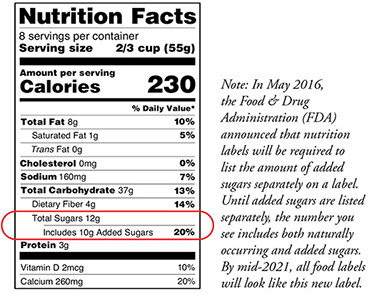
    Nutrition label highlighting total sugars.

    Step 2: Check the Ingredients List

    Read the ingredients list on a processed food’s label to tell if the product contains added sugars. There are many names for sugar. Some words you might find in a list of ingredients that indicate a sugar include:

    *  Sugar

    *  Syrup

    *  Nectar

    *  Juice

    *  Malt

    *  Molasses

    *  Honey

    *  Words that end in “-ose”

    Honey, maple syrup, molasses, brown rice syrup & stevia may be better choices among sugars. However, limit all added sugars.

    If a sweetener is one of the first 3 ingredients on the label, avoid this product. It may be high in calories but not include many nutrients.

    Step 3: Find out the real amount
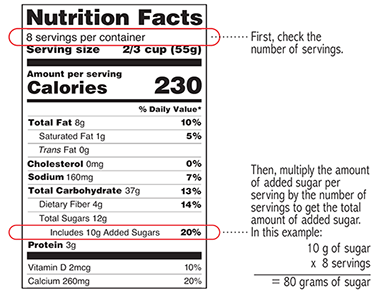
    Nutrition label highlighting the real amount of added sugars.

    If you have more than the serving size listed on the label, you are getting even more sugar than the label says. If you have half of the serving size, you will get half of the sugar listed.

    How much added sugar is okay?

    It is almost impossible to avoid all added sugar. Sugar is added to nearly every processed food. Yogurt, salad dressing, ketchup, crackers, peanut butter, tomato sauce, and most bottled beverages contain added sugars.

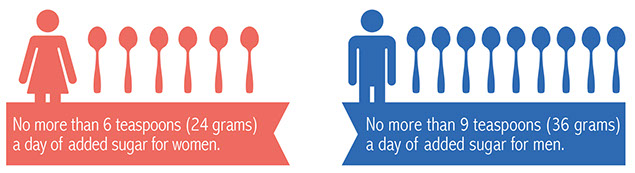
    The American Heart Association has set recommended limits on daily intake of added sugars:
    Reduce Sugar-Sweetened Drinks

    Sugar-sweetened drinks (including pop/soda, bottled tea and coffee drinks, juices, flavored waters, etc.) are some of the top sources of added sugars in the U.S. By choosing water or unsweetened drinks, you can reduce added sugar and calories, leaving room in your diet for nutrient-dense foods.

    *  What is one sugar-sweetened drink you consume now?

    *  Look at the label. How many grams of sugar does it contain per serving?

    If you drink sweetened beverages, you will very likely go over your daily limit for added sugar.

    What about Bottled Fruit Juice?

    100% fruit juice is more nutritious than soda, as it often contains vitamin C and may be fortified with calcium. However, fruit juice does not contain fiber to slow the absorption of sugar into the bloodstream. Instead, squeeze a lemon or orange slice into plain water. Or, have the whole fruit for a serving of heart-healthy fiber and a naturally sweet treat!

    Look for Hidden Sugar Traps

    Many foods you wouldn’t consider “sweets” contain a lot of added sugar. Find each of the food products below and check the Nutrition Facts. You may already have these products at home. Or, check next time you are in the store. For the product you are looking at, check how many grams of sugar are in this food. Would you typically only eat one serving?

    *  Yogurt

    *  Salad dressing

    *  Tomato sauce

    *  Ketchup

    *  Bread

    *  Cereal

    *  Granola bars

    What changes do you need to make to get your total added sugar below the number of teaspoons advised for your gender?

    Careful!“Low Fat” or “Lite” foods, other than dairy foods and drinks, often make up for taste and texture with sugar and artificial ingredients. Foods that are “sugar free” may have artificial sweeteners and other chemicals to make the product still taste sweet. Choose these foods less often.

    More Ways to Limit Added Sugars

    *  Add a slice of lemon, lime, or cucumber to water for a flavorful twist.

    *  Avoid buying sweet snacks or candy. Mentally practice passing by and not stopping to pick up sweets at the store or vending machine.

    *  Add your own natural sweetener, if needed, such as whole, dried, or canned fruit (packed in water or 100% juice).

    *  Toast whole grain bread to bring out natural sweetness.

    *  Schedule 30 minutes of physical activity and 30 minutes more sleep each night for a natural energy lift.

    *  Limit foods high in added sugars as occasional treats.

    *  Add fresh or canned fruit (packed in water or 100% juice) to plain yogurt instead of having yogurt that contains added fruits and sugar.

    *  Avoid rewarding children with sweets. Ask relatives and friends not to reward your child with sweets.

    *  Buy bread from your local bakery. These breads may have fewer added sugars.

    *  Make your own cakes, pies, and cookies. Reduce the sugar in the recipe by one-third or more. Use baking swaps.

    *  Order a child-size dessert or split a dessert.

    *  Cut back on added sugar in coffee and tea. Each week, cut the amount of sugar you add to these drinks by half until you add no sugar.

    Be realistic!Enjoy sweet treats, but make these foods “once in a while” foods. Savor and enjoy treats when you do have them. Eat them slowly and pay attention to the taste, texture, and pleasure from the food.

    © American Institute for Preventive Medicine

  • Mental Health

    Healthylife® Weigh

    Part 5

    Group of people with thumbs up in yoga studio.

    Emotional Health

    Exercise releases endorphins and increases levels of serotonin and dopamine in the brain. These brain chemicals help create feelings of happiness and euphoria. You may start to feel these benefits after just a few minutes of moderate exercise. This leads to a quick happiness buzz and an overall mood boost!

    Stress Management

    Norepinephrine is a chemical that can moderate the brain’s response to stress. Exercise helps to increase that chemical. Exercise can decrease worry and tension. It also enhances the mind’s ability to deal with daily stressors. Managing stress can reduce emotional eating and cravings for sweets and high-fat foods. The calming effect of exercise can last at least four hours after the exercise is over.

    View physical activity as a break from your day. Use this time to focus on the present, instead of past or future problems and worries.

    Connect to My Values:

    Example: Having good emotional health will help me enjoy what I am doing in the moment. Enjoying life’s pleasures, such as the beauty of fall colors, is important to me.

    © American Institute for Preventive Medicine

  • Physical Vs. Emotional Hunger

    Healthylife® Weigh

    Part 6

    Close up shot of pizza on table, with group of people sitting around and picking up a portion.

    Eat when you are physically hungry. Know the difference between physical and emotional hunger.

    Physical Hunger

    *  Your stomach feels empty.

    *  Comes on gradually and can be postponed.

    *  You feel sluggish and need energy.

    *  You haven’t eaten for several hours.

    * You are hungry enough to eat anything.

    Emotional Hunger

    *  You have a psychological desire to eat.

    *  Comes on suddenly and feels urgent.

    *  You only want certain foods.

    *  You eat something because it looks or smells good, even though your hunger is satisfied.

    *  You eat as a response to boredom, not the physical need to eat.

    Q: Is my hunger physical or emotional?

    A: Yes, I am physically hungry

    Ways to Manage Hunger

    *  Eat meals at regular times and intervals every day.

    *  Exercise regularly.

    *  Eat snacks that are high in fiber and/or protein:

    – Raw and cooked veggies

    – A piece of fruit

    – Unbuttered popcorn

    – Trail mix with nuts, seeds and  dried fruit

    *  Drink water throughout the day.

    A: No, I am emotionally hungry

    Ways to Manage a Craving

    *  Do an activity that takes your mind off of food. Walk to another room.

    *  Go for a walk or do your favorite exercise.

    *  Do a burst of exercise, like 10 jumping jacks, squats, or lunges.

    *  Take 10 deep breaths as you stretch.

    *  Drink a glass of water.

    *  Wait 10 minutes. Re-evaluate the hunger.

    *  Have a small amount of the specific food you are craving. If you are worried you can’t control your portion, skip this tip.

    *  Use the tips in this section for managing the emotion.

    © American Institute for Preventive Medicine