Tag: Weight Control

  • Recognize When Something Is Bothering You

    Healthylife® Weigh

    Part 6

    Couple having dinner at restaurant.

    Identify what forces are at play. These may be positive or negative emotions that are pushing you to do something you don’t need or want to do.

    The following emotions that trigger less healthy eating.

    *  Anger

    *  Anxiety

    *  Boredom

    *  Depression

    *  Frustration

    *  Insecurity

    *  Stress

    *  Celebration

    Write other feelings you have that trigger feelings of hunger:

    *  Accept that you are having these feelings. Rather than trying to change how you feel, focus on changing your response to these feelings.

    *  Keep a journal to determine what triggers lead you to emotional eating.

    For negative emotions, did eating food solve the situation? Chances are it did not. Food does not solve emotional problems. It never has and it never will. Food simply keeps you from dealing with the issue at hand. When the last bite is eaten, the problem is still there.

    Positive emotions, like joy and comradery, may cause you to overeat. Think of a time when you were celebrating and over-ate.

    Avoid feeling guilty if you have overeaten or chosen less healthy foods. The feeling of guilt can make digestion difficult or lead to more overeating.

    © American Institute for Preventive Medicine

  • Survey Your Starting Point

    Healthylife® Weigh

    Part 1

    Man smiling.

    Complete the survey below by tracking it in your journal or using the “Print on Demand”. This survey looks at the “big picture” – your overall goals, current habits, strengths, weaknesses, support system, and other factors that influence behavior. Each question has a purpose. Complete all sections. This is one of many opportunities in this guide for self-discovery and reflection.

    Be honest with yourself. If you are working with a coach, answers to these questions may help your coach tailor the program to your needs. If you are using HealthyLife® Weigh on your own, the prompts throughout the guide will help you “coach” yourself!

    My Current Habits Survey

    Today’s Date:

    My Height:

    My Current Weight:

    Have you been told to lose weight for health reasons?

    Which medical conditions that apply to you:

    *   Diabetes

    *   Prediabetes

    *   High blood pressure

    *   High cholesterol

    *   Heart disease

    *   Heart attack

    *   Stroke

    *   Cancer

    *   Chronic back pain

    *   Arthritis

    *   Asthma

    *   Sleep apnea

    REMEMBER:The guidelines in HealthyLife® Weigh do not take the place of medical advice. If you are managing a chronic health condition or taking medication, it is important to let your doctor know of any changes you are making to your diet and exercise habits.

    Indicate how strongly you agree or disagree with the following statements. If how you feel varies, select how you feel on most days.

    *  My current weight puts me at higher risk for health problems.

    *  I know the benefits of a well-balanced diet.

    *  I know the benefits of making regular physical exercise a part of my daily lifestyle.

    *  I am confident in my ability to reach my physical activity goals.

    *  I am confident in my ability to improve my eating habits.

    *  I eat for emotional reasons (stress, boredom, joy, etc.) several times a week.

    *  Making changes to my health is a priority for me.

    *  Choices I make daily affect my health risks in the future.

    *  I am confident in my ability to improve how I manage stress.

    *  I have control over the direction my life is taking.

    *  It is not wise to plan too far ahead because many things turn out to be a matter of luck anyway.

    *  When I make plans or set goals, I am almost certain that I can make them work and achieve my goals.

    Identify the habits you have already adopted, those you are in the process of changing, and those you do not intend to change right now.

    *  Exercise five times per week for 30 minutes at a moderate intensity.*

    *  Take the stairs or park a little farther away.

    *  Eat five servings of fruits & vegetables daily.**

    *  Choose foods high in fiber (such as whole grains, oatmeal, beans, & lentils).

    *  Limit added sugars to fewer than 25 grams (6 tsp.) per day.

    *  Keep healthy food options in my kitchen and limit unhealthy options.

    *  Choose restaurants that offer healthy menu options.

    *  Moderate intensity exercise includes brisk walking, active gardening/yard work, or any  activity that raises your heart rate.

    **A serving of fruits and vegetables equals one small piece of fruit (about the size of a baseball), ½ cup cooked vegetables, or 1 cup of raw vegetables.

    Which cooking skills you feel confident doing:

    *  Cooking on the stove

    *  Cooking in the microwave

    *  Cooking in the oven

    *  Chopping vegetables

    *  Boiling water

    *  Opening a can

    *  Using the toaster

    *  Using a blender

    *  Using measuring utensils

    *  Following a recipe

    *  Using a food scale

    *  Using a toaster oven

    *  Cooking on the grill

    *  Freezing leftovers

    *  Modifying a recipe

    What cooking skills do you want to learn or improve? This guide gives some tips to prepare foods. For more recipes, tips, and demonstrations, consider taking a cooking class, watch videos online, or watch cooking shows on TV.

    What are your favorite ways to prepare food? In this guide, you will learn healthy ways to prepare foods. You don’t have to completely change how you like to prepare food. Often, a small step can make a big difference-and be just as convenient!
    © American Institute for Preventive Medicine

  • Yoga

    Healthylife® Weigh

    Part 5

    Senior women doing yoga.

    Yoga is excellent for improving flexibility, relaxation, and stress reduction. Find a good instructor who can modify yoga to suit your individual needs. Develop your skills slowly. You can also find free yoga resources online or at your library. Watch YouTube videos or DVDs for demonstrations of movements.

    © American Institute for Preventive Medicine
  • Address Insecurity

    Healthylife® Weigh

    Part 6

    Man and dog outside.

    Focus on things that you can do well. List at least 5 things in your life that you are proud of. Examples include raising a family, earning a degree, getting promoted at work, increasing your bowling average, and having a garden!

    How can you improve these skills further? Set realistic goals to do this!

    Spend time with people who make you feel loved and secure. Build a list of places you can go where you feel comfortable.

    Spend Time with Animals

    Spend time with a pet. Volunteer at a shelter. Spend time with a friend or family member’s pet. Go to a pet store, or look at adopting a rescue animal. Spending time with a pet can:

    *  Decrease production of cortisol, a stress hormone that can put you on edge and make you ill over time.

    *  Increase serotonin, which helps you feel relaxed and happy.

    *  Help you feel secure. Pets, especially dogs, can love unconditionally and may sense when you need extra support. Some pets are trained to help you manage certain emotions, like anxiety.

    Stand Tall

    Change your posture, whether you are sitting or standing. Changing your posture can help you change your point of view.

    Power Stance: Plant your feet firmly, shoulder-width apart. Take a deep breath and pull your shoulders back, stretching your upper chest forward. Place your hands on your hips.

    This can help you feel respected and powerful. Appreciate your own power and what you are capable of doing. Feel respect for yourself.

    Stand or sit in this pose for a few minutes before a challenge, such as an emotional conversation or job interview. Use this  tool for addressing your inner critic or self-defeating thoughts.

    © American Institute for Preventive Medicine

  • Check Your Current Exercise Habits

    Healthylife® Weigh

    Part 5

    Fitness concept with sneakers dumbbells headphones and bottle of water.

    How would you describe your current exercise habits?

    *  I do not engage in additional exercise beyond my daily activities.

    *  I exercise 1-3 times per week, for at least 30 minutes at a time.

    *  I exercise most days of the week, for at least 30 minutes at a time.

    *  I sit most of the day for my job.

    *  I am on my feet most of the day for my job.

    *  I am very active during most of the day for my job.

    What are your favorite ways to be physically active?

    Recommendation: Be physically active for at least 2 ½ hours (150 minutes) per week. You can do this in blocks of time that you choose. Any amount of physical activity counts toward the weekly amount.

    *  Have a chronic health problem, such as heart disease or diabetes.

    *  Have high blood pressure.

    *  Feel faint or very dizzy when you try to exercise.

    *  Have an injury or bone or joint problems, such as arthritis, that has been or could become aggravated by exercise.

    © American Institute for Preventive Medicine
  • Estimate Serving Sizes

    Healthylife® Weigh

    Part 2

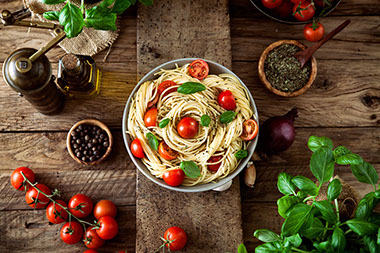
    Pasta with olive oil, garlic, basil and tomatoes.

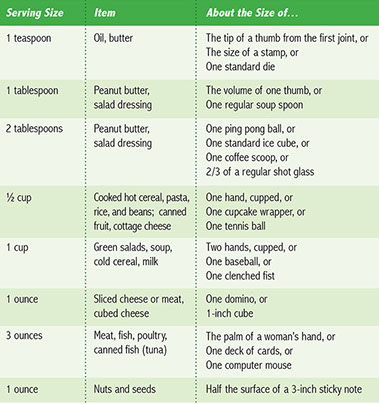
    To stay within the food group guidelines for your calorie needs, you need to use correct serving sizes. To be exact, you could use measuring cups and spoons or weigh foods on a scale. Do this when you can or when you are learning, but this is not always practical. You can estimate serving sizes using familiar objects.

    Chart showing serving sizes and items.

    © American Institute for Preventive Medicine
  • Help Your Refrigerator Help You

    Healthylife® Weigh

    Part 4

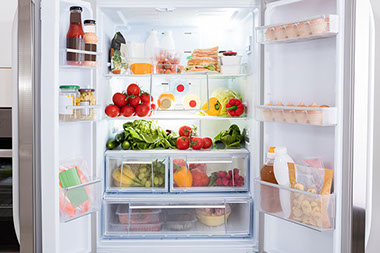
    Refrigerator filled with fresh fruits and vegetables.

    Once foods are right in front of you, it is harder to make a choice based on what your body needs. Instead, you are likely to choose foods based on these factors:

    *  If you can see it

    *  Color

    *  How fresh you think it is

    *  What you think it tastes like

    *  If you’ve thought about the food earlier or the reward you will get from having the food

    Tips for a Weight-Friendly Fridge

    *  Store chopped veggies and fruits on the middle shelf at eye-level. Use clear glass or plastic containers.

    *  Put less-healthy leftovers in the crisper or behind healthier options. Store healthy leftovers in clear containers or with clear plastic wrap.

    *  Avoid washing fruit (especially berries) until you are ready to eat (moisture invites mold).

    *  Wrap cake, pizza, and other less healthy leftovers in aluminum foil or use solid-colored containers.

    *  Use the produce drawer to hide sweets and less-healthy foods.

    *  Put washed grapes or cherry tomatoes in a colander.  Put this on a plate to allow liquid to drain.

    *  Keep hard-boiled eggs, string cheese, grilled turkey burger patties, and non-fat or Greek yogurts in front for easy,  high-protein snacks.

    *  Keep all un-opened sodas and sugar-sweetened drinks out of the fridge. Out of sight, out of mind!

    Plan Your Refrigerator Layout

    Plan where you are going to place healthy foods. Plan, too, where you are going to place less healthy foods. Use specific examples of foods you already have or that you plan to buy.

    © American Institute for Preventive Medicine
  • Limit Sodium

    Healthylife® Weigh

    Part 2

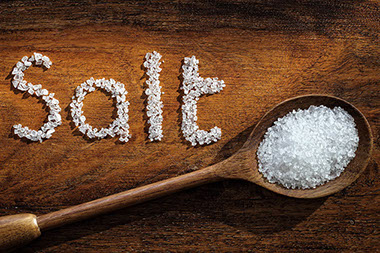
    Sea salt on wooden spoon and the word salt written in grain.

    Your body needs some sodium to:

    *  Maintain the right balance of fluids in your body.

    *  Transmit nerve impulses.

    *  Contract and relax muscles.

    Use added salt sparingly and limit foods high in sodium. Most people eat much more sodium than they need. There are important reasons to limit sodium in the diet. A low-sodium diet can help:

    *  Prevent high blood pressure. High blood pressure, if untreated, can lead to heart attack, stroke, poor eye health, headaches, and kidney failure.

    *  Lower your blood pressure if you have high blood pressure.

    *  Avoid swelling (edema) in legs, ankles, and internal organs.

    *  Reduce bloating and other side effects of premenstrual syndrome (PMS).

    Limit sodium to 2,300 milligrams per day (about 1 teaspoon). If you have high blood pressure, consult your doctor about the amount of sodium you should have each day. He or she may suggest you limit your sodium intake to 1,500 milligrams per day (about ¾ teaspoon). This includes sodium from all sources- salt added during cooking and at the table, salt in processed food, and sodium that occurs naturally in foods.

    Ways to Limit Sodium

    *  Choose low-sodium versions of canned foods, like soup, tomatoes and vegetables.

    *  Read nutrition information for restaurant items, when available. Choose from the “heart healthy” menu.

    *  Taste your food before adding salt. If needed, add a little.

    *  Leave the salt shaker off the table.

    *  Limit intake of processed meats like sausage and cold cuts.

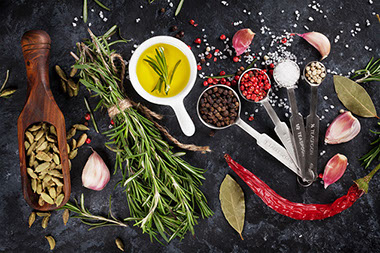
    Flavor Foods Without Salt

    *  Beef – Bay leaf, marjoram, nutmeg, onion, pepper, sage, thyme

    *  Lamb – Curry powder, garlic, rosemary, mint

    *  Pork – Garlic, onion, sage, pepper, oregano

    *  Veal – Bay leaf, curry powder, ginger, marjoram, oregano

    *  Chicken – Ginger, marjoram, oregano, paprika, rosemary, sage, tarragon, thyme

    *  Fish – Curry powder, dill, dry mustard, lemon juice, marjoram, paprika, pepper

    *  Carrots – Cinnamon, cloves, marjoram, nutmeg, rosemary, sage

    *  Corn – Cumin, curry powder, onion, paprika, parsley

    *  Green – beans Dill, curry powder, lemon juice, marjoram, oregano, tarragon, thyme

    *  Peas – Ginger, marjoram, onion, parsley, sage

    *  Potatoes – Dill, garlic, onion, paprika, parsley, sage

    *  Summer squash – Cloves, curry powder, marjoram, nutmeg, rosemary, sage

    *  Winter squash – Cinnamon, ginger, nutmeg, onion

    *  Tomatoes – Basil, bay leaf, dill, marjoram, onion, oregano, parsley, pepper

    © American Institute for Preventive Medicine
  • Modify Ingredients In Recipes

    Healthylife® Weigh

    Part 3

    Herbs and spices.

    Recipes offer guidelines, not rules. You may want to modify them if you:

    *  Don’t like an ingredient.

    *  Don’t have an ingredient.

    *  Want to include something different.

    *  Need to fulfill a need on MyPlate, like getting another serving of vegetables or whole grains.

    *  Want to reduce sodium, saturated fat, or added sugars.

    *  Are allergic or sensitive to an ingredient.

    3 Ways to Modify a Recipe:

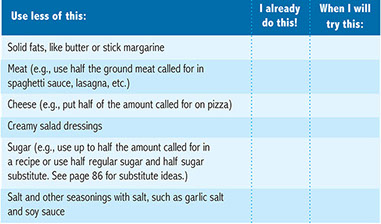
    1. Use less of ingredients that have added sugar, sodium, or saturated fat.

    Chart of ideas on using less of ingredients.

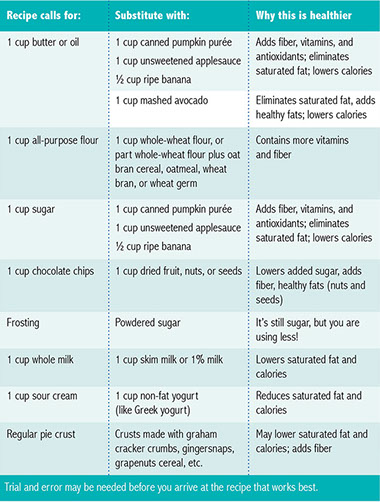
    2. Substitute ingredients

    Chart of substitute ingredients ideas.

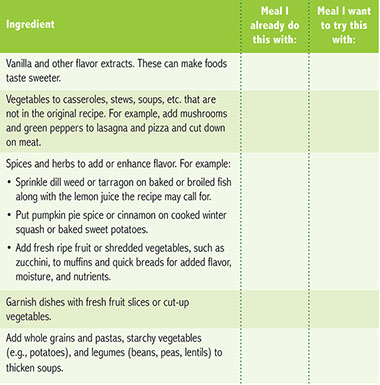
    3. Add new ingredients

    Chart of adding new ingredient ideas.

    © American Institute for Preventive Medicine
  • Plan A Balanced Day 2

    Healthylife® Weigh

    Menus & Recipes

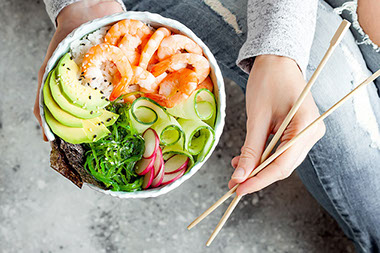
    Person holding a shrimp bowl with seaweed, avocado, cucumber, radish, sesame seeds.

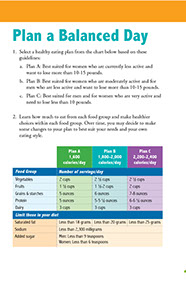
    1. Select a healthy eating plan from the chart below based on these guidelines:

    a. Plan A: Best suited for women who are currently less active and want to lose more than 10-15 pounds.

    b. Plan B: Best suited for women who are moderately active and for men who are less active and want to lose more than 10-15 pounds.

    c. Plan C: Best suited for men and for women who are very active and need to lose less than 10 pounds.

    2. Learn how much to eat from each food group and make healthier choices within each food group. Over time, you may decide to make some changes to your plan to best suit your needs and your own eating style.

    © American Institute for Preventive Medicine