Tag: Weight Control

  • Relieve The Pressure

    Healthylife® Weigh

    Part 6

    Multi-generation family enjoying christmas meal at home.

    Avoiding all holiday food challenges is nearly impossible. Adjust your goals and your action plan for success during this time. Your goal may be to “maintain, don’t gain” during a holiday season.

    Celebration days throughout the year are likely a small fraction of your overall year. Of course, stretching celebration days into weeks and months as a “holiday season” can pose challenges to your healthy goals. Even during traditional “holiday seasons,” stick with your healthy habits on nearly all days.

    Healthy Holiday Strategies:

    *  Have a healthy snack (fiber-rich carbohydrate + protein & a healthy fat) before going to the event.

    *  Keep a drink in your hand (choose water most of the time) and sip throughout the event.

    *  Avoid tables with appetizers and food. Talk with others away from where snacks are served.

    *  Prioritize exercise. This will help you manage stress and keep your metabolism running hot.

    *  Focus on people, not food. Visit friends and relatives. Take non-food gifts, such as flowers.

    *  Modify meals to include less sugar, saturated fat, and sodium.

    *  Create new traditions that are not planned around food. Do volunteer work or plan a hike/outdoor adventure with friends and family.

    *  Use stress management tools in this guide.

    *  Get enough quality sleep.

    © American Institute for Preventive Medicine

  • Tackle Limitations

    Healthylife® Weigh

    Part 5

    Couple enjoying a bike ride.

    Think of getting started like riding a bike. You feel the most resistance when you are stopped and trying to start pedaling. Once you get going, the going gets easier. What is stopping you from getting started? Which of the following apply:

    *  Mental Concerns (fears, doubt, low motivation)

    *  Lack of Skills/Knowledge

    *  Equipment/Physical Needs

    *  Other (time, people, etc.)

    © American Institute for Preventive Medicine

  • 5 Ways To Feel Fuller, Longer

    HEALTHY EATING

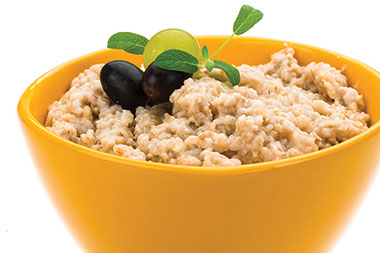
    Image of a bowl with oatmeal.

    Want to feel full without overeating?Certain nutrients and foods may help curb your appetite and make you feel fuller longer, according to the Institute of Food Technologists.

    1. Protein

    Add protein (such as low-fat cheese) to breakfast. And a high-protein afternoon snack containing soy can lead to appetite control and less evening snacking.

    2. Whole grains and fiber

    Oats increased appetite-control hormones up to  4 hours after a meal, but rice-based foods did not.

    3. Eggs

    Eggs are one of the densest proteins in the non-meat category. Eating one egg with breakfast will help to reduce hunger between meal times.

    4. Almonds

    The healthy fats in almonds decrease hunger and improve dietary vitamin E intake. People who ate 1.5 oz. of dry-roasted, lightly salted almonds every day helped curb their hunger without increasing body weight.

    5. Pulses

    Part of the legume family, pulses include dried peas, edible beans, lentils, and chickpeas. They are high in protein and low in fat, and are proven to contribute to a feeling of fullness.

    © American Institute for Preventive Medicine

  • Alter Your Eating Cues

    Healthylife® Weigh

    Part 4

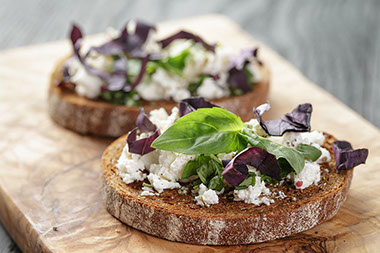
    Rye sandwich with ricotta, herbs and basil.

    Eating cues are things that prompt you to eat. They come from links your brain has made between eating and other events. When done over and over again, the event itself triggers eating. Some examples of events that trigger eating are:

    *  Morning coffee breaks: Doughnuts, sweet rolls

    *  Watching football on TV: Potato chips, beer

    *  Shopping at the mall: Big cookies, soft pretzels, soda, specialty coffee

    *  Going to a movie: Buttered popcorn, soda, candy

    *  Going out to celebrate: Large meals, desserts, alcoholic beverages

    *  Attending sporting events: Beer, hot dogs, nachos with cheese, peanuts

    Focus on triggers that you face most often and that lead you to eat foods high in added sugar, saturated fat, and/or sodium.

    It is possible to break these links. The more you practice a new behavior, the stronger it becomes. You may want to replace eating with a non-eating behavior. Or, you may want to practice choosing a healthier food or drink at that time.

    Ways to Alter Eating Cues

    *  Eat a snack before going somewhere (including out to eat).

    *  If allowed, bring your own healthy snack.

    *  Bring or buy a “fun-sized” or small portion of the treat you are craving (if available).

    *  Eat meals and snacks in one specified place at home, such as the kitchen or dining room table.

    *  Never eat while standing-always be seated.

    *  Do no other activity, such as watching TV, while eating.

    *  Try to eat meals at the same time each day.

    *  Take along bottled water and high fiber snacks to places that trigger high-calorie drinking and eating.

    *  Take a walk break instead of a morning coffee break.

    *  Avoid walking by places that tempt you to eat while you shop.

    *  Go to places, be with people and/or do things not associated with eating.

    *  Take longer to eat a meal.

    *  Use utensils to eat.

    *  Put your fork or spoon down between bites.

    *  Chew & swallow each bite before taking another one.

    *  Take sips of water between bites.

    *  Split a meal or snack with someone else.
    © American Institute for Preventive Medicine

  • Choose Fresh, Frozen, Canned, Or Dried

    Healthylife® Weigh

    Part 2

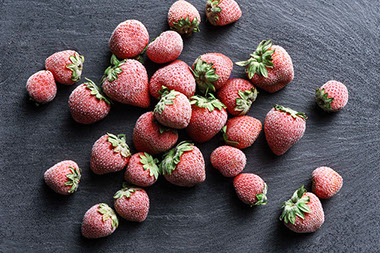
    Frozen strawberries.

    All forms of fruits and vegetables can be healthy options. You may like the taste of one form over another. If you have only tried a vegetable in one form (for example, canned green beans), try it fresh or frozen. You may be surprised how different it tastes. Frozen and canned produce is picked at the peak of ripeness. This means the nutrients were able to fully develop before the plant was picked. This makes these choices very healthy, especially outside of the growing/harvest season.

    Fresh

    *  Choose a variety of fresh produce. Include ready-to-eat snacks like apples and baby carrots.

    *  Buy produce that’s in season to help the environment and provide natural variety in your diet.

    *  Grow your own, when possible.

    Frozen

    *  Choose frozen veggies without added sauces or salt. Add your own seasonings that have little or no salt or sodium.

    *  Choose fruits without added sugar. Fruit has plenty of natural sugar.

    Canned

    *  Choose low-sodium added varieties.

    *  Wipe off the top of the can before opening it.

    *  Rinse the vegetables in a colander to reduce the sodium content further.

    *  With canned fruit, look for options packed in water or 100% fruit juice. Avoid canned fruits that are packed in syrup.

    Dried

    *  Avoid choices with added sugar.

    *  Drink a glass of water to replace the water that has been removed.

    © American Institute for Preventive Medicine

  • Exercise And Sleep

    Healthylife® Weigh

    Part 5

    Women sleeping.

    Physical activity can help you sleep better. After your body has worked hard, deep sleep is triggered to help your body recover, repair, and get ready for more activity. This natural drive helps you fall asleep and sleep more restfully.

    Be active outdoors, when possible. Outdoor physical activity increases exposure to sunlight. This helps to strengthen your body’s circadian rhythm (natural sleep clock). A stronger circadian rhythm helps you feel sleepy when it’s time to rest.

    Sleep Helps You Recover from Exercise

    Physical activity triggers a cycle of muscle break-down and repair. The repair process depends on sleep. Without enough sleep, repair is limited. This can increase the risk of injury and limit athletic goals (e.g., running or walking farther or lifting more weight).

    Severe sleep restriction (less than four hours per night) can cause dramatic increases in your heart rate and blood pressure. This strains your heart. Not only does this limit your ability to exercise, but your risk for heart attack and cardiovascular problems increases.

    Timing Exercise with Sleep

    Physical activity increases adrenaline in the body. This hormone increases your heart rate and alertness. Plan vigorous exercise at least four to six hours before bedtime. Light exercise and mild activities should end at least two to four hours before bedtime.

    © American Institute for Preventive Medicine

  • How Do You View Your Body?

    Healthylife® Weigh

    Part 5

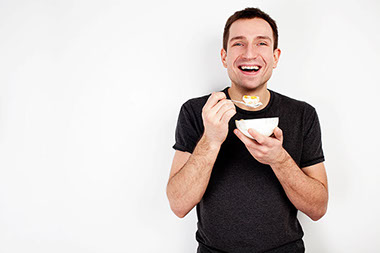
    Young smiling man eating on diet.

    Body Ownership, Healthy Body Image

    *  My body is beautiful to me.

    *  My feelings about my body are not influenced by society’s concept of an ideal body shape.

    *  I know that the significant others in my life will always find me attractive.

    *  I nourish my body so it has the strength and energy to achieve my physical goals.

    *  I pay attention to my body and my appearance because it is important to me, but it only occupies a small part of my day.

    Body Pre-Occupied/ Distorted Body Image

    *  I spend a significant time in front of the mirror viewing my body.

    *  I spend a significant time comparing my body to others.

    *  I’d be more attractive if I was thinner, more muscular, etc.

    *  I have considered changing or have changed my body through surgery so that I can accept myself.

    *  I wish I could change the way I look.

    Body Hate/ Disassociation

    *  I often feel separated and distant from my body, as if it belongs to someone else.

    *  I hate my body and I often isolate myself from others.

    *  I don’t see anything positive or even neutral about my body shape and size.

    *  I don’t believe others when they tell me I look OK.

    *  I hate the way I look in the mirror.

    Move toward viewing your body in a healthy way. Use the healthy body image statements in the left column as affirmations. Repeat these to yourself. Make changing your attitude a goal.

    © American Institute for Preventive Medicine

  • Look Beyond Your Weight Goal

    Healthylife® Weigh

    Part 7

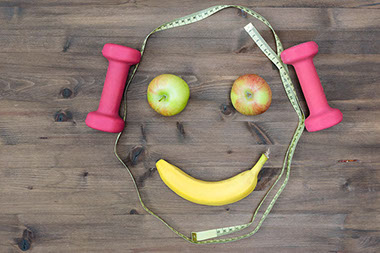
    Apples, measuring tape, dumbbells and banana assembled into a smiling face.

    A healthy lifestyle is not just about the number on the scale. Reflect on what got you motivated to lose weight and got you over hurdles. Strengthen your values by connecting more to the world around you.

    Share your story.Share your struggles, your ideas, and your motivation. Share through your words and actions. You may have inspired someone already. Post to social media or comment on another post. Start a blog about your journey as you continue to learn and manage new challenges.

    Say thank youto those who have helped you along the way and who continue to help you. This may be your healthcare professionals, health coach, coworkers, friends, family, or the stranger who makes your coffee every day. Let people know how much they mean to you. It could be the boost that person needs today.

    Address hunger in your community.Millions of people worldwide struggle with food insecurity. Someone who is food insecure doesn’t know where their next meal is coming from. Many are children. It may be you. Food banks, soup kitchens, homeless shelters, and other community organizations appreciate volunteers or donations. Volunteer to teach a cooking class or lead a grocery store tour. Share your strengths.

    Care for the environment.The global food system depends on a healthy planet. It is also one of the biggest contributors of greenhouse gases and global warming. Choose local, sustainably produced food when possible. In general, the negative environmental impact increases with how far the food traveled, how long it was stored, and how many chemicals were sprayed on it. Buy enough, but not too much, to reduce waste. Use reusable containers for eating and transporting meals and snacks.

    © American Institute for Preventive Medicine

  • Myplate 2

    Healthylife® Weigh

    Part 2

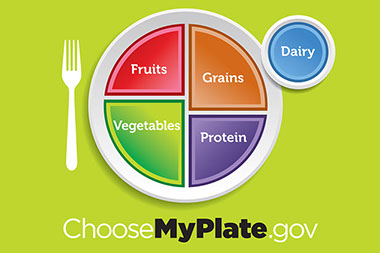
    Choose MyPlate logo.

    MyPlate, developed by the USDA, shows how different food groups should take up space on a plate. The nutrition guidelines in HealthyLife® Weigh are based on MyPlate and the 2015-2020 Dietary Guidelines for Americans.

    *  Make ½ of your plate fruits and vegetables.

    *  ¼ of your plate should be lean protein.

    *  ¼ of your plate should be a whole grain or high-fiber starch.

    *  Drink low-fat dairy or consume other calcium-rich foods and beverages.

    While this graphic is far from a complete nutrition guide, the basic principle of having HALF of your plate fruits and vegetables, a QUARTER of your plate grains or starches, and a QUARTER of your plate a quality protein is a good rule of thumb.

    *  How often does your plate look like the one above?

    *  Which section is the fullest in your current diet?

    *  Which section is the emptiest in your current diet?

    © American Institute for Preventive Medicine

  • Plan Myplate 2

    Healthylife® Weigh

    Part 3

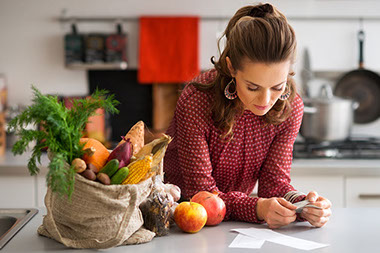
    Woman reading shopping list, next to her on the kitchen counter is a burlap sac with a variety of fruits.

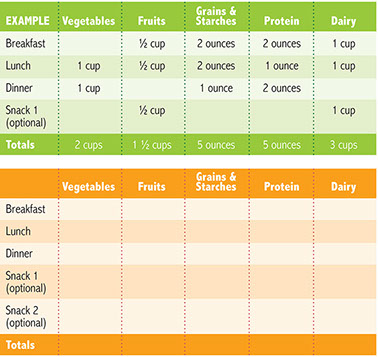
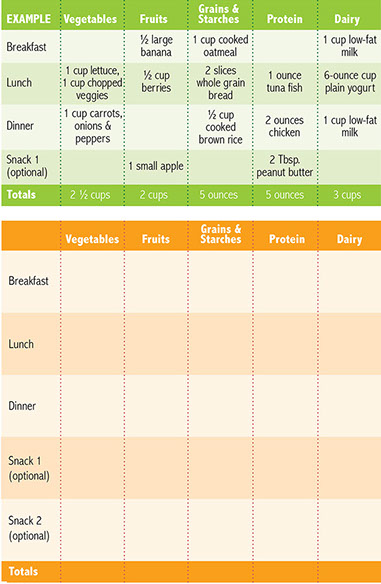
    1. Write your daily goals for each food group.

    *  Vegetables (cups)

    *  Fruits (cups)

    *  Grains/Starches (ounces)

    *  Protein (ounces)

    *  Dairy (cups)

    2. Plan how much of each food group you want to have at a meal. Make sure the total for each group meets, but doesn’t go over, your daily goal.

    3. Select foods for each meal or snack. Refer to what counts as an ounce or a cup for each food group. Choose foods that you like to eat and that are convenient for you.

    © American Institute for Preventive Medicine