Tag: Weight Control

  • Resistance Training

    Healthylife® Weigh

    Part 5

    Fit senior man in gym working out with weights.

    Make resistance training part of your exercise routine. Resistance training:

    *  Builds endurance. Your muscles can work longer before getting tired.

    *  Builds muscle. Muscle increases your resting metabolism. This means that even when your body is at rest, you are burning more fuel.

    *  Improves bone density. This helps prevent osteoporosis and fractures.

    *  Makes your body look more toned.

    *  Reduces the chance of injury while exercising.

    Tips for Resistance Training:

    *  Use free weights, a stretch band, or your body weight. Use the Dyna® Band and Exercise Guide if you received these with HealthyLife® Weigh.

    *  Follow guidelines on resistance machines for proper form. Ask a personal trainer to make sure you are doing exercises correctly.

    *  Work out with a friend. Have someone spot you.

    *  Warm up with 15 repetitions, using ½ to ¾ of your usual weight.

    *  Rest your muscles for a day in between workouts. If you want to work out every day, do the upper body one day; the lower body the next.

    *  Move slowly. Don’t jerk the weights up or drop them too fast.

    *  Breathe out when you are at the hardest part of the exercise. Breathe in when you return to the starting position. Don’t hold your breath.

    *  Work opposing muscles. For example, after you work the front of the arm (biceps), work the back of the arm (triceps).

    Examples of Resistance Training:

    Knee Push-Up: Rest on your knees and on the palms of your hands, about shoulder width apart. Push up. Keep your body straight from knees to shoulders. Push up and down slowly to the count of 4.

    Calf Raises: Stand with your feet about hip distance apart. Rise onto your toes. Hold for 1 count and lower. Try it on the edge of a step and let your heel drop below your toes for a wider range of motion.

    © American Institute for Preventive Medicine

  • Take Responsibility For Change

    Healthylife® Weigh

    Part 5

    Determined female jogging along road in the rain.

    Recognize your role in making changes. Other factors may have a role in your ability to do something. However, name something that IS in your power to change. Take control of your goals. Don’t wait for someone else to do it for you.

    Depending on someone or something else for change:

    *  I will meet my daily recommendation for vegetables when my kids start liking them more at meals.

    *  I will start a daily exercise routine when summer and warmer temperatures arrive.

    *  I will drink enough water every day when my office fixes the drinking fountain.

    Actively taking responsibility for change:

    *  I will meet my daily recommendation for vegetables when I swap my afternoon crackers for carrots and try a new vegetable at dinner each week.

    *  I will start a daily exercise routine when I set my alarm for an hour earlier and go for a brisk stroll in the morning before work.

    *  I will drink enough water every day when I fill up my water bottle one more time each day.

    Find a statement you wrote that doesn’t start with “I.” Re-write this statement to name something within your control.

    If you wait for perfect conditions, you’ll never get anything done.
    © American Institute for Preventive Medicine
  • Beans, Peas May Help You Slim Down

    HEALTHY EATING

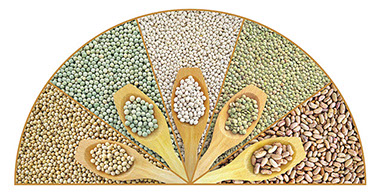
    Image of different types of peas.

    Have you ever eaten “pulses”? There’s a good chance you have – and you may want to start eating more of them.

    Pulses are the edible seeds of legumes. They include kidney beans, lima beans, butter beans, chick peas, black-eyed peas and lentils – available canned or dried.

    Nutritionists already praise pulses as an excellent source of fiber, protein and vitamins. But a recent study published in The American Journal of Clinical Nutrition says that adults who added pulses to their daily diet lost more weight than those who didn’t eat them. And, there was no other special effort involved. The feeling of fullness can help people eat less and consume fewer calories without feeling hungry.

    Pulses have other benefits too. They may help lower blood levels of LDL (bad) cholesterol. They also have a low glycemic index. Glycemic index measures how foods that contain carbohydrates raise blood sugar. Foods with a high glycemic index raise your blood sugar more than foods with a low glycemic index.

    © American Institute for Preventive Medicine