Tag: Weight Control

  • The “Write” Way To Healthy Habits

    Weight Control

    Keep a daily food and activity diary.

    How many calories have you consumed today? Your best guess is likely 10 to 25 percent less than you think. To find out how many calories you do have, keep a daily food diary. And, while you are at it, record your physical activity, too. Burning calories might make up for those little mouthfuls that add up.

    Set your target.

    Health experts say that the average woman should have 1800-2,000 calories per day, and the average man, 2200-2,500. Your needs may vary and depend on whether you need to lose weight, gain weight, or have other diet-related issues. You should discuss your caloric and physical activity needs with your doctor.

    Be honest.

    Record everything you eat from the time you wake until the time you go to bed. This means what you eat and drink at meals and in between meals. Include coffee drinks, mindless munchies, 20-ounce sodas, and peppermints you pop in your mouth throughout the day.

    Get ready for a reality check.

    You can find out how many calories are in foods and drinks from:

    *  Books like Calorie King Fat & Carbohydrate Counter or online atwww.calorieking.com

    *  SuperTracker atwww.choosemyplate.gov

    *  Smartphone apps like My Fitness Pal, Calorie Counter, and The Daily Burn.

    Enter physical activities you do, too. You may be in for an unpleasant surprise to find out how many calories you take in and how few you expend in energy.

    If you had to pay for calories with physical activity:

    Food

    1 oz. potato chips

    Jelly doughnut

    Large cinnamon roll

    Calorie Cost

    150

    300

    800

    Activity Cost

    30-minute walk

    60-minute walk

    160-minute walk

    Action Step

    Think before you munch. If you are eating just because food is in front of you, walk away. Better yet, take a walk around the block. Then record the activity in your diary.

    Page from Ways to Well-Being book by the American Institute for Preventive Medicine. www.HealthyLife.com. All rights reserved.

    © American Institute for Preventive Medicine

  • Seek Downtime Daily 2

    SleepWell® Program

    Week 4

    Image of man sitting on couch.

    Downtime is idle time between activities. Examples are the moments you have waiting at a red light, the time spent riding in an elevator, and the extra time during a lunch break.

    Idle time allows your brain to rest and process and store information (how you learn and form memories). If you’ve ever had a great idea come to you in the shower, you know how creative your mind is during this time.

    Often, multi-tasking steals this time away. The resulting “addiction to activity” does not let your mind rest during the day. The result can be a feeling of being busy all the time. You may feel like you need “time to think.” If you go all day without downtime, it can be harder to quiet your mind at night and go to sleep.

    Practice letting your mind rest every day. If you are used to filling your time with multiple tasks at once, the following exercise may be eye-opening!

    Try this: Sit in a room for 15 minutes and do nothing. Don’t look at your phone or seek any other distractions. Let thoughts enter your mind.

    Reflect:

    How did you feel at the end of 15 minutes?

    Natural Ways to Include Downtime Daily

    *  Turn off notifications on your phone. Set aside time for social media during the day-and avoid it at other times.

    *  Listen to music instead of the news or talk radio while driving. Or, sit in silence and let your mind wander.

    *  Set an alarm on your phone to remind you to take five minutes of “blank space” time in your day.

    © American Institute for Preventive Medicine

  • Mood & Food: The Close Link

    HEALTHY EATING

    A bite out of a green apple and in a chocolate bar.

    You may already know that your diet can change how you feel mentally. If you’ve ever been really hungry, you may notice that you start to feel upset or angry. And, some high-calorie junk foods are called “comfort foods” for a reason. They make you feel better mentally, but only for a little while.

    The link between the mind and what a person eats is complex. That’s why it can be so hard to make good choices when you have a bad day or feel depressed. But there are ways to fight this habit and start to make better choices, even when your mood is down or you feel stressed.

    Why we want comfort food

    Stress can make you want to eat unhealthy foods. This is your body’s way of trying to get fuel when it thinks you are in trouble. Although this is normal, you have the power to overcome it.

    Take a moment to think about a food you are craving. Then think about your current emotions. If you’re feeling sad, angry or stressed, this could be why you want that pizza or ice cream.

    If you eat the food, you may feel good for a few minutes. But unhealthy foods with lots of fat and sugar can actually increase the risk of depression or anxiety. This creates an unhealthy cycle that will continue as you eat those comfort foods.

    The cycle of mood & food

    If you use food to cope with stress or depression for too long, your body will get used to it. Then, when you do try to make a healthy choice, your body and mind may be confused. This could lead to an even stronger craving for those comfort foods. This cycle makes it very hard to make changes to your diet.

    You can win!

    You’re not stuck in this cycle. Eating fruits and vegetables can make you feel happy. When you’re happy, you’re more likely to reach for healthy foods again. This can start a positive cycle!

    Source: American Heart Association

    © American Institute for Preventive Medicine

  • Knowing When Not To Weigh Yourself

    Weight Control

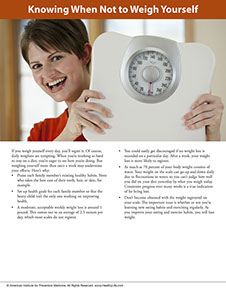
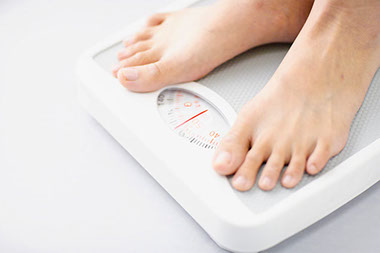
    Image on feet on a scale.

    If you weigh yourself every day, you’ll regret it. Of course, daily weigh-ins are tempting. When you’re working so hard to stay on a diet, you’re eager to see how you’re doing. But weighing yourself more than once a week may undermine your efforts. Here’s why:

    *  Praise each family member’s existing healthy habits. Note who takes the best care of their teeth, hair, or skin, for example.

    *  Set up health goals for each family member so that the heavy child isn’t the only one working on improving health.

    *  A moderate, acceptable weekly weight loss is around 1 pound. This comes out to an average of 2.3 ounces per day, which most scales do not register.

    *  You could easily get discouraged if no weight loss is recorded on a particular day. After a week, your weight loss is more likely to register.

    *  As much as 70 percent of your body weight consists of water. Your weight on the scale can go up and down daily due to fluctuations in water, so you can’t judge how well you did on your diet yesterday by what you weigh today. Consistent progress over many weeks is a true indication of fat being lost.

    *  Don’t become obsessed with the weight registered on your scale. The important issue is whether or not you’re learning new eating habits and exercising regularly. As you improve your eating and exercise habits, you will lose weight.

    Page from A Year of Health Hints book by the American Institute for Preventive Medicine. www.HealthyLife.com. All rights reserved.

    © American Institute for Preventive Medicine

  • Address Anxiety 2

    Healthylife® QuitWell™

    Part 2

    Zen garden with massage stones and waterlily.

    Anxiety is a feeling of dread, fear, or distress over a real or imagined threat to your mental or physical well-being. Smoking, chewing, or vaping may be a way that you have coped in the past with these feelings. At all stages of change, you can learn to address anxiety in healthy ways.

    First, try to calm your body physically. Calming the physical body can make working through what is in your mind easier.

    *  Breathe deeply and evenly.

    *  Take a walk or get some other form of exercise.

    *  Take a long, warm bath or shower. Or, go for a swim.

    *  Listen to soothing music. Or, go somewhere quiet.

    *  Connect with people. Visit or call someone who will listen to you and support you.

    *  Drink a warm cup of decaf coffee or tea-avoid caffeine, which can make anxiety worse.

    As you take a step back, use these tips to manage the thoughts that are causing your anxiety:

    *  Ask: is your thought based on facts?

    *  Identify what you are trying to do. Know your purpose.

    *  Consider many different outcomes and their effects.

    *  View the situation from many perspectives.

    *  Don’t assume a situation will have the same outcome as it did in the past.

    *  Have good evidence for a generalization before you make it.

    *  Avoid assuming one event caused another just because they happened at the same time.

    You will likely feel calmer after you quit. Nicotine only makes you more nervous. Nicotine is a stimulant. After you get over the initial stress of quitting, you’ll find that without all that nicotine in your body, you feel calmer and more relaxed.
    © American Institute for Preventive Medicine

  • Set Goals 2

    SleepWell® Program

    Week 2

    Image of wood blocks with letters spelling "smart."

    View sleep improvement as a long-term project, especially if you have had poor sleep for a long time. First, define small steps you want to take. Continue to reflect on your efforts.

    Small Steps

    Think of the actions you take on a daily basis as small steps towards your bigger goal. This guide has already given you many ideas for small steps. Examples are limiting caffeine and dimming the lights one hour before bedtime. Identify your next change and use the following guidelines to improve your goal. All goals should be:

    Chart on S.M.A.R.T.

    Stay motivated with the small successes you achieve along the way. Use your SleepWell® Tracker every day for feedback on the effect your actions have on your sleep.

    Reminder:If your sleep issues are chronic (last longer than three weeks), your primary goal should be to schedule an appointment with your doctor or a sleep specialist.

    Practice Goal-Setting

    Strengthen your goal using the S.M.A.R.T. tool. Start with a simple statement about what you want to accomplish. Next, write how your goal will be specific, measurable, attainable, relevant, and timely.

    Barriers to Change

    As you think more about your goal, roadblocks may appear. You may need tools or skills to achieve your goal. Identify what is making it difficult for you to change. Barriers do not mean you can’t make the change. Identify challenges that must be overcome to succeed.

    © American Institute for Preventive Medicine

  • Potatoes: Diet Friend Or Foe?

    HEALTHY EATING

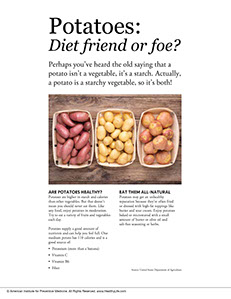
    Three baskets filled with potatoes.

    Perhaps you’ve heard the old saying that a potato isn’t a vegetable, it’s a starch. Actually, a potato is a starchy vegetable, so it’s both!

    Are potatoes healthy?

    Potatoes are higher in starch and calories than other vegetables. But that doesn’t mean you should never eat them. Like any food, enjoy potatoes in moderation. Try to eat a variety of fruits and vegetables each day.

    Potatoes supply a good amount of nutrients and can help you feel full. One medium potato has 110 calories and is a good source of:

    *  Potassium (more than a banana)

    *  Vitamin C

    *  Vitamin B6

    *  Fiber

    Eat them all-natural

    Potatoes may get an unhealthy reputation because they’re often fried or dressed with high-fat toppings like butter and sour cream. Enjoy potatoes baked or microwaved with a small amount of butter or olive oil and  salt-free seasoning or herbs.

    Source: United States Department of Agriculture

    © American Institute for Preventive Medicine
  • Lean On Friends For Weight Loss Support

    Weight Control

    Find a friend or a room full of others on similar paths.

    Getting support as you change lifestyle habits is important. It could be from a buddy who will listen to your woes, applaud your successes, and help you stay on track. Or you could find the support you need in a group program where others’ successes inspire and motivate you.

    Friends don’t let friends eat junk.

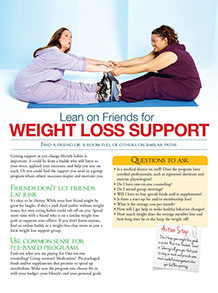
    Image of two friends eating healthy.

    It’s okay to be choosy. While your best friend might be great for laughs, if she’s a junk food junkie without weight issues, her own eating habits could rub off on you. Spend more time with a friend who is on a similar weight loss path or supports your efforts. If you don’t know anyone, find an online buddy in a weight-loss chat room or join a local weight loss support group.

    Use common sense for fee-based programs.

    Find out what you are paying for. One-on-one counseling? Group sessions? Medication? Pre-packaged foods and/or supplements that promise to speed up metabolism. Make sure the program you choose fits in with your budget, your lifestyle, and your personal goals.

    Questions to ask:

    *  Is a medical doctor on staff? Does the program have certified professionals, such as registered dietitians and exercise physiologists?

    *  Do I have one-on-one counseling?

    *  Do I attend group meetings?

    *  Will I have to buy special foods and/or supplements?

    *  Is there a start-up fee and/or membership fees?

    *  What is the average cost per month?

    *  How will I get help to make healthy behavior changes?

    *  How much weight does the average member lose and how long does he or she keep the weight off?

    Action Step

    Don’t keep your weight loss goals a secret. Post it on Facebook. Tweet it. Sharing will give you that push to stay on track and provide some much needed encouragement when you feel like quitting.

    Page from Ways to Well-Being book by the American Institute for Preventive Medicine. www.HealthyLife.com. All rights reserved.

    © American Institute for Preventive Medicine

  • Be Assertive 2

    Healthylife® QuitWell™

    Part 5

    Image of cigarettes and money.

    Learn the differences between passive, aggressive, and assertive communication.

    Passive

    *  You lack expression for yourself.

    *  You do not stand up for your rights and needs.

    Result: You usually do not achieve your goal. You may feel like someone is walking all over you.

    Aggressive

    *  You stand up for your rights and needs, but at the expense of someone else.

    Result: You usually put down or hurt someone else. You gain no respect and may even start a conflict.

    Assertive

    *  You stand up for your rights and needs without putting down or hurting someone else.

    Result: You build self-respect and feel good about yourself. You are likely to achieve your goal.

    Example

    Your co-worker offers you a cigarette, saying that you can have just one, even though you recently quit. This person wants to smoke with you for old time’s sake. You know this could send you back to using tobacco.

    Passive Response:“All right, I’ll have a cigarette with you, but just this one.”

    Aggressive Response:“You really have some nerve offering me a cigarette. I hate cigarettes and I think it’s disgusting that you smoke. You should smell your breath. Don’t ever come near me with a cigarette again.”

    Assertive Response:“No, thank you. I have quit smoking and I plan to stay that way. Even one can trigger my old addiction. You can help me remain an ex-smoker by not offering me any.”

    © American Institute for Preventive Medicine
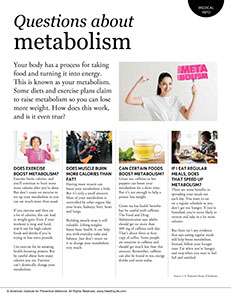
  • Questions About Metabolism

    MEDICAL NEWS

    Women flexing arm while holding a fork in the other hand, with the word "Metabolism".

    Your body has a process for taking food and turning it into energy. This is known as your metabolism. Some diets and exercise plans claim to raise metabolism so you can lose more weight. How does this work, and is it even true?

    Does exercise boost metabolism?

    Exercise burns calories, and you’ll continue to burn some more calories after you’re done. But don’t count on exercise to rev up your metabolism so you can eat much more than usual.

    If you exercise and then eat a lot of calories, this can lead to weight gain. Even if your workout is long and hard, watch out for high-calorie foods and drinks if you’re trying to lose extra pounds.

    Use exercise for its amazing health-boosting powers. But be careful about how many calories you eat. Exercise can’t drastically change your metabolism.

    Does muscle burn more calories than fat?

    Having more muscle can boost your metabolism a little. But it’s only a small amount. Most of your metabolism is controlled by other organs like your brain, kidneys, liver, heart and lungs. Building muscle mass is still valuable. Lifting weights boost bone health. It can help you with everyday tasks and balance. Just don’t count on it to change your metabolism very much.

    Can certain foods boost metabolism?

    Green tea, caffeine or hot peppers can boost your metabolism for a short time. But it’s not enough to help a person lose weight.

    Green tea has health benefits but be careful with caffeine. The Food and Drug Administration says adults should get no more than 400 mg of caffeine each day. That’s about three or four cups of coffee. Some people are sensitive to caffeine and should get much less than this amount. Remember, caffeine can also be found in tea, energy drinks and some sodas.

    If I eat regular meals, does that speed up metabolism?

    There are some benefits to spreading your meals out each day. You want to eat on a regular schedule so you don’t get too hungry. If you’re famished, you’re more likely to overeat and take in a lot more calories.

    But there isn’t any evidence that says eating regular meals will help boost metabolism. Instead, follow your hunger cues. Eat when you’re hungry and stop when you start to feel full and satisfied.

    Source: U.S. National Library of Medicine

    © American Institute for Preventive Medicine