Weight Control
A simple measurement can help detect your health risks.
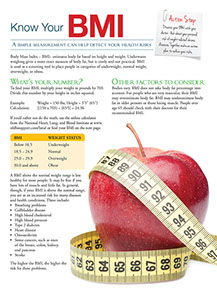
Body Mass Index − BMI− estimates body fat based on height and weight. Underwater weighing gives a more exact measure of body fat, but is costly and not practical. BMI is used as a screening tool to place people in categories of underweight, normal weight, overweight, or obese.
What’s your number?
To find your BMI, multiply your weight in pounds by 703.
Divide this number by your height in inches squared.
Example: Weight = 150 lbs; Height = 5’5″ (65″)
Calculation: [(150 x 703) ÷ (65²)] = 24.96
If you’d rather not do the math, use the online calculator from the National Heart, Lung, and Blood Institute atwww.nhlbisupport.com/bmi.
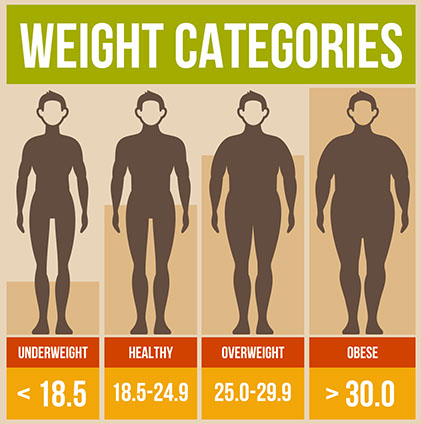
BMI – WEIGHT STATUS
Below 18.5 – Underweight
18.5 – 24.9 – Normal
25.0 – 29.9 – Overweight
30.0 and above Obese
A BMI above the normal weight range is less healthy for most people. It may be fine if you have lots of muscle and little fat. In general, though, if your BMI is above the normal range, you are at an increased risk for many diseases and health conditions. These include:
* Breathing problems
* Gallbladder disease
* High blood cholesterol
* High blood pressure
* Type 2 diabetes
* Heart disease
* Osteoarthritis
* Some cancers, such as ones of the breast, colon, kidney, and pancreas
* Stroke
The higher the BMI, the higher the risk for these problems.
Other factors to consider
Bodies vary. BMI does not take body fat percentage into account. For people who are very muscular, their BMI may overestimate body fat. BMI may underestimate body fat in older persons or those losing muscle. People over age 65 should check with their doctors for their recommended BMI.
Action Step
Discuss your BMI with your doctor. Ask about your personal risk of weight-related chronic diseases. Together, make an action plan to reduce your risks.
© American Institute for Preventive Medicine