Tag: Women’s Health

  • Depression

    Student Health

    Depression is the most common reason college students go to their school’s counseling service. Depression makes a person less able to manage life. It affects a person’s mood, mind, body, and behaviors.

    Signs & Symptoms

    The number and severity of the symptoms vary from person to person. A person who is depressed has one or more of the signs and symptoms listed below.

    *  Feeling sad, hopeless, and helpless.

    *  Feeling guilty and/or worthless.

    *  Thinking negative thoughts.

    *  Having a loss of interest in things, such as social activities, hobbies, and sex.

    *  Sleeping too little or too much.

    *  Fatigue or loss of energy.

    *  Problems concentrating or making decisions.

    *  Ongoing physical symptoms, such as headaches, chronic pain, or digestive problems that don’t respond to treatment.

    *  Uncontrollable crying.

    *  Poor appetite with weight loss, or overeating and weight gain.

    *  Thoughts of suicide or death.

    Causes & Risk Factors

    *  Major changes and stress that accompany college, including choosing career goals, leaving home, and the strain from trying to study and socialize at the same time.

    *  Obsessing about expenses.

    *  Abuse of alcohol, drugs, and some medications.

    *  Relationship changes, such as break ups, a family divorce, or the death of someone close.

    *  Brain chemical imbalances. Also, some types of depression run in families.

    *  Hormonal changes. This could be from taking birth control pills or using anabolic steroids which can cause changes in mood.

    *  Lack of natural, unfiltered sunlight between late fall and spring. This is called Seasonal Affective Disorder (SAD). It may only affect some people that are prone to this disorder.

    *  Holiday “blues.”

    Most likely, depression is caused by a mix of: A family history of the illness; brain chemical imbalances; emotional issues; and other factors, such as a medical illness or alcohol abuse.

    In some people, events like extreme stress and grief may cause depression. In others, depression occurs even when life is going well.

    Treatment

    Treatment includes medicines, psychotherapy, and other therapies that are specific to the cause of the depression. Exposure to bright lights (similar to sunlight) for depression that results from SAD can be helpful. {Note: Some antidepressant medicines can increase the risk for suicidal thoughts and behaviors, especially in children and adolescents. This risk may be higher within the first days to a month after starting the medicine. Persons who take antidepressants should be closely monitored.}

    Questions to Ask

    Self-Care / Prevention

    *  Take medications as prescribed. Get your doctor’s advice before you take over-the-counter herbs, such as St. John’s Wort, especially if you take other medications.

    *  Don’t use illegal drugs. Limit alcohol. These can cause or worsen depression. Drugs and alcohol can also make medicines for depression less effective. Harmful side effects can occur when drugs and/or alcohol are mixed with medicine.

    *  Eat healthy foods. Eat at regular times.

    *  Get regular exercise.

    *  Talk to someone who will listen to the tensions and frustrations you are feeling.

    *  Try not to isolate yourself. Be with people you trust and feel safe with, even though you feel down.

    *  Do things you enjoy. Do something that lets you express yourself. Draw. Paint. Write your thoughts in a diary or journal.

    *  Relax. Listen to soft music, take a warm bath or shower. Do relaxation exercises.

    *  Avoid stressful situations or taking on added commitments when you feel depressed.

    *  Keep an emergency number handy (e.g., crisis hotline, trusted friend’s number, etc.) in case you feel desperate.

    Feeling better takes time. Don’t expect to just “snap out” of your depression.

    To Help A Friend Who Is Depressed

    *  Help your friend get an appropriate diagnosis. Make an initial appointment with a professional and offer to take your friend.

    *  Do not ignore remarks about suicide. Report them, immediately, to a student advisor, teacher, or health care provider.

    *  Be aware of the type of medication your friend needs to take and when it should be taken. If necessary, alert your friend’s health care provider about any side effects that you notice.

    *  Be supportive. Depression is no different from any other physical illness. It requires patience, understanding, love, and encouragement. Encourage your friend to continue with treatment and to see his or her health care provider if there is no improvement.

    *  Listen with care. Point out your friend’s successes and attributes when he or she feels worthless, helpless, or down about the future. Helping your friend see previous successes can help give the confidence needed to continue with treatment. Your friend doesn’t need you to tell him or her what to do. Listening is very helpful.

    *  Encourage your friend to go out and do things with you or with others, such as to see a movie or to do things your friend enjoyed in the past. Don’t push, though, or make too many demands.

    *  Seek support from organizations that deal with depression.

    Resources

    Your school’s Student Counseling Service or Student Mental Health Service. (Normally, these services are no cost to you.)

    International Foundation for Research and Education on Depression (IFRED)

    www.ifred.org

    Mental Health America (MHA)

    800.969.6642

    www.mentalhealthamerica.net

    National Mental Health Consumers’ Self-Help Clearinghouse

    800.553.4539

    www.mhselfhelp.org

    Student Self-Care book by the American Institute for Preventive Medicine. www.HealthyLife.com. All rights reserved.

    © American Institute for Preventive Medicine

  • Eating Disorders 2

    Women’s Health

    Image of women sitting alone.

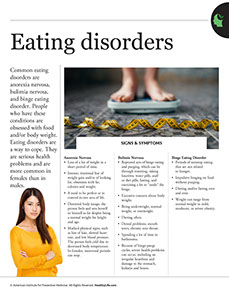
    Common eating disorders are anorexia nervosa, bulimia nervosa, and binge eating disorder. People who have these conditions are obsessed with food and/or body weight. Eating disorders are a way to cope. They are serious health problems and are more common in females than in males.

    Signs & Symptoms

    Anorexia Nervosa

    *  Loss of a lot of weight in a short period of time.

    *  Intense, irrational fear of weight gain and/or of looking fat, obsession with fat, calories and weight.

    *  A need to be perfect or in control in one area of life.

    *  Distorted body image; the person feels and sees herself or himself as fat despite being a normal weight for height and age.

    *  Marked physical signs, such as loss of hair, slowed heart rate, and low blood pressure. The person feels cold due to decreased body temperature. In females, menstrual periods can stop.

    Bulimia Nervosa

    *  Repeated acts of binge eating and purging, which can be through vomiting, taking laxatives, water pills, and/or diet pills, fasting, and exercising a lot to “undo” the binge.

    *  Excessive concern about body weight.

    *  Being underweight, normal weight, or overweight.

    *  Dieting often.

    *  Dental problems, mouth sores, chronic sore throat.

    *  Spending a lot of time in bathrooms.

    *  Because of binge-purge cycles, severe health problems can occur, including an irregular heartbeat and damage to the stomach, kidneys and bones.

    Binge Eating Disorder

    *  Periods of nonstop eating that are not related to hunger.

    *  Impulsive binging on food without purging.

    *  Dieting and/or fasting over and over.

    *  Weight can range from normal weight to mild, moderate, or severe obesity.

    Causes & Risk Factors

    An exact cause has not been found. Persons from all backgrounds, ages and genders are affected. Risk factors include:

    *  A family history of eating disorders.

    *  Pressure from society to be thin.

    *  Personal and family pressures.

    *  Sexual, physical, or alcohol abuse in the past.

    *  Fear of starting puberty.

    *  Fear of having sex.

    *  Pressure for athletes to lose weight or to be thin for competitive sports.

    *  Chronic dieting.

    Treatment

    *  Counseling. This can be individual, family, group, and/or behavioral therapy.

    *  Support groups.

    *  Medication.

    *  Nutrition therapy.

    *  Outpatient treatment.

    *  Hospitalization, if needed.

    Treatment varies with the disorder and how severe it is. The earlier the condition is diagnosed and treated, the better the outcome.

    Questions to Ask

    Self-Care

    Eating disorders need professional treatment.

    Prevent an Eating Disorder

    *  Learn to accept yourself and your body. You don’t need to look like anyone else. Spend time with people who accept you as you are, not people who focus on “thinness.”

    *  Know that self-esteem does not have to depend on body weight.

    *  Eat nutritious foods. Focus on whole grains, beans, fresh fruits and vegetables, low-fat dairy foods, and lean meats.

    *  Commit to a goal of normal eating. Realize that this will take time. It will also take courage to fight fears of gaining weight.

    *  Don’t skip meals. If you do, you are more likely to binge when you eat.

    *  Limit white flour, sugar and foods high in sugar and fat, such as cakes, cookies and pastries. People who have bulimia tend to binge on junk food. The more they eat, the more they want.

    *  Get regular, moderate exercise at least 3 to 4 times a week. If you exercise more than your doctor advises, do more non-exercise activities with family and friends.

    *  Find success in things you do. Hobbies, work, school, etc. can promote self-esteem.

    *  Discuss with family and friends how TV, movies and social media can send the message that only a certain body type is acceptable.

    *  Learn as much as you can about eating disorders from reputable websites, books and organizations that deal with them.

    *  To help children avoid eating disorders, parents should promote a balance between their child’s competing needs for independence and family involvement.

    Treat an Eating Disorder

    *  Follow your treatment plan from your health care provider. To be successful, you need to be actively involved in your treatment.

    *  Attend counseling sessions and/or support group meetings as scheduled.

    *  Set small goals that you can easily reach. Congratulate yourself for every success. This is a process. Accept set backs. Learn from them.

    *  Talk to someone instead of turning to food.

    *  Work toward the point where weight is no longer a way you rate your success. Think about your accomplishments, positive personal qualities, and valued relationships.

    *  Learn to express your rights. You have the right to say no and the right to express your feelings and your opinions. You have the right to ask that your needs are met.

    *  Keep a journal of your progress, feelings, thoughts, etc., but not about what you eat. The journal is just for you, not for others to read or judge. This is a safe place to be honest with yourself. The journal can also help you identify your “triggers” so that you can deal with them in the future.

    *  Don’t let the scale run your life. Better yet, throw out the scale!

    Resources

    National Eating Disorders Association (NEDA)Information and Referral Helpline

    800.931.2237

    www.nationaleatingdisorders.org

    Women's Self-Care book by the American Institute for Preventive Medicine. www.HealthyLife.com. All rights reserved.

    © American Institute for Preventive Medicine

  • Hiv/Aids

    Sexual Health

    HIV stands for human immunodeficiency virus. AIDS is acquired immune deficiency syndrome. It is caused by HIV. The virus destroys the body’s immune system. This leaves a person unable to fight off diseases. The virus also attacks the central nervous system causing mental problems. One million people in the U.S. have HIV, but about 25% of them do not know they have it. People ages 15 to 65 are advised to be screened for HIV.

    Signs & Symptoms

    Many people have no symptoms when first infected with HIV. Within a month or two, some people have flu-like symptoms. These include fever, fatigue, headache, and swollen glands in the neck and groin. These symptoms usually go away within a week to a month. They are often mistaken for other infections.

    In adults, symptoms of HIV may take a few months to 10 or more years to appear. In children born with HIV, symptoms appear within 2 years.

    Symptoms of HIV Before the Onset of AIDS

    *  Swollen glands.

    *  Fatigue. Weight loss.

    *  Fever and sweating that occur often.

    *  Skin rashes that persist. Flaky skin.

    *  Infections. These include herpes, shingles, and yeast infection.

    *  Short-term memory loss.

    *  Getting sick often. Slow growth in children.

    AIDS is the most advanced stage of HIV. With AIDS, a low level of cells in the blood called T4 cells occurs. Persons with AIDS get many illnesses. These include skin infections, pneumonia, and cancer.

    Symptoms of AIDS

    *  Extreme fatigue. Weight loss.

    *  Severe and chronic diarrhea.

    *  Fever. Severe headaches.

    *  Shortness of breath. Coughing. A hard time swallowing.

    *  Abdominal cramps. Nausea. Vomiting.

    *  Lack of coordination. Vision loss.

    *  Mental status changes. Seizures. Coma.

    Causes

    HIV is spread when body fluids, such as semen and blood, pass from an infected person to another person. This includes having unprotected sexual contact and/or sharing drug needles.

    Infected females can give HIV to their babies during pregnancy, birth, or breast-feeding. The risk of the baby getting HIV is lowered a great deal if the female takes antiviral medicines during the pregnancy and delivery. The baby takes medicine the first six weeks of life, too.

    HIV is not spread from donating blood, touching, hugging, or (dry) kissing a person with HIV. A cough, a sneeze, tears, sweat, or using a hot tub, or public restroom does not spread HIV either.

    Treatment

    A rapid oral HIV test and blood tests detect antibodies to HIV. There is no cure for AIDS, but treatment helps the immune system fight HIV, infections, and cancers that can occur with it. Treatment includes medications (often used in multidrug combinations) and treating infections.

    Questions to Ask

    Self-Care / Prevention

    *  Take medication as prescribed.

    *  Take steps to reduce the risk of getting infections and diseases. Get enough rest. Eat healthy foods. Take vitamins and minerals as advised by your doctor.

    *  Get emotional support. Join a support group for persons infected with HIV. Let your family and friends know how they can help you.

    To Reduce the Risk for HIV

    *  Follow Safer Sex.

    *  Don’t share needles with anyone. Don’t have sex with people who use or have injected illegal drugs.

    *  Don’t share personal items that have blood on them, such as razors.

    *  Don’t have sex with people who are at high risk for HIV:

    – Persons with multiple sex partners or who inject illegal drugs.

    – Partners of persons infected or exposed to HIV.

    – Persons who have had multiple blood transfusions, especially before 1985, unless tested negative for HIV.

    Resources

    AIDSinfo

    800.HIV.0440 (448.0440)

    www.aidsinfo.nih.gov

    CDC National AIDS Hotline (NAH) and National STD Hotline

    800.CDC.INFO (232.4636)

    www.cdc.gov/std

    Healthier at Home book by the American Institute for Preventive Medicine. www.HealthyLife.com. All rights reserved.

    © American Institute for Preventive Medicine

  • Tips For A Healthier, Easier Pregnancy

    Pregnancy & Prenatal Care

    Close up image of 4 pregnant bellies.

    Healthy moms tend to have healthy babies. If you plan to become pregnant, take the following steps to help your baby get off to a good start.

    *  Have a complete medical exam, including a gynecological exam. A number of medical conditions, including obesity, high blood pressure, diabetes, smoking, alcohol use, nutritional deficiencies, and Rh negative blood factor (after the first pregnancy) can jeopardize the health of mother and child.

    *  Check with your doctor about the effects of any prescription or over-the-counter medication you take.

    *  If you have a chronic medical condition, ask your doctor how it may affect your pregnancy and whether or not you should change or adjust your medication.

    *  If you use an IUD or take birth control pills, use an alternative form of birth control for 1 to 2 months before trying to become pregnant.

    *  If you’re markedly overweight, plan to lose excess pounds before becoming pregnant.

    *  Exercise regularly.

    *  Consider genetic tests or counseling if you or your husband has a family history of genetic disorders, if you are 35 or older, or if your husband is 50 or older.

    You and your baby will do best if you follow these guidelines.

    *  Ask your doctor or a dietitian to outline a meal plan that meets the special nutritional needs created by pregnancy.

    *  Avoid caffeine, alcohol, nicotine, and illicit drugs, as they can harm you and your unborn baby.

    *  Consult your doctor before taking any medication.

    *  Ask your doctor what prenatal vitamin/mineral supplement you should take.

    *  Follow your health care provider’s advice about weight gain. The amount of weight you gain should depend on your pre-pregnancy weight and health status, as well as your ethnic background. If you are very overweight, plan to lose excess pounds before you get pregnant.

    *  Continue to exercise in moderation.

    *  Practice relaxation and other stress management techniques. (Doctors think emotional stress may constrict the blood supply to the uterus and placenta, the baby’s only source of oxygen and nutrients.)

    *  Enroll in childbirth preparation classes.

    *  If you own a cat, arrange for someone else to empty the litter box. Cat excrement can transmit a disease called toxoplasmosis. If you’re infected while pregnant, your baby may be stillborn, born prematurely, or suffer serious damage to the brain, eyes, or other parts of the body.

    A Year of Health Hints book by the American Institute for Preventive Medicine. www.HealthyLife.com. All rights reserved.

    © American Institute for Preventive Medicine

  • Smart Ways To Exercise During Pregnancy

    Pregnancy & Prenatal Care

    Image of pregnant women exercising with dumb bells.

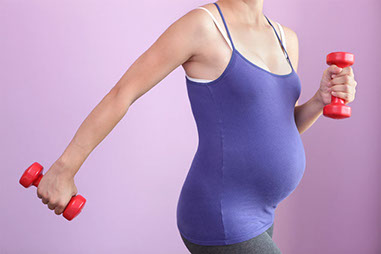
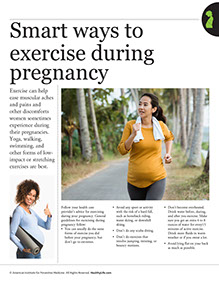
    Exercise can help ease muscular aches and pains and other discomforts women sometimes experience during their pregnancies. Yoga, walking, swimming, and other forms of low-impact or stretching exercises are best.

    Follow your health care provider’s advice for exercising during your pregnancy. General guidelines for exercising during pregnancy follow:

    *  You can usually do the same forms of exercise you did before your pregnancy, but don’t go to extremes.

    *  Check your pulse when you exercise. In general, your heart rate should stay below 140 beats a minute.

    *  Avoid any sport or activity with the risk of a hard fall, such as horseback riding and water skiing.

    *  Don’t do exercises that involve jumping, twisting, or bouncy motions.

    *  Don’t become overheated. Drink water before, during, and after you exercise. Make sure you get an extra 4 to 8 ounces of water for every 15 minutes of active exercise. Drink more fluids in warm weather or if you sweat a lot.

    *  After the 20th week of pregnancy, avoid exercises in which you lie flat on your back.

    A Year of Health Hints book by the American Institute for Preventive Medicine. www.HealthyLife.com. All rights reserved.

    © American Institute for Preventive Medicine

  • Hiv/Aids 2

    Women’s Health

    HIV stands for human immunodeficiency virus. AIDS is acquired immune deficiency syndrome. It is caused by HIV. The virus destroys the body’s immune system. This leaves a person unable to fight off diseases. The virus also attacks the central nervous system causing mental problems.

    Signs & Symptoms

    When first infected with HIV, many people have no symptoms. Within a month or two, some persons have flu-like symptoms (e.g., fever, fatigue, headache, and swollen glands). These symptoms usually go away within a week to a month. They are often mistaken for other infections. In adults, symptoms of HIV may take months to 10 or more years to appear. In children born with HIV, symptoms appear within 2 years.

    Symptoms of HIV Before the Onset of AIDS

    *  Fatigue. Weight loss.

    *  Swollen glands.

    *  Fever and sweating. These occur often.

    *  Skin rashes that persist. Flaky skin.

    *  Getting sick often.

    *  Short-term memory loss.

    *  Infections. These include herpes, shingles, and yeast infections.

    In Women, Signs that HIV Could be Present Include:

    *  Chronic vaginal yeast infections.

    *  Abnormal Pap test from HPV exposure in the past.

    *  Cervical cancer.

    *  Pelvic inflammatory disease (PID).

    *  Some sexually transmitted infections, such as human papillomavirus (HPV). {Note: HPV can be present without HIV. Testing confirms its presence.}

    AIDS is the most advanced stage of HIV. With AIDS, there is a low level of cells in the blood called T4 cells. Persons with AIDS get many illnesses. These include skin infections, pneumonia, and cancer. These conditions are what lead to death.

    Symptoms of AIDS

    *  Extreme fatigue. Weight loss.

    *  Severe and chronic diarrhea.

    *  Fever. Severe headaches.

    *  Shortness of breath. Coughing. A hard time swallowing.

    *  Abdominal cramps. Nausea. Vomiting.

    *  Lack of coordination. Vision loss.

    *  Mental status changes.

    *  Seizures. Coma.

    Causes

    HIV is spread when body fluids, such as semen or blood, pass from an infected person to another person. This includes having sex without a latex or polyurethane condom and/or sharing drug needles.

    Infected females can give HIV to their babies during pregnancy, delivery, and breast-feeding. The risk of the baby getting HIV is greatly lowered if the mother takes antiviral medicines during the pregnancy and delivery. The baby takes medicine the first six weeks of life, too.

    High Risk Activities for HIV Infection

    *  Anal, oral and/or vaginal sex without a latex or polyurethane condom, unless you limit sexual contact to one person and neither of you is infected with HIV. High risk situations are having sex:

    – When drunk or high. (Judgement is impaired.)

    – With multiple or casual sex partners or with a partner who has had multiple sex partners.

    – With a partner who has used drugs by  injection or is a bisexual male.

    – When you or your partner has signs and symptoms of a genital tract infection.

    *  Sharing needles and/or “the works” when injecting any kind of drugs.

    *  Having had blood transfusions, especially before 1985, unless tested negative for HIV.

    *  Prolonged, open-mouth kissing with a person infected with HIV.

    Blood screening tests are also done on donated blood which makes it highly unlikely that you’d get HIV from current blood transfusions. You cannot get HIV from:

    *  Donating blood.

    *  Casual contact, such as touching, holding hands, hugging, and dry kissing.

    *  A cough, sneeze, tears, or sweat.

    *  An animal or insect bite.

    *  A toilet seat. Using a hot tub or swimming.

    Treatment

    There is no cure for AIDS. Treatment includes:

    *  Medications. Multi-drug combinations are used.

    *  Measures to reduce the risk of infections and diseases (e.g., rest, proper nutrition, and vitamin supplements, as advised).

    *  Emotional support.

    *  Medical treatment for infections and chronic problems.

    Questions to Ask

    Self-Care / Prevention

    Someday, a cure for HIV/AIDS may exist. For now, prevention is the best protection. Take these steps:

    *  Unless you are in a monogamous relationship in which you and your partner are HIV free, use male latex or polyurethane condoms every time you have sex.

    *  Don’t have sex with people who are at high risk for HIV. These are:

    – Persons with multiple sex partners.

    – Persons who inject illegal drugs.

    – Partners of persons infected or exposed to HIV.

    – Persons who have had multiple blood transfusions, especially before 1985, unless tested negative for HIV.

    *  Ask specific questions about your partner’s sexual past (e.g., have they had many partners or unprotected (no condom) sex?). Ask if they have been tested for HIV and if the results were positive or negative. Be aware, though, that the response may not be an honest one. You need to protect yourself! Get tested for HIV. Ask your partner to get tested, too. If you have been exposed to HIV, use prevention measures or avoid sex until you get tested for it.

    *  If you’ve had sex with someone you suspect is HIV positive, see your doctor.

    *  Don’t share needles with anyone. This includes illegal drugs, such as heroin, as well as, steroids, insulin, etc.

    *  Don’t share personal items that have blood on them, such as razors.

    *  Plan ahead for safer sex. Decide what you’ll say and be willing to do ahead of time with a potential sex partner.

    *  Keep a supply of condoms handy (e.g., in your purse, by the bed, in your pocket, etc.). Know the correct way to use them. Putting the condom on your partner can be a part of foreplay.

    *  Don’t have sex when your judgement is impaired, such as while under the influence of drugs or alcohol.

    *  Avoid sex if either partner has signs and symptoms of a genital tract infection.

    Detection

    A rapid oral HIV test and blood tests detect antibodies to HIV. Get tested for HIV at doctors’ offices, clinics, and health departments or use a home test and counseling service, such as Home Access. You can buy this over-the-counter, by phone at 800.HIV.TEST (448.8378), or online atwww.homeaccess.com.

    Resources

    National AIDS Hotline

    800.CDC.INFO (232.4636)

    AIDS Info

    800.HIV.0440 (448.0440)

    www.aidsinfo.nih.gov

    Women's Self-Care book by the American Institute for Preventive Medicine. www.HealthyLife.com. All rights reserved.

    © American Institute for Preventive Medicine

  • Urinary Problems

    Women’s Health

    Common urinary problems in women are urinary incontinence, overactive bladder (OAB), and urinary tract infections (UTIs).

    Signs & Symptoms

    Urinary incontinence means you lose bladder control or can’t store urine like you should. Although there are many types, the most common ones in women are stress incontinence and urge incontinence.

    For Stress Incontinence

    Urine leaks out with a sudden rise in pressure in the abdomen. This can occur when you cough, sneeze, lift, jump, run, or strain to pass stool.

    For Urge Incontinence

    Urine is released before you can get to the toilet due to a sudden and intense urge to urinate.

    For Overactive Bladder

    You urinate often (8 or more times during the day and at least 2 times during the night) and you have a sudden and urgent need to urinate.

    For Urinary Tract Infections

    Bladder Infection Symptoms

    *  You urinate more often than usual. It burns or stings when you urinate.

    *  Your urine is bloody or cloudy.

    *  You have pain in the abdomen or over your bladder.

    *  Confusion or other change in mental status, especially if you are over age 70.

    Kidney Infection Symptoms

    *  Fever and shaking chills. Nausea and vomiting

    *  Pain in one or both sides of your mid back.

    Sometimes, there are no symptoms with a UTI.

    Causes & Risk Factors

    For Urinary Incontinence

    Problems occur with bladder muscles and nerves that help you hold or release urine and structures that support the bladder. This can be due to many factors:

    *  Physical changes due to aging or injury.

    *  Pregnancy and childbirth.

    *  Menopause.

    *  Multiple sclerosis.

    *  Spinal cord injury.

    For Overactive Bladder

    Abnormal nerves send signals to the bladder at the wrong time. This causes spasms in the bladder muscles to squeeze without warning.

    For Urinary Tract Infections

    Bacteria infect any part of the urinary tract – the kidneys, bladder, and ureters (tubes that connect the kidneys to the bladder).

    Treatment

    For Incontinence:

    *  Bladder training, pelvic floor muscle training, or Kegel exercises.

    *  Medications.

    *  Medical treatment, such as an electric or magnetic stimulation device.

    *  Surgical procedures.

    For Overactive Bladder

    Medications that help relax muscles of the bladder and prevent bladder spasms.

    For Urinary Tract Infections

    An antibiotic is prescribed to treat the specific infection. Pain relievers are taken as needed.

    Questions to Ask

    Self-Care / Prevention

    For Urinary Tract Infections (UTIs)

    *  Drink at least 8 glasses of water a day. Drink juice made from unsweetened cranberry juice concentrate. Take cranberry tablets.

    *  For pain, take acetaminophen, ibuprofen, naproxen sodium, or Uristat®, an over-the-counter medicine for bladder infection pain.

    *  Wear cotton underwear and loose-fitting slacks.

    *  Avoid alcohol, caffeine, and spicy foods.

    For Urinary Incontinence

    *  Avoid caffeine. Limit or avoid fluids 2 to 3 hours before bedtime.

    *  Limit carbonated drinks, alcohol, citrus juices, greasy and spicy foods, and artificial sweeteners.

    *  Empty your bladder before you leave the house, take a nap, or go to bed.

    *  Try to urinate often, even if you don’t feel the urge. When you urinate, empty your bladder as much as you can. Relax for a minute and try to go again.

    *  Keep a diary of when you leak urine. If you do this every 3 hours, empty your bladder every 2 hours. Use an alarm clock or wristwatch with an alarm to remind you.

    *  Wear absorbent pads or briefs, as needed.

    *  Ask your doctor if your type of incontinence could be managed by using self-catheters. These help to empty your bladder all the way. A doctor needs to prescribe self-catheters.

    Kegel Exercises

    Kegel exercises are pelvic floor exercises. These help treat or cure stress incontinence. Follow these steps:

    1.  Start to urinate, then hold back and try to stop. If you can slow the stream of urine, even a little, you are using the right muscles. You should feel muscles squeezing around the anus and the urethra (the tube through which urine is passed).

    2.  Relax your body. Close your eyes. Imagine that you are going to pass urine and then hold back from doing so. You should feel the muscles squeeze like you did in step 1.

    3.  Squeeze the muscles for 3 seconds. Then relax them for 3 seconds. When you squeeze and relax, count slowly. Start out doing this 3 times a day. Gradually work up to 3 sets of 10 contractions. Hold each one for 10 seconds at a time. You can do Kegel exercises when you lie down, sit, and/or stand.

    4.  When you do these exercises do not: Tense the muscles in your belly or buttocks; hold your breath; clench your fists or teeth; or make a face.

    5.  Squeeze your pelvic floor muscles right before and during whatever it is (jumping, etc.) that causes you to leak urine. Relax the muscles once the activity is over.

    6.  You can also use pelvic weights prescribed by your doctor. You insert a weighted cone into the vagina and squeeze the correct muscles to keep it from falling out.

    Do pelvic floor muscles daily. It may take several months to benefit from them. Get help to do them from:www.medicinenet.com/kegel_exercises_for_women/article.htm.

    FYI: Interstitial Cystitis (IC)

    Note: Symptoms of a condition called Interstitial Cystitis (IC) mimic those of an acute UTI. Intense pain and pressure in the lower abdomen come with the need to urinate. (This can be more than 50 times a day.) Nine out of 10 persons who have IC are women. Antibiotics do not give relief, because bacteria is not present with IC. This condition needs medical diagnosis and treatment.

    Resources

    National Institute of Diabetes and Digestive and Kidney Diseases (NIDDK)

    www2.niddk.nih.gov

    National Association for Continence (NAFC)

    800.BLADDER (252.3337)

    www.nafc.org

    Women's Self-Care book by the American Institute for Preventive Medicine. www.HealthyLife.com. All rights reserved.

    © American Institute for Preventive Medicine

  • Ectopic Pregnancies

    Pregnancy & Prenatal Care

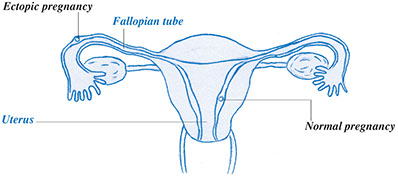
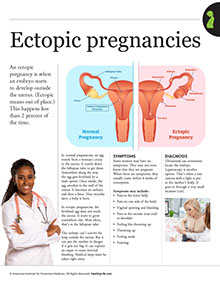
    An ectopic pregnancy is when an embryo starts to develop outside the uterus. (Ectopic means out of place.) This happens less than 2 percent of the time.

    In normal pregnancies, an egg travels from a woman’s ovary to the uterus. It travels down the fallopian tube to get there. Somewhere along the way, the egg gets fertilized by a male sperm. Once inside, the egg attaches to the wall of the uterus. It becomes an embryo and then a fetus. Nine months later, a baby is born.

    In ectopic pregnancies, the fertilized egg does not reach the uterus. It starts to grow somewhere else. Most often, that’s in the fallopian tube.

    The embryo can’t survive for long outside the uterus. But it can put the mother in danger if it gets too big. It can rupture an organ or cause internal bleeding. Medical steps must be taken right away.

    Symptoms

    Some women may have no symptoms. They may not even know that they are pregnant. When there are symptoms, they usually come within 8 weeks of conception. Symptoms may include:

    *  Pain in the lower belly

    *  Pain on one side of the body

    *  Vaginal spotting and bleeding

    *  Pain in the rectum (rear end) or shoulder

    *  Feeling like throwing up

    *  Throwing up

    *  Feeling weak

    *  Fainting

    Diagnosis

    Ultrasound can sometimes locate the embryo. Laparoscopy is another option. That’s when a tiny camera with a light is put in the mother’s body. It goes in through a very small incision (cut).

    Illustration of normal vs ectopic pregnancy.

    Causes

    There are many causes for ectopic pregnancies:

    *  Damage to the ovary or fallopian tube

    *  Scarring of the ovary or fallopian tube. Scarring can result from endometriosis, pelvic inflammatory disease or an STD.

    Also, the risk for an ectopic pregnancy is higher for women who:

    *  Have had an ectopic pregnancy in the past

    *  Have had fallopian tube surgery

    *  Have had problems getting pregnant

    *  Have used an IUD for birth control

    These women should call their health care provider when they miss a menstrual period.

    Treatment

    Medicines may be used. But if some time has passed, surgery may be needed. The embryo is removed. Any damage to the mother’s body is repaired. In some rare cases, a fallopian tube or ovary must be removed. But women have another set of these. So the mother may become pregnant again.

    Questions to Ask

    Self-Care / Prevention

    Tips to Lower the Risk of an Ectopic Pregnancy

    *  Talk to your health care provider about your risks for damage to your fallopian tubes from:

    – STDs

    – Pelvic Inflammatory Disease

    – Endometriosis

    *  Ask if you need to get tested for these and how often. Find out, too, if your health plan pays for these tests.

    *  Schedule any tests needed with your health care provider.

    Prenatal Self-Care book by the American Institute for Preventive Medicine. www.HealthyLife.com. All rights reserved.

    © American Institute for Preventive Medicine

  • Labor And Delivery

    Pregnancy & Prenatal Care

    There are two ways a baby may be born:

    *  Through the vagina (vaginal birth). Contractions of the uterus push the baby out through the cervix into the vagina. The baby passes through the vagina to enter the world.

    *  Cesarean section (C-section). This is a surgical method. The baby is taken directly from the uterus.

    The type of delivery you have will depend on your needs. Discuss the options with your health care provider.

    Vaginal Births

    Natural childbirth means that no medication is given to induce (bring on) labor. Little or no medicine is given to relieve pain. The mother uses various methods to aid the delivery process, like special breathing. Her “coach” provides support.

    Vaginal births can also involve medicines. Some of these are:

    *  Misoprostal. This tablet is put in through the vagina to help dilate the cervix.

    *  Pitocin. This is a hormone that causes the uterus to contract. It helps to start or speed up labor. It is given through an IV (intravenous drip).

    *  Prostaglandin gel. This is a gel that is put in through the vagina. It goes right on the cervix. It can help dilate the cervix. It also causes the uterus to contract. This helps to start labor.

    *  Narcotic pain relievers. Example: Demerol. These can be given with a shot or an IV. They take the edge off pain. But they can also cause you to feel drowsy or dizzy. They can cause an upset stomach or throwing up. Other medicines may be given with narcotic pain relievers. These help them have a stronger effect.

    *  Tranquilizers. These relax you if you are tense and anxious. They can be given in pills or with a shot. Tranquilizers are sometimes used with pain relievers.

    *  Anesthetics. Anesthetics cause a loss of feeling. They are usually given after labor has been in progress. There are two main types:

    *  General anesthesia. This puts the mother to sleep. It is used most often for emergency C-sections. But it can be used in a vaginal birth when the baby is in a breech position. That’s when the baby’s bottom or one or both feet reach the cervix before the head does.

    *  Local anesthetics. These affect only the area where they are applied. Common examples:

    – Pudendal block. A shot numbs the nerves in the vaginal area. It is usually given when the cervix is fully dilated (opened). It may be used with a pain reliever or tranquilizer.

    – Epidural block. This is the most popular anesthetic used for labor. The mother lies on her left side or she sits up and leans forward. A shot is given in the back to numb the area. A thin plastic tube is put into the epidural space of the spine. Medicine is given through the tube. This causes some loss of feeling from the waist down. How much numbness occurs depends on the drug and dose used. An epidural block can have other effects. It can lower the mother’s blood pressure. It can make her unable to pass urine on her own. In that case, a tube called a Foley catheter is used to empty urine from the bladder. An epidural block can also increase the chance that forceps will be used at delivery. {Note: Just pain medicine can be given through the tube. It does not cause a loss of feeling from the waist down. If this is done, the mother may be able to get out of bed and walk. But an adult should be with her.}

    Whether or not pain medicine is used is not what matters most. The goal in labor and delivery is to have a healthy baby and a healthy mother.

    Cesarean Births

    A C-section requires anesthetics. Either an epidural block or spinal is used. General anesthesia is rarely used. C-sections are usually done with a low, left-to-right incision (cut) near the line of pubic hair. This is called a lower-segment incision or a “bikini” cut. An up-and-down incision is rare these days. But it may be used in an emergency. The type of incision in the skin may be different from the one made in the uterus.

    C-sections may or may not be planned. Here are some reasons for doing one:

    *  The baby (or babies) or mother is not doing well

    *  The baby is too big for the mother’s pelvis

    *  The mother has placenta previa or placenta abruptio.

    *  The mother had a past C-section with an up-and-down incision on the uterus.

    *  The baby is lying in a way that makes it hard to deliver.

    *  The mother has an active outbreak of genital herpes.

    *  Labor does not progress the way it should.

    *  The umbilical cord is wedged between the cervix and the baby. This cuts off blood flow to the baby.

    *  The mother is not strong enough for a vaginal delivery.

    *  The mother has health problems, like diabetes, high blood pressure, kidney disease, or preeclampsia.

    *  The baby is more than 2 weeks late and the placenta does not nourish the baby well.

    Vaginal Births after C-Section (VBAC)

    Some pregnant women have already had a C-section delivery. Of this group, some might be able to have a safe vaginal delivery. Some might not for the next baby.

    A vaginal delivery after a C-section may be possible if:

    *  The incision for the C-section was the left-to-right, lower-segment type.

    *  Your pelvis is normal size.

    *  Reasons for the past C-section are not present now. Examples:

    – Breech baby

    – Separation of the placenta (placenta abruptio)

    – More than one baby

    – Baby in distress

    Signs of Prelabor

    Prelabor is the period just before labor begins. Call your health care provider if any of these signs of prelabor happen more than one month before your due date:

    *  The baby begins to settle into your pelvis. It looks and feels as if the baby has “dropped.” This process is called lightening and engagement. It’s easier for you to breathe after it happens.

    *  You feel more pressure on the pelvis and rectum (rear end). The pressure can cause a dull ache in the pelvic area or lower back. It feels like menstrual cramps.

    *  Vaginal discharge may increase and thicken.

    *  Your energy level changes. Some women feel less energy. Others feel more. They want to clean the whole house. The “nesting instinct” is a way of getting ready for the new baby.

    *  You lose the mucus plug. That’s a blob of thick stuff that blocks the cervix. You can lose it several days before labor starts. Or you can lose it just as labor starts.

    *  You may see the bloody show. When the cervix opens, small blood vessels often break. The blood colors the mucus plug pink. Or it may streak the mucus plug with red. When the mucus plug falls out, you may see the blood. You may pass a big clump that looks like a wet cotton ball. Some women don’t notice the bloody show. Bloody show usually means that labor will start within 24 hours. But sometimes labor could still be a few days away.

    *  You have diarrhea. Some women get this just before labor starts.

    *  The “bag of waters” (or your “water”) breaks. That’s the sac inside the uterus. It holds the amniotic fluid. The baby grows there. About 15 percent of the time, the water breaks before labor starts. More often, this happens during labor. The fluid can come out in a gush or a slow trickle. Call your provider right away if this happens.

    1st Stage of Childbirth

    The First Stage of Childbirth: Labor

    Labor has three parts:

    *  The first part is called early or latent labor. This is usually the longest part. It’s usually the least painful, too.

    – Real contractions begin. Contractions are when the muscles of the uterus tighten and then relax. The feelings usually start in the lower back and travel to the belly. Some contractions are felt only in your back. Others are felt only in your belly. Contractions usually start about 15 to 20 minutes apart and last 30 to 45 seconds.

    – The cervix dilates to open 3 centimeters across. That’s about the size of a silver 50¢ piece. It gets thinner. This can happen over a period of days or weeks. You may not even be aware of it. Or it can happen with stronger contractions over a period of 2 to 6 hours. Rarely, it could take up to 24 hours with the stronger contractions.

    – Call your health care provider during the first part of labor. Your provider may tell you to go to the hospital or birthing center. Make sure you’re packed!

    *  The second part is called active labor. This part of labor is usually shorter than the first part. On average, it lasts 2 to 3  hours. But its length can vary greatly. If you’re not already at the hospital or birthing center, you should get there early in this part of labor. Signs of this part of labor:

    – Contractions are stronger. They come more often, usually every 3 to 4 minutes. They last longer, from 40 to 60 seconds each.

    – The cervix dilates to 7 centimeters. That’s about the size of the rim of a coffee mug.

    *  The third part is called advanced active labor or transition. It is the most tiring part. But it is also the shortest. The average length is 15 to 60 minutes. Here are signs that you are in transition:

    – Contractions are even stronger. They come every 2 to 3 minutes. Each lasts 60 to 90 seconds.

    – The cervix dilates fully. It opens 7 to 10 centimeters. That’s about the size of a small grapefruit.

    2nd Stage of Childbirth

    The Second Stage of Childbirth: Delivery

    During delivery, you push the baby down the birth canal and out into the world.

    *  Contractions continue. They are usually more regular than before. They come less than two minutes apart. Each lasts about 60 to 90 seconds. You only push when you have contractions. Your health care provider will tell you when to push.

    *  Most babies come out head first. Then the shoulders. After this, the rest of the baby’s body slips out with ease. Your baby may be placed on your tummy.

    *  The umbilical cord is clamped and cut.

    *  The time for this stage varies greatly. It can take from 10 minutes to 3 hours or more.

    3rd Stage of Childbirth

    The Third Stage of Childbirth: Delivery of the Placenta

    Delivery of the placenta usually lasts from about 5 to 30 minutes. Delivery takes place through mild contractions. You might not even feel them. One more push from you can help the placenta come out. Or a nurse or your health care provider may gently press down on your abdomen. This, too, can help the placenta come out.

    {Note: The total time for labor varies from woman to woman. It also varies from pregnancy to pregnancy for the same woman. First babies tend to take longer than later ones. This is not always the case, though.}

    During Labor

    Things Your Health Care Provider May Do During Labor

    Your health care provider and his or her staff may do any of the things below during labor. What they will do depends on your special needs. But find out ahead of time which ones the provider is sure to do.

    *  Do a physical exam.

    – Your provider feels your belly. This helps the provider know how big the baby is. It helps the provider to know how the baby is lying.

    – Your provider gives you a pelvic exam. This shows how open and thin your cervix is. Your “bag of waters” could break by itself during this exam.

    *  Put an IV (intravenous drip) in a hand or arm vein. Here are reasons why this may be done:

    – To give you fluids. This keeps you from getting dehydrated (dried out or without enough body fluids).

    – To give you glucose. Glucose is a type of sugar. It gives you energy. This will help if you have a long labor.

    – To provide a way to give you medicine quickly, if you need it.

    *  Use a fetal monitor to check the baby. This small machine can check your baby’s heartbeat before the baby is born. It can also record your contractions. There are 2 kinds of fetal monitors:

    – External monitor. This kind has two wide straps. The straps go over your belly. One strap picks up your baby’s heartbeat by ultrasound. The other connects to a pressure gauge. The gauge records your contractions on a printout.

    – Internal monitor. This kind has a small tube that goes inside the uterus. The “bag of waters” must be broken before this monitor can be used. It gets there through the vagina and cervix. A small electrode goes on the baby’s head. This monitor gives more detail than the external one. It is used when the baby doesn’t seem to be doing well. It may also be used when the external monitor is not giving an accurate reading. This can happen if the baby is very active. It can happen when the mother is obese.

    *  Break your “bag of waters.” Your provider pricks the “bag of waters” with a small tool. The tool enters through the opened cervix. The provider looks at the color of the fluid. Clear is a good sign. Yellow or green could signal a problem.

    *  Use forceps to help the delivery. Forceps are metal tongs. They are cradled around the baby’s head. They help ease the baby out of the birth canal if the mother can’t push.

    *  Use vacuum extraction to help the delivery. A suction cup is put on the baby’s head in the birth canal. This helps the baby come out if the mother can’t push. The suction cup is attached to a vacuum pump. Your doctor uses this to pull the baby gently with each contraction. Many doctors prefer this method to forceps. {Note: Forceps and vacuum extraction are not used until the baby’s head can be seen at the vaginal opening.}

    *  Do an episiotomy. This is a surgical cut. It is made in the skin between the vagina and the anus just before the baby is born. The purpose is to widen the vaginal opening. That helps the baby come out. It also helps keep the skin in the vaginal area from tearing. After the baby is born, the cut is stitched.

    How long you stay in the hospital or birthing center will depend on:

    *  The type of delivery you have and where you give birth. You may go home within 12 to 24 hours in a birthing center. You may be able to stay in a hospital for up to two days. Both of these are with normal vaginal deliveries without problems. C-section stays vary. They usually last 2 to 3 days.

    *  Your health insurance. Find out what your insurance pays for.

    *  Your medical needs. You or your baby may need to stay in the hospital longer than usual if you have special medical needs. Sometimes you and your baby get home health care. Your hospital or health insurance may provide this.

    Prenatal Self-Care book by the American Institute for Preventive Medicine. www.HealthyLife.com. All rights reserved.

    © American Institute for Preventive Medicine

  • Vaginal Infections

    Women’s Health

    Vaginal infections are the most common reason American females see their doctors. Vaginal infections result in vaginitis (swelling of the vagina).

    Signs, Symptoms & Causes

    For Bacterial Vaginosis (BV)

    Nearly half of females with clinical signs of BV report no symptoms. When present, symptoms include:

    *  A thin, gray, or milky white vaginal discharge. This has a fishy odor, which is more noted after intercourse.

    *  Mild vaginal irritation or burning.

    Bacterial vaginosis results when certain bacteria outnumber normal and protective bacteria in the vagina. The exact cause is not known.

    Risk factors for BV include douching, using an IUD, and a change or an increase in sexual partners.

    For Vaginal Yeast Infections

    Vaginal yeast infections are also called Monilia, Candida, and fungal infections. Signs and symptoms range from mild to severe. They include:

    *  Thick, white vaginal discharge that looks like cottage cheese and may smell like yeast.

    *  Itching, irritation, and redness around the vagina.

    *  Burning and/or pain when urinating or with sex.

    Vaginal yeast infections result from the overgrowth of the fungus Candida. This is normally present in harmless amounts in the vagina, digestive tract, and mouth.

    Risk Factors for Vaginal Yeast Infections

    *  Hormonal changes that come with pregnancy or monthly periods. Taking hormones or birth control pills.

    *  Antibiotic use, especially “broad spectrum” ones. Corticosteroid medicine use.

    *  High blood sugar. This can occur when diabetes is not controlled.

    *  Sex that irritates the vagina a lot.

    *  Using douches. Using feminine hygiene sprays.

    *  Using hot tubs and jacuzzis a lot.

    Chronic vaginal yeast infections can be one of the first signs of diabetes, STIs, and HIV.

    Diagnosis

    Different vaginal infections have the same symptoms. This makes it hard to tell one from another. A doctor may need to diagnose the cause. A sample of vaginal fluid is taken and tested. Often, this takes less than 3 minutes.

    Treatment

    For Bacterial Vaginosis

    Prescribed antibiotic creams, gels, or pills are needed. Male sex partner(s) may also need treatment. Feminine hygiene sprays that mask vaginal odor should not be used. Nor should OTC medications, such as ones for vaginal yeast infections. These do not treat BV.

    For Vaginal Yeast Infections

    Prescribed and OTC vaginal creams or suppositories get rid of the Candida overgrowth. Oral medicines, such as Diflucan®, may be prescribed.

    Questions to Ask

    Self-Care / Prevention

    *  Take medications, as prescribed.

    *  For a repeat vaginal yeast infection, use an over-the-counter (OTC) antifungal vaginal medication, such as Monistat. Use it as directed. {Note: Stop using any OTC product for a vaginal yeast infection at least 24 hours before a vaginal exam.}

    *  Ask your pharmacist about an OTC cream for itching and burning to help with symptoms during treatment.

    *  Bathe or shower often. Clean the inside folds of the vulva. Dry the vaginal area well.

    *  Wipe from front to back after using the toilet.

    *  If your vagina is dry, use a water soluble lubricant, such as K-Y Liquid®, when you have sex.

    *  Wear all-cotton underwear. Don’t wear garments that are tight in the crotch. Change underwear and workout clothes as soon as possible after you sweat.

    *  Don’t use bath oils, bubble baths, feminine hygiene sprays, or perfumed or deodorant soaps.

    *  Don’t sit around in a wet bathing suit. Shower after you swim in a pool to remove the chlorine from your skin. Dry the vaginal area well.

    *  Eat well. Limit sugar and foods with sugar. Eat foods, such as yogurt, that contain live cultures of “lactobacillus acidophilus.” If you can’t tolerate yogurt, take an OTC product that has this.

    *  Let your doctor know if you are prone to getting yeast infections whenever you take an antibiotic. You may be told to also use a vaginal antifungal product.

    *  If you still menstruate, use unscented tampons or sanitary pads and change them often.

    Women's Self-Care book by the American Institute for Preventive Medicine. www.HealthyLife.com. All rights reserved.

    © American Institute for Preventive Medicine