Tag: Women’s Health

  • Depression 2

    Women’s Health

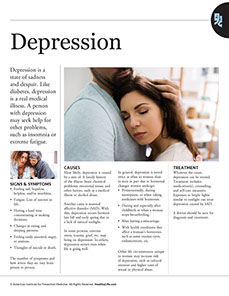
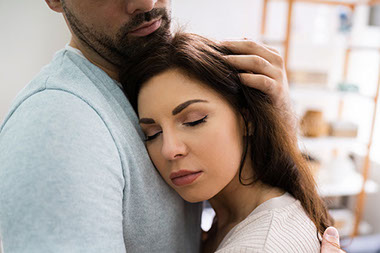
    Close up of women's face as she leans on man chest for support.

    Depression is a state of sadness and despair. Like diabetes, depression is a real medical illness. A person with depression may seek help for other problems, such as insomnia or extreme fatigue.

    Signs & Symptoms

    *  Feeling sad, hopeless, helpless, and/or worthless.

    *  Fatigue. Loss of interest in life.

    *  Having a hard time concentrating or making decisions.

    *  Changes in eating and sleeping patterns.

    *  Feeling easily annoyed, angry, or anxious.

    *  Thoughts of suicide or death.

    The number of symptoms and how severe they are vary from person to person.

    Causes

    Most likely, depression is caused by a mix of: A family history of the illness; brain chemical problems; emotional issues; and other factors, such as a medical illness or alcohol abuse.

    Another cause is seasonal affective disorder (SAD). With this, depression occurs between late fall and early spring due to a lack of natural sunlight.

    In some persons, extreme stress, trauma, grief, etc. may bring on depression. In others, depression occurs even when life is going well.

    In general, depression is noted twice as often in women than in men in part due to hormonal changes women undergo:

    *  Premenstrually, during menopause, or when taking medicines with hormones.

    *  During and especially after childbirth or when a woman stops breastfeeding.

    *  After having a miscarriage.

    *  With health conditions that affect a woman’s hormones, such as some ovarian cysts, endometriosis, etc.

    Other life circumstances unique to women may increase risk of depression, such as cultural stressors and higher rates of sexual or physical abuse.

    Treatment

    Whatever the cause, depression can be treated. Treatment includes medication(s), counseling, and self-care measures. Exposure to bright lights similar to sunlight can treat depression caused by SAD.

    A doctor should be seen for diagnosis and treatment.

    Questions to Ask

    Self-Care / Prevention

    *  Take medications as prescribed. Get your doctor’s advice before you take over-the-counter herbs, like St. John’s Wort, especially if you take other medications.

    *  Don’t use illegal drugs. Limit alcohol. These can cause or worsen depression. Drugs and alcohol can also make medicines for depression less effective. Harmful side effects can happen when alcohol and/or drugs are mixed with medicine.

    *  Eat healthy foods. Eat at regular times. Don’t skip meals or binge on junk food. Limit caffeine and sugary foods.

    *  Try not to isolate yourself. Be with people you feel safe with even though you feel down.

    *  Do something you enjoy. Do things that let you express yourself. Write, paint, etc.

    *  Exercise regularly.

    *  Relax. Listen to soft music, take a warm bath or shower. Do relaxation exercises. Meditation can help you deal with depression.

    *  Keep an emergency number handy (e.g., crisis hotline, trusted friend’s number, etc.) in case you feel desperate.

    Resources

    Women's Self-Care book by the American Institute for Preventive Medicine. www.HealthyLife.com. All rights reserved.

    © American Institute for Preventive Medicine
  • Backaches

    Pregnancy & Prenatal Care

    Causes

    Pregnant women get backaches because:

    *  The growing uterus and extra weight pull the body forward. Standing this way can strain the back muscles.

    *  Hormones are released during pregnancy. These make the ligaments soften and stretch. Ligaments are tissues that surround and support the joints.

    *  Joints in the lower back get sore from pressure. This happens to joints in the pelvic area, too. The baby is growing in size and weight.

    *  The baby presses against the tailbone.

    Prevention

    Do exercises your health care provider tells you to do. Use good posture, too. Keep your spine straight when you are standing. Have a friend check your back for curving: Stand with your heels against a wall. Ask your friend to look at your back. Tell him or her to let you know if it curves. Center your weight over the pelvic area. Be careful when you bend over, too. Bending wrong can give you a backache.

    Back Labor

    Most women have some back pain during labor. Some women have it through their whole labor. This is called back labor. It is caused by the way the baby is lying. The back of the baby’s head presses against the tailbone. Or it may press slightly to one side of it. Back labor can occur in preterm labor, too.

    Questions to Ask

    Self-Care

    Tips for Good Posture

    When you stand:

    *  Stand straight.

    *  Tuck in your bottom.

    *  Don’t hollow your back.

    *  Don’t tighten your shoulders or hold them back. Keep them dropped.

    *  If you have to stand for a long time: Stretch your feet and shift your weight. Rest one foot and then the other on a footstool or telephone book.

    When you sit:

    *  Sit on a straight chair with a high back.

    *  Rest your back against the chair’s back.

    *  Put a pillow at the small of your back.

    *  Rest one or both feet on a footstool.

    *  Don’t sit too long. It strains your lower back. Get up and walk around.

    When you bend:

    *  To pick something up, squat down on your heels and bend your knees. Keep your upper body straight. Don’t lean over from the waist. Use the strength from your legs, not your back.

    *  To do something down low, kneel or squat. Or get down on all fours. That way, you help take the baby’s weight off your spine.

    When you lie down or sleep:

    *  Use a firm mattress. If you don’t have one, have someone help you place a board under your mattress. Or have someone put your mattress on the floor.

    *  Lie on your left side with your knees bent. Bend the upper knee more than the lower knee. Leave a lot of space between your legs.

    *  Put a pillow under your upper knee and leg.

    Other Self-Care Tips

    *  Don’t gain too much weight.

    *  Wear shoes with low (but not flat) heels.

    *  On a long car ride, stop every two hours. Get out and walk around.

    *  Don’t take medicine for pain. Ask your health care provider first.

    *  Don’t lift objects over 15 pounds.

    *  Don’t do exercises where you lift both legs at the same time.

    *  Do exercises for stronger back and belly muscles. Ask your health care provider for these.

    *  Do relaxation and deep breathing exercises. Do yoga.

    *  Have someone massage your lower back. Massage won’t cure a backache. It can loosen tight muscles, though.

    *  Apply warm, moist heat to your back. Use a hot water bottle or warm wash cloth.

    *  Ask your health care provider if you should wear a back support girdle, a back brace, or a special elastic sling.

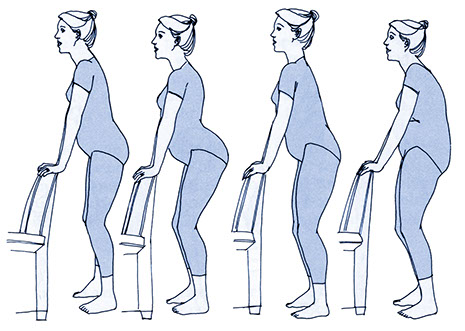
    *  Do an exercise called the “pelvic rock”. This exercise helps your lower back be more flexible. It helps make the muscles in your belly stronger.

    You can stand to do the pelvic rock.

    Step 1

    *  Stand 2 feet away from the back of a chair.

    *  Put your hands on the chair’s back. Keep your elbows straight.

    *  Bend a little forward from your hips.

    Step 2

    *  Push your hips backward and relax the muscles in your belly. Relax your back.

    *  Bend your knees a little.

    Step 3

    *  Slowly pull your hips forward.

    *  Tuck your buttocks under as if someone were pushing you from behind.

    Step 4

    *  Repeat steps 1, 2, and 3.

    Illustration of pregnant women doing the pelvic rock exercise while standing.

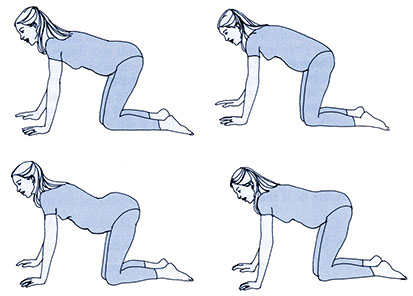
    You can do the pelvic rock on your hands and knees.

    Step 1

    Get down on all fours. Have your knees slightly apart. Have your back and elbows straight.

    Step 2

    Breathe in. As you breathe in, relax your back. Use the muscles in your lower belly.

    Step 3

    Breathe out. As you breath out, let your back relax down to a flat position. Do not let your back sag.

    Step 4

    Repeat steps 1, 2, and 3.

    {Note: Tell your health care provider if you get pain when you do the pelvic rock. Ask for help if you have a problem doing the pelvic rock.}

    Illustration of pregnant women doing the pelvic rock on hands and knees.
    Prenatal Self-Care book by the American Institute for Preventive Medicine. www.HealthyLife.com. All rights reserved.

    © American Institute for Preventive Medicine
  • Getting Help For Violence And Abuse

    Women’s Health

    Violence uses force, power, or threats to cause physical or emotional harm on purpose.

    Abuse is one form of violence. It can be emotional, physical, financial, and/or sexual.

    It may not be easy to admit that you are the victim of abuse. You may be confused about what to do or how to find a way out.

    Time to Get Help When

    It is time to get help if the person you love, live with, or work with does any of these things:

    *  Puts you down in public.

    *  Criticizes you for little things.

    *  Keeps you from seeing or talking to family, friends, or co-workers.

    *  Monitors what you are doing all of the time.

    *  Keeps accusing you of being unfaithful.

    *  Destroys things you own or care about.

    *  Gets angry when he or she drinks alcohol or uses drugs.

    *  Blames you for his or her angry outbursts.

    *  Threatens to hurt you, children, or animals. Beats, chokes, hits, kicks, pushes, shoves, or slaps you or them, or hurts you in any way.

    *  Says it is your fault if he or she hurts you, then promises that it will not happen again.

    *  Threatens to or uses weapons against you.

    *  Forces you to have sex against your will. {The Department of Veterans Affairs uses the term military sexual trauma (MST) for sexual assault or repeated, threatening sexual harassment that occurred while a Veteran was in the service.}

    Causes

    Violence and abuse are ways to gain and keep control over others. Persons who commit violence or abuse come from all ethnic groups and backgrounds. Often, they have these problems:

    *  Poor skills to communicate.

    *  Past family violence. They may have been abused in the past. They may have seen one parent beat the other.

    *  Alcohol or drug problems.

    Regardless of the cause, no one deserves to be abused! Most often, persons who abuse others or commit violence, find it hard to change their behavior without expert help. If you are a victim of violence or abuse, get help and support.

    Getting Help

    *  If you are assaulted or threatened or need emergency help, call 911!

    *  If you are not in immediate danger, have a plan for times you feel unsafe or in danger or when you decide to leave the abusive setting.

    – Decide who you will call (e.g., police, neighbors, relatives, and a shelter). Make a list of these telephone numbers. Memorize the numbers, too.

    – Decide where you will go. If you have children, plan how you will take them with you. Have a plan for where they should go if you can’t get away. Practice these safety plans with your children. Plan how you will take your pets, too, if you can.

    *  To help recover from sexual assault or trauma, contact your doctor or health care provider for proper counseling and treatment. {Note: Veterans can receive free treatment for military sexual trauma (MST) at all VA health care facilities.}

    Be prepared to leave an abusive setting. Keep important items in a safe place (unknown to the person who is abusing you) until you are ready to leave or if you have to leave quickly. Get these items together ahead of time.

    *  Extra keys to your car, house, and safety deposit box.

    *  Cash. Credit cards and ATM card. Checkbook, bankbooks, and investment records or their account numbers.

    *  Jewelry or other small objects that you can sell in case you need money.

    *  Cell phone, a phone calling card, and phone numbers that you need.

    *  Personal papers for you and your children. These can be the original forms, copies of them, or information, such as numbers and dates written on paper. Items include:

    – Birth certificates and social security numbers.

    – Driver’s license, state ID, and passports.

    – Car registration, title, and insurance information.

    – Medical ID cards and medical records for you and your children.

    – Marriage license, divorce papers, legal papers for custody, restraining orders, etc.

    – House deed or lease agreement.

    Resources

    National Domestic Violence Hotline

    800.799.SAFE (799.7233)

    Rape, Abuse, and Incest National Network (RAINN)

    www.rainn.org

    National Sexual Assault Hotline

    800.656.HOPE (656.4673)

    National Sexual Assault Online Hotline

    https://ohl.rainn.org/online

    Women's Self-Care book by the American Institute for Preventive Medicine. www.HealthyLife.com. All rights reserved.

    © American Institute for Preventive Medicine
  • Osteoporosis

    Bone & Muscle Problems

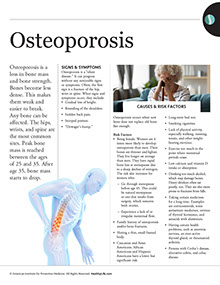
    Nurse with older women holding a cane.

    Osteoporosis is a loss of bone mass and strength. This significantly increases the risk of fractures and falls.

    To help prevent osteoporosis, take medicines as prescribed by your doctor, do weight-bearing exercises, choose a balanced diet rich in calcium and vitamin D, and practice good posture.

    Often, the first sign of osteoporosis is a fracture of a wrist, hip, or spine.

    To help detect osteoporosis, have tests that measure bone density as advised by your doctor.

    If you have been diagnosed with osteoporosis or had a fracture from a fall at standing height, talk with your doctor about medication options. Also, learn how to fall-proof your home. Learn more about bone health and osteoporosis atnof.org.

    Health at Home Lifetime book by the American Institute for Preventive Medicine. www.HealthyLife.com. All rights reserved.

    © American Institute for Preventive Medicine
  • Due Date

    SELF-CARE CORNER

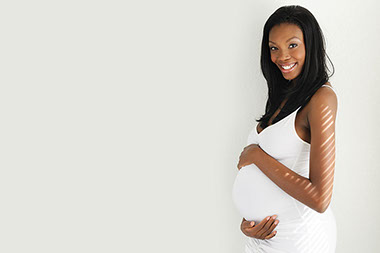
    Image of pregnant women smiling.

    Although we think of pregnancy as lasting 9 months, in reality most pregnancies last nearly 10 months. Research shows that babies are born healthier if they have at least 39 weeks to grow in the womb.

    The NIH in Health offers these wise choices for a healthy pregnancy:

    *  See your doctor for regular care while you are pregnant.

    *  Talk to your doctor about the medicines you take. Some may not be safe during pregnancy.

    *  Follow a healthy diet.

    *  Take folic acid-at least 400 micrograms each day. This B vitamin can help prevent serious birth defects of the brain and spine. Make sure you take folic acid for at least one month before you get pregnant, too.

    *  Stay active. Ask your doctor which physical activity is safe for you.

    *  Avoid drinking alcohol and smoking (and being around anyone smoking).

    *  Control any existing conditions such as diabetes.

    *  If you have no medical reasons to deliver early, wait until at least 39 weeks for delivery. A woman’s body will go into labor when the baby is ready to enter the world.

    © American Institute for Preventive Medicine

  • Birth Control Options

    Women’s Health

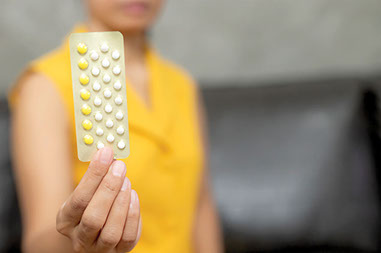
    Women's hand holding up birth control pack.

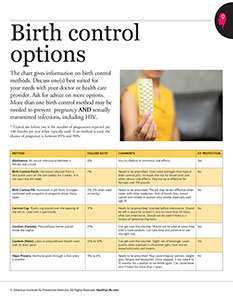
    This page gives information on birth control methods. Discuss one(s) best suited for your needs with your doctor or health care provider. Ask for advice on more options. More than one birth control method may be needed to prevent  pregnancy AND sexually transmitted infections, including HIV.

    * Typical use failure rate is the number of pregnancies expected per 100 females per year when typically used. If no method is used, the chance of pregnancy is between 85% and 90%.

    Abstinence

    No sexual intercourse between a female and a male.

    Has no medical or hormonal side effects.

    Failure Rate*

    0%

    HIV / STI Protection

    Yes

    Birth Control Patch

    Hormones released from a skin patch worn on the skin weekly for 3 weeks. It is not worn the 4th week.

    Needs to be prescribed. Gives more estrogen than typical birth control pills. Increases the risk for blood clots and other serious side effects. May not be as effective for females over 198 pounds.

    Failure Rate*

    7%

    HIV / STI Protection

    No

    Birth Control Pill

    Hormones in pill form. Estrogen combined with progestin or progestin alone. Many types.

    Needs to be prescribed. The pill may be less effective when taken with other medicines. Risk of blood clots, breast cancer and strokes in women who smoke, especially over age 35.

    Failure Rate*

    3% (1% when used correctly)

    HIV / STI Protection

    No

    Cervical Cap

    Plastic cap placed over the opening of the cervix. Used with a spermicide.

    Needs to be prescribed. Inserted before intercourse. Should be left in place for at least 8, but no more than 48 hours after last intercourse. Should not be used if there is a history of abnormal Pap tests.

    Failure Rate*

    17%

    HIV / STI Protection

    No

    Condom (Female)

    Polyurethane barrier placed inside the vagina.

    Can get over-the-counter. Should not be used at same time with a male condom. Can take time and patience to use the right way.

    Failure Rate*

    21%

    HIV / STI Protection

    Yes

    Condom (Male)

    Latex or polyurethane sheath worn over an erect penis.

    Can get over-the-counter. Slight risk of breakage. Loses quality when exposed to ultraviolet light, heat, and oil-based lubricants and creams.

    Failure Rate*

    13% to 18%

    HIV / STI Protection

    Yes

    Depo-Provera

    Hormone given through a shot every 3 months.

    Needs to be prescribed. May cause irregular periods, weight gain, fatigue and headaches. Once stopped, it can take 4 to 18 months for a woman to be fertile again. Can cause bone loss if taken for more than 2 years.

    Failure Rate*

    4% to 6%

    HIV / STI Protection

    No

    Diaphragm

    Reusable, thin, soft, cap (plastic or silicon) that covers the cervix. Used with a spermicide.

    Needs to be prescribed. Should be checked for leaks. Size may need to be changed with weight changes. May dislodge during intercourse. Should be left in place at least 6, but no more than 24 hours, after last intercourse.

    Failure Rate*

    6% to 16%

    HIV / STI Protection

    No

    Emergency Contraception Pills

    High-dose birth control pills that need to be taken up to 5 days after unprotected intercourse. Called “morning after pill.”

    Progestin-only pills are available over-the-counter without age restrictions. Other types, such as ella®, are available by prescription only for all ages. Most require a single dose but some are taken as 2 doses, 12 hours apart. Can cause nausea, vomitting, breast tenderness and changes in menstrual periods.

    Failure Rate*

    11% to 25% (the sooner used, the more effective)

    HIV / STI Protection

    No

    Emergency IUD Insertion

    Needs to be done within 5 days of unprotected intercourse.

    Needs to be done by a health care professional. Used as an emergency contraception method.

    Failure Rate*

    Less than 1%

    HIV / STI Protection

    No

    FemCap®

    Silicone rubber device. Fits snugly over the cervix.

    Needs to be prescribed. Should be left in place for at least 6, but no more than 48 hours, after last intercourse.

    Failure Rate*

    17% to 23%; less effective if gave birth

    HIV / STI Protection

    No

    Nexplannon®

    Thin plastic implant about the size of a match stick. Releases a low dose of the hormone progestin for up to 3 years.

    Needs to be inserted and removed by a health care professional. Can cause irregular menstrual bleeding, mostly fewer and lighter periods, or no periods.

    Failure Rate*

    Less than 1%

    HIV / STI Protection

    No

    Intrauterine Device (IUD)

    ParaGard. Small copper device inserted into uterus. {Note: An IUD does not prevent an ectopic pregnancy. With this, an embryo starts to grow outside the uterus.}

    Needs to be inserted and removed by health care professional. Can be left in place for up to 10 years. May become dislodged. Risk of infection and piercing of the uterus. Need to check that the 2 strings hang from the bottom so the IUD is in the correct position.

    Failure Rate*

    Less than 1%

    HIV / STI Protection

    No

    Intrauterine System (IUS)

    Mirena®. T-shaped device placed in uterus. Releases low dose of hormones every day for 5 years.

    Needs to be inserted and removed by a health care professional. May lessen menstrual cramps. Needs to be replaced every 5 years.

    Failure Rate*

    Less than 1%

    HIV / STI Protection

    No

    Lea’s Shield®

    Silicone cup with an air valve and a loop (aids in removal) that fits snugly over the cervix. Used with a spermicide.

    Needs to be prescribed. Should be left in place at least 8, but no more than 48 hours, after last intercourse.

    Failure Rate*

    15%

    HIV / STI Protection

    No

    Natural Family Planning

    Ovulation signs need to be checked for and tracked.

    Sexual intercourse must be limited to “safe” days. Takes training, time and record keeping to work right. Method for planning a pregnancy, too.

    Failure Rate*

    2% to 23%

    HIV / STI Protection

    No

    NuvaRing®

    A soft, flexible ring that a female inserts deep into the vagina. Contains hormones.

    Needs to be prescribed. A new Ring is inserted once and kept in place for 3 weeks. It is removed the week of menstrual period. May cause increased risk for vaginal problems.

    Failure Rate*

    7% to 9%

    HIV / STI Protection

    No

    Spermicides (Foams, Jellies, Creams)

    Chemicals inserted into the vagina kill sperm before it enters the uterus.

    Can get over-the-counter. More reliable when used with condoms, diaphragms, etc. Inserted between 5 and 90 minutes before intercourse. Need to reapply for repeated acts of intercourse.

    Failure Rate*

    21% to 28%

    HIV / STI Protection

    No

    Today’s Sponge®

    Polyurethane barrier that contains spermicide.

    Can get over-the-counter. Must be left in place for 6 hours after last intercourse, but should not be worn for more than 24 hours after sex.

    Failure Rate*

    12% to 24%

    HIV / STI Protection

    Some

    Sterilization (Female)

    Tubal ligation (having the tubes tied). This surgery burns, cuts, blocks or ties off the fallopian tubes. Another type, tubal implants (Essure®), is not surgery. A device is inserted through the vagina and uterus into each fallopian tube. This causes scar tissue to grow and plug the tubes.

    Permanent form of birth control. Should be used only when no more children are desired. Surgery usually needs general anesthesia. Essure® is no longer sold in the U.S. but women who are using it to prevent pregnancy can continue to use it. Women who suspect they may be having symptoms related to the device, such as pain, should talk to their doctor about what steps may be appropriate for them to take.

    Failure Rate*

    Less than 1%

    HIV / STI Protection

    No

    Sterilization (Male)

    Vasectomy. The tubes through which sperm travels from the testes are cut.

    Permanent form of birth control. Done in an outpatient setting with local anesthesia. Not effective right away. Sperm can still be present for 20 ejaculations.

    Failure Rate*

    Less than 1%

    HIV / STI Protection

    No

    Withdrawal

    The penis is removed before ejaculation.

    Have to control ejaculation. Sperm can leak before this occurs.

    Failure Rate*

    Up to 27%

    HIV / STI Protection

    No

    Women's Self-Care book by the American Institute for Preventive Medicine. www.HealthyLife.com. All rights reserved.

    © American Institute for Preventive Medicine
  • Getting Ready For Childbirth

    Pregnancy & Prenatal Care

    What to Do First

    *  Choose where you want to have your baby.

    *  Choose a health care provider.

    How to Get Ready

    *  Read books on pregnancy and childbirth.

    *  Take a childbirth class, if you can.

    *  Get regular prenatal care from your health care provider.

    Childbirth Classes Do These Things

    *  Tell you what happens when you give birth

    *  Show you and your partner (or other “coach”) what to do during labor and delivery

    *  Help lessen the fear of giving birth

    *  Help explain what happens with a Cesarean section (C-section). Knowing what to expect is helpful when a C-section is planned. It is helpful, too, if it is not planned, but needs to be done for the safety of you and your baby.

    *  Teach you how to work with the natural birthing process. You can do this through:

    – Exercises that make the muscles used in childbirth stronger

    – Massage

    – Focusing the mind

    – Relaxing and breathing methods

    You can find out about childbirth classes from:

    *  Your health care provider

    *  The maternity department of local hospitals

    *  Local education programs

    *  Local March of Dimes

    Prenatal Self-Care book by the American Institute for Preventive Medicine. www.HealthyLife.com. All rights reserved.

    © American Institute for Preventive Medicine
  • Osteoporosis 2

    Women’s Health

    Osteoporosis is a loss in bone mass and bone strength. Bones become less dense. This makes them weak and easier to break. Any bone can be affected. The hips, wrists, and spine are the most common sites. Peak bone mass is reached between the ages of 25 and 35. After age 35, bone mass starts to drop.

    Signs & Symptoms

    Osteoporosis is a “silent disease.” It can progress without any noticeable signs or symptoms. Often, the first sign is a fracture of the hip, wrist, or spine. When signs and symptoms occur, they include:

    *  Gradual loss of height.

    *  Rounding of the shoulders.

    *  Sudden back pain.

    *  Stooped posture.

    *  “Dowager’s hump.”

    Causes

    Osteoporosis occurs when new bone does not replace old bone fast enough.

    Risk Factors Include:

    *  Being female. Women are 4 times more likely to develop osteoporosis than men. Why?

    – Their bones are thinner and lighter.

    – They live longer on average than men.

    – They have rapid bone loss at menopause due to a sharp decline of estrogen. The risk also increases for women who: Go through menopause before age 45. This could be natural menopause or one that results from surgery which removes both ovaries. Experience a lack of or irregular menstrual flow.

    *  Having a thin, small framed body.

    *  Being Caucasian or Asian. African Americans and Hispanic Americans are at a risk, too.

    *  Lack of physical activity, especially walking, running, tennis, and other weight-bearing exercises.

    *  Long-term bed rest.

    *  Exercising too much to the point where menstrual periods cease.

    *  Low calcium and vitamin D intake or absorption.

    *  Family history of osteoporosis and/or bone fractures.

    *  Smoking cigarettes.

    *  Drinking too much alcohol, which may damage bones. Heavy drinkers often eat poorly, too. They are also more prone to fractures from falls.

    *  Taking certain medicines for a long time. Examples are: Corticosteroids; some antiseizure medicines; overuse of thyroid hormones; and antacids with aluminum.

    *  Having certain health problems, such as anorexia nervosa, an over-active thyroid gland, or rheumatoid arthritis.

    *  Persons with Crohn’s disease, ulcerative colitis, and celiac disease are at risk, too.

    Treatment

    There is no cure for osteoporosis. The focus of treatment is to prevent the disease, to prevent further bone loss, and build new bone. Special X-rays, such as one known as DEXA, can measure bone density in various sites of the body. These tests can help doctors decide if and what kind of treatment is needed. Treatment includes:

    *  Medications. There are different kinds. Your doctor will prescribe one(s) best suited for your needs.

    *  A balanced diet rich in calcium and vitamin D and taking supplements of these, as needed.

    *  Exercises, as advised by your doctor.

    *  Proper posture.

    *  Fall prevention measures:

    – Wear flat, sturdy, non-skid shoes.

    – Get regular vision exams. Wear corrective glasses, etc., as needed.

    – Ask your doctor if any medications you take could increase the risk of falls. Ask how to deal with this. Let your doctor know if your medicine(s) affect your vision, balance, etc.

    – Use grab bars and safety mats or nonskid tape in your tub and shower.

    – Use handrails on stairways.

    – Pick things up by bending your knees and keeping your back straight. Don’t stoop.

    – Use a cane or walker if necessary.

    – If you use throw rugs, use ones with nonskid backs.

    – See that halls, stairways, and entrances are well lit. Use night lights in hallways, bathrooms, etc.

    – Stay home if it is icy or slippery outside.

    Questions to Ask

    Self-Care / Prevention

    To Treat Osteoporosis

    *  Take medications, as prescribed.

    *  Do the daily exercises approved by your doctor.

    *  Practice good posture.

    To Treat, Slow, and Prevent Osteoporosis

    *  Eat a balanced diet.

    *  Get your daily calcium need.

    Choose High Calcium Foods Daily

    *  Skim and low-fat milks, yogurts, and cheeses. {Note: If you are lactose intolerant, you may need to use dairy products that are treated with the enzyme lactose or you can add this enzyme using over-the-counter drops or tablets.}

    *  Soy milks and yogurts with added calcium.

    *  Soft-boned fish and shellfish, such as cod, salmon, sardines, and shrimp.

    *  Vegetables, especially broccoli, kale, and collards.

    *  Beans and bean sprouts, as well as tofu (soy bean curd), if processed with calcium.

    *  Calcium-fortified foods, such as some orange juices, apple juices, and ready-to-eat cereals.

    *  Take calcium supplements, as advised by your doctor.

    Get Your Recommended Daily Need for Vitamin D.

    *  Choose nonfat and low-fat dairy products that are fortified with vitamin D, saltwater fish, liver, and egg yolks. You also get vitamin D from direct exposure of sunlight on your skin. Fifteen minutes of midday sun exposure (without sunscreen) may meet the daily need.

    *  Take vitamin D supplements, as advised by your doctor. The best source of vitamin D for bone health is vitamin D3.

    *  Do regular, weight-bearing exercises at least 3 or 4 times a week. Examples are walking and low-impact or non-impact aerobics. (If you have osteoporosis, follow the exercise program outlined by your doctor.)

    *  Do not smoke.

    *  Limit alcohol.

    *  Use fall prevention measures.

    Resources

    National Osteoporosis Foundation

    www.nof.org

    Women's Self-Care book by the American Institute for Preventive Medicine. www.HealthyLife.com. All rights reserved.

    © American Institute for Preventive Medicine

  • Endometriosis: A Mysterious Condition

    MEDICAL NEWS

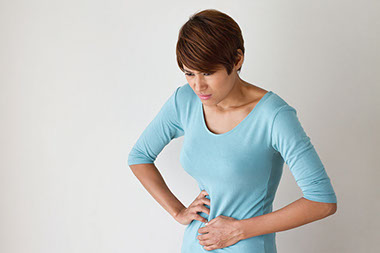
    Image of women holding her stomach in pain.

    Millions of women are affected by endometriosis. Yet, it remains a mysterious, often painful disease that is difficult to treat. Get to know the symptoms of this condition and what you can do about it.

    Signs of endometriosis include:

    *  Stomach or pelvic pain during menstruation

    *  Nausea or diarrhea during menstruation

    *  Severe menstrual cramps

    *  Infertility without a known cause

    If you think you may have endometriosis, see your gynecologist.

    Treatment options may include:

    *  Birth control pills

    *  Hormonal treatments that stop menstruation temporarily

    *  Surgery (this is often a minimally invasive procedure called a laparoscopy)

    Some women have also found relief with alternative therapies such as acupuncture. Be sure to talk with your doctor about any supplements or medications you are taking. If you plan to become pregnant, talk with your doctor about this as well. Endometriosis can be treated and many women are able to become pregnant with this disease.

    Source: National Institutes of Health

    © American Institute for Preventive Medicine
  • Birth Defects

    Pregnancy & Prenatal Care

    Pregnant women standing in open field.

    In the U.S., about one out of 33 babies is born with a birth defect. This includes cystic fibrosis, Down syndrome, heart defects, sickle cell disease, spina bifida, and Tay-Sachs disease.

    A baby’s neural tube starts to develop about 3 weeks after conception (before many women know they are pregnant).

    Females of childbearing age should take a daily supplement with 400 micrograms of folic acid (a B vitamin). Women who have had a baby with a neural tube defect should follow their doctor’s advice about folic acid for future pregnancies.

    Learn about birth defects from the March of Dimes atmarchofdimes.com.

    Health at Home Lifetime book by the American Institute for Preventive Medicine. www.HealthyLife.com. All rights reserved.

    © American Institute for Preventive Medicine