Tag: Women’s Health

  • When To See A Gynecologist

    Women’s Health

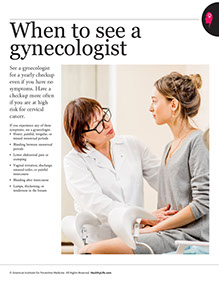
    Image of female doctor with female patient.

    If you experience any of these symptoms, see a gynecologist.

    *  Heavy, painful, irregular, or missed menstrual periods. Bleeding between menstrual periods.

    *  Lower abdominal pain or cramping.

    *  Vaginal irritation, discharge, or painful intercourse. Bleeding after intercourse.

    *  Lumps, thickening, or tenderness in the breasts.

    Also see a gynecologist for a yearly checkup even if you have no symptoms. Have a checkup more often if you are at high risk for cervical cancer.

    A Year of Health Hints book by the American Institute for Preventive Medicine. www.HealthyLife.com. All rights reserved.

    © American Institute for Preventive Medicine

  • Osteoporosis 3

    Bone & Muscle Problems

    Osteoporosis is a loss in bone mass and bone strength. Bones become less dense. This makes them weak and easier to break. Any bone can be affected. The hips, wrists, and spine are the most common sites.

    Signs & Symptoms

    Osteoporosis is a “silent disease.” It can occur without pain. You don’t see or feel changes taking place inside your bones. Often, the first sign is a fracture of the hip, wrist, or spine. When signs and symptoms occur, they include:

    *  Gradual loss of height

    *  Rounding of the shoulders

    *  Sudden back pain

    *  Stooped posture

    *  Dowager’s hump

    Causes & Risk Factors

    Bone is living tissue. It breaks down and is replaced with new bone. Osteoporosis occurs when new bone does not replace old bone fast enough.

    Risk Factors

    *  Being female. Women are more likely to develop osteoporosis than men.

    *  Low estrogen level. This occurs with menopause.

    *  Low testosterone level in men

    *  Aging

    *  A family history of osteoporosis or broken bones as adults

    *  Having a thin, small-framed body

    *  Lack of exercise, especially weight-bearing ones, such as walking and dancing

    *  Long-term bed rest

    *  Low calcium and vitamin D intake or absorption

    *  Smoking

    *  Drinking too much alcohol

    *  Long term use of some medicines, such as oral corticosteroids and antacids with aluminum

    *  Having certain health problems, such as anorexia nervosa, an over-active thyroid gland, and rheumatoid arthritis. Persons with Crohn’s disease, ulcerative colitis, and celiac disease are at an increased risk, too.

    Diagnosis

    There is no cure for osteoporosis. The focus is to:

    *  Prevent the disease

    *  Prevent further bone loss

    *  Build new bone

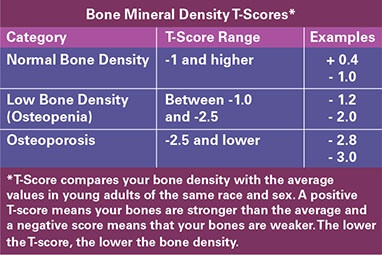
    *  All women 65 years of age and older should have a bone mineral density (BMD) screening test. Women who have had a fracture or are at a high risk for osteoporosis should get this test sooner than age 65, as advised by their doctors.

    *  Older men should have a BMD test if they have key risk factors for BMD-related fractures:

    – A past fracture, possibly due to osteoporosis

    – Low body weight. Physical inactivity.

    – Prolonged use of corticosteroid medications.

    {Note: Follow your doctor’s advice for when and how often to get screening tests for osteoporosis.}

    *  The most common test used to measure how dense bones are is a special X-ray known as a DXA or DEXA scan. You lie on a table and a technician moves a scanner above your spine, hip, or wrist. This safe and painless test takes about 10-20 minutes. Test results can identify persons who are at the highest risk for fractures.

    Medical Care

    Talk about your bone health with your doctor. Discuss:

    *  Your personal and family medical history

    *  Medications you take and have taken

    *  Falls or broken bones you have had as an adult

    *  Self-Care / Prevention measures you do already and ones you need help with

    Medical treatment may include:

    *  Treatment for problems that increase the risk for low bone mass and osteoporosis

    *  Evaluating your risk of falls. Tests for this include ones that check your balance, vision, blood pressure, muscle strength, and heart rhythm.

    *  An exercise program for your needs. Physical therapy may be prescribed.

    *  High doses of vitamin D if your blood level is very low. Your doctor needs to prescribe this.

    *  Medications:

    – Some slow down the breakdown of old bone. Two categories of these are bisphosphonates (biss-FOSS-fuh-nates) and anti-resorptive agents. Some of these medications are pills. Others are given in shots or through an IV.

    – Another one (teriparatide) helps the body make new bone faster than the old bone is broken down.

    Talk to your doctor about the benefits and risks of medications. Find out what side effects you should let him or her know about.

    Reasons to Contact Doctor/Provider

    *  You have any “Signs & Symptoms” of Osteoporosis.

    *  You want to find out about medicines and other ways to prevent and/or treat osteoporosis.

    *  You are a female age 65 or older and have not had a bone mineral density (BMD) test.

    *  You are a female age 50 and older; you have had a fracture or are at high risk for osteoporosis; and  you have not had a BMD test.

    *  You are an elderly male; you have risk factors for osteoporosis; and you need advice on getting a BMD test.

    *  After a fall, bump or strain, you have wrist, hip, or back pain.

    *  After a fall, you are not able to get up. Call or have someone call 9-1-1!

    Self-Care / Prevention

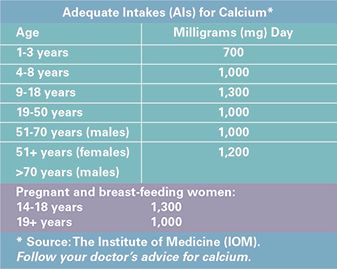
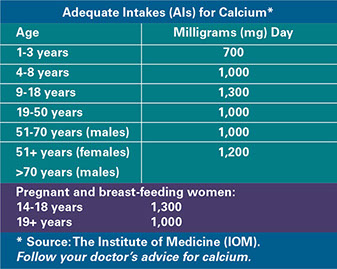
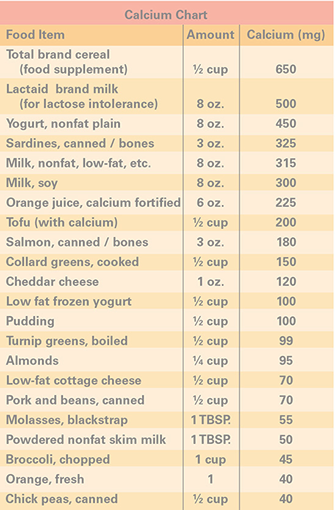
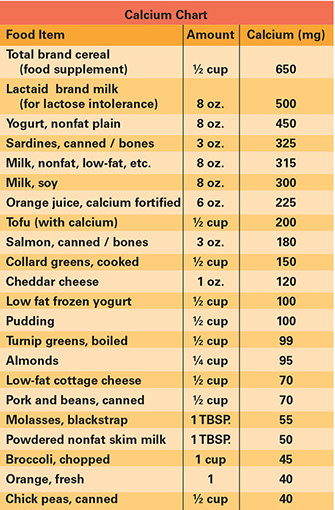
    Get Your Recommended Adequate Intake (AI) for Calcium Every Day

    *  Choose high-calcium foods daily. Examples are milk, yogurt, salmon, and green leafy vegetables.

    *  Take calcium supplements, as advised by your doctor. It is best to limit calcium to 500 milligrams at a time. Ask your doctor about taking Tums® to get calcium.

    *  Eat a balanced diet. Have at least 5 fruits and vegetables every day. These have many vitamins, minerals, and anti-oxidants that can benefit bone health, as well as overall health.

    *  Don’t smoke. If you smoke, quit! Get help from your doctor,www.smokefree.gov, and/or 1.800.QUIT.NOW (784.8669).

    *  Limit alcohol. Too much alcohol interferes with  the body’s need for calcium and vitamin D. It also increases the risk for falls.

    *  Take medications, as prescribed.

    Sources of vitamin D:

    *  Sun exposure (without sunscreen) on your skin. Fifteen minutes of midday sunshine may meet the daily need. {Note: You may not get vitamin D benefits from the sun: During winter months; if you have dark skin; and/or you are age 60 years and older.}

    *  Foods, such as fortified milks and cereals, egg yolks, saltwater fish, and liver.

    *  Vitamin D supplements, as advised by your doctor. The best source of vitamin D for bone health is vitamin D3.

    Use Fall Prevention Measures

    (Falling is what leads to broken bones for many people with osteoporosis.)

    *  Ask your doctor if any medications you take could cause you to fall and how to deal with this. Find out how to deal with vision and balance problems, too.

    *  Put salt or kitty litter on icy sidewalks. Or stay home during bad weather!

    *  Use grab bars and safety mats, etc. in your tub and shower.

    *  Use handrails on both sides of stairways.

    *  When you reach for things on the floor or pick things up, bend at your knees, not at your waist.

    *  Wear flat, sturdy, nonskid shoes.

    *  If you use throw rugs, use ones with nonskid backs. Or tack them down to the floor.

    *  Use a cane or walker, if necessary.

    *  Keep halls, stairways, and entrances well lit. Use night lights in hallways, bathrooms, etc.

    *  Keep a flashlight next to your bed.

    *  Practice proper posture.

    In the house, carry a cordless or cell phone with you, if you can. Doing this keeps you from rushing to answer the phone when it rings. You will also be able to call for help if you do fall.

    Be Physically Active

    Physical activity throughout life is important for bone health. Putting stress on your bones tells your body that your bones need to be made stronger.

    *  Do regular, weight-bearing exercise. Do this at least 3 or 4 times a week. Examples are walking, dancing, and step aerobics.*

    *  Do resistance exercises to strengthen muscles and build bone.* Examples are using weights and resistance bands.

    *  Do exercises that increase flexibility.* Examples are tai chi, yoga and stretching exercises.

    *  (Note: A person with osteoporosis should follow the exercise program outlined by his or her doctor.)

    Low bone mass and osteoporosis pose a major health threat.

    *  One out of every 2 women and one in 4 men over age 50 will have an osteoporosis-related fracture in his or her lifetime.

    *  After a fracture, persons are more likely to have chronic pain, a fear of falling, and depression. They lose independence and have a lower quality of life.

    *  One year after a hip fracture, 1 in 4 people dies, 1 can’t walk, and 2 of the 4 can walk but are less mobile than before the fracture.

    *  In the U.S., costs for osteoporosis and related fractures have been estimated to be about $14 billion a year.

    Resources

    National Osteoporosis Foundation

    800.231.4222

    www.nof.org

    NIH Osteoporosis and Related Bone Disease National Resource Center

    800.624.BONE (624.2663)

    www.bone.nih.gov

    Osteoporosis brochure by the American Institute for Preventive Medicine. www.HealthyLife.com. All rights reserved.

    © American Institute for Preventive Medicine

  • Gbs: Get Tested, Get Treated

    MEDICAL NEWS

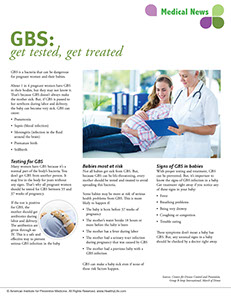
    Image of pregnant women at the doctors office.

    GBS is a bacteria that can be dangerous for pregnant women and their babies.

    About 1 in 4 pregnant women have GBS in their bodies, but they may not know it. That’s because GBS doesn’t always make the mother sick. But, if GBS is passed to her newborn during labor and delivery, the baby can become very sick. GBS can cause:

    *  Pneumonia

    *  Sepsis (blood infection)

    *  Meningitis (infection in the fluid around the brain)

    *  Premature birth

    *  Stillbirth

    Testing for GBS

    Many women have GBS because it’s a normal part of the body’s bacteria. You don’t get GBS from another person. It may live in the body for years without any signs. That’s why all pregnant women should be tested for GBS between 35 and 37 weeks of pregnancy.

    If the test is positive for GBS, the mother should get antibiotics during labor and delivery. The antibiotics are given through an IV. This is a safe and effective way to prevent serious GBS infection in the baby.

    Babies most at risk

    Not all babies get sick from GBS. But, because GBS can be life-threatening, every mother should be tested and treated to avoid spreading this bacteria.

    Some babies may be more at risk of serious health problems from GBS. This is more likely to happen if:

    *  The baby is born before 37 weeks of pregnancy

    *  The mother’s water breaks 18 hours or more before the baby is born

    *  The mother has a fever during labor

    *  The mother had a urinary tract infection during pregnancy that was caused by GBS

    *  The mother had a previous baby with a GBS infection

    GBS can make a baby sick even if none of these risk factors happen.

    Signs of GBS in babies

    With proper testing and treatment, GBS can be prevented. But, it’s important to know the signs of GBS infection in a baby. Get treatment right away if you notice any of these signs in your baby:

    *  Fever

    *  Breathing problems

    *  Being very drowsy

    *  Coughing or congestion

    *  Trouble eating

    These symptoms don’t mean a baby has GBS. But, any unusual signs in a baby should be checked by a doctor right away.

    Sources: Centers for Disease Control and Prevention, Group B Strep International, March of Dimes

    © American Institute for Preventive Medicine

  • Bleeding

    Pregnancy & Prenatal Care

    Pregnant women sometimes have light spotting. That’s when a tiny bit of blood leaks from the vagina or the surface of the cervix. It may happen after a vaginal exam. It may also happen after sex. If the blood starts out pink or red and turns dark brown, it is not active bleeding. This is not usually a problem. But let your health care provider know when there is any bleeding. He or she will decide what to do. Bleeding can be a sign of a problem if:

    *  The blood is bright red.

    *  Pain or cramps are present, too.

    *  The bleeding is heavy. Heavy means the bleeding soaks a sanitary pad.

    *  The spotting keeps going on.

    Causes

    Before the 20th week, bleeding could be, but is not always, a sign of miscarriage. Other causes of bleeding include:

    *  Loss of the mucus plug

    *  Kidney infection

    *  Preterm labor

    *  Placenta previa and other problems called vasa previa and marginal previa

    *  Placenta abruptio

    *  Swollen cervix

    Placenta Previa

    The placenta carries oxygen and food to the baby. In most pregnancies, the placenta attaches high in the uterus. In placenta previa, it attaches low, over the cervix. The lower uterus stretches during late pregnancy. Parts of the placenta tear from the wall. That causes bleeding.

    Placenta previa is rare. It happens in only 1 in 200 pregnancies. Its cause is not known. Falls and injuries are not factors. Symptoms of placenta previa are:

    *  Bright red vaginal bleeding. This could start as early as the 24th week. Often, it starts during the 34th or 35th week.

    *  Usually, there is no pain or cramping.

    A woman may not know that she has placenta previa until bleeding happens. Then an ultrasound test can show the problem.

    Women with placenta previa have to spend a lot of time in bed. Bed rest may last late into the pregnancy. Bed rest gives the baby time to grow. It prevents stress to the uterus. The goal is to keep blood loss down. A lot of blood loss means danger for both mother and baby. In severe cases, the mother may have to go to the hospital for treatment.

    In some cases, the bleeding stops, but the placenta blocks the cervix. The mother will need a Cesarean section (C-section) delivery if the placenta completely blocks the cervix. The mother may need a C-section if the placenta only partly blocks the cervix. When this happens, the mother may have more bleeding after she delivers the baby.

    {Note: Some pregnant women may have a “low lying placenta.” This means the placenta lies at the bottom of the uterus (not higher where it should be). An ultrasound can show a “low lying” placenta. If it is found before the 24th week, the placenta can move upward and out of the way of the cervix. If so, there is no longer a problem.}

    Placenta Abruptio

    There is a right time for delivery of the placenta. That’s after the baby is born. But sometimes it happens another way. The placenta starts to leave the wall of the uterus too early. It starts before the baby is born. This can happen whether the placenta is attached high or low.

    Placenta abruptio happens in about 1 in 200 pregnancies. Some cases are more serious than others. Causes might be high blood pressure or a serious blow to the belly. An older mother may be more apt to have placenta abruptio. So are women who use cocaine during pregnancy. Symptoms of placenta abruptio are:

    *  Bright red vaginal bleeding

    *  Severe pain in the abdomen. The pain lasts. It doesn’t come and go.

    There are no tests for placenta abruptio. Even ultrasound may not show it. Regular prenatal visits help. The health care provider looks for blood in the mother’s vagina. The provider finds out if the uterus is tender.

    Women with placenta abruptio need to go to the hospital right away. Some women can have a vaginal delivery. That’s if labor begins on its own and the baby is healthy. Otherwise, a C-section is done. The mother may be given blood.

    Questions to Ask

    Self-Care / Prevention

    *  Watch closely for bleeding. If you see any, call your health care provider.

    *  Rest in bed for light bleeding.

    *  Avoid doing things that could injure you. Examples: heavy lifting, hard exercise. Don’t do work, sports, or exercises that could give you a blow to the belly.

    *  Wear a special seat belt when you drive. You can get one that protects a pregnant woman’s belly.

    *  Don’t smoke.

    *  Don’t be exposed to other people’s smoke.

    *  Follow your health care provider’s advice about sex. You may be told to:

    – Avoid sex.

    – Use extra caution during sex:

    – Your partner can focus on more gentle touching.

    – Limit how deeply the penis enters the vagina. Use positions that help control the depth.

    Prenatal Self-Care book by the American Institute for Preventive Medicine. www.HealthyLife.com. All rights reserved.

    © American Institute for Preventive Medicine

  • Plan For A Healthier, Happier Menopause

    Women’s Health

    Image of two mature women laughing.

    Some women dread menopause, associating the change of life with hot flashes, painful intercourse, mood swings, and the specter of old age. As with menstruation and childbearing, menopause is a rite of passage that has some discomforts. But you can help to prevent or alleviate many of them.

    *  To maintain a positive outlook, share your feelings with friends, stay active, and take an interest in others in your community.

    *  To lessen mood swings, cut down on caffeine, alcohol, and sweets.

    *  To help maintain hormonal balance, do regular exercise. Lose weight if you are overweight.

    Kegel exercises (named for the individual who invented them) can help to keep your pelvic and vaginal muscles toned, preventing a prolapsed uterus or poor bladder control, both of which sometimes accompany menopause. To feel these muscles at work, stop and start your urine flow in midstream the next time you use the toilet. Then practice the two exercises that follow.

    *  Squeeze the pelvic/vaginal muscles for 3 seconds, then relax them for 3 seconds. Do this ten times, three times a day.

    *  Squeeze and relax the same muscles as quickly as possible. Repeat ten times, three times a day.

    A Year of Health Hints book by the American Institute for Preventive Medicine. www.HealthyLife.com. All rights reserved.

    © American Institute for Preventive Medicine

  • Pelvic Inflammatory Disease (Pid)

    Women’s Health

    Pelvic inflammatory disease (PID) is an infection that goes up through the uterus to the fallopian tubes. Both females and males carry the organisms that cause PID. These can be passed on to someone else. This occurs even when no symptoms are noticed.

    Signs & Symptoms

    When symptoms are present, they can vary from woman to woman. PID can be acute or chronic.

    Symptoms of Acute PID

    *  Pain in the abdomen or back. The pain can be severe.

    *  Vaginal discharge with a foul odor.

    *  Pain during sex.

    *  The abdomen is tender and/or bloated.

    *  Menstrual cramps are very painful.

    *  High fever.

    Symptoms of Chronic PID

    *  Pain in the abdomen or back is less severe. This often occurs halfway through the menstrual cycle or during a pelvic exam.

    *  Skin on the abdomen is sensitive.

    *  Vaginal discharge. Change in menstrual flow.

    *  Nausea.

    *  Low grade fever.

    Causes

    *  Sexually transmitted infections (STIs), such as gonorrhea and chlamydia. The organisms that cause these STIs spread into the internal reproductive organs. Many times, PID is caused by more than one of these organisms.

    *  Having had PID in the past.

    *  Recently having vaginitis.

    *  Bacteria normally found in the intestines can get into the pelvic cavity. Times this can happen:

    – After sex, especially having vaginal intercourse right after having anal intercourse.

    – With high risk sexual practices that increase the risk of infection. Examples are having multiple sex partners or having sex with a person who has many partners.

    – After an intrauterine device (IUD) is put in or adjusted. This is a low risk, though.

    Diagnosis

    The symptoms of PID are a lot like those of other conditions, such as endometriosis and urinary tract infections. This can make it hard to diagnose PID from symptoms alone. Most of the time your doctor can diagnose PID with an exam and simple laboratory tests. Rarely, your doctor may need to do a laparoscopy. This is a minor surgical procedure which allows your doctor to see all the structures inside your abdomen. An ultrasound may also be done.

    Treatment

    Antibiotics treat diagnosed PID. If the infection is severe, bed rest and antibiotics given through an IV may be needed. Treatment for an infected sex partner is also needed. This prevents getting the infection again.

    When PID is not treated, the infection can spread to other parts of the body. If it spreads to the blood, it may threaten life.

    Scarring from the infection can cause damage to a woman’s reproductive organs. It can cause infertility. Also, a woman who has had PID is at increased risk for:

    *  A tubal pregnancy.

    *  Premature labor and birth.

    Questions to Ask

    Self-Care / Prevention

    *  Wipe from front to back after a bowel movement to keep bacteria from getting into the vagina.

    *  When you menstruate, change tampons and/or pads often.

    *  Don’t have vaginal sex right after anal sex.

    *  Don’t have sex with anyone who has not been treated for a current case of PID or an STI or with anyone who has partners that haven’t been treated.

    *  Use barrier birth control methods with spermicides. These reduce the risk of getting PID from an infected partner. These include the male or female condom, cervical cap, or diaphragm. Use these even if you use other forms of birth control, such as the pill.

    *  Don’t use an IUD if you are at risk for STIs. If you use an IUD, have your doctor remove it if you become pregnant and then miscarry. If it is left in, your risk for PID goes up.

    *  Don’t smoke.

    *  Don’t use douches. These can spread bacteria further up the vagina.

    *  After childbirth, wait until you stop bleeding to have sex. After a D & C, abortion, or miscarriage, wait 1 week to have sex. Use a latex or polyurethane condom for 2 weeks after having an IUD put in.

    *  If you are at risk for PID, get tested for chlamydia and gonorrhea every 6 months.

    Resources

    National Women’s Health Information Center

    www.womenshealth.gov

    Women's Self-Care book by the American Institute for Preventive Medicine. www.HealthyLife.com. All rights reserved.

    © American Institute for Preventive Medicine

  • Ovarian Cancer: Know The Signs

    MEDICAL NEWS

    Image of women holding cancer patient.

    The ovaries are small, almond-shaped organs on either side of the uterus (womb). Because they are deep inside the abdomen, many women don’t feel or see symptoms of ovarian cancer. In fact, less than 20 percent of ovarian cancer cases are diagnosed in the early stages, when it is more treatable.

    Signs are hard to spot

    Symptoms of ovarian cancer can be confusing. They may seem like other illnesses. Sometimes, a woman has no symptoms at all. When signs do appear, they may include:

    *  Bloating

    *  Pelvic or stomach pain

    *  Appetite changes or feeling full without eating much

    *  Having to urinate more often or more urgently

    *  Feeling very tired

    *  Heartburn

    *  Nausea

    *  Constipation

    *  Back pain

    *  Pain during sex

    *  Menstrual changes

    Usually, these symptoms don’t mean a woman has ovarian cancer. They may be signs of a digestive problem, hormonal imbalance or another illness. But, if the symptoms don’t go away, it’s best to see a doctor.

    How is ovarian cancer detected?

    There is no single test to check for ovarian cancer. But, women who have symptoms or who are at high risk may need one or more of the following tests:

    *  Pelvic Exam: All women age 18 and up should have an annual pelvic exam from their primary care provider or gynecologist.

    *  Transvaginal ultrasound: An ultrasound wand is used to look at the ovaries and other organs.

    *  CA-125 blood test: A protein called CA-125 is produced by ovarian cancer cells. If a blood test shows higher levels of this protein, a woman may need more tests to check for cancer.

    Additional tests may include Computed Tomography (CT) scans or laproscopy, which uses a lighted tube inserted in a small incision. If there is a risk that cancer has spread, further testing is done.

    Unfortunately, there is no foolproof way to find ovarian cancer early. The key is to talk with your doctor, have regular checkups and be sure to discuss any symptoms you are having. If anyone in your family has had ovarian cancer – or any other cancer – be sure your doctor knows about this. Some cancer types can run in families.

    © American Institute for Preventive Medicine

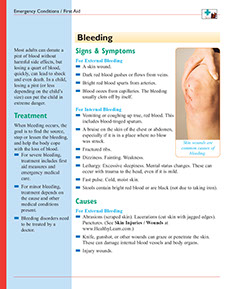
  • Bleeding 2

    First Aid

    Most adults can donate a pint of blood without harmful side effects, but losing a quart of blood, quickly, can lead to shock and even death. In a child, losing a pint (or less depending on the child’s size) can put the child in extreme danger.

    Signs & Symptoms

    For External Bleeding

    *  A skin wound.

    *  Dark red blood gushes or flows from veins.

    *  Bright red blood spurts from arteries.

    *  Blood oozes from capillaries. The bleeding usually clots off by itself.

    For Internal Bleeding

    *  Vomiting or coughing up true, red blood. This includes blood-tinged sputum.

    *  A bruise on the skin of the chest or abdomen, especially if it is in a place where no blow was struck.

    *  Fractured ribs.

    *  Dizziness. Fainting. Weakness.

    *  Lethargy. Excessive sleepiness. Mental status changes. These can occur with trauma to the head, even if it is mild.

    *  Fast pulse. Cold, moist skin.

    *  Stools contain bright red blood or are black (not due to taking iron).

    Causes

    For External Bleeding

    *  Abrasions (scraped skin). Lacerations (cut skin with jagged edges). Punctures.

    *  Knife, gunshot, or other wounds can graze or penetrate the skin. These can damage internal blood vessels and body organs.

    *  Injury wounds.

    For Internal Bleeding

    *  A bruise. This is bleeding from and damage to tissues beneath the skin.

    *  Damage to blood vessels and/or internal structures. This includes a blunt injury that does not break the skin, a bleeding ulcer, and an aneurysm.

    *  Bleeding disorders.

    Taking blood-thinning drugs can result in both internal and external bleeding.

    Treatment

    When bleeding occurs, the goal is to find the source, stop or lessen the bleeding, and help the body cope with the loss of blood.

    *  For severe bleeding, treatment includes first aid measures and emergency medical care.

    *  For minor bleeding, treatment depends on the cause and other medical conditions present.

    *  Bleeding disorders need to be treated by a doctor.

    Questions to Ask

    Self-Care / First Aid

    For Severe Bleeding

    *  Without delay, apply direct pressure to the wound using a sterile dressing or clean cloths. {Note: If the cut is large and the edges of it gape open, pinch the edges of the wound while you apply pressure.}

    *  Call 9-1-1 or take the person to nearest hospital emergency department.

    *  Do not remove an object that is stuck in a wound. Pack it in place with padding. Put tape around the padding so it doesn’t move.

    *  If bleeding continues before getting medical help, put extra cloths, etc. on top of existing ones. Keep putting pressure on the wound until bleeding stops or until medical help takes over.

    *  The most important thing to do is to apply direct pressure on the bleeding site. Some health experts advise to do these things, too, if needed:

    – Elevate the wounded area higher than heart level while applying pressure. Do this if no bone is broken.

    – Apply pressure to a “pressure point” if bleeding still continues after 15 to 20 minutes of direct pressure. Use the pressure point closest to the bleeding site that is between the wound and the heart. (See Pressure Points.)

    *  Don’t apply a tourniquet except to save a life.

    *  While giving first aid for bleeding, keep looking for signs of shock.

    For an Amputation

    *  Control bleeding.

    *  Wrap the severed part in a clean, dry (not wet) cloth or sterile gauze. Place the wrapped part in a plastic bag or other waterproof container. Put these on a bed of ice. Do not submerge the severed part in cold water or ice.

    For Bleeding from the Scalp

    *  Use a ring pad to apply pressure around the edges of the wound, not on the wound. Make a ring pad (shaped like a doughnut) with a bandage of narrow, long strips of cloth. Start with one end of the narrow bandage and wrap it around all four fingers on one hand until you form a loop. Leave a long strip of the bandage material to weave in and around the loop so it doesn’t unravel.

    Healthier at Home book by the American Institute for Preventive Medicine. www.HealthyLife.com. All rights reserved.

    © American Institute for Preventive Medicine

  • High Blood Pressure

    Heart & Circulation Problems

    The medical name for high blood pressure is hypertension (hy-puhr-TEHN-shun). High blood pressure (HBP) is when blood moves through the arteries at a higher pressure than normal. The heart strains to pump blood through the arteries.

    Signs & Symptoms

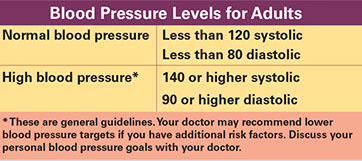
    High blood pressure (HBP) is a “silent disease.” Often there are no signs or symptoms. A lot of adults with HBP do not know they have it. So, get your blood pressure checked at each doctor’s office visit, at least every 2 years, or as often as your doctor advises. When blood pressure is 180 or higher (top number) or 120 or higher (bottom number), these signs of a hypertensive crisis may occur:

    *  Severe chest pain

    *  Severe headache with confusion and blurred vision

    *  Severe anxiety

    *  Shortness of breath

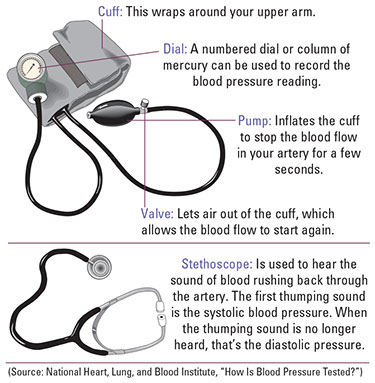
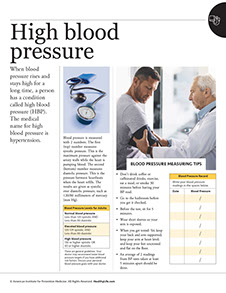
    Blood pressure is measured with 2 numbers. The first (top) number measures systolic pressure. This is the maximum pressure against the artery walls while the heart is pumping blood. The second (bottom) number measures diastolic pressure. This is the pressure between heartbeats when the heart refills. The results are given as systolic over diastolic pressure, such as 120/80 millimeters of mercury (mm Hg).

    Tips When You Have Your BP Measured

    *  Don’t drink coffee or smoke 30 minutes before having your BP read. (Don’t smoke at all!)

    *  Go to the bathroom before you get it checked.

    *  Before the test, sit for 5 minutes.

    *  Wear short sleeves so your arm is exposed.

    *  When you get tested: Sit; keep your back and arm supported; and keep your arm at heart level.

    *  An average of 2 readings from BP tests taken at least 5 minutes apart should be done.

    Causes, Risk Factors & Care

    The exact cause is not known.

    Risk factors include:

    *  Family history of HBP

    *  Aging. More than half of older adults have HBP.

    *  Smoking cigarettes

    *  Race. African Americans are more likely to have HBP than Caucasians.

    *  Gender. Men are more likely to have HBP than women (until women reach menopause).

    *  Being inactive. Obesity. Sleep apnea.

    *  Drinking too much alcohol

    *  Too much sodium intake in some persons

    *  Emotional distress

    High blood pressure could be caused by another medical problem or be a side effect of some medicines. This is called secondary hypertension. This can usually be reversed when the problem is treated.

    Diagnosis

    Blood pressure readings tell if your blood pressure is high. A health care professional measures blood pressure during an office visit with a manual or automated device called a sphygmomanometer (sfig’-mo-ma-nom-e-ter). The numbers on the gauge measure your blood pressure in millimeters of mercury (mm Hg).

    You should get 2 or more readings at different times. To confirm a diagnosis of HBP, your doctor may have you wear a device that records your blood pressure every 20-30 minutes over a period of 24 to 48 hours. This is called ambulatory blood pressure monitoring (ABPM).

    Note: Sometimes just being at the doctor’s office is enough to raise some people’s blood pressure. This is called “white-coat hypertension.” If you think this affects you, tell your doctor. You may be advised to check your blood pressure with a home testing device. Your doctor may have you wear a device that records your blood pressure for 24 hours. This will give accurate readings of your blood pressure.

    Health Problems Related to HBP

    High blood pressure plays a major role in these health problems:

    *  Stroke. Dementia. Brain damage.

    *  Heart disease. A person with HBP is 5 times more likely to have a heart attack than a person without HBP. It can also cause the heart to enlarge. This could cause (congestive) heart failure.

    *  Chronic kidney disease

    *  Kidney failure

    *  Vision loss. This includes blindness.

    Why is ambulatory blood pressure monitoring (ABPM) done?

    During an office visit, a short-term rise in blood pressure can be due to:

    *  Emotions or stress

    *  Pain or physical activity

    *  Caffeine or nicotine

    *  “White-coat hypertension.” With this, just being at a doctor’s office or in the presence of medical staff is enough to raise blood pressure.

    Getting blood pressure readings over 1-2 days during normal activity and sleep gives a more accurate measurement of your blood pressure.

    Self-Care / Prevention

    For blood pressure control, follow a healthy lifestyle.

    *  Get your blood pressure checked at each office visit, at least every 2 years, or as often as your doctor advises.

    *  Get to and/or stay at a healthy weight. Aim for a body mass index (BMI) between 18.5 and 24.9. Find your BMI using the table below or from:www.nhlbisupport.com/bmi.

    *  Don’t smoke. If you smoke, quit.

    *  Limit alcohol to 2 drinks or less a day if you are male and 1 drink or less a day if you are female or age 65 or older.

    *  Limit caffeine.

    *  Exercise. Try to do at least 60 minutes a day.

    *  Learn to handle stress. Take classes. Learn relaxation techniques, etc.

    *  Take medicine as prescribed. Tell your doctor if you have any side effects, such as dizziness, faintness, or a dry cough without having a cold. Don’t stop taking your prescribed medicine or change the dose(s) unless your doctor tells you to.

    *  Talk to your doctor or pharmacist before you take antihistamines and decongestants. Discuss all prescribed and over-the-counter medicines with your doctor and pharmacist before you take them to avoid harmful drug interactions. Find out about drug and food interactions, too. Ask if grapefruit juice can cause harmful effects with the medicine(s) you take.

    *  Keep track of your blood pressure using a home testing device. Do this if advised by your doctor.

    Medical Care

    High blood pressure usually lasts a lifetime, but can be treated and controlled. If you are diagnosed with high blood pressure, follow your doctor’s advice. Medical treatment includes:

    *  A physical exam and lab tests. These check for damage to your heart, kidneys, and other organs. They also identify risk factors you have for heart, kidney, and other diseases. Your treatment plan is based on your needs.

    *  Follow-up blood pressure checks and other tests as needed.

    *  Healthy lifestyle changes.

    *  Medications. Most persons need more than 1 medicine to treat high blood pressure.

    Your doctor will decide if and what medication(s) you need. This is based on your blood pressure level, age, race, other conditions you have, heart disease risk factors, etc. Common medicines used to treat HBP are:

    *  Diuretics (water pills)

    *  Calcium channel blockers

    *  ACE inhibitors

    *  Angiotensin II receptor blockers

    *  Beta-blockers

    *  Alpha blockers. Alpha-beta blockers.

    *  Nervous system inhibitors

    *  Vasodilators

    Reasons to Get Medical Care

    *  You have signs or symptoms of a hypertensive crisis. Get medical care right away.

    *  You need to schedule office visit appointments to get your blood pressure checked. Do this as often as your doctor advises.

    *  You have adverse side effects from taking medicine(s) to lower blood pressure. Examples are:

    – You feel lightheaded or dizzy.

    – You feel weak, sleepy, and/or drowsy.

    – Your heart races.

    – You get a skin rash.

    Resources

    American Heart Association

    800.242.8721

    www.heart.org

    National Heart, Lung, and Blood Institute

    www.nhlbi.nih.gov

    High Blood Pressure brochure by the American Institute for Preventive Medicine. www.HealthyLife.com. All rights reserved.

    © American Institute for Preventive Medicine

  • Plan For A Healthy Pregnancy

    Women’s Health

    To help a pregnancy get off to a good start, take these steps before you get pregnant:

    *  Get a medical checkup. Discuss your medical history and your family medical history with your doctor.

    *  Do you have a chronic medical problem, such as asthma, diabetes, or high blood pressure? If you do, ask your doctor if changes need to be made in your treatment plan.

    *  Find out what medicines you can take. Ask which ones you should not take. Tell or show your doctor all prescribed and over-the-counter medicines, vitamins, herbal products, etc. that you take. Ask if you need to change any of these while you try to get pregnant.

    *  Take 400 to 800 micrograms (.4 to .8 milligrams) of folic acid every day. This B vitamin can help prevent serious birth defects of the brain and spine. Make sure you take folic acid for at least one month before you get pregnant. Women who have had a baby with a serious problem of the brain or spine should take the amount of folic acid their doctors advise.

    *  Discuss current and past birth control methods.  Ask what method you should use until you decide to get pregnant.

    *  If you or your partner has a family history of sickle-cell disease, Tay-Sachs disease, etc., get genetic counseling. Do this, too, if you are older than age 35 or if your partner is age 60 or older.

    *  Do you smoke? Do you take street drugs? If so, now is the time to quit. Get help if you need it.

    *  Stop or limit alcohol use. This will make it easier to go without it when you are pregnant.

    *  Get vaccines, as advised by your doctor.

    *  Avoid exposure to X-rays.

    *  Caffeine is okay for women planning to get pregnant, but limit it to 400 milligrams a day. This is the amount in about two 8-ounce cups of coffee. Follow your doctor’s advice for caffeine during pregnancy.

    *  Get regular exercise.

    *  If you are overweight, lose weight before you get pregnant.

    *  Eat healthy foods. These include:

    – Fruits and vegetables.

    – Whole grain breads and cereals.

    – Low-fat dairy foods and other calcium-rich foods.

    Resources

    March of Dimes

    www.marchofdimes.com

    Women's Self-Care book by the American Institute for Preventive Medicine. www.HealthyLife.com. All rights reserved.

    © American Institute for Preventive Medicine