Tag: Women’s Medical Conditions

  • Endometriosis: A Mysterious Condition

    MEDICAL NEWS

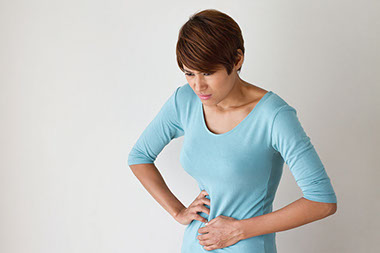
    Image of women holding her stomach in pain.

    Millions of women are affected by endometriosis. Yet, it remains a mysterious, often painful disease that is difficult to treat. Get to know the symptoms of this condition and what you can do about it.

    Signs of endometriosis include:

    *  Stomach or pelvic pain during menstruation

    *  Nausea or diarrhea during menstruation

    *  Severe menstrual cramps

    *  Infertility without a known cause

    If you think you may have endometriosis, see your gynecologist.

    Treatment options may include:

    *  Birth control pills

    *  Hormonal treatments that stop menstruation temporarily

    *  Surgery (this is often a minimally invasive procedure called a laparoscopy)

    Some women have also found relief with alternative therapies such as acupuncture. Be sure to talk with your doctor about any supplements or medications you are taking. If you plan to become pregnant, talk with your doctor about this as well. Endometriosis can be treated and many women are able to become pregnant with this disease.

    Source: National Institutes of Health

    © American Institute for Preventive Medicine

  • Fibroids

    Women’s Health

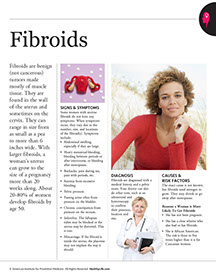
    Fibroids are benign (not cancerous) tumors made mostly of muscle tissue. They are found in the wall of the uterus and sometimes on the cervix. They can range in size from as small as a pea to more than 6 inches wide. With larger fibroids, a woman’s uterus can grow to the size of a pregnancy more than 20 weeks along. About 20% to 25% of women over the age of 35 get fibroids.

    Signs & Symptoms

    Some women with uterine fibroids do not have any symptoms. When symptoms occur, they vary due to the number, size, and locations of the fibroid(s). Symptoms include:

    *  Abdominal swelling, especially if they are large.

    *  Heavy menstrual bleeding, bleeding between periods or after intercourse, or bleeding after menopause.

    *  Backache, pain during sex, pain with periods, etc.

    *  Anemia from excessive bleeding.

    *  Pelvic pressure.

    *  Passing urine often from pressure on the bladder.

    *  Chronic constipation from pressure on the rectum.

    *  Infertility. The fallopian tubes may be blocked or the uterus may be distorted.

    *  Miscarriage. If the fibroid is inside the uterus, the placenta may not implant the way it should.

    Diagnosis

    Fibroids are diagnosed with a medical history and a pelvic exam. Your doctor can also do other tests, such as an ultrasound and hysteroscopy to confirm their presence, location, and size.

    Causes & Risk Factors

    Reasons a Woman is More Likely To Get Fibroids

    *  She has not been pregnant.

    *  She has a close relative who also had or has fibroids.

    *  She is African American. The risk is three to five times higher than it is for Caucasian women.

    The exact cause is not known, but fibroids need estrogen to grow. They may shrink or go away after menopause.

    Treatment

    “Watchful waiting”

    Your doctor will “watch” for any changes and may suggest “waiting” for menopause, since fibroids often shrink or disappear after that time. If you have problems during this “waiting” period, you may decide that you do not want to “wait” for menopause, but choose to have something done to treat your fibroids. Problems include: Too much pain; too much bleeding; an abdomen that gets too big; the need to take daily iron to prevent anemia; and other abdominal problems.

    Medication

    One type is called GnRH agonists. These block the production of estrogen by the ovaries. This shrinks fibroids in some cases, but is not a cure. The fibroids return when the medicine is stopped. Shrinking the fibroids might allow a minor surgery (with less blood loss) to be done instead of a major one. GnRH agonists are taken for a few months, but not more than six, because their side effects mimic menopause and may lead to osteoporosis. In some cases, GnRH agonists can be used longer with “Add Back Therapy.” This uses low dose estrogen to make side effects milder.

    Surgery Methods Include:

    *  Myomectomy. The fibroids are removed. The uterus is not. This can be done using a laparoscope and a laser (laparoscopy). The fibroids could also be cut out using a resectoscope (hysteroscopy). Fibroids can be removed under direct vision during abdominal surgery (laparotomy). Myomectomy methods may allow fibroids to grow back. The more fibroids there are to begin with, the greater the chance they will grow back.

    *  Procedures to destroy the uterine lining. These do not remove fibroids or the uterus, but stop or lighten menstrual flow from then on. The uterine lining can be destroyed using a laser, heat, or ultra cold.

    *  Uterine artery embolization. A catheter is inserted in a large blood vessel in the groin and sent to the level of the uterine arteries. A substance is given that blocks blood flow to the uterine arteries that nourish the fibroids. This treatment shrinks the fibroids.

    *  Hysterectomy. This surgery removes the uterus and the fibroids with it. This method is advised when the fibroid is very large or when other treatments don’t stop severe bleeding. It is the only way to get rid of fibroids for sure. A women can no longer get pregnant after the surgery. This treatment is also advised if the fibroid is cancerous. This rarely occurs.

    Questions to Ask

    Self-Care / Prevention

    *  Take medications as advised.

    *  Maintain a healthy body weight. Follow a diet low in fat. The more body fat you have, the more estrogen your body is likely to have. This promotes fibroid growth.

    *  Do regular exercise. This may reduce your body’s fat and estrogen levels.

    Resources

    National Women’s Health Information Center

    www.womenshealth.gov

    Women's Self-Care book by the American Institute for Preventive Medicine. www.HealthyLife.com. All rights reserved.

    © American Institute for Preventive Medicine

  • Headaches

    Brain & Nervous System

    Women sitting with blanket and holding forehead.

    Persons who suffer from headaches should see a doctor for proper diagnosis and treatment.

    Common causes of headaches are tension, sinus problems, tobacco smoke, low blood sugar, and things in your diet like red wine, aged cheese, and MSG.

    Keep a diary of when headaches occur, how long they last, and where and how severe the pain is. Keep track of other symptoms, such as nausea, too. Show this diary to your doctor to help them identify which type of headache you have and the most beneficial treatments.

    The most common treatments for headaches are rest and over-the-counter pain relievers. It is best to treat headaches when they begin or when they are still mild. Prescription medication may also be prescribed by your doctor.

    In addition to medicine, self-care practices can also help manage your symptoms and prevent headaches. Examples include putting a heat or ice pack on your head or neck, getting enough quality sleep, and drinking plenty of water.

    Health at Home Lifetime book by the American Institute for Preventive Medicine. www.HealthyLife.com. All rights reserved.

    © American Institute for Preventive Medicine

  • Headaches 2

    General Health Conditions

    Causes

    *  Anxiety, stress, caffeine withdrawal, or depression

    *  Lack of sleep. Poor sleep position.

    *  A sensitivity to certain foods and drinks.

    *  Reading a lot, especially in dim light

    *  Missing or delaying a meal

    *  Doing boring work

    *  Being in one position for a long time, like at a computer

    *  Hormone changes that come  with menstruation, while taking birth control pills, etc.

    *  Exposure to chemicals and/or pollution

    *  Side effects from some medications

    *  Dirty or polluted air

    *  Airplane travel

    *  Alcohol

    *  Poison

    *  Poor posture

    *  Cigarette smoke

    *  Too much physical activity

    *  Bright lights. This includes watching TV.

    *  Movement, such as riding in a car or elevator

    *  Loud noises

    *  Strong odors

    *  Eating or drinking something very cold, such as ice cream

    Types

    You can have cancer for years without having symptoms. There is usually no pain at the onset of cancer. As different types of cancers grow, warning signs may occur. See your doctor for a proper diagnosis.

    For Tension or Muscular Headaches

    About 90 percent of all headaches are tension or muscular headaches. These headaches respond well to self-care, without causing ongoing problems. Symptoms include:

    *  You have a dull ache in your forehead, above your ears, or at the back of your head.

    *  You feel pain in your neck or shoulders.

    Tense or tight muscles in the face, neck, or scalp result in these headaches. Common causes are:

    *  An illness

    *  Fever

    *  Tiredness

    *  Stress

    *  Worry

    *  Concentrating hard for long periods of time

    For Sinus Headaches

    Symptoms

    *  The pain is in your forehead, cheekbones, and nose.

    *  The pain is worse in the morning.

    *  It hurts more if you bend over or touch your face.

    *  Your nose is stuffy.

    Sinuses are behind your cheeks, around your eyes, and in your nose. You may get a sinus headache from:

    *  A cold or upper respiratory infection

    *  Allergies, like hay fever

    *  Other breathing problems

    *  Swimming in dirty or polluted water

    *  Airplane travel

    These things interfere with fluid drainage in the nose, causing a buildup of pressure. Pain results.

    For Cluster Headaches

    Cluster headaches usually start at night, can last from 15 minutes to 3 hours, and can interrupt sleep. They can also start during the hours a person is awake. These headaches come once or twice a year, usually in older men, and tend to run in families.

    Cluster headaches are much less common than migraines. Spring and autumn are the most common times of the year for them. Symptoms include:

    *  The pain is on one side of your head.

    *  The pain is in or on the sides of your eyes.

    *  Your eyes are watery.

    *  The pain is sharp, burning, and intense.

    *  Your pupils look smaller.

    *  One or both of your eyelids droop.

    *  You get headaches in groups (clusters), everyday for a week or longer.

    For Children’s Headaches

    Children’s headaches that come once in a while can be treated with ibuprofen or acetaminophen. Make sure you use the right type and dose for your child’s weight. Don’t give aspirin to anyone younger than 19 years of age due to its link to Reye’s Syndrome. Reye’s Syndrome is a rare disease that can cause death. It usually occurs 7 to 10 days after the onset of the flu or chicken pox. If the child complains of head pain on a regular basis, take the child to his or her doctor. Symptoms:

    *  The headaches tend to be shorter than ones in adults.

    *  Sometimes, an upset stomach and vomiting are also present.

    *  Headaches come in groups, then are gone for months.

    For Migraine Headaches

    Migraines happen when blood vessels in your head open too wide or close too tight. At least one in eight adults suffer from migraines. Women have migraines more often than men. Migraines tend to run in families, too. Symptoms include:

    *  One side of your head hurts more than the other.

    *  You feel sick to your stomach or throw up.

    *  You may see spots or zigzag flashes of light.

    *  Light hurts your eyes.

    *  Noise bothers you.

    *  Your ears ring.

    *  Your face is pale.

    *  After the headache, some people have a drained feeling with tired, aching muscles. Others feel great after the headache goes away.

    Types of Migraine Headaches

    *  Migraines with an aura. An aura is when a person sees spots or flashing lights for 10 to 15 minutes or his or her face becomes numb. (Ten percent of migraines are this type.)

    *  Migraines without an aura. They start more slowly and tend to last longer than migraines with an aura. They don’t begin with changes in a person’s vision or numbness. (Ninety percent of migraines are this type.)

    Prevention

    Keep a headache diary. Write down when, where, and why the headaches seem to start. Try to avoid things that trigger headaches.

    Be aware of early symptoms. Try to stop the headache as it begins.

    *  Exercise on a regular basis.

    *  Keep regular sleep hours, even on weekends.

    *  Don’t smoke. If you smoke, quit.

    *  Cut down on salt.

    *  Avoid excess alcohol. Alcohol can lead to a “hangover” headache.

    *  Don’t have foods and drinks known to trigger headaches in sensitive people.

    Foods and Drinks That May Cause Headaches

    *  Alcohol, especially red wine

    *  Bananas (if more than 1/2 banana daily)

    *  Beans: Broad, lima, fava, snow peas

    *  Brewer’s yeast

    *  Caffeine (from coffee, tea, cola soft drinks, some medications, chocolate) or caffeine withdrawal

    *  Chicken livers, paté

    *  Citrus fruits (if more than 1/2 cup daily)

    *  Cured meats (hot dogs, luncheon meats, etc.)

    *  Figs, raisins, papayas, avocados, red plums (no more than 1/2 cup daily)

    *  Foods with MSG (monosodium glutamate), such as soy sauce, meat tenderizers, seasoned salt

    *  Hard cheeses (aged cheddar, provolone, etc.)

    *  Herring, pickled or dried

    *  Nuts and peanut butter

    *  Onions

    *  Pickled, preserved, or marinated foods

    *  Sauerkraut

    *  Sour cream

    *  Sourdough bread

    *  Vinegar

    Treatment

    Usually, headaches are not linked to serious health problems. Self-care treats most headaches.

    Self-Care

    *  Rest in a quiet, dark room with your eyes closed.

    *  Rub the base of your skull with your thumbs. Work from the ears toward the center of the back of your head. Also, rub gently along the sides of your eyes, your shoulders, neck, and jaw.

    *  Take a warm bath or shower.

    *  Place a cold or warm washcloth, whichever feels better, over the area that aches.

    *  Take an over-the-counter (OTC) medicine (that your provider recommends) for pain. Take it right away.

    *  Relax. Imagine a calm scene. Meditate or breathe deeply.

    Medication

    *  Over-the-counter (OTC) pain medications. Examples are aspirin, ibuprofen, naproxen sodium and ketoprofen. Most tension and muscular headaches go away with OTC medications. Some OTC medicines (e.g., Excedrin Migraine® and Motrin Migraine Pain®) are FDA approved for migraine headaches.

    *  Prescribed medicines. Examples are:

    – Triptan drugs, such as sumatriptan

    – Ergotamines, with or without caffeine

    – Antihistamines

    – Beta-blockers

    – Calcium channel blockers

    – Tricyclic antidepressants

    Take medicines as prescribed.

    Biofeedback

    Biofeedback is a process of learning how to control internal functions to relieve pain. Biofeedback training has helped many people who have suffered from headaches.

    These things occur with biofeedback:

    *  A biofeedback therapist explains how the muscles react to stress and cause tension headaches.

    *  Most of the time, you sit in a comfortable chair in a dimly lit room.

    *  A headband, connected to a machine, is fastened across your forehead. The machine emits a steady sound that changes if muscles in the head or neck are tensed.

    *  A small thermometer is attached to one of your fingers. Another machine keeps track of your temperature.

    *  You learn how to use these biofeedback machines.

    *  You learn to control the automatic response of your muscles and blood vessels that cause headaches.

    *  Then you learn to do the same thing without the machines to control headaches on your own.

    Medical Care

    Reasons to Get Medical Care Fast

    *  A headache due to a serious head injury or a blow to the head causes severe pain, enlarged pupils, vomiting, confusion, or feeling sleepy.

    *  Severe pain occurs in and around one eye.

    *  A severe, persistent headache occurs with a stiff neck or a red or purple rash that doesn’t fade when pressure is applied to the skin.

    *  The headache came on suddenly and hurts much more than any headache you have ever had.

    Call 9-1-1 if signs of a stoke occur:

    *  A sudden and severe headache with no known cause

    *  Sudden numbness or weakness of the face, arm or leg, especially on one side of the body

    *  Sudden confusion, trouble speaking or understanding

    *  Sudden trouble seeing in one or both eyes

    *  Sudden trouble walking, dizziness, loss of balance or coordination

    Reasons to Call Doctor or Health Care Provider

    *  The headache has lasted more than 2 to 3 days and keeps getting worse.

    *  Migraine headaches (intense, throbbing, one-sided, often with nausea or vomiting) occur often. Flashing lights or spots may precede the pain.

    *  A headache persists or recurs and is present with nausea or vomiting.

    *  A headache started after taking a new medicine (prescribed or over-the-counter).

    Work with Your Health Care Provider

    For headaches that do not need medical care fast, contact your primary care provider first. Most likely, he or she will be able to figure out the type of headache you have. If not, he or she can refer you to a specialist. Tips on working with your doctor or health care provider:

    *  Make notes before your office visit.

    *  List every symptom, even if it seems minor.

    *  Be honest with your health care provider. The facts you give could be important in finding out why you have headaches.

    *  Follow your doctor’s advice. Let him or her know if the prescribed treatment helps. Tell your doctor if you have any side effects from treatment.

    *  Answer these questions before your office visit:

    – When did your headaches begin (days, weeks, months, years ago)?

    – How long does your headache last (minutes, hours, days)?

    – How often do you have these headaches (once a day, once a week, etc.)?

    – Where does it hurt (both sides, one side, etc.)?

    – How does the pain feel (dull, sharp, throbbing, nonstop)? How does the pain usually start (dull or sharp)?

    – Is there a pattern to your headaches? Are they gone for months at a time then come back several times a day? Are they worse lately?

    – Are your headaches different from each other? (You may have more than one kind.)

    – When does the pain usually start (at night, in the morning)?

    – Are there any symptoms just before the headache begins (stuffy nose, pain elsewhere, flashing lights)?

    – Do any other symptoms occur with the headache (upset stomach, pain elsewhere)?

    – What helps the headache go away (rest, medicine, hot or cold treatment, massage)?

    – Does anything make the pain worse (moving the head, standing or lying)?

    – Does an activity or situation bring on headaches (after exercise or eating a certain food)?

    – Are you taking any other medicines or drugs?

    – Is another health care provider treating you for anything else?

    Resources

    National Headache Foundation

    800.843.2256

    www.headaches.org
    Headaches brochure by the American Institute for Preventive Medicine. www.HealthyLife.com. All rights reserved.

    © American Institute for Preventive Medicine

  • Headaches 3

    Women’s Health

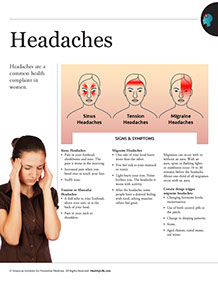
    Headaches are a common health complaint in women.

    Signs, Symptoms & Causes

    For Tension or Muscular Headaches

    *  A dull ache in your forehead, above your ears, or at the back of your head.

    *  Pain in your neck or shoulders.

    Common causes are tense or tight muscles in the face, neck, or scalp, concentrating hard for long periods of time, stress, and lack of sleep.

    For Sinus Headaches

    *  Pain in your forehead, cheekbones, and nose. The pain is worse in the morning.

    *  Increased pain when you bend over or touch your face.

    *  Stuffy nose.

    A sinus headache occurs when fluids in the nose aren’t able to drain well and a buildup of pressure occurs in the sinuses. A cold, allergies, dirty or polluted water, and airplane travel can cause a sinus headache.

    For Migraine Headaches

    *  One side of your head hurts more than the other.

    *  You feel sick to your stomach or vomit.

    *  Light hurts your eyes. Noise bothers you. The headache is worse with activity.

    *   After the headache, some people have a drained feeling with tired, aching muscles; others feel great.

    Migraines can occur with or without an aura. With an aura, spots or flashing lights or numbness occur 10 to 30 minutes before the headache. Ten percent of all migraines are this type; 90% occur without an aura.

    Migraine headaches happen when blood vessels in your head open too wide or close too tight. They tend to run in families and affect nearly 30% of women at some time during their lives. They occur more often in women than in men.

    Migraines occur less often during pregnancy (especially the second half) and often disappear during menopause. Some women, though, may get migraines for the first time during menopause.

    Certain things trigger migraine headaches:

    *  Changing hormone levels. Menstruation.

    *  Use of birth control pills or the patch.

    *  Change in sleeping patterns.

    *  Stress.

    *  Aged cheeses. Cured meats. Red wines.

    Other Causes of Headaches

    *  Analgesic rebound from regular or repeated use of over-the-counter or prescribed pain relievers.

    *  Eating or drinking something very cold, such as ice cream. {Note: To prevent ice cream headaches, warm the ice cream for a few seconds in the front of your mouth.}

    *  Caffeine withdrawal.

    *  Low blood sugar, hunger, or sensitivity to certain foods and drinks.

    *  A symptom of a health problem. Examples are allergies, depression, high blood pressure, dental problems, and a pinched nerve in the neck.

    *  Cigarette smoke, pollution, etc.

    *  Uncorrected vision problems.

    Treatment

    Self-care can treat headaches caused by tension, fatigue, and/or stress. Certain over-the-counter medicines and prescribed medicines can treat sinus headaches and migraine headaches.

    Biofeedback has helped many people who have suffered from headaches.

    Headaches that are symptoms of health problems are relieved when the condition is treated with success.

    Questions to Ask

    Self-Care / Prevention

    *  Don’t smoke. If you smoke, quit!

    *  Try to stop the headache when it starts.

    *  Take an over-the-counter (OTC) medicine for pain as directed on the label.

    *  Rest in a quiet, dark room with your eyes closed.

    *  Massage the back of your neck with your thumbs. Work from the ears toward the center of the back of your head. Also, rub gently along the sides of your eyes. Gently rub your shoulders, neck, and jaw. Get a massage.

    *  Place a cold or warm washcloth or hot or cold pack, whichever feels better, over the area that aches.

    *  Take a warm bath or shower.

    *  Relax. Picture a calm scene in your head. Meditate or breathe deeply.

    *  Keep a diary of when, where, and why headaches occur.

    *  Get enough rest.

    *  Eat 5 to 6 small meals instead of 3 large meals. To ward off low blood sugar, don’t skip meals. Avoid sweets.

    *  Keep regular sleeping times as much as you can.

    *  When lying down, use a pillow that supports the neck. Sleep on your back.

    *  Avoid scents, foods, and beverages that trigger headaches.

    *  To help prevent headaches and nausea caused by a hangover, try an OTC product, such as Chaser-Freedom From Hangovers.

    *  For a hangover: After drinking alcohol, take an OTC pain reliever. Eat solid foods. Rest or sleep. Have 2 or more glasses of water before you go to sleep. Drink 2 or more glasses of water when you wake up.

    Foods and Drinks that May Cause Headaches

    *  Alcoholic beverage, especially red wine

    *  Aspartame (the artificial sweetener in NutraSweet®)

    *  Bananas (if more than 1/2 banana a day)

    *  Caffeine from coffee, tea, cola soft drinks, chocolate, or some medications

    *  Lack of caffeine if abruptly stopped, such as stopping coffee intake

    *  Citrus fruits (if more than 1/2 cup a day)

    *  Cured meats, such as frankfurters

    *  Food additives, such as monosodium glutamate (MSG)

    *  Hard cheeses, such as aged cheddar or provolone

    *  Nuts and peanut butter

    *  Onions

    *  Sour cream

    *  Soy sauce

    *  Vinegar

    Resources

    National Headache Foundation

    888.NHF.5552 (643.5552)

    www.headaches.org

    Women's Self-Care book by the American Institute for Preventive Medicine. www.HealthyLife.com. All rights reserved.

    © American Institute for Preventive Medicine

  • Hiv/Aids

    Sexual Health

    HIV stands for human immunodeficiency virus. AIDS is acquired immune deficiency syndrome. It is caused by HIV. The virus destroys the body’s immune system. This leaves a person unable to fight off diseases. The virus also attacks the central nervous system causing mental problems. One million people in the U.S. have HIV, but about 25% of them do not know they have it. People ages 15 to 65 are advised to be screened for HIV.

    Signs & Symptoms

    Many people have no symptoms when first infected with HIV. Within a month or two, some people have flu-like symptoms. These include fever, fatigue, headache, and swollen glands in the neck and groin. These symptoms usually go away within a week to a month. They are often mistaken for other infections.

    In adults, symptoms of HIV may take a few months to 10 or more years to appear. In children born with HIV, symptoms appear within 2 years.

    Symptoms of HIV Before the Onset of AIDS

    *  Swollen glands.

    *  Fatigue. Weight loss.

    *  Fever and sweating that occur often.

    *  Skin rashes that persist. Flaky skin.

    *  Infections. These include herpes, shingles, and yeast infection.

    *  Short-term memory loss.

    *  Getting sick often. Slow growth in children.

    AIDS is the most advanced stage of HIV. With AIDS, a low level of cells in the blood called T4 cells occurs. Persons with AIDS get many illnesses. These include skin infections, pneumonia, and cancer.

    Symptoms of AIDS

    *  Extreme fatigue. Weight loss.

    *  Severe and chronic diarrhea.

    *  Fever. Severe headaches.

    *  Shortness of breath. Coughing. A hard time swallowing.

    *  Abdominal cramps. Nausea. Vomiting.

    *  Lack of coordination. Vision loss.

    *  Mental status changes. Seizures. Coma.

    Causes

    HIV is spread when body fluids, such as semen and blood, pass from an infected person to another person. This includes having unprotected sexual contact and/or sharing drug needles.

    Infected females can give HIV to their babies during pregnancy, birth, or breast-feeding. The risk of the baby getting HIV is lowered a great deal if the female takes antiviral medicines during the pregnancy and delivery. The baby takes medicine the first six weeks of life, too.

    HIV is not spread from donating blood, touching, hugging, or (dry) kissing a person with HIV. A cough, a sneeze, tears, sweat, or using a hot tub, or public restroom does not spread HIV either.

    Treatment

    A rapid oral HIV test and blood tests detect antibodies to HIV. There is no cure for AIDS, but treatment helps the immune system fight HIV, infections, and cancers that can occur with it. Treatment includes medications (often used in multidrug combinations) and treating infections.

    Questions to Ask

    Self-Care / Prevention

    *  Take medication as prescribed.

    *  Take steps to reduce the risk of getting infections and diseases. Get enough rest. Eat healthy foods. Take vitamins and minerals as advised by your doctor.

    *  Get emotional support. Join a support group for persons infected with HIV. Let your family and friends know how they can help you.

    To Reduce the Risk for HIV

    *  Follow Safer Sex.

    *  Don’t share needles with anyone. Don’t have sex with people who use or have injected illegal drugs.

    *  Don’t share personal items that have blood on them, such as razors.

    *  Don’t have sex with people who are at high risk for HIV:

    – Persons with multiple sex partners or who inject illegal drugs.

    – Partners of persons infected or exposed to HIV.

    – Persons who have had multiple blood transfusions, especially before 1985, unless tested negative for HIV.

    Resources

    AIDSinfo

    800.HIV.0440 (448.0440)

    www.aidsinfo.nih.gov

    CDC National AIDS Hotline (NAH) and National STD Hotline

    800.CDC.INFO (232.4636)

    www.cdc.gov/std

    Healthier at Home book by the American Institute for Preventive Medicine. www.HealthyLife.com. All rights reserved.

    © American Institute for Preventive Medicine