
Tag: workload

  • Prevent Burnout

    Stress Management

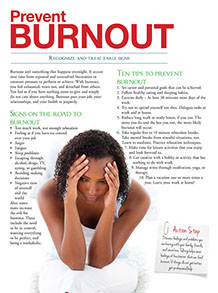
    Image of women with head in her hands.

    Recognize and treat early signs.

    Burnout isn’t something that happens overnight. It occurs over time from repeated and unresolved frustration or constant pressure to perform or achieve. With burnout, you feel exhausted, worn out, and detached from others. You feel as if you have nothing more to give and simply do not care about anything. Burnout puts your job, your relationships, and your health in jeopardy.

    Ten tips to prevent burnout:

    1.  Set career and personal goals that can be achieved.

    2.  Follow healthy eating and sleeping habits.

    3.  Exercise daily – At least 30 minutes most days of the week.

    4.  Try not to spread yourself too thin. Delegate tasks at work and at home.

    5.  Reduce long work or study hours, if you can. The more you do and the less you rest, the more likely burnout will occur.

    6.  Take regular five to 10 minute relaxation breaks. Take mental breaks from stressful situations, too. Learn to meditate. Practice relaxation techniques.

    7.  Make time for leisure activities that you enjoy and look forward to.

    8.  Get creative with a hobby or activity that has nothing to do with work.

    9.  Manage stress through meditation, yoga, or therapy.

    10. Plan a vacation one or more times a year. Leave your work at home!

    Signs on the road to burnout:

    *  Too much work, not enough relaxation

    *  Feeling as if you have no control over your job

    *  Anger

    *  Fatigue

    *  Sleep problems

    *  Escaping through alcohol, drugs, TV, eating, or gambling

    *  Avoiding making decisions

    *  Negative view of yourself and the world

    Also, some traits increase the risk for burnout. These include the need to be in control, wanting everything to be perfect, and being a workaholic.

    Action Step

    Discuss feelings and problems you are having with your family, friends, and coworkers. Talking helps ease feelings of frustration that can feed burnout. If things do not get better, get professional help.
    Page from Ways to Well-Being book by the American Institute for Preventive Medicine. www.HealthyLife.com. All rights reserved.

    © American Institute for Preventive Medicine

  • Prevent Burnout 2

    Work Life

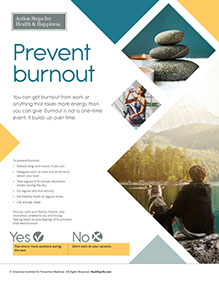
    Man sitting on roack along a lake with his dog.

    You can get burnout from work or anything that takes more energy than you can give. Burnout is not a one-time event. It builds up over time.

    To prevent burnout:

    *  Reduce long work hours, if you can.

    *  Delegate tasks at work and at home to lessen your load.

    *  Take regular 5-10 minute relaxation breaks during the day.

    *  Do regular physical activity.

    *  Eat healthy foods at regular times.

    *  Get enough sleep.

    *  Plan one or more vacations during the year.

    *  Don’t work on your vacation.

    Discuss, with your family, friends, and coworkers, problems you are having. Talking helps to ease feelings of frustration that feed burnout.

    ays to Well-Being book by the American Institute for Preventive Medicine. www.HealthyLife.com. All rights reserved.

    © American Institute for Preventive Medicine
  • Overwhelmed At Work? How To Handle It

    WORK LIFE

    Image of stressed women at work.

    No matter what your job, you’re bound to feel overwhelmed sometimes. Whether you have new responsibilities, are worried about a certain project, or just have too much on your plate, it’s normal to feel the pressure occasionally. Though you may not be able to change what’s causing these feelings, you can find ways to deal with these situations in a healthy way.

    Jot it down.

    If your mind is swimming with a list of to-dos, put it on paper. Sometimes seeing the list can help you come up with a plan to get it done. You can figure out what needs to be done first, and then you have a starting point.

    Take a break from work when you’re off-duty.

    If your life revolves around the buzzing of your phone with emails and work demands, try to take some time each day to turn it off. You may find you feel more relaxed and ready to focus when you return to work.

    Start with just one step.

    If a huge project feels too difficult to start, then just think about the first thing you need to do. It can be something minor, such as sending an email or writing down a task list. Every big project begins with one step. Consider what needs to be done right now, and do that first. Once you get started, it may be easier to keep going.

    Talk to your supervisor.

    If possible, bring up your main concerns to your boss. Be specific about your problem, and focus on what you can do to help solve it. For instance, if you have too many tasks, tell them what you are able to do in the time you have, and suggest alternate ways to get the rest done. Perhaps you can ask for more time to get a project done. Or, see if you can delegate the task to a co-worker.

    An organized desk gives you control

    If you’re feeling buried at work, look in front of you. A messy desk can create more stress and anxiety. Clean up your space by:

    *  Going through papers as you get them, rather than letting them pile up

    *  Creating a “pending” or “in progress” folder for things you need to do

    *  Clean up your space before you leave each day

    *  Put things back as soon as you’re done using them

    A tidy desk can brighten your outlook and boost your productivity.

    Source: American Psychological Association

    © American Institute for Preventive Medicine