Tag: Yoga, Pilates, Flexibility

  • Stay Fit For Life By Getting Flexible

    BE FIT

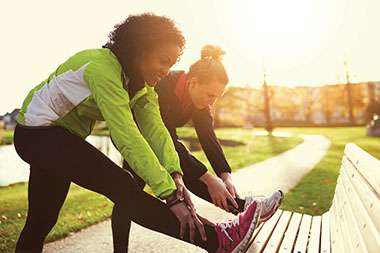
    Two women stretching legs on bench.

    Flexibility is your range of motion throughout the joints of your body. A rigid joint may not function well and can limit your ability to move with ease.

    A healthy range of motion allows you to bend down to tie your shoes or reach up high to get something out of a cabinet. If you want to move well, you need to be flexible!

    Tips to improve flexibility

    *  Stretch your muscles daily.

    *  Take regular stretch breaks, especially after long periods of inactivity.

    *  Make time to stretch after you exercise when your muscles are warm.

    *  Hold each stretch for about 90 seconds.

    *  Only stretch to the point of “comfortable discomfort,” never pain.

    *  Breathe deeply and relax while stretching.
    © American Institute for Preventive Medicine
  • Get Flexible!

    Fitness

    To be truly fit, you need to be limber. The following stretches can help you achieve that goal.

    Side Stretch

    Stand straight with your legs spread comfortably. Clasp your hand above your head. Lean from the waist as far to the right as is comfortable without  moving your hip. Repeat, leaning to the left.

    Sitting Stretch

    Sit on the floor with your legs extended and at least 6 to 10 inch apart. Keeping your back straight, bend forward with arms outstretched as far as is comfortable and hold the position for 8 to 10 seconds. Don’t strain or bounce.

    Horizontal Leg Stretch

    Lie on your back with both legs outstretched. Be sure to keep the small of your back flat against the floor. Bend your right knee and raise it until your foot is a few inches off the floor. Keeping your leg straight, slide your left leg to the left along the floor. Slide it back and lower the other leg. Repeat, alternating legs.

    Don’t Do These Stretches

    The following stretches, although popular, may injure you or aggravate an existing ailment like a back or other orthopedic problem. Avoid:

    The plow. In this stretch, you lie on your back and raise your legs until your feet are resting on the floor behind your head.

    The hurdler’s stretch. For this one, sit on the floor with one leg extended forward and the other extended behind you, with the knee bent.

    The toe touch. This familiar stretch requires you to bend at the hips to touch your toes, with your legs straight and knees locked.

    Page image from A Year of Health Hints book by the American Institute for Preventive Medicine. www.HealthyLife.com. All rights reserved.

    © American Institute for Preventive Medicine
  • 5 Things To Know About Yoga

    BE FIT

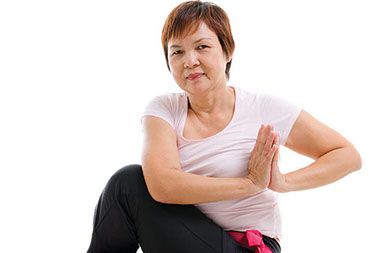
    Image of women in yoga position.

    Yoga typically combines physical postures, breathing exercises, and meditation or relaxation. Researchers are studying how yoga may be used to help improve health and to learn more about its safe use. If you’re thinking about practicing yoga, here are 5 things you should know from the National Center for Complementary and Alternative Medicine:

    1. Studies suggest that yoga may be beneficial for a number of conditions. Recent studies in people with chronic low-back pain suggest that a carefully adapted set of yoga poses can help reduce pain and improve function. Other studies also suggest that practicing yoga (as well as other forms of regular exercise) might have other health benefits such as reducing heart rate and blood pressure, and may also help relieve anxiety and depression.

    2. Research suggests that yoga is not helpful for asthma, and studies looking at yoga and arthritis have had mixed results.

    3. Yoga is generally considered to be safe in healthy people when practiced appropriately. However, people with high blood pressure, glaucoma, or sciatica, and women who are pregnant should modify or avoid some yoga poses.

    4. Practice safely and mindfully. Everyone’s body is different, and yoga postures should be modified based on individual abilities. Inform your instructor about any medical issues you have, and ask about the physical demands of yoga.

    5. Talk to your doctor about any complementary health practices you use, including yoga. Give them a full picture of what you do to manage your health. This will help ensure coordinated and safe care.

    © American Institute for Preventive Medicine

  • Hey, Want To Improve Your Balance?

    SELF-CARE CORNER

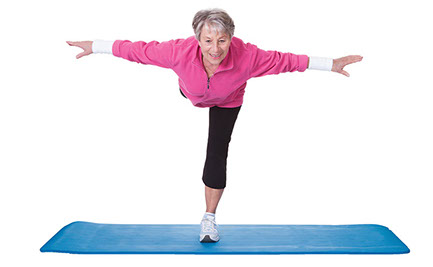
    Image of older women balancing on one leg while bending over half way.

    Everyone wants to prevent falls and improve balance, at any age. NIH in Health offers these daily exercises to steady your balance (and you could do these while talking on the phone or at work too):

    *  Stand on one leg at a time for a minute. Slowly increase the time. Try to balance with your eyes closed or without holding on to anything.

    *  Stand on your toes for a count of 10, and then rock back on your heels for a count of 10.

    *  Move your hips in a big circle to the left, and then to the right. Do not move your shoulders or feet. Repeat 5 times.

    © American Institute for Preventive Medicine
  • Is Yoga For You?

    BE FIT

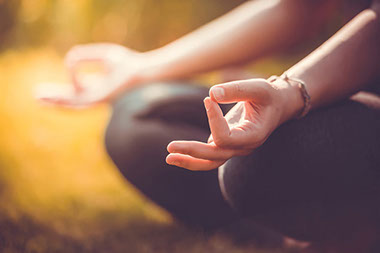
    Close up image of female hands while in a yoga pose.

    Yoga is an ancient Indian practice that engages the mind and body. There are many different forms of yoga, and the type you choose should suit your health and fitness goals. Check out these more popular types of yoga.

    Hatha

    Hatha yoga is a general term for any type of yoga. But in general, hatha classes focus on perfecting and holding yoga poses and proper breathing. It can be relaxing, as it is generally slower paced. You may not get an aerobic workout from hatha yoga, but it can improve your strength, balance and flexibility. Hatha classes are usually geared towards beginners.

    Vinyasa

    This is a faster-paced style of yoga that moves quickly from pose to pose, sometimes with upbeat music. You may work up a sweat and get a good cardiovascular workout. Before trying vinyasa, be sure you are familiar with basic yoga poses so you can follow along. It is often suitable for all skill levels, as the poses can be modified to fit your comfort and ability.

    Ashtanga

    This style uses the same six poses in an identical order or sequence. It can be repetitive, but allows people to follow a set routine. This tends to be a more fast-paced and vigorous style of yoga. You may get hot and will need to drink plenty of fluids.

    Bikram

    Bikram yoga, sometimes called hot yoga, is done in a heated room and is designed to make participants sweat heavily during the class. Bikram involves a set of 26 poses and two breathing exercises during a 90-minute class. Though it’s a predictable sequence, the heat makes it a strenuous activity. Though studies haven’t proven its safety or risks for sure, it is not right for everyone. Always ask your doctor before trying any kind of hot yoga. The excess heat may cause heat-related illnesses in some people.

    © American Institute for Preventive Medicine