SELF-CARE CORNER
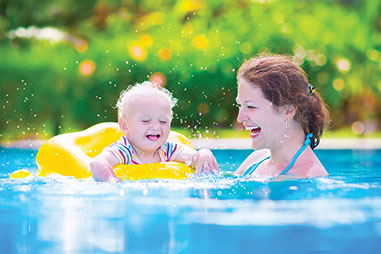
When the summer sun beats down, many people flock to water for cooling relief and fun. Swimming, boating and water activities are a favorite pastime for many Americans. But, it’s important to know the dangers of water and how to keep yourself and your loved ones safe.
The Centers for Disease Control and Prevention says more than 3,500 people DROWN in the U.S. each year in swimming (non-boating) related accidents.
Most of these are children under the age of 14.
And according to the U.S. Coast Guard,
hundreds more die in boating-related accidents
each year – and the majority of them are DUE TO DROWNING.
Most drownings are preventable –
so here’s what you should do any time you’re around water:
*Keep pools gated and locked.Home pools should be enclosed with a locked fence that’s at least 4 feet high.
*Always supervise.Children drown within seconds, not minutes. And, there’s typically no screaming, splashing, or other noise. Keep your eyes on children in the water at all times. Don’t turn your back, even for “just a minute.”
*Wear life jackets.Many boating-related deaths could be avoided if all passengers wore U.S. Coast Guard-approved life jackets. Children should also wear them when swimming.
*Consider swimming lessons.Children and adults can benefit from knowing how to swim, and it can reduce the risk of drowning.
*Learn CPR.Giving cardiopulmonary resuscitation (CPR) can save lives if given quickly after a water accident.
*Stay sober.Alcohol and water don’t mix – so don’t drink if you’re boating, swimming or supervising children in the water.
*Watch the weather.If there’s a chance of strong winds or a thunderstorm, stay out of the water.
*Watch for rip currents in natural bodies of water.A rip current is a powerful current that you can’t see, but can quickly take even a grown adult underwater. If you feel one pull you down, swim parallel to the shore until you get free. Don’t try to fight it or swim toward the shore.
*Know the boating laws.There are state and federal laws that boaters must follow. Learn about them atwww.uscgboating.org. You can also look into boating safety courses and safety checks for your boat on this website.

© American Institute for Preventive Medicine