Nutrition
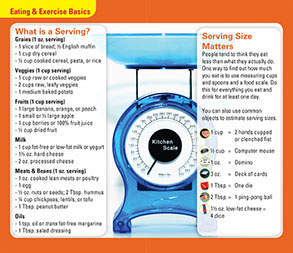
Grains (1 oz. serving)
* 1 slice of bread; ½ English muffin
* 1 cup dry cereal
* ½ cup cooked cereal, pasta, or rice
Veggies (1 cup serving)
* 1 cup raw or cooked veggies
* 2 cups raw, leafy veggies
* 1 medium baked potato
Fruits (1 cup serving)
* 1 large banana, orange, or peach
* 1 small or ½ large apple
* 1 cup berries or 100% fruit juice
* ½ cup dried fruit
Milk
* 1 cup fat-free or low-fat milk or yogurt
* 1½ oz. hard cheese
* 2 oz. processed cheese
Meats & Beans (1 oz. serving)
* 1 oz. cooked lean meats or poultry
* 1 egg
* ½ oz. nuts or seeds; 2 Tbsp. hummus
* ¼ cup chickpeas, lentils, or tofu
* 1 Tbsp. peanut butter
Oils
* 1 tsp. oil or trans fat-free margarine
* 1 Tbsp. salad dressing
Serving Size Matters
People tend to think they eat less than what they actually do. One way to find out how much you eat is to use measuring cups and spoons and a food scale. Do this for everything you eat and drink for at least one day. You can also use common objects to estimate serving sizes.
1 cup = 2 hands cupped or clenched fist
½ cup = Computer mouse
1 oz. = Domino
3 oz. = Deck of cards
1 Tbsp. = One die
2 Tbsp. = 1 ping-pong ball
1½ oz. low-fat cheese = 4 dice
© American Institute for Preventive Medicine