Healthylife® Weigh
Part 1
Ways to Measure Weight
There are several ways to determine your healthy body weight. While weight is not the only way to determine health, aim to weigh within a healthy range to reduce health risks. Three measures can help determine your weight-related health status:
1. Body Mass Index (BMI)
2. Waist Circumference
3. Risk Factors for Health Problems
Body Mass Index
* Find your height in the left column under “Height.” Move across to find your weight in the row next to your height.
* The number at the top of the column where your height and weight meet is your BMI.
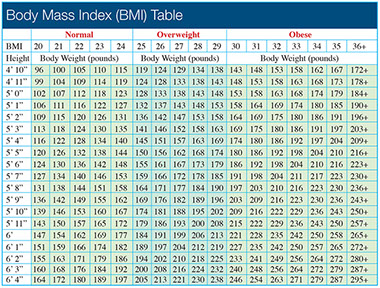
You can also find your BMI using the BMI calculator atwww.nhlbi.nih.gov/health/educational/lose_wt/BMI/bmicalc.htm.
Waist Circumference
Excess abdominal fat puts you at greater risk for heart disease, high blood pressure, and type 2 diabetes than excess fat in the hips and thighs. One way to tell if you have excess abdominal fat is to measure your waist circumference.
1. Stand relaxed with your feet together (avoid pulling in your stomach).
2. Waist measurement: Place a measuring tape around your waist near your belly button (men) or the smallest part of your waist (women).

4. Using a calculator, calculate: Waist measurement ÷ Hip measurement =
Risk Factors for Health Problems
You may be putting yourself at higher risk if you have a BMI of 30 or greater. If your BMI is between 25 and 29 and you have two or more risk factors listed below, you may also be at risk.


© American Institute for Preventive Medicine