Systematic Stress Management Program
Step 2: Stress Management at Work
Introduction
Work Stress Factors
Burnout Self Inventory
Identify Your Burnout Traits
Work Stressor Questionnaire
Ten Tips for Preventing Burnout
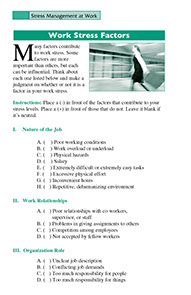
Many factors contribute to work stress. Some factors are more important than others, but each can be influential. Think about each one listed below and make a judgment on whether or not it is a factor in your work stress.
Instructions: Give yourself a (-) next to the factors that contribute to your stress levels. Or, a (+) to those that do not. Leave it blank if it’s neutral.
I. Nature of the Job
* Poor working conditions
* Work overload or underload
* Physical hazards
* Salary
* Extremely difficult or extremely easy tasks
* Excessive physical effort
* Inconvenient hours
* Repetitive, dehumanizing environment
II. Work Relationships
* Poor relationships with co-workers, supervisor, or staff
* Problems in giving assignments to others
* Competition among employees
* Not accepted by fellow workers
III. Organization Role
* Unclear job description
* Conflicting job demands
* Too much responsibility for people
* Too much responsibility for things
IV. Career Development
* Lack of job security
* Overqualified for job
* Under qualified for job
* Ambition is inhibited by boss
* Inadequate credit for accomplishments
V. Organizational Structure and Atmosphere
* Little control over decisions
* Office politics
* Restrictions on behavior
* Discouragement of individual expression
* Being evaluated
VI. Non-Work Factors
* Family problems
* Money problems
* Life satisfaction
* Life stages
* Health
This exercise is a good starting place to survey the general nature of the stress you experience on your job. Once sources are identified, corrections can begin.
© American Institute for Preventive Medicine
Step 1: Understanding Stress
Step 3: Type A & B Behavior Patterns
Step 5: Thinking Differently
Step 7: Communication & Stress
Step 2: Stress Management at Work
Step 4: Biofeedback Training & Relaxation
Step 6: Time Management
Steps to Systematic Stress Management™
RELATED ARTICLES
© American Institute for Preventive Medicine – All Rights Reserved.Disclaimer|www.HealthyLife.com