SUCCESS OVER STRESS
Stress is a part of life. Some stress can be good for you, because it can help you focus and do your best. But, when stress lasts a long time, it can take a toll on your physical and mental health. Maybe you’ve tried to “just relax” with no luck. Perhaps you’ve tried to cut things out of your schedule, but you’re still overwhelmed. Stress can be more complex than we realize. If you feel stressed all the time, consider these possible causes:
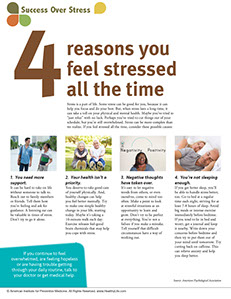
1.You need more support.It can be hard to take on life without someone to talk to. Reach out to family members or friends. Tell them how you’re feeling and ask for guidance. A listening ear can be valuable in times of stress. Don’t try to go it alone.
2.Your health isn’t a priority.You deserve to take good care of yourself physically. And, healthy changes can help you feel better mentally. Try to make one simple healthy change in your life, starting today. Maybe it’s taking a 10-minute walk each day. Exercise releases feel-good brain chemicals that may help you cope with stress.
3.Negative thoughts have taken over.It’s easy to let negative words from others, or even ourselves, come to mind too often. Make a point to look at stressful situations as an opportunity to learn and grow. Don’t try to be perfect at everything. You’re not a failure if you make a mistake. Tell yourself that difficult circumstances have a way of working out.
4.You’re not sleeping enough.If you get better sleep, you’ll be able to handle stress better, too. Go to bed at a regular time each night, striving for at least 7-8 hours of sleep. Avoid big meals or intense exercise immediately before bedtime. If you tend to lie in bed and worry, get a journal and keep it nearby. Write down your concerns before bedtime and then try to put them out of your mind until tomorrow. Try cutting back on caffeine. This can relieve anxiety and help you sleep better.
If you continue to feel overwhelmed, are feeling hopeless or are having trouble getting through your daily routine, talk to your doctor or get medical help.
Source: American Psychological Association
© American Institute for Preventive Medicine