HEALTHY EATING
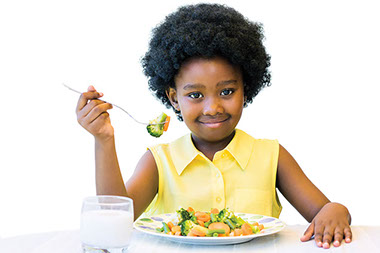
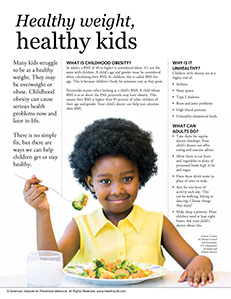
Many kids struggle to be at a healthy weight. They may be overweight or obese. Childhood obesity can cause serious health problems now and later in life.
There is no simple fix, but there are ways we can help children get or stay healthy.
What is childhood obesity?
In adults, a BMI of 40 or higher is considered obese. It’s not the same with children. A child’s age and gender must be considered when calculating their BMI. In children, this is called BMI-for-age. This is because children’s body fat amounts vary as they grow.
Percentiles matter when looking at a child’s BMI. A child whose BMI is at or above the 95th percentile may have obesity. This means their BMI is higher than 95 percent of other children of their age and gender. Your child’s doctor can help you calculate their BMI.
Why is it unhealthy?
Children with obesity are at a higher risk of:
* Asthma
* Sleep apnea
* Type 2 diabetes
* Bone and joint problems
* High blood pressure
* Unhealthy cholesterol levels
What can adults do?
* Take them for regular doctor checkups. Your child’s doctor can offer eating and exercise advice.
* Allow them to eat fruits and vegetables in place of processed foods high in fat and sugar.
* Have them drink water in place of juice or soda.
* Aim for one hour of activity each day. This can be walking, biking or dancing. Choose things they enjoy!
* Make sleep a priority. Most children need at least eight hours. Ask your child’s doctor about this.
Sources: Centers for Disease Control and Prevention, U.S. Department of Health and Human Services
© American Institute for Preventive Medicine