Author: AIPM

  • Know How To Use A Fire Extinguisher

    Home Safety

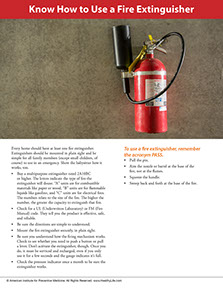
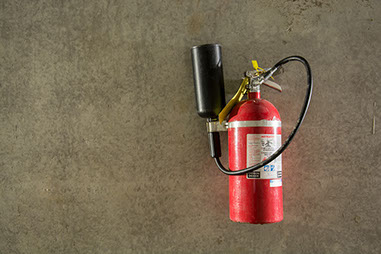
    Image of fire extinguisher.

    Every home should have at least one fire extinguisher. Extinguishers should be mounted in plain sight and be simple for all family members (except small children, of course) to use in an emergency. Show the babysitter how it works, too.

    *  Buy a multipurpose extinguisher rated 2A10BC or higher. The letters indicate the type of fire the extinguisher will douse. “A” units are for combustible materials like paper or wood, “B” units are for flammable liquids like gasoline, and “C” units are for electrical fires. The numbers relate to the size of the fire. The higher the number, the greater the capacity to extinguish that fire.

    *  Check for a UL (Underwriters Laboratory) or FM (Fire Mutual) code. They tell you the product is effective, safe, and reliable.

    *  Be sure the directions are simple to understand. Mount the fire extinguisher securely, in plain sight.

    *  Be sure you understand how the firing mechanism works. Check to see whether you need to push a button or pull a lever. Don’t activate the extinguisher, though. Once you do, it must be serviced and recharged, even if you only use it for a few seconds and the gauge indicates it’s full.

    *  Check the pressure indicator once a month to be sure the extinguisher works.

    To use a fire extinguisher, remember the acronym PASS.

    *  Pull the pin.

    *  Aim the nozzle or barrel at the base of the fire, not at the flames.

    *  Squeeze the handle.

    *  Sweep back and forth at the base of the fire.

    A Year of Health Hints book by the American Institute for Preventive Medicine. www.HealthyLife.com. All rights reserved.

    © American Institute for Preventive Medicine

  • Violence & Abuse

    Mental Health

    Violence is the intended use or threat of force or power against one or more persons or even oneself. It results in physical or emotional harm, deprivation, or, too often, death. Worldwide, violence causes 44% of deaths among males; 7% among females.

    Abuse is one form of violence. It can be emotional, physical, economic, and/or sexual.

    Violence and abuse are law and order issues, as well as, personal and public health issues.

    Signs & Symptoms

    A person who commits violence and abuse does the things listed below. The signs often progress from ones that cause less harm to ones that can threaten life.

    *  Uses verbal abuse, such as name calling.

    *  Acts possessive and extremely jealous.

    *  Has a bad temper. Does violent acts in front of others, but doesn’t harm them. An example is putting a fist through a wall.

    *  Gives threats.

    *  Acts cruel to animals.

    *  Pushes, slaps, and/or restrains others.

    *  Punches. Kicks. Bites. Sexually assaults.

    *  Chokes others. Breaks bones. Uses weapons.

    Causes

    Violence and abuse are ways to gain and keep control over others. Persons who commit violence or abuse come from all groups and backgrounds. Often, they have these problems:

    *  Poor skills to communicate.

    *  A family history of violence. They may have been abused in the past. They may have seen one parent beat the other.

    *  Alcohol or drug abuse.

    Treatment

    Treatment for the victim of abuse or violence depends on the situation and includes:

    *  Emergency medical care. Calling the police.

    *  Going to a safe place, such as a shelter for victims of abuse.

    *  Counseling.

    *  Training to be assertive.

    In general, persons who abuse others or commit violence find it hard to change their behavior without professional help.

    Questions to Ask

    Self-Care / Prevention

    To Handle Being in an Abusive Relationship

    *  Get help!

    *  Have a safety plan for times you feel unsafe or in danger.

    – Decide who you will call (e.g., police, neighbors, relatives, a shelter). Make a list of these telephone numbers. Memorize them, too.

    – Decide where you will go. If you have children and pets, develop safety plans. Practice the safety plans with your children. Have a plan for taking them with you. Have plans for where they should go if you can’t get away.

    – Keep extra keys to your car and house in a safe place unknown to the person abusing you.

    – Put some cash in a safe place that you can get quickly in case you need money for transportation to a safe place.

    To Manage Conflict Without Violence

    *  When you communicate, state your needs without putting others down.

    *  Learn to deal with frustration, rejection, ridicule, jealousy, and anger.

    *  Accept differences in others. This includes sexual preferences, ethnic and religious backgrounds, etc. You do not need to change your beliefs, but don’t expect other persons to change theirs, either.

    *  Be an active listener. Focus on what the other person is saying. Try to understand his or her point of view. Or, simply accept it as an opinion.

    *  Take a course that teaches skills to manage conflict.

    *  When you can’t resolve a conflict on your own, get help.

    Resources

    National Center for Victims of Crime

    202.467.8700

    www.ncvc.org

    National Domestic Violence Hotline

    800.799.7233

    www.thehotline.org

    Healthier at Home book by the American Institute for Preventive Medicine. www.HealthyLife.com. All rights reserved.

    © American Institute for Preventive Medicine

  • What To Do If Clothing Catches Fire

    Home Safety

    Image of mother and daughter.

    Few things are more terrifying than having your clothes catch fire. Teach your children and everyone else in your family this simple, lifesaving technique, known as stop, drop, and roll.

    Stop. Your natural inclination may be to run. But motion only fans the flames.

    Drop. Get to the ground, cover your face with your hands, and keep your face as far from the flames as possible. (If a blanket, rug, or coat is handy, use it to smother the flames. But doing so should never delay stop, drop, and roll.)

    Roll. Roll back and forth, again and again, until the flames go out.

    A Year of Health Hints book by the American Institute for Preventive Medicine. www.HealthyLife.com. All rights reserved.

    © American Institute for Preventive Medicine

  • When In Doubt, Throw It Out

    Home Safety

    Take steps to avoid foodborne illnesses.

    If it looks good, and smells good, it’s safe to eat. Right? Not always. Harmful bacteria that cause foodborne illnesses can hide very well in foods. Keeping foods safe to eat can prevent stomach pain, nausea, diarrhea, and other dire symptoms caused by eating spoiled food.

    Store foods safely:

    *  Separate raw, cooked, and ready-to-eat foods when you shop for and store them. Follow instructions on package labels.

    *  Refrigerate foods that can spoil within two hours (one hour if the room or outdoor temperature is above 90°F).

    *  Keep the refrigerator at 40°F or lower; the freezer at or below 0°F.

    *  Wrap meat and poultry securely to prevent leakage onto other foods. Use foil or freezer wrap.

    *  High-acid canned foods, such as tomatoes and pineapple can be stored for 12 to 18 months. Low-acid canned foods, such as most vegetables will keep two to five years if kept in a cool, dry place.

    Prepare foods safely:

    *  Wash your hands with warm water and soap for at least 20 seconds before and after handling food.

    *  Rinse raw fruits and veggies under running tap water before eating, cutting, or cooking.

    *  Scrub firm produce, such as melons and cucumbers with a clean produce brush.

    *  Use clean utensils and clean surfaces.

    *  Thaw frozen foods in the fridge or in cold water. You can also use the microwave if you are going to cook the food right away.

    *  Cook foods to a safe temperature.

    Leftovers, anyone?

    *  Quickly refrigerate leftovers.

    *  Freeze ones that you do not intend to eat within two to four days.

    *  Reheat leftovers on the stove or in the oven or microwave until an internal temperature reaches 165°F.

    *  Keep hot foods higher than 140°F. Keep cold foods at 40°F or lower. Bacteria grow rapidly in the “danger zone” between 40°F and 140°F.

    Action Step

    Find out about food recalls and alerts from your local news, national news, and from

    www.FoodSafety.gov.

    Ways to Well-Being book by the American Institute for Preventive Medicine. www.HealthyLife.com. All rights reserved.

    © American Institute for Preventive Medicine

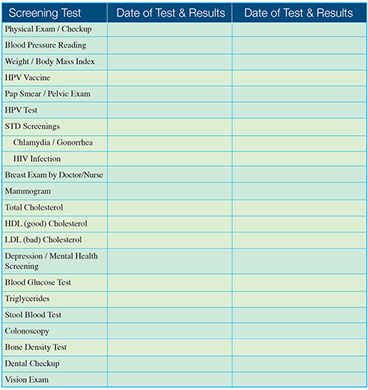
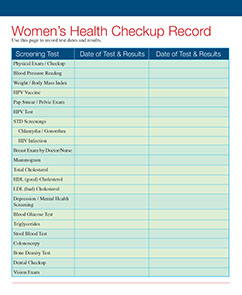
  • Women’s Health Checkup Record

    Medical History

    Use this page to record test dates and results.

    Women's health checkup record chart.
    Men's and Women's Self-Care Book. Published by the American Institute for Preventive Medicine.

    © American Institute for Preventive Medicine

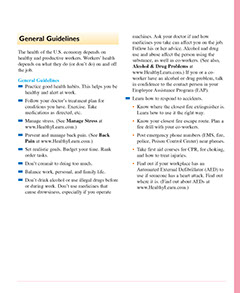
  • Workplace Health & Safety General Guidelines

    Work Life

    The health of the U.S. economy depends on healthy and productive workers. Workers’ health depends on what they do (or don’t do) on and off the job.

    General Guidelines

    *  Practice good health habits. This helps you be healthy and alert at work.

    *  Follow your doctor’s treatment plan for conditions you have. Exercise. Take medications as directed, etc.

    *  Manage stress.

    *  Prevent and manage back pain.

    *  Set realistic goals. Budget your time. Rank order tasks.

    *  Don’t commit to doing too much.

    *  Balance work, personal, and family life.

    *  Don’t drink alcohol or use illegal drugs before or during work. Don’t use medicines that cause drowsiness, especially if you operate machines. Ask your doctor if and how medicines you take can affect you on the job. Follow his or her advice. Alcohol and drug use and abuse affect the person using the substance, as well as co-workers. If you or a co- worker have an alcohol or drug problem, talk in confidence to the contact person in your Employee Assistance Program (EAP).

    *  Learn how to respond to accidents.

    – Know where the closest fire extinguisher is. Learn how to use it the right way.

    – Know your closest fire escape route. Plan a fire drill with your co-workers.

    – Post emergency phone numbers (EMS, fire, police, Poison Control Center) near phones.

    – Take first aid courses for CPR, for choking, and how to treat injuries.

    – Find out if your workplace has an Automated External Defibrillator (AED) to use if someone has a heart attack. Find out where it is.

    Healthier at Home book by the American Institute for Preventive Medicine. www.HealthyLife.com. All rights reserved.

    © American Institute for Preventive Medicine

  • You & Your Health Care Provider

    Medical Care

    To take care of your health, you need to follow good health habits. These include eating right, staying physically active, and getting enough sleep.

    You also need to get regular medical care. You are more likely to get the medical care you need when you:

    *  Know where to go for medical care.

    *  Feel comfortable when you see or talk to health care providers.

    Choosing a Doctor

    If You Have Health Insurance

    *  Look for a doctor who accepts your health plan.

    – Check with the plan. You can find this out from the plan’s Web site. You can find this out from the customer service phone number on your health insurance card. If your health plan is from your workplace, you can ask the person at work who handles employee benefits.

    – If you belong to a managed care plan, get a list of doctors who work with the plan. Health Maintenance Organizations (HMOs) and Preferred Provider Organizations (PPOs) are types of managed care plans.

    – If you have Medicare, find out about doctors who accept this fromwww.medicare.govor call 1.800.MEDICARE (633.4227).

    – If you have Medicaid, contactwww.cms.hhs.govor call or visit your local Social Security office.

    *  After you find out which doctors accept your health plan, call their offices to find out if they are taking new patients.

    If You Do Not Have Health Insurance

    *  Look into getting some. Insurance costs money, but having none may end up costing you more.

    – Discuss your health needs and ability to pay for premiums with an insurance broker. Find out about health insurance in your state fromwww.naic.org/state_web_map.htm.

    – Look into group coverage. Find out if you can get health insurance from groups you belong to, such as the school or college you attend or groups, such as AARP.

    *  If you cannot pay for health care, contact the Bureau of Primary Health Care atwww.ask.hsra.gov/pc. This site will help you find a clinic in your area that will provide medical care at a reduced cost or for free.

    *  Know about “Insure Kids Now!” Infants, children and teens may be able to get free or low-cost health insurance from the state you live in. To find out, contact 877.KIDS.NOW (543.7669) orwww.insurekidsnow.com.

    After Finding out Your Options for Doctors

    *  Make a list of things that are important to you. Examples are a close location, if you want a male or female doctor, and someone who can understand and speak your language.

    *  Look for a doctor who has the training and experience to meet your health needs.

    *  Look for a doctor you can relate to. How do you want medical decisions to be made? The doctor alone? You and the doctor together? Interview several doctors before you decide on the one you want. Choose one you feel comfortable with.

    *  Ask about office hours and staffing. Ask how long persons usually wait to see the doctor. Find out how many patients are scheduled to be seen in an hour.

    *  Ask how payment is handled. Must you pay for your visit at that time? Can you be billed and pay later?

    *  Find out what other providers serve as backups when the doctor is away. Ask what you should do at non-office hour times. Ask which walk-in clinic or urgent care center you should use.

    *  Find out which hospital(s) the doctor sends patients to.

    *  Look for a doctor who is competent and can care for all your general health needs. Ask if and who the doctor will refer you to for any special health needs.

    *  Ask relatives and friends if they have been patients of doctors you can choose from and if they would recommend them to you.

    Find out if the doctor is licensed in the state he or she practices in. Check with your local medical society. Information about doctors in most states can be found atwww.docboard.org. More places to find out about a doctor’s credentials are:

    *  The American Board of Medical Specialties (ABMS)  –  866.ASK.ABMS (275.2267)  –www.abms.org

    *  Medical Association’s “AMA Physician Select” free servicewww.ama-assn.org/aps/amahg.htm

    *  The Federation of State Medical Boards  –   888.ASK.FCVS (275.3287)  –www.fsmb.org/members.htm

    *  Health Grades. (There is a fee to use this.)www.healthgrades.com

    * These Web sites:www.docboard.orgwww.healthfinder.gov

    Doctors & Their Specialties

    Different doctors treat different conditions. A list of these specialists is given below and on the next panel. {Note: Some health plans require that you get a referral from your primary doctor to see a specialist and have the costs paid for by the plan. Your health plan may allow you to see a specialist without a referral.}

    *  Allergist – Diagnoses and treats allergies.

    *  Anesthesiologist – Gives anesthetics during surgery.

    *  Cardiologist – Diagnoses and treats diseases of the heart and blood vessels.

    *  Chiropractor – Manipulates and adjusts the spine for therapy.

    *  Dermatologist – Diagnoses and treats acne, skin cancer, and other skin conditions.

    *  Emergency Medicine – Specializes in rapid recognition and treatment of trauma or acute illness.

    *  Endocrinologist – Diagnoses disorders of the internal glands, such as diabetes and thyroid problems.

    *  Family Practitioner – Provides total health care of the individual and the family.

    *  Gastroenterologist – Diagnoses and treats disorders of the stomach, bowels, liver, gallbladder, and other organs of the digestive tract.

    *  Gynecologist – Diagnoses and treats fibroids, ovarian cysts, and other female reproductive system conditions.

    *  Internist – Diagnoses and treats a variety of diseases, especially those of adults.

    *  Nephrologist – Diagnoses and treats diseases and problems of the kidneys.

    *  Neurologist – Diagnoses and treats disorders of the nervous system, such as Alzheimer’s disease and multiple sclerosis.

    *  Obstetrician – Provides care and treatment of females during pregnancy, labor and delivery, and 6 weeks after delivery.

    *  Oncologist – Diagnoses and treats all types of cancer and other types of benign and malignant tumors.

    *  Ophthalmologist – Diagnoses, monitors, and treats vision problems and other disorders of the eye.

    *  Orthopedist – Diagnoses and treats injuries and diseases of the bones, joints, and muscles.

    *  Pediatrician – Diagnoses and treats the physical, emotional, and social problems of children.

    *  Physiatrist – Provides physical and rehabilitation treatment of muscle and bone disorders.

    *  Psychiatrist – Treats and prevents mental, emotional, and/or behavioral disorders.

    *  Radiologist – Uses X-rays and radiant energy for the diagnosis and treatment of disease.

    *  Urologist – Diagnoses and treats bladder and prostate problems and other conditions of the urinary or urogenital tract.

    Calling Your Doctor

    Reasons to Call Your Doctor/Provider

    Common sense says to avoid visits to a provider when they are not really necessary. Yet there are symptoms a doctor should check out. These include:

    *  Any unexplained lumps or swelling.

    *  Frequent nosebleeds.

    *  Blackouts.

    *  Dizzy spells.

    *  Frequent earaches.

    *  Severe depression.

    *  Persistent hoarse voice or trouble swallowing.

    *  Frequent or painful urination.

    *  Breast lumps or pain.

    *  Recurring colds, sweating, fever.

    *  Blood in the urine or stools.

    *  Chronic cough.

    *  Swollen ankles.

    *  Enlarged lymph glands.

    *  Loss of function, stumbling.

    *  Severe insomnia or fatigue.

    *  Persistent thirst.

    *  Convulsions.

    *  Chest pressure or pain.

    *  Weight loss or gain for no reason.

    *  Diarrhea or constipation that does not go away.

    Calling Your Doctor/Provider Checklist

    Things to Find Out Before You Call

    *  What is the best time to call?

    *  What is the provider’s rule for calling back?

    *  Who should you speak with if you can’t talk one-on-one with the provider?

    *  What is the phone number for emergency calls or calls when the office is closed?

    *  Who can you call if the provider is out of town?

    During the Phone Call

    *  Quickly explain why you are calling, especially if you’ve phoned after hours. (Have someone else call if necessary.)

    *  Define your problems and symptoms. Write these down and keep them by the phone so you can report them fast and completely.

    *  Report results of things you have kept track of (e.g., temperature of 101°F for 2 days, diarrhea that has lasted for 48 hours, etc.).

    *  Ask the provider what you should do. Write it down.

    *  Have your pharmacist’s phone number handy.

    *  Ask if and when you should call back, or if you should be seen.

    *  Ask what would require you to go to an urgent care center or to the hospital’s emergency department.

    *  Thank the provider for talking to you on the telephone.

    Office Visit

    Making the Most of an Office Visit

    Before the Office Visit

    *  If necessary, have your medical records, reports, and/or results of lab tests and X-rays mailed or faxed to your provider. Call the provider’s office to find out if your records were received.

    *  Plan ahead of time what you want to discuss. Write it down to take with you. Also, make a list of medications, vitamins, etc. that you take. Include their doses. Or, take them in their original containers with you.

    At the Office Visit

    Be prepared to discuss:

    *  Your current problems, symptoms, and needs. Read or give a written list to your provider.

    *  Any home treatments or self-tests you have done. State what has and has not helped.

    *  Your own and your family’s medical history.

    *  Your daily living habits (e.g., eating, drinking, exercise, smoking, and sleep habits).

    *  Your work, family, and living situations and stresses and changes going on in your life.

    Be prepared to ask:

    *  For an explanation, in simple terms, of: What the provider advises; names and doses of medications, if prescribed; and what the medication should do, how it should be taken, and about side effects.

    *  For the costs of the office visit and tests done and if and who you need to call for test results.

    *  What self-care measures you should do and when you need to call or see the provider again.

    *  For a summary of the office visit to be sent to other providers, if needed.

    Tips to Communicate Well

    *  Be honest. Tell the provider all you know and feel about your problem. Things you notice about your health can help your provider make a diagnosis.

    *  Discuss anything you’ve done that has helped with symptoms or that has made them worse.

    *  Repeat in your own words what the provider has told you with phrases like, “Do I hear you say that…?”

    *  Let your provider know if what is being said or prescribed does not make sense to you.

    *  Take notes on what is said and what you need to do. If you are confused by medical terms, ask for simple definitions. Don’t be embarrassed by this.

    *  Be frank with the provider if any part of the office visit is annoying, such as a lengthy wait or a rude staff member. Be tactful, but honest.

    *  Don’t be afraid to voice your fears about what you’ve heard. The provider may be able to clarify any untruths.

    *  Find out the best time to call the provider if you have questions after you speak with him or her.

    Rating Your Doctor/Provider

    Ask the following questions to rate your provider:

    *  Does the provider listen to you and answer all your questions in terms you can understand? Or is he or she vague, impatient, or not willing to answer?

    *  Are you comfortable with the provider? Can you express your feelings, and talk about personal concerns, including sexual and emotional problems?

    *  Does the provider do a complete job? Does he or she take a complete history and ask about past physical and emotional problems and your family’s medical history? Does he or she find out what medications you take and are allergic to and ask about other matters that affect your health?

    *  Does your provider address the root causes of your medical problems or just prescribe medications to treat the symptoms?

    *  Are you satisfied with the provider’s substitute when he or she is not available?

    *  Is the office staff friendly? Do they listen to you?

    *  Does the provider answer your phone calls promptly?

    *  Do you have to wait for a long time when you have an appointment?

    *  Does the provider have hospital privileges at a respected hospital?

    If you are not satisfied with your answers to these questions, discuss your concerns with your health care provider. If, after doing so, you are still not satisfied, consider looking for another provider.

    Resources

    Agency for Healthcare Research and Quality (AHRQ)

    www.ahrq.gov
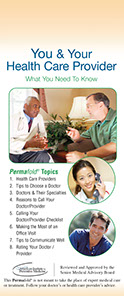
    Cover to the You and Your Health Care Provider brochure by the American Institute for Preventive Medicine. www.HealthyLife.com.

    © American Institute for Preventive Medicine

  • You’re Built For Humor

    Mental Health Care

    Older women laughing and wearing fun, funky sunglasses.

    Having a sense of humor is associated with living a longer life.

    The millions of dollars spent each year on comedic television shows, books and movies prove that humor is a must-have in life. Other than being great fun, laughter produces feel-good chemicals in your brain called endorphins. They give you a natural high and can help ease pain. It seems our bodies are hard-wired to respond positively to humor. Laughter can also:

    *  Reduce stress, anxiety and depression

    *  Strengthen your immune system

    *  Extend your life expectancy

    *  Lower risks for heart disease

    Minding Your Mental Health Book. Published by the American Institute for Preventive Medicine. www.HealthyLife.com. All rights reserved.

    © American Institute for Preventive Medicine