Author: AIPM

  • Popcorn: A Healthy Corn Option

    HEALTHY EATING

    Popcorn in a bowl on a yellow background.

    Fresh corn is healthy, but there’s another great way to enjoy corn: popcorn.

    When you think of popcorn, you might think of movie theatres and lots of butter. But popcorn is a naturally healthy food without all the extra butter, oil and salt.

    Popcorn is whole grain corn. It’s made from a specific type of corn that pops open when it’s heated. It can be a healthy alternative to higher-calorie snacks like potato chips and crackers. One cup of air-popped corn has just 31 calories and over one gram of fiber.

    To keep it healthy, go light on the butter, oil and salt.

    Source: United States Department of Agriculture

    © American Institute for Preventive Medicine

  • Potatoes: Diet Friend Or Foe?

    HEALTHY EATING

    Three baskets filled with potatoes.

    Perhaps you’ve heard the old saying that a potato isn’t a vegetable, it’s a starch. Actually, a potato is a starchy vegetable, so it’s both!

    Are potatoes healthy?

    Potatoes are higher in starch and calories than other vegetables. But that doesn’t mean you should never eat them. Like any food, enjoy potatoes in moderation. Try to eat a variety of fruits and vegetables each day.

    Potatoes supply a good amount of nutrients and can help you feel full. One medium potato has 110 calories and is a good source of:

    *  Potassium (more than a banana)

    *  Vitamin C

    *  Vitamin B6

    *  Fiber

    Eat them all-natural

    Potatoes may get an unhealthy reputation because they’re often fried or dressed with high-fat toppings like butter and sour cream. Enjoy potatoes baked or microwaved with a small amount of butter or olive oil and  salt-free seasoning or herbs.

    Source: United States Department of Agriculture

    © American Institute for Preventive Medicine

  • Prevent Child Abuse With Strong Families

    FAMILY LIFE

    Young child cuddled up with teddy bear.

    Child abuse affects hundreds of thousands of children each year. Even if you don’t know someone affected by child abuse, you can help prevent it. It starts with knowing its causes and risk factors.

    Why does abuse happen?

    If a parent or caregiver has these risk factors, child abuse is more likely to happen:

    *  Low self-esteem

    *  Poor impulse or temper control

    *  Untreated mental health conditions like depression or anxiety

    *  Substance abuse

    *  Lack of education or knowledge about child development

    *  Unemployment or poverty

    In addition, if a child has special needs or a challenging temperament, they are more likely to be abused. Babies and young children, because they require constant care, are also more likely to be abused than older children. Teens are at a higher risk of sexual abuse than younger children.

    Protective factors

    Protective factors are things that lower the risk of child abuse or neglect. Protective factors include:

    *  Having resources for things everyone needs, like food, transportation and housing

    *  Access to safe schools and health care

    *  Parents who have ways to cope with stress

    *  A strong family support system of family and friends

    *  Children who have self-esteem, confidence and independence

    *  Parents and children who communicate well with each other

    What to do if you suspect abuse

    If you suspect that someone is abusing or neglecting a child, there are resources to help.

    *State child abuse and neglect agencies:Contact your local child protective services office or law enforcement agency.

    *Childhelp National Child Abuse Hotline:1.800-4-A-CHILD  (1-800-422-4453). Professional crisis counselors are available 24 hours a day, 7 days a week, in over 170 languages. All calls are confidential. The hotline offers crisis intervention, information and referrals to thousands of emergency, social service and support resources.

    Sources: Centers for Disease Control and Prevention, Child Welfare Information Gateway

    © American Institute for Preventive Medicine

  • Prevent Firework Injuries

    WELL-BEING

    Two hands holding sparklers.

    Fireworks are all fun and games until someone gets hurt. In fact, fireworks start an average of 18,500 fires each year and cause thousands of injuries. However, those facts still don’t deter many people from buying and setting off fireworks each summer. To keep yourself and your family safe, practice these fireworks safety tips.

    Leave it to the professionals

    If you can, allow professionals to set off any fireworks. Attend a public fireworks event over trying to set up your own fireworks display.

    Keep children away

    If you are setting off your own fireworks, do not allow children to help and make sure everyone is at a safe distance.

    Say no to drugs and alcohol

    Do not set off any fireworks while impaired by drugs or alcohol. Or, ask someone else who is not impaired to set off the fireworks for you.

    Handle with care

    Do not hold the fireworks in your hands or set off indoors. Only use them away from people, houses and flammable material. Do not point or throw fireworks at another person and never ignite devices in a container.

    Stay away from defective fireworks

    Do not try to re-light or handle malfunctioning fireworks. Soak both used and unused fireworks in water for a few hours before discarding. Keep a bucket of water nearby to fully extinguish fireworks that don’t go off or use in case of fire.

    Sparklers are scary

    This popular pastime for children has proven to be one of the most dangerous. Sparklers burn at about 2,000 degrees – hot enough to melt some metals. They can ignite clothing and severely burn children who drop them on their feet. Safer alternatives to consider are glow sticks, confetti poppers and colored streamers.

    Source: National Safety Council

    © American Institute for Preventive Medicine

  • Protect Your Pet From Toxins

    WELL-BEING

    Dog on 2 legs on the counter with food.

    Many substances that are safe for people may be toxic to pets. To care for your pet’s health, be aware of these hidden dangers.

    *  Over-the-counter and prescription medications can be highly toxic to animals. Store them in sturdy containers that cannot be chewed through.

    *  Prescription animal medications are made to be tasty. Keep them well out of reach.

    *  Certain foods, such as chocolate, grapes, onions, and garlic, are toxic to pets.

    *  Products intended to kill rodents are particularly dangerous to pets. Choose pet-safe traps instead of chemicals.

    *  Paint, glue and cleaning products are toxic. Curious pets may mistake them for food. Keep these products safely stored and out of their reach.

    *  Bug spray and foggers are poisonous to pets. Because they have smaller bodies, it takes less of a product to cause problems.

    *  Certain house and garden plants may be toxic or irritating when consumed, depending on your pet. Check online to find out what plants are safe.

    © American Institute for Preventive Medicine

  • Q&A: Diversity In The Workplace

    WORK LIFE

    A diverse group of co-workers sitting around at the office.

    Every workplace is part of a broader community of people. As such, it should reflect the diversity around it. A more diverse workplace benefits both the company and its employees.

    What is diversity?

    The practice of involving people from a variety of backgrounds, including race, gender, ethnicity, sexual orientation, religion, and disability.

    Why does it matter?

    To be effective, a workplace should reflect the diversity of its clients, local community, and broader society. When people from different backgrounds work together, they are ideally placed to provide efficient and equitable service.

    How does it benefit a company?

    Establishing policies that value diversity creates a corporate environment that promotes collaboration, innovation, and new perspectives.

    How does it help employees?

    Working in a diverse, inclusive environment allows each employee to rise to their full potential and maximize their skills. Diverse companies build on the unique strengths of each individual.

    © American Institute for Preventive Medicine

  • Questions About Metabolism

    MEDICAL NEWS

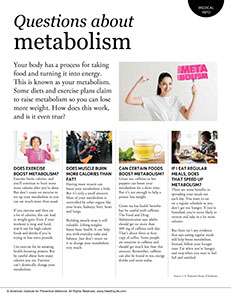
    Women flexing arm while holding a fork in the other hand, with the word "Metabolism".

    Your body has a process for taking food and turning it into energy. This is known as your metabolism. Some diets and exercise plans claim to raise metabolism so you can lose more weight. How does this work, and is it even true?

    Does exercise boost metabolism?

    Exercise burns calories, and you’ll continue to burn some more calories after you’re done. But don’t count on exercise to rev up your metabolism so you can eat much more than usual.

    If you exercise and then eat a lot of calories, this can lead to weight gain. Even if your workout is long and hard, watch out for high-calorie foods and drinks if you’re trying to lose extra pounds.

    Use exercise for its amazing health-boosting powers. But be careful about how many calories you eat. Exercise can’t drastically change your metabolism.

    Does muscle burn more calories than fat?

    Having more muscle can boost your metabolism a little. But it’s only a small amount. Most of your metabolism is controlled by other organs like your brain, kidneys, liver, heart and lungs. Building muscle mass is still valuable. Lifting weights boost bone health. It can help you with everyday tasks and balance. Just don’t count on it to change your metabolism very much.

    Can certain foods boost metabolism?

    Green tea, caffeine or hot peppers can boost your metabolism for a short time. But it’s not enough to help a person lose weight.

    Green tea has health benefits but be careful with caffeine. The Food and Drug Administration says adults should get no more than 400 mg of caffeine each day. That’s about three or four cups of coffee. Some people are sensitive to caffeine and should get much less than this amount. Remember, caffeine can also be found in tea, energy drinks and some sodas.

    If I eat regular meals, does that speed up metabolism?

    There are some benefits to spreading your meals out each day. You want to eat on a regular schedule so you don’t get too hungry. If you’re famished, you’re more likely to overeat and take in a lot more calories.

    But there isn’t any evidence that says eating regular meals will help boost metabolism. Instead, follow your hunger cues. Eat when you’re hungry and stop when you start to feel full and satisfied.

    Source: U.S. National Library of Medicine

    © American Institute for Preventive Medicine

  • Questions About A1C Answered

    MEDICAL NEWS

    Paper with A1C printed along with pills and syringe.

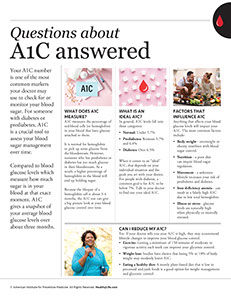
    Your A1C number is one of the most common markers your doctor may use to check for or monitor your blood sugar. For someone with diabetes or prediabetes, A1C is a crucial tool to assess your blood sugar management over time.

    Compared to blood glucose levels which measure how much sugar is in your blood at that exact moment, A1C gives a snapshot of your average blood glucose levels over about three months.

    What does A1C measure?

    A1C measures the percentage of red blood cells (or hemoglobin) in your blood that have glucose attached to them.

    It is normal for hemoglobin to pick up some glucose from the bloodstream. However, someone who has prediabetes or diabetes has too much glucose in their bloodstream. As a result, a higher percentage of hemoglobin in the blood will end up holding sugar.

    Because the lifespan of a hemoglobin cell is about 3-4 months, the A1C test can give a big picture look at your blood glucose control over time.

    What is an ideal A1C?

    In general, A1C levels fall into three categories:

    *  Normal: Under 5.7%

    *  Prediabetes: Between 5.7% and 6.4%

    *  Diabetes: Over 6.5%

    When it comes to an “ideal” A1C, that depends on your individual situation and the goals you set with your doctor. For people with diabetes, a common goal is for A1C to be below 7%. Talk to your doctor to find out your ideal A1C.

    Factors that influence A1C

    Anything that affects your blood glucose levels will impact your A1C. The most common factors include:

    *  Body weight – overweight or obesity interferes with blood sugar control.

    *  Nutrition – a poor diet can impair blood sugar regulation.

    *  Movement – a sedentary lifestyle increases your risk of prediabetes and diabetes.

    *  Iron deficiency anemia – can result in a falsely high A1C due to low total hemoglobin.

    *  Illness or stress – glucose levels are naturally high when physically or mentally stressed.

    Can I reduce my A1C?

    Yes. If your doctor tells you your A1C is high, they may recommend lifestyle changes to improve your blood glucose control.

    *  Exercise: Getting a minimum of 150 minutes of moderate to vigorous activity each week can improve your glycemic control.

    *  Weight loss: Studies have shown that losing 5% to 10% of body weight may modestly lower A1C.

    *  Eating a healthy diet: A mostly plant-based diet that is low in processed and junk foods is a good option for weight management and glycemic control.

    © American Institute for Preventive Medicine

  • Quick Facts About Sodium

    HEALTHY EATING

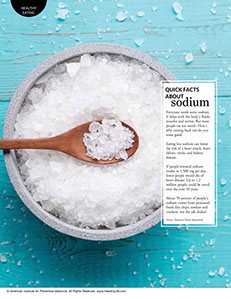
    A bowl filled with salt and a wooden spoon.

    Everyone needs some sodium. It helps with the body’s fluids, muscles and nerves. But most people eat too much. Here’s why cutting back can do you some good:

    Eating less sodium can lower the risk of a heart attack, heart failure, stroke and kidney disease.

    If people lowered sodium intake to 1,500 mg per day, fewer people would die of heart disease. Up to 1.2 million people could be saved over the next 10 years.

    About 70 percent of people’s sodium comes from processed foods like chips, cookies and crackers, not the salt shaker!

    Source: American Heart Association

    © American Institute for Preventive Medicine