Author: AIPM

  • Veggie Barley Salad With Orange Vinaigrette

    HEALTHY EATING

    Image of veggie barley salad with orange vinaigrette.

    Ingredients:

    1 cup pearl barley

    1 medium tomato (chopped)

    2 medium carrots (shredded)

    1 medium red, orange or yellow bell pepper (seeded and chopped)

    2 cups fresh spinach (chopped)

    1-1/2 ounces orange juice

    3 tablespoons olive or canola oil

    2 tablespoons apple cider vinegar  (or any other mild vinegar)

    1 teaspoon honey

    Salt and freshly ground black pepper

    Directions:

    1. Bring a large pot of water to a boil. Add barley and cook, uncovered, until tender, about 40 minutes. Transfer to a large bowl.

    2. Add the tomato, carrots, bell pepper and spinach, and stir to combine.

    3. In a small bowl, whisk together the orange juice, olive or canola oil, vinegar, honey, salt and pepper. Pour the vinaigrette over the barley salad and mix thoroughly.

    4. Refrigerate overnight for best results.

    Servings: 4.

    Calories: 294, Total Fat: 11 g, Saturated Fat: 2 g, Sodium: 81 mg, Total Carbohydrate: 44 g, Dietary Fiber: 8 g, Protein: 5 g

    Source: USDA Mixing Bowl

    © American Institute for Preventive Medicine

  • Video Warfare

    FAMILY LIFE

    Image of two kids playing video games.

    Children learn from video games, say Iowa State University psychology professors. So parents may want to shop smart when choosing games for their children. Even if the content is unrealistic or cartoonish, kids learn good behaviors (playing drums) or bad behaviors (aggressive tactics) by practicing.

    Professors Craig Anderson and Doug Gentile-leading experts on the effects of video games on young people and authors of the book Violent Video Game Effects on Children and Adolescents, say, “Parents and researchers initially believed that what mattered most about violent games was how realistic and bloody they were. Our research now suggests that what matters most is whether you have to harm other characters to advance in the game.”

    Follow their advice to parents before making a video game purchase for children:

    *  Play the game, have someone else demonstrate it for you, or look at clips from the game on the game’s website.

    *  Then ask yourself the following questions: Does the game involve some characters trying to harm others? Does this happen frequently, more than once or twice in 30 minutes? Is the harm rewarded in any way? Is the harm portrayed as humorous? Are nonviolent solutions absent or less “fun” than the violent ones? Are realistic consequences of violence absent from the game?

    Two or more yes answers should cause parents to think carefully about the lessons being taught before purchasing that game for children. Some sports and fun music games may be better choices than warfare games.

    © American Institute for Preventive Medicine

  • Vietnamese Fresh Spring Rolls

    HEALTHY EATING

    Image of Vietnamese spring rolls.

    Ingredients

    1 cup carrots, cut into long, thin strips

    2 cups bean sprouts

    2 cups cucumber, seeded and cut into long, thin strips

    1 cup minced scallions/green onions

    1/2 cup chopped fresh cilantro

    1/4 cup chopped fresh mint

    8 rice paper wrappers (ask at your supermarket)

    Directions

    Toss first 6 ingredients in a large bowl. Soak one rice paper wrapper in warm water until soft (1 to 2 minutes). Shake off excess water. Place vegetable filling off-center on rice paper and fold like an egg roll (tuck sides to keep filling inside). Repeat with remaining vegetable filling and wrappers. Serve immediately.

    Makes 8 servings. Per serving (1 roll): 70 calories, 1 g fat, 28 mg sodium, 2 g fiber, 3 g protein, 16 g carbohydrates

    From the NIH Your Health Is Golden! Heart Health Promotion Activities for Vietnamese Communities

    © American Institute for Preventive Medicine

  • Vinegar Can Be Tasty – And Healthy

    HEALTHY EATING

    Image of a varity of different vinegars.

    White vinegar has a number of household uses. Some people use it for cleaning, laundry and flushing out the coffee maker. It’s also been used for centuries to preserve food, especially vegetables.

    But don’t let the strong vinegar odor turn you off from all vinegars. In fact, there are many different types that are both healthful and delicious. Many of them have a mild, pleasing taste that pairs well with a variety of foods. Some are even naturally sweet enough to dress up fruits and healthy desserts.

    Vinegar is made when a liquid that contains starch and sugar is fermented. It comes from the French words “vin” and “aigre” which mean “sour wine.” The liquid ferments into alcohol, then ferments again into vinegar. It is believed that vinegar was made by chance thousands of years ago when some wine was left too long in its cask.

    The right vinegar can add flavor without adding sodium, calories, fat or unhealthy additives. It can add acidity to soups and stews, or works well for marinating meat and vegetables.

    Go beyond the standard vinegar and oil combination and check out these delicious vinegars in your next cooking experiment. There are dozens of types of vinegars, and some can be difficult to find except in specialty stores. The following types are generally easy to find in most stores.

    Distilled white vinegar

    The most common type seen in stores, it is made from fermented alcohol. White vinegar has a strong taste and odor and is great for making pickles, poached eggs and buttermilk.

    Balsamic

    Made from fermented grapes, balsamic becomes sweeter and almost like syrup the longer it ages. It adds flavor to pasta and vegetarian dishes and pairs well with fruit.

    Apple cider vinegar

    Made from fermented apples, apple cider vinegar is very versatile. It adds zest and subtle sweetness to salad dressings and slaws, as well as meat marinades.

    Malt vinegar

    This light brown vinegar, made from barley, is commonly used on french fries and fish and chips. Use it on healthier choices like baked potatoes and grilled chicken for a kick that’s not too overwhelming.

    Red wine vinegar

    This lively, strong tasting vinegar is ideal for meat marinades and dark sauces.

    White wine vinegar

    Don’t confuse this with distilled white vinegar. It is also much milder than red wine vinegar. White wine vinegar is great for those who want a subtle taste or who don’t want to change the color of their food.

    Rice vinegar

    Plain rice vinegar is mild and clean-tasting. It works well with most recipes that require vinegar without a strong taste, especially stir-fries and salad dressings.

    © American Institute for Preventive Medicine

  • Vitamin D-What You Need To Know

    SELF-CARE CORNER

    Image of sun rising behind green hills.

    Without vitamin D, your bones may not grow strong at any age. Why? Because for your bones to make the best use of calcium, they need  vitamin D, says Robert P. Heaney, MD, researcher and professor in the Osteoporosis Research Center at Creighton University.

    But did you know that even mild shortages of vitamin D can contribute to diabetes, some cancers, high blood pressure, heart disease, and pregnancy problems? “Asking the body to deal with these disorders without adequate vitamin D is like asking a fighter to enter battle with one hand tied behind his back,” said Dr. Heaney. Vitamin D is a chemical that our body’s tissues use to produce biochemical products required for daily life. It’s less important to understand the process. It’s more important to know where to get vitamin D and how much you need.

    Some Facts

    *  Your skin produces vitamin D when you are exposed to certain rays of the sun. If you never get sunshine on your skin, you will not get enough ultraviolet radiation for your skin to make vitamin D.

    *  Sunlight in winter in most of the U.S. is so weak, it does not allow you to produce enough vitamin D, even if you’re outside in winter during midday.

    *  During summer months, a light-skinned person wearing a bathing suit will make about 15,000 IU of vitamin D in 15 to 20 minutes. Darker-skinned people can do the same, but it will take twice as long.

    *  Sunscreen blocks the radiation and prevents your skin from making vitamin D. Brief sun exposure, said Dr. Heaney, is not enough to cause skin cancer. He suggested you apply sunscreen after the first 15 minutes in the sun.

    *  Some food has vitamin D but not much. Vitamin D is added to many foods such as milk, some yogurts and orange juices, cheese, and breakfast cereals. Read the labels to see how much.

    *  Because most of us do not get enough sun exposure (or choose not to) or enough vitamin D in food, Dr. Heaney suggests taking supplements of vitamin D3, the natural form. The label should say cholecalciferol (vitamin D3) or ask the pharmacist which supplement is best.

    *  Vitamin D is safe to take. You may take supplements daily, weekly, or monthly. The important point is that you need to maintain a high enough blood level of vitamin D. This is measured by a blood test.

    *  Dr. Heaney recommends, based on his research, that adults take supplements providing from 1,000 to 3,000 IU per day. This number is higher than the 600 to 800 IU Recommended Dietary Allowance per day. Follow your doctor’s advice for vitamin D.

    *  Talk with your doctor about testing your blood level and discussing how much supplementation you may need in both summer and winter.

    © American Institute for Preventive Medicine
  • Walk Off Stress, Naturally

    SUCCESS OVER STRESS

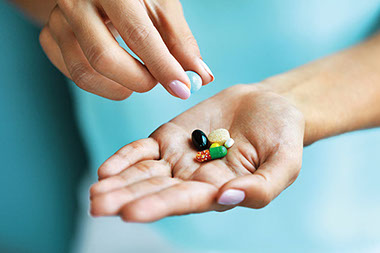
    Image of an older Asian couple walking.

    At work, at home, even in the car, stress is a constant struggle for many people. Unmanaged stress can lead to serious health conditions such as high blood pressure, heart disease, obesity, and diabetes.

    “The American lifestyle is fast-paced and productive, but can be extremely stressful. If that stress it not addressed, our bodies and minds can suffer,” said Dr. Aaron Michelfelder, professor of family medicine at Loyola University Chicago Stritch School of Medicine.

    Our bodies need sleep to rejuvenate, and if we are uptight and stressed, we aren’t able to get the rest we need. This can lead to serious physical and mental health issues, which is why it’s extremely important to wind down, both body and mind, after a stressful day.

    According to Dr. Michelfelder, one of the best ways to wind down and reconnect after a stressful day is by taking a walk. Though any walking is good, walking in the woods or in nature has been proven to be even better at reducing stress and improving your health.

    “When we get to nature, our health improves,” he said. “Our stress hormones rise all day long in our bloodstream and taking even a few moments while walking to reconnect with our inner thoughts and to check in with our body will lower those damaging stress hormones. Walking with our family or friends is also a great way to lower our blood pressure and make us happier.”

    Research out of Japan shows that walking in the woods also may play a role in fighting cancer. Plants emit a chemical called phytoncides that protects them from rotting and insects. When people breathe it in, there is an increase in the level of “natural killer” cells, which are part of a person’s immune response to cancer.

    “When we walk in a forest or park, our levels of white blood cells increase and it also lowers our pulse rate, blood pressure and level of the stress hormone cortisol,” Dr. Michelfelder said.

    He also suggests reading, writing, meditating or reflecting to help calm the mind after a long day. To help calm the body, yoga and breathing exercises also are good.

    “If you want to wind down, stay away from electronic screens as they activate the mind. Electronic devices stimulate brain activity and someone’s post on Facebook or a story on the evening news might cause more stress,” he said.

    © American Institute for Preventive Medicine
  • Walking Off The Midway Munchies

    BE FIT

    Image of couple walking at a state fair with cotton candy.

    How far will you need to walk to burn off the calories of some of your favorite state fair foods? University of Nebraska Extension has it all calculated:

    *  Corn dog, large: 4.5 miles

    *  Cotton candy: 1.5 miles

    *  Fried candy bar on a stick: 4.5 miles

    *  Funnel cake, 6-inch diameter: 3 miles

    *  Soft drink, 32 oz.: 2.5 miles

    *  Sno-cone: 2.5 miles

    *  Soft pretzel: 3 miles

    So wear comfortable shoes and plan to walk off what you eat. But be prudent. Choose a small soft drink or bring along bottled water. Save your calories for the splurges. Split a funnel cake among friends; share that fried candy bar so everyone gets a bite. Limit yourself to one treat.

    © American Institute for Preventive Medicine

  • Wallet-Friendly Workouts

    BE FIT

    Image of bike in the field.

    Finances are one of the biggest reasons people don’t join a gym. A monthly gym membership fee can take a big bite out of a budget, but that doesn’t mean you should throw in the towel on exercise.

    You can get all of the benefits of exercise at little to no cost with these tips:

    *  Use home items as workout tools. Instead of buying weights, use canned goods or fill used gallon jugs with water or sand.

    *  Put gravity to work for you. Many resistance exercises use only your body weight and gravity to help you get stronger. Think push-ups, squats, crunches, leg lifts, and arm raises.

    *  Use the stairs in your home for a step training workout. Or, use a low, sturdy step stool. Play music while stepping.

    *  Borrow fitness DVDs from your library, or look for used ones at garage sales.

    *  Utilize community resources. Some fitness centers, senior centers, and community programs offer free or low-cost fitness classes. Local hotels or schools may have a minimal fee to swim in the pool at select times. Walk a local walking path or step through a scenic park for fresh air and fitness.

    *  Consider used items. Many people will sell their used bikes, weight machines, treadmills, and other equipment at a fraction of the cost of a new item. Stop by local yard sales or look for local “yard sale” groups on social media.

    *  Try just shoes and an app. If you already have a smart phone, there are many free or low-cost fitness apps available to keep you motivated. Lace up your walking shoes and start tracking your progress with the app to keep you motivated and on track. YouTube also offers a variety of workout programs that allow you to exercise at home.

    © American Institute for Preventive Medicine

  • Want To Eat Healthier?

    HEALTHY EATING

    Image of family eating dinner at the kitchen table.

    Then cook meals at home

    People who frequently cook meals at home eat healthier and consume fewer calories than those who cook less, according to Johns Hopkins Bloomberg School of Public Health research.

    “When people cook most of their meals at home, they consume fewer carbohydrates, less sugar and less fat than those who cook less or not at all-even if they are not trying to lose weight,” according to a study in Public Health Nutrition.

    © American Institute for Preventive Medicine
  • Want To Quit? Start Here

    WELL-BEING

    Image of broken cigarette and nicotine gum.

    There’s no one right way to quit smoking. Some people find that they just quit on their own. Others use medical treatments to help. If you’re thinking about quitting, you have several options:

    *  Attend support groups or counseling

    *  Get your doctor’s advice and support

    *  Choose medicines that contain nicotine and help with nicotine addiction, including patches, gum, lozenges, inhalers and nasal spray. Some are available in stores and others need a prescription.

    *  Find a prescription medicine that doesn’t contain nicotine and still helps a person quit smoking.

    *  Go cold turkey: stop completely, all at once, without any help.

    *  Slowly decrease the amount of cigarettes smoked each day until you stop altogether.

    Counseling and medicine together may be more helpful than using just one method. Sometimes, you may need to try a few different approaches to find the one that works for you.

    Get free quitting help by phone

    If you’d like to talk with someone about quitting, call 1-800-QUIT-NOW (1-800-784-8669). This service is FREE and may include support and advice, a quit plan, free or discounted medications and other resources.

    Free quitting help online

    For those with a computer or tablet, help with quitting is just a few clicks away. Smokefree.gov offers a number of resources to help people quit smoking. There are tools and tips, information and support throughout the process of quitting.

    Source: Centers for Disease Control and Prevention, National Institutes of Health

    Reasons to quit smoking

    Quitting smoking isn’t easy. But, it means you will start to become healthier within just minutes of quitting. Take a look at the benefits of quitting:

    *  20 minutes after quitting: Blood pressure and heart rate gets lower.

    *  12 hours after quitting: Carbon monoxide levels in the blood go back to normal.

    *  2 weeks to 3 months after quitting: Lungs start to work better and blood circulation gets better.

    *  1 to 9 months after quitting: Lungs can handle mucus and recover from infections more easily. This means less coughing and shortness of breath.

    *  1 year after quitting: The risk of a heart attack drops dramatically. The increased risk of heart disease is cut in half.

    *  2 to 5 years after quitting: Risk of a stroke is now the same as a non-smoker.

    *  5 years after quitting: Risk of several cancers is slashed in half. This includes cancers of the bladder, mouth, throat and esophagus.

    *  10 years after quitting: Risk of lung cancer decreases by half. Risk of cancer of the voice box and pancreas drop.

    *  15 years after quitting: The risk of heart disease drops to that of a non-smoker.

    Don’t forget about benefits to your appearance. Yellowed teeth and fingers can become a thing of the past, as well as bad breath and smoke odors on clothes and in hair. Tobacco also causes wrinkling of the skin and tooth loss, so quitting can mean better skin and a brighter smile.

    It’s never too late to quit. Quitting at any age can extend a person’s life, reduce or eliminate health problems, and lower the risk of dying from smoking-related diseases.

    Source: American Cancer Society

    © American Institute for Preventive Medicine