Author: AIPM

  • Save At The Supermarket

    FINANCIAL HEALTH

    Couple at the grocery store.

    While the cost of food is out of your control, smart shopping habits will help keep your grocery bill more manageable.

    Tips to save on groceries

    Shop with a list

    Grocery stores know just how to tempt you to make impulse purchases. With eye-catching end cap displays and strategically placed snack foods, it’s easy to end up bringing home more than you intended. Instead, make a detailed list before you go and stick to it.

    Check the cabinets

    How many times have you purchased an item only to find you already have it hidden in the back of your pantry? As you make your shopping list, carefully check your current food supply to make sure you really need the ingredients.

    Buy in bulk

    When possible, purchase family-sized or bulk items for your most commonly used ingredients. This works especially well for meats, beans, rice, grains, and pasta. When you get home, promptly freeze or store the extra. You can also join a wholesale club to get better prices on bulk food.

    Eat seasonally

    Fruits and vegetables are cheapest when in season. For example, berries are more expensive in the winter than during peak berry season in the summer. Oranges and other citrus are usually cheapest during the winter months. Opt for in-season produce whenever possible.

    Stock up

    Buy more than one when your favorite foods go on sale. Dry goods generally keep for a long time, and many fresh foods can be frozen for longer storage. Keep in mind that you should only stock up on ingredients you regularly use.

    Low-cost recipes

    How you choose to eat is a major determinant of your food budget. If you like to cook gourmet, you’ll need fancier ingredients that cost more. Instead, find tasty recipes that use inexpensive ingredients. Examples include beans, rice, frozen vegetables, tuna, potatoes, and eggs.

    © American Institute for Preventive Medicine

  • Reevaluate Your Budget

    FINANCIAL HEALTH

    Women working on a budget.

    Following a monthly budget is one of the best ways to manage your finances. A budget provides a clear picture of where your money comes from and where it is going.

    Budgets change over time. Changes in your income, expenses, or spending can create an imbalance or even a surplus. If it’s been a while since you reviewed your budget, it may be time for a checkup.

    Record all income

    Add up all your sources of income in a month. These can include paychecks, child support, and government benefits. The total of all money coming in counts as income, whether it came from a traditional paycheck or not.

    Record all expenses

    Add up all the bills you must pay. These include housing costs, car payments, utility and phone bills, child support, debt payments, etc. Most bills are recurring each month.

    Evaluate spending

    In addition to bills, you also need to allocate money for food, gas, and sundries. This is where spending can quickly get out of control. Review three to six months of spending in each category and determine what a reasonable monthly amount should be.

    Consider saving goals

    Assess the state of your savings. Ideally, you should have several months of expenses in a savings account as a safety net. Determine if you need to allocate more money in this area.

    Make a long-term plan

    Financial stability requires long-term thinking. Reflect on your long-term financial goals such as college savings, retirement, or big expenses. Is your current budget working?

    Adjust budget

    Using the information you’ve gathered, update your budget to accurately reflect your current income and expenses. If you have extra at the end of the month, consider increasing your saving goals or long-term financial plans.

    © American Institute for Preventive Medicine

  • Potassium: Why You Need It

    HEALTHY EATING

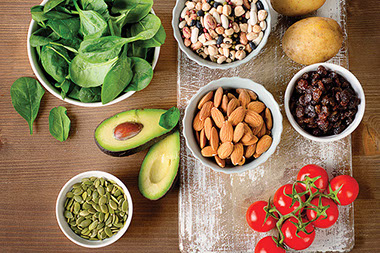
    A varity of foods high in potassium.

    Potassium is an important mineral that the body needs for various functions. But many people don’t get enough potassium in their diet. And people who take certain diuretic medicines may have low levels, too.

    Why do I need potassium?

    When potassium levels are low, a person may have:

    *  High blood pressure and stroke: Low potassium raises the risk of having high blood pressure, especially when a person eats high amounts of salt (sodium). High blood pressure is a major risk factor for heart attack and stroke.

    *  Kidney stones: Low potassium levels can take calcium out of the bones. This causes calcium to come out in the urine, which can lead to kidney stones. Kidney stones can be painful and sometimes require procedures or surgery to remove.

    *  Bone weakness: Potassium strengthens bones. Without it, bones may be weaker and more likely to break.

    *  Muscle weakness

    *  Heart rhythm problems, known as arrhythmias

    Food sources of potassium

    A healthy diet can help you get the right amount of potassium. These foods are good sources:

    *  Leafy greens, such as spinach and kale

    *  Vegetables like peas, cucumbers, squash and broccoli

    *  Root vegetables, such as potatoes, sweet potatoes and carrots

    *  Fruit from vines, such as raspberries, grapes and blackberries

    *  Citrus fruits, such as oranges and grapefruit

    *  Fruits, such as dried apricots, melon, raisins and bananas

    *  Legumes, such as beans and lentils

    *  Milk and yogurt

    *  Meats, poultry and fish

    How much potassium you need

    It’s usually best to get your potassium through a healthy diet. Don’t take potassium supplements unless your doctor recommends it. Most people need 2,600-3,400 milligrams (mg) of potassium every day.

    People who have chronic kidney disease may need to lower their potassium intake. This is because the kidneys help get rid of excess potassium. Ask your doctor about your potassium intake if you have kidney disease.

    Most people can get a proper balance of potassium and other minerals through their diet. Ask your doctor before making any major diet changes.

    Sources: National Institutes of Health, U.S. National Library of Medicine

    © American Institute for Preventive Medicine
  • Preparing For College Move-In

    FAMILY LIFE

    Female college student carring in a full bin of stuff.

    It’s time to send your young adult off for their first semester of college. Here are some tips to be sure they’re ready for move-in day.

    *Pack light.Only pack the basics you know they will use and plan to order additional items when needed.

    *Bring cleaning supplies.Have them handy when you first arrive.

    *Limit who helps with the move.College move-in can be chaotic, and the fewer people, the better.

    *Pack seasonally.Your college student won’t need a winter coat in August. Use vacuum seal bags for items that will be needed later.

    *Find the nearest drugstore, grocery store, and restaurants.Make sure your student knows how to access transportation to get there.

    *Bring lots of snacks.Move-in day can be physically as well as emotionally taxing. Make sure everyone stays well hydrated and fed so you can enjoy the day together.

    © American Institute for Preventive Medicine
  • Pros & Cons Of Beef

    HEALTHY EATING

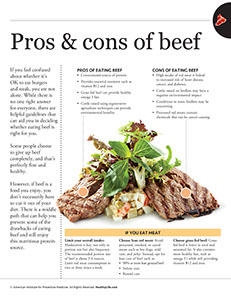
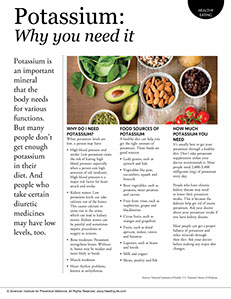
    Two pieces of beef with garnish.

    If you feel confused about whether it’s OK to eat burgers and steak, you are not alone. While there is no one right answer for everyone, there are helpful guidelines that can aid you in deciding whether eating beef is right for you.

    Some people choose to give up beef completely, and that’s perfectly fine and healthy.

    However, if beef is a food you enjoy, you don’t necessarily have to cut it out of your diet. There is a middle path that can help you prevent some of the drawbacks of eating beef and still enjoy this nutritious protein source.

    Pros of eating beef

    *  Concentrated source of protein

    *  Provides essential nutrients such as vitamin B12 and iron

    *  Grass-fed beef can provide healthy omega 3 fats

    *  Cattle raised using regenerative agriculture techniques can provide environmental benefits

    Cons of eating beef

    *  High intake of red meat is linked to increased risk of heart disease, cancer, and diabetes.

    *  Cattle raised on feedlots may have a negative environmental impact

    *  Conditions in some feedlots may be concerning

    *  Processed red meats contain chemicals that can be cancer-causing

    If you eat meat

    Limit your overall intake: Moderation is key, not only in portion size but also frequency. The recommended portion size of beef is about 3-4 ounces. Limit red meat consumption to two or three times a week.

    Choose lean red meat: Avoid processed, smoked, or cured meats such as hot dogs, cold cuts, and jerky. Instead, opt for lean cuts of beef such as:

    *  90% or more lean ground beef

    *  Sirloin cuts

    *  Round cuts

    Choose grass-fed beef: Grass-fed beef is lower in total and saturated fat. It also contains more healthy fats, such as omega 3’s while still providing vitamin B12 and iron.

    Source: Centers for Disease Control and Prevention

    © American Institute for Preventive Medicine

  • Q & A Blood Donation

    WELL-BEING

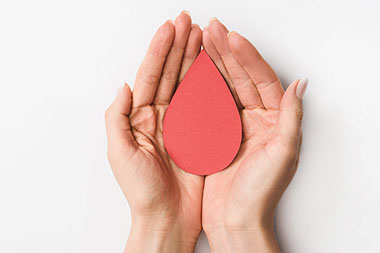
    Close up of hands holding a piece of paper shaped as a blood drop.

    Every day, people need life-saving blood transfusions. These transfusions are possible because people donate their blood. Despite the need for donated blood, many people are afraid to donate. They may have fears about the process, needles or even their own health. Get the facts about blood donation so you can make an informed decision.

    More than 4 million lives are saved each year because of blood donations.

    Q: Is blood donation safe?

    A: Yes. Each donation uses a new, sterile needle that is thrown away after one use. You may also be given a quick health check to be sure you’re healthy enough to donate. This may include taking your temperature, blood pressure and pulse.

    Q: What if I don’t like needles?

    A: Many people have a fear of needles. But blood donation is a quick process that can help save up to three lives. Facing your fears can mean the world to another person. Try listening to relaxing music, deep breathing or reading a book during your donation. Drinking fluids before donating will make donation easier and faster.

    Q: Will I faint afterward?

    A: Some people feel lightheaded after donating blood. But most people feel fine afterward. If this concerns you, you can have a few extra minutes to sit or lie down. You can also lower the risk of this happening by eating a healthy meal before your donation and drinking at least 16 ounces of water. When you feel well enough, slowly sit up. Blood donation only takes about 1/10th of the blood from your body. Your body replaces this lost blood quickly.

    Q: Don’t they only need rare blood types?

    A: Sometimes there is a public appeal for certain blood types. But all blood types are needed and valuable. If you don’t know your blood type, you can find out after your donation.

    If you have any health conditions, you can ask your doctor whether blood donation is right for you.

    Source: American Heart Association

    © American Institute for Preventive Medicine

  • Recipe: Chicken Curry

    HEALTHY EATING

    A plate of chicken curry with rice.

    Ingredients

    2 teaspoons ground cumin

    1 ½ teaspoons ground coriander

    ½ teaspoon ground turmeric

    ½ teaspoon cayenne

    ½ teaspoon cinnamon

    ½ teaspoon black pepper

    ¼ teaspoon ground mustard

    ¼ teaspoon ground cloves

    ½ teaspoon salt

    1 pound boneless, skinless chicken breasts

    2 tablespoons olive oil

    1 medium onion, finely chopped

    4 cloves fresh garlic, diced or crushed

    6 ounces canned, no-salt-added tomato paste

    1 cup sour cream

    1 medium fresh jalapeño pepper, finely chopped

    1 tablespoon minced fresh ginger root

    ½ cup finely chopped cilantro

    Directions

    1.  Mix together all the spices and salt.

    2.  Place the uncooked, diced chicken in a large bowl and mix with spices until well coated.

    3.  In a large skillet, heat 1 tablespoon of the oil over medium-high heat, swirling to coat the bottom. Add the spice-coated chicken and cook until browned on all sides. Remove from pan.

    4.  In the same skillet, heat 1 tablespoon of oil over medium-high heat. Add the onion and garlic and cook about 3 minutes, or until soft, stirring frequently.

    5.  Return the chicken to the pan and add the tomato paste, sour cream, jalapeño, and ginger root. If the mixture seems dry, gradually stir in a little water as needed. Bring to a boil. Reduce the heat and simmer for 15 minutes, or until the chicken is no longer pink in the center.

    6.  Sprinkle with cilantro just before serving.

    Nutrition Facts: 6 servings, Calories 242; Total Fat 14g; Saturated Fat 6g; Sodium 486mg; Total Carbohydrate 10g; Dietary Fiber 2g; Protein 20g

    © American Institute for Preventive Medicine
  • Orange Honeyed Winter Squash

    HEALTHY EATING

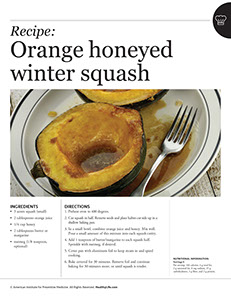
    Orange honeyed winter squash on plate.

    Ingredients

    *  3 acorn squash (small)

    *  2 tablespoons orange juice

    *  1/4 cup honey

    *  2 tablespoons butter or margarine

    *  nutmeg (1/8 teaspoon, optional)

    Directions

    1.  Preheat oven to 400 degrees.

    2.  Cut squash in half. Remove seeds and place halves cut side up in a shallow baking pan.

    3.  In a small bowl, combine orange juice and honey. Mix well. Pour a small amount of this mixture into each squash cavity.

    4.  Add 1 teaspoon of butter/margarine to each squash half. Sprinkle with nutmeg, if desired.

    5.  Cover pan with aluminum foil to keep steam in and speed cooking.

    6.  Bake covered for 30 minutes. Remove foil and continue baking for 30 minutes more, or until squash is tender.

    Nutritional Information: Servings 6

    Per serving: 166 calories, 4 g total fat, 2 g saturated fat, 8 mg sodium, 35 g carbohydrates, 3 g fiber, and 2 g protein.

    © American Institute for Preventive Medicine