Author: AIPM

  • Weekly Family Meetings

    FAMILY LIFE

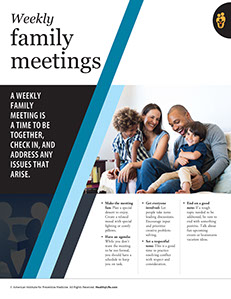
    Young family smiling and laughing togething.

    A weekly family meeting is a time to be together, check in, and address any issues that arise.

    *  Make the meeting fun: Plan a special dessert to enjoy. Create a relaxed mood with special lighting or comfy pillows.

    *  Have an agenda: While you don’t want the meeting to be too formal, you should have a schedule to keep you on task.

    *  Get everyone involved: Let people take turns leading discussions. Encourage input and prioritize creative problem-solving.

    *  Set a respectful tone: This is a good time to practice resolving conflict with respect and consideration.

    *  End on a good note: If a tough topic needed to be addressed, be sure to end with something positive. Talk about fun upcoming events or brainstorm vacation ideas.

    © American Institute for Preventive Medicine

  • What Is Cbd?

    WELL-BEING

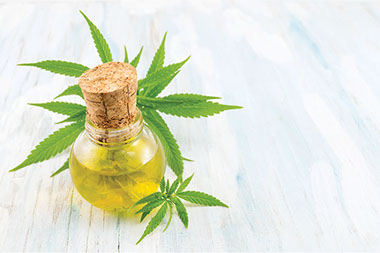
    CBD oil in small glass jar.

    CBD (or cannabidiol) oil may be purchased in many pharmacies and other stores. It is claimed to treat more than 50 health conditions like sleep problems, anxiety and pain. But, experts say there’s little evidence that it works for most of them.

    What is CBD?

    CBD oil comes from the cannabis plant. Cannabis plants can be marijuana or hemp.

    A chemical called tetrahydrocannabinol (THC) causes the mental changes that make a person “high” when they use marijuana. CBD oil should contain little to no THC so it can’t make a person high. However, there is no way to know for sure that the CBD product is THC-free.

    The Food and Drug Administration (FDA) tested CBD products. Some products were found to contain THC, even though CBD should not contain it. Other products had a different amount of CBD than what the label stated.

    What does CBD do?

    Experts don’t know exactly how CBD works in the body. There is solid evidence that it can help control seizure disorders in children. But, evidence that it helps treat other conditions is lacking. In fact, the FDA has warned several companies about selling CBD with untested health claims.

    Does CBD have side effects?

    In studies, people didn’t report serious side effects when taking CBD. There were some reports of diarrhea. Also, CBD may interact with a person’s other medications. People who take other medicines or have health conditions should ask a doctor before using CBD.

    Should I use CBD?

    There isn’t enough evidence to recommend CBD for health problems other than seizures. Experts say you should stick with proven treatments for health problems. Always talk with a doctor before using any natural treatment, including CBD.

    Source: National Institutes of Health

    © American Institute for Preventive Medicine
  • What To Know About Blood Clots

    SELF-CARE CORNER

    Veins on the back of a women's leg.

    Healthy blood is designed to clot. When blood clots, it prevents heavy bleeding. But, if a clot happens inside a vein, it can be dangerous. This is called a deep vein thrombosis (DVT). Sometimes, the blood clot may move through the body and get stuck in the lungs. This is called a pulmonary embolism (PE).

    Up to 100,000 Americans die from a DVT or PE every year. These clots kill more people than breast cancer, car collisions, and HIV/AIDS combined.

    Signs of a clot

    Signs of a DVT or PE include:

    *  Swelling, tenderness, redness or warmth in one area of the body

    *  Chest heaviness or pain

    *  Sweating

    *  Feeling out of breath

    *  Weakness or fainting

    *  Fast heart beat

    *  Feeling of impending doom

    Know your risk

    Certain things make you more likely to get a blood clot. They include:

    *  Recent surgery or an injury

    *  Being in bed for long periods

    *  Not moving a certain body part, such as a broken leg

    *  Sitting for a long time, including during travel

    *  Higher levels of estrogen from birth control pills, pregnancy or hormone replacement therapy

    *  Medical conditions, such as cancer, Crohn’s disease, ulcerative colitis, heart disease, blood clotting disorders or lung disease

    *  Obesity

    *  Smoking

    *  History of atrial fibrillation (A-fib)

    Reduce your risk

    Talk about your risk with your doctor. You can lower your risk of getting a blood clot by:

    *  Getting up from sitting at least every two hours

    *  Moving around after surgery or being in bed for a long time

    *  Moving legs and feet while on plane trips

    *  Wearing loose-fitting clothes while sitting for a long time

    *  Exercising regularly

    *  Wearing compression stockings if recommended by your doctor

    What to do?

    If you think you or a loved one might have a blood clot, see a doctor right away. A blood clot can be treated if it’s caught early. Sometimes, doctors use medicines that dissolve the clot. Other times, doctors will perform surgery to remove the clot.

    Sources: American Society of Hematology, Centers for Disease Control and Prevention

    © American Institute for Preventive Medicine
  • What’s In Your Medicine Cabinet?

    SELF-CARE CORNER

    Women sitting at kitchen table organizing medication.

    Unused or expired medications pose a health risk to you and your loved ones. Getting your medicine cabinet up to date should be part of your yearly spring cleaning.

    Medication left lingering in your cabinet is problematic for several reasons:

    *  Expired medication can make you sick or fail to work as expected.

    *  Unused prescription drugs are some of the most commonly misused substances among teens.

    *  Unused medications are a potential poisoning concern for both children and pets.

    In addition, identifying and properly disposing of unused or expired medications is a crucial way to prevent pollution from entering local water sources.

    Give your medicine cabinet a good declutter

    1.  Remove everything from your medicine cabinet and gather any over-the-counter or prescription drugs from around the house.

    2.  Place any prescriptions that are up to date and in use back in the cabinet.

    3.  All other prescription medications should go in a pile for disposal.

    4.  Check the expiration date on all over-the-counter medications. Place any that are expired in the disposal pile.

    5.  Evaluate anything that is not expired to determine if it is needed. It should go in the disposal pile if it is unlikely to be used.

    6.  Organize any remaining medications by type in the medicine cabinet. Ensure all medicine in the cabinet is clearly labeled.

    7.  It’s always important to store medication in a child and pet-proof location.

    How to safely dispose of medication

    The best way to get rid of unused or expired medication is through a local take-back program. Contact your local city or county government and ask if they hold hazardous waste collection days or have a location to drop off medications for disposal.

    You can also visitdisposemymeds.orgto find a local pharmacy that allows you to drop off medication.

    If you cannot find a place to take back your medication, follow these steps to dispose of it at home safely.

    1.  Empty all medication from its original container into a disposable container or ziplock bag.

    2.  Mix the medication with an undesirable substance such as kitty litter or coffee grounds, and seal it up.

    3.  Place the container in the trash.

    4.  Remove any identifying tags from empty medication bottles and place them in the trash or recycle bin.

    © American Institute for Preventive Medicine

  • Why You Need A Vacation

    WORK LIFE

    Couple holding hands running into the ocean.

    If your time off is accruing year after year, you might be missing out on one of the secrets to being a good employee.

    It’s time to take a vacation! While many people are reluctant to be away from their jobs, a vacation can make you a better employee.

    Vacations are refreshing

    A week off can leave you feeling rested and energized. You’ll be ready to dive into work with renewed vigor.

    Good for mental health

    Taking a break from your daily routine allows your mind to let go of stress and anxiety. When you return to work, you might find you have a better mental outlook.

    Increase productivity

    Studies have shown that people who take regular vacations are more productive when they return. Time away might be just what you need to become even better at your job.

    © American Institute for Preventive Medicine
  • Zone Minutes Explained

    BE FIT

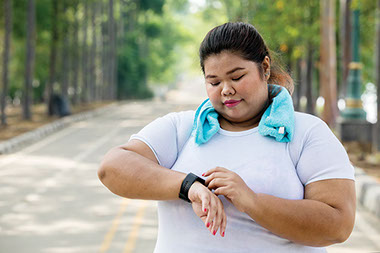
    Women looking at watch before exercising.

    When we are active, our heart and muscles increase the circulation of blood throughout the body. The more we get our heart pumping, the more efficient the body becomes at using oxygen.

    Zone minutes refer to the amount of time spent in any activity that gets the heart rate elevated into a range that promotes health. We all need a certain amount of time in the “zone” to keep our heart, muscles, lungs, and brain in peak condition.

    Getting at least 30 zone minutes a day, or 150 a week, is the recommended minimum for good health.

    The heart-rate zone

    Your recommended heart-rate zone depends on your age and physical condition. The simplest way to find your zone is to calculate 220 minus your age. This tells you your maximum recommended heart rate in beats per minute (BPM).

    In general, you earn zone minutes for activities that get you to 50-85% of your maximum heart rate.

    For example: A fifty-year-old in good health has a maximum heart rate of 170. When engaged in moderate to vigorous activity, their heart rate should be in the zone of 85-145 BPM.

    Activities to get in the zone

    To reach 150 zone minutes per week, make time for activities that get your heart pumping. Remember your zone minutes require moderate to vigorous exertion. Here are some great options:

    *  A moderately paced walk

    *  Playing a sport

    *  Biking

    *  Swimming

    *  Dancing

    *  Weight training

    If you’re new to being active, check with your doctor before you start. In the beginning, stick with moderate activity and don’t overexert yourself. As your body becomes more efficient, you will likely feel more comfortable in your target heart rate zone.

    Tracking your zone minutes

    There are many options for tracking how many zone minutes you accumulate each day. Choose the option that works best for you.

    *  Use a smartwatch to track your heart rate and minutes in the zone.

    *  Wear a heart rate monitor when you exercise to make sure you get in your ideal range.

    *  Do the talk test when being active: if you can talk and sing easily, you’re at a low intensity; if you can talk but not sing, you’re at moderate intensity, and if you cannot comfortably talk or sing, you’re at high intensity.

    © American Institute for Preventive Medicine
  • Bring On The Barley

    HEALTHY EATING

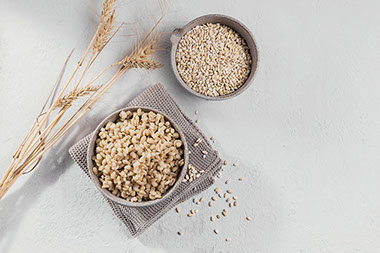
    Two bowls filled with barley, one cooked, one raw.

    In its whole-grain form, barley is packed with a wealth of beneficial nutrients. Known for its nutty flavor and slightly chewy texture, it makes a great addition to soups, salads, and many other dishes.

    What’s in it

    *Fiber:One-quarter cup of uncooked, whole-grain barley (3/4 cup cooked) has 8 grams of fiber.

    *Beta-glucan:One of the unique fiber types in barley, beta-glucan, has been shown to lower blood LDL-cholesterol levels by aiding cholesterol excretion from the body.

    *Antioxidants:Contains many vitamins, minerals, and phytochemicals. Vitamin E and lignans are two antioxidants in whole-grain barley.

    *Minerals:It provides a good source of iron, selenium, copper, and magnesium.

    Health benefits

    A diet high in whole grains, such as barley, is widely recognized as beneficial to health. It may:

    *  Reduce the risk of heart disease

    *  Support healthy digestion

    *  Aid in weight management and weight loss

    *  Reduce the risk of type 2 diabetes

    *  Lower chronic inflammation

    *  Decrease the risk of cancer

    *  Support bone health

    Types of barley

    To get the health benefits of eating barley, you need to eat the whole-grain form. When a grain is refined, the bran and germ are stripped away, removing some key nutritional value, including its fiber.

    Barley comes in several forms, some of which are whole and some refined. Choose a whole-grain version!

    Whole grain barley

    *  Hulled barley

    *  Hulled barley grits

    *  Hulled barley flakes

    *  Whole grain barley flour

    Refined barley

    *  Pearl barley

    *  Quick pearl barley

    © American Institute for Preventive Medicine
  • Explore Your Family History

    FAMILY LIFE

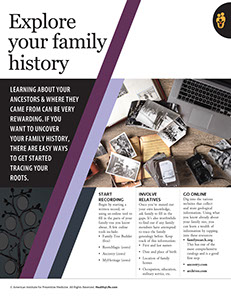
    Old black and white photos on table next to camera, laptop, old photo album.

    Learning about your ancestors & where they came from can be very rewarding. If you want to uncover your family history, there are easy ways to get started tracing your roots.

    Start recording

    Begin by starting a written record, or using an online tool to fill in the parts of your family tree you know about. A few online tools include:

    *  Family Tree Builder (free)

    *  RootsMagic (costs)

    *  Ancestry (costs)

    *  MyHeritage (costs)

    Involve relatives

    Once you’ve maxed out your own knowledge, ask family to fill in the gaps. It’s also worthwhile to find out if any family members have attempted to trace the family genealogy before. Keep track of this information:

    *  First and last names

    *  Date and place of birth

    *  Location of family homes

    *  Occupation, education, military service, etc.

    Go online

    Dig into the various websites that collect and store geological information. Using what you know already about your family tree, you can learn a wealth of information by tapping into these resources:

    *familysearch.org– This has one of the most comprehensive catalogs and is a good first step.

    *ancestry.com

    *archives.com

    © American Institute for Preventive Medicine