Author: AIPM

  • First Aid Kits: Stay Up To Date

    SELF-CARE CORNER

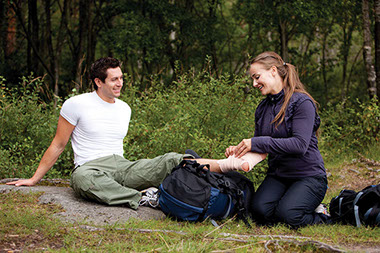
    Women helping wrap man's foot and ankle with sprain wrap.

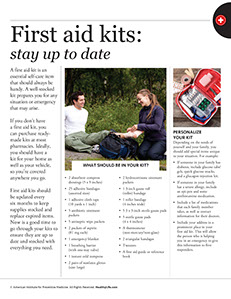
    A first aid kit is an essential self-care item that should always be handy. A well-stocked kit prepares you for any situation or emergency that may arise.

    If you don’t have a first aid kit, you can purchase ready-made kits at most pharmacies. Ideally, you should have a kit for your home as well as your vehicle, so you’re covered anywhere you go.

    First aid kits should be updated every six months to keep supplies stocked and replace expired items. Now is a good time to go through your kits to ensure they are up to date and stocked with everything you need.

    What should be in your kit?

    *  2 absorbent compress dressings (5 x 9 inches)

    *  25 adhesive bandages (assorted sizes)

    *  1 adhesive cloth tape (10 yards x 1 inch)

    *  5 antibiotic ointment packets

    *  5 antiseptic wipe packets

    *  2 packets of aspirin (81 mg each)

    *  1 emergency blanket

    *  1 breathing barrier (with one-way valve)

    *  1 instant cold compress

    *  2 pairs of nonlatex gloves (size: large)

    *  2 hydrocortisone ointment packets

    *  1 3-inch gauze roll (roller) bandage

    *  1 roller bandage (4 inches wide)

    *  5 3 x 3-inch sterile gauze pads

    *  5 sterile gauze pads (4 x 4 inches)

    *  A thermometer (non-mercury/non-glass)

    *  2 triangular bandages

    *  Tweezers

    *  A first aid guide or reference book

    Personalize your kit

    Depending on the needs of yourself and your family, you should add special items unique to your situation. For example:

    *  If someone in your family has diabetes, include glucose tabs/gels, quick glucose snacks, and a glucagon injection kit.

    *  If someone in your family has a severe allergy, include an epi-pen and some antihistamine medication.

    *  Include a list of medications that each family member takes, as well as contact information for their doctors.

    *  Include your address in a prominent place in your first aid kit. This will allow the person who is helping you in an emergency to give this information to first responders.
    © American Institute for Preventive Medicine

  • Fun Facts About Cruciferous Vegetables

    HEALTHY EATING

    A bowl filled with broccoli and brussels sprouts.

    *  The word “cruciferous” means “cross bearing.” These vegetables got this name because the four petals on cruciferous vegetables make a cross shape.

    *  Brussels sprouts and broccoli are rich in magnesium. This mineral is needed for hundreds of different functions in the body, including bone health, muscle relaxation, nerve function and blood sugar control.

    *  Cruciferous vegetables get their taste and aroma from sulfur compounds called glucosinolates. Glucosinolates help the body protect cells from damage. This could be a factor in preventing some types of cancer.

    Sources: Academy of Nutrition and Dietetics, American Institute for Cancer Research

    © American Institute for Preventive Medicine
  • Get Into Zone 2

    BE FIT

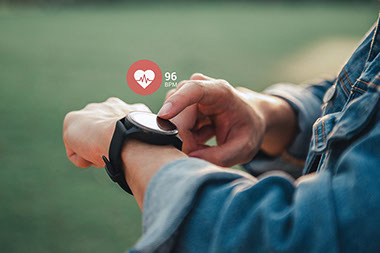
    Close up of man using smart watch with heart beat showing at 96 bpm.

    Zone 2 is one of the five cardiac heart rate zones, ranging from 1 (gentle warm-up) to 5 (maximum effort). In zone 2, your heart rate is moderately elevated, but you’re not out of breath.

    Zone 2 exercise is beneficial because it strengthens the heart and lungs. This makes your body more efficient, capable, and energetic. Here’s how to get started with zone 2:

    *  Calculate your zone 2 heart rate range.

    – 220 – age = MAX heart rate.

    – Zone 2 is 60-80% of your max.

    – MAX heart rate x 0.6 and 0.8 = zone 2 range.

    *  Choose an aerobic activity you enjoy, such as walking, jogging, biking, swimming, or rowing.

    *  Wear a heart rate monitor and get started.

    *  Once your heart rate reaches zone 2, adjust your intensity to stay in that range.

    *  Aim for 30 minutes to 1 hour of zone 2 training several times each week.

    © American Institute for Preventive Medicine
  • Get Up & Move After Work

    WORK LIFE

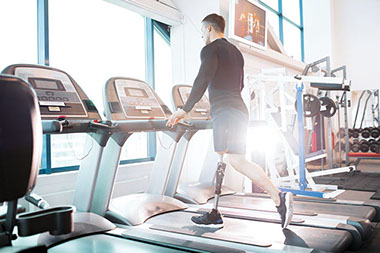
    Man with amputee leg using the treadmill.

    If you’re like many people, you may already be sitting for several hours each day at work. And this could be harming your health. Sitting for long periods is linked to health problems and even a shorter life.

    We can’t always control how much we sit at work. But we can take steps toward better health outside of those hours. Here’s what you can do to get moving in your time away from your job.

    Your prime time

    Been sitting at a desk all day? After work can be a great time to get in some activity. Some people enjoy an exercise class or going to the gym before dinner.

    But if you can’t manage one of these things, don’t give up. Even a short walk is helpful. Go after dinner if you don’t have time before then. Some exercise is always better than not doing any exercise.

    Try using your usual TV or screen time each night to go for a walk or work out to an exercise video.

    Don’t forget lunch

    Want to squeeze in more activity? You can also use your lunch break to break up your sitting time. Try taking a walk throughout your building or head outside.

    You don’t have to do all your exercise at once. Breaking up your exercise into 10-minute chunks offers health benefits. Even 10 minutes a day of activity can add two years to your life expectancy. Thirty minutes of activity a day adds four years or more.

    Try the same thing with any work break. Even a 15-minute break is long enough to get your body moving.

    What if I’m just too tired?

    If you find that you are tired every night after work, it may be time to look at your sleep habits. Are you getting seven to eight hours? If not, try to find ways to make sleep a priority.

    If you’re getting enough sleep but still feel tired, talk with your doctor. Sleep disorders and certain health issues can cause fatigue. Getting your energy back is an important step toward becoming more physically active.

    Source: National Institutes of Health

    © American Institute for Preventive Medicine

  • The Health Benefits Ofolive Oil

    HEALTHY EATING

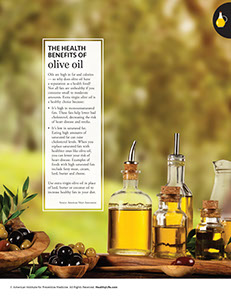
    Olive oil bottles on table.

    Oils are high in fat and calories – so why does olive oil have a reputation as a health food? Not all fats are unhealthy if you consume small to moderate amounts. Extra virgin olive oil is a healthy choice because:

    *  It’s high in monounsaturated fats. These fats help lower bad cholesterol, decreasing the risk of heart disease and stroke.

    *  It’s low in saturated fat. Eating high amounts of saturated fat can raise cholesterol levels. When you replace saturated fats with healthier ones like olive oil, you can lower your risk of heart disease. Examples of foods with high saturated fats include fatty meat, cream, lard, butter and cheese.

    Use extra virgin olive oil in place of lard, butter or coconut oil to increase healthy fats in your diet.

    Source: American Heart Association

    © American Institute for Preventive Medicine
  • Health Screenings For Women

    SELF-CARE CORNER

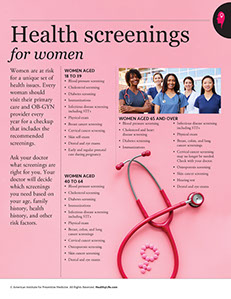
    Stethoscope and female symbol pills on pink top view.

    Women are at risk for a unique set of health issues. Every woman should visit their primary care and OB-GYN provider every year for a checkup that includes the recommended screenings.

    Ask your doctor what screenings are right for you. Your doctor will decide which screenings you need based on your age, family history, health history, and other risk factors.

    Women aged 18 to 39

    *  Blood pressure screening

    *  Cholesterol screening

    *  Diabetes screening

    *  Immunizations

    *  Infectious disease screening including STI’s

    *  Physical exam

    *  Breast cancer screening

    *  Cervical cancer screening

    *  Skin self-exam

    *  Dental and eye exams

    *  Early and regular prenatal care during pregnancy

    Women aged  40 to 64

    *  Blood pressure screening

    *  Cholesterol screening

    *  Diabetes screening

    *  Immunizations

    *  Infectious disease screening including STI’s

    *  Physical exam

    *  Breast, colon, and lung cancer screenings

    *  Cervical cancer screening

    *  Osteoporosis screening

    *  Skin cancer screening

    *  Dental and eye exams

    Women aged 65 and over

    *  Blood pressure screening

    *  Cholesterol and heart disease screening

    *  Diabetes screening

    *  Immunizations

    *  Infectious disease screening including STI’s

    *  Physical exam

    *  Breast, colon, and lung cancer screenings

    *  Cervical cancer screening may no longer be needed. Check with your doctor.

    *  Osteoporosis screening

    *  Skin cancer screening

    *  Hearing test

    *  Dental and eye exams

    © American Institute for Preventive Medicine
  • Helping Teens Stay Drug-Free

    FAMILY LIFE

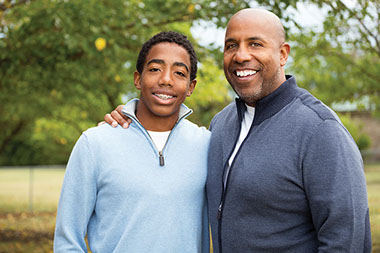
    Father and teen son smiling.

    Most parents don’t want to think about their teen using drugs. They assume their teen is doing OK. They may also think it would be obvious if their teen was into drugs or alcohol.

    Unfortunately, even teens with great parents sometimes take risks and make dangerous choices.

    Why do teens take risks?

    A teen’s brain is very sensitive to emotions and doing things that feel good. Plus, their brains aren’t fully developed yet.

    This means they are not ready to make rational decisions all the time. They may also struggle with mental health issues like depression or anxiety. It can be all too easy to slip into using drugs or alcohol.

    What can parents do?

    A good relationship with your teen is important. This can help them feel they can talk to you about challenges they are facing. This also means they might come to you if they have a problem with drugs or alcohol. Here are some tips to help you stay connected:

    *Be a great listener.Talk with your teen about their daily life. Give them a chance to express their opinion. Don’t interrupt. If they tell you something upsetting, try to remain calm. Ask them how you can help.

    *Help them find activities.Teens do well if they have an outlet for fun and stress relief. This may be music, sports, religious activities or volunteering.

    *Know your teen’s friends.Encourage your teen and their friends to hang out at your house.

    *Don’t solve their problems for them.Parents want to help their teen when they need it. But it’s often more effective to teach them skills to help them solve their own problems. If they have a fight with a friend, talk with them about ways they could work it out themselves. Offer your support but try not to step in.

    *Talk about tough stuff.Help your teen figure out what to do if they are being pressured into something. Show them that they can turn to you. Do they feel comfortable calling you if they need a ride home from a party? Can they talk to you about peer pressure and drinking?

    Source: National Institutes of Health

    © American Institute for Preventive Medicine
  • Host Productive Meetings

    WORK LIFE

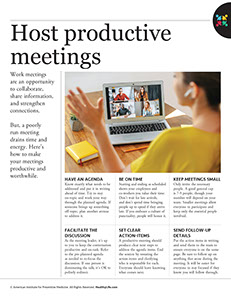
    Video conferencing.

    Work meetings are an opportunity to collaborate, share information, and strengthen connections. But, a poorly run meeting drains time and energy. Here’s how to make your meetings productive and worthwhile.

    Have an agenda

    Know exactly what needs to be addressed and put it in writing ahead of time. Try to stay on-topic and work your way through the planned agenda. If someone brings up something off-topic, plan another avenue to address it.

    Be on time

    Starting and ending as scheduled shows your employees and co-workers you value their time. Don’t wait for late arrivals, and don’t spend time bringing people up to speed if they arrive late. If you embrace a culture of punctuality, people will honor it.

    Keep meetings small

    Only invite the necessary people. A good general cap is 7-9 people, though your number will depend on your team. Smaller meetings allow everyone to participate and keep only the essential people involved.

    Facilitate the discussion

    As the meeting leader, it’s up to you to keep the conversation productive and on-task. Refer to the pre-planned agenda as needed to re-focus the discussion. If one person is dominating the talk, it’s OK to politely redirect.

    Set clear action-items

    A productive meeting should produce clear next steps to address the agenda items. End the session by restating the action items and clarifying who is responsible for each. Everyone should leave knowing what comes next.

    Send follow-up details

    Put the action items in writing and send them to the team to ensure everyone is on the same page. Be sure to follow up on anything that arose during the meeting. It will be easier for everyone to stay focused if they know you will follow through.

    © American Institute for Preventive Medicine