Author: AIPM

  • Dash Eating Plan

    Nutrition

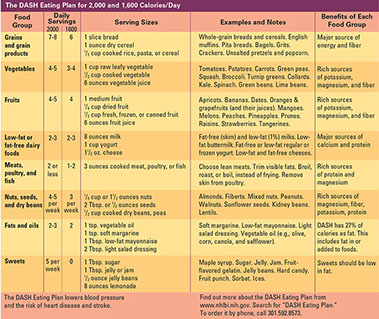
    DASH stands for Dietary Approach to Stop Hypertension. Research shows that following the DASH eating plan can help prevent and lower high blood pressure. This eating plan is rich in:

    *  Fruits and vegetables

    *  Fat-free or low-fat milk and milk products

    *  Whole grains

    *  Fish, poultry, beans, seeds, and nuts

    *  Potassium, magnesium, calcium, and fiber. These nutrients are linked with lowering blood pressure.

    Dash eating plan chart.

    Resources

    Get more information, including menus and recipes for different-calorie DASH Eating Plans, fromwww.nhlbi.nih.gov. Search for “DASH Eating Plan.”

    Healthy Eating brochure by the American Institute for Preventive Medicine. www.HealthyLife.com. All rights reserved.

    © American Institute for Preventive Medicine
  • Eat The Rainbow With Soup

    Nutrition

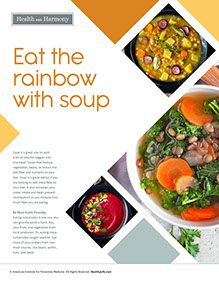
    Soup with a variety of color.

    Soup is a great way to pack a lot of colorful veggies into one meal! Soups that feature vegetables, beans, or brown rice add fiber and nutrients to your diet. Soup is a great option if you are looking to add more fiber to your diet. It also increases your water intake and helps prevent constipation as you increase how much fiber you are eating.

    Be More Earth-Friendly

    Eating sustainably is one way you can give the earth a hand. Buy your fruits and vegetables from local producers. Try eating more sustainably caught seafood. Get more of your protein from non-meat sources, like beans, lentils, nuts, and seeds.

    Page from HealthyLife Weigh book by the American Institute for Preventive Medicine. www.HealthyLife.com. All rights reserved.

    © American Institute for Preventive Medicine
  • Eat, Drink, And Be Wary

    Healthy Travel

    Image of couple eating at a resturant.

    It’s been said that travel expands the mind and loosens the bowels. One-third of visitors to developing countries suffer from travel sickness, or turista. This includes diarrhea, cramps, fatigue, and sometimes fever and nausea. Food and water contaminated with bacteria are usually to blame. Here’s what to do.

    *  If you plan to travel outside the United States, check with the local tourist board to find out if the water is safe for foreign visitors to drink.  Often, natives who are used to the local water can drink it with no ill effects, but outsiders experience nausea or diarrhea (or both).

    *  If you know or suspect the water is unsafe, drink and brush your teeth with bottled water that has a sealed cap. The same goes for making ice cubes, washing fruits and vegetables, or cooking.

    *  Carry an immersion coil so you can boil your water. Boil the water for at least 10 minutes, and allow it to cool before you use it.

    *  If you can’t boil your water, use purifying tablets, such as Halazone or Potable Aqua tablets, which you can buy at most drugstores and many sporting goods stores.

    *  Drink beverages served in original bottles, cans, etc. Don’t use ice made from tap water.

    *  Don’t eat raw fruits or vegetables (including salad). The exception: fresh fruit you peel yourself.

    *  Don’t order undercooked meat. Beef, pork, chicken, and fish should be cooked thoroughly.

    *  Don’t eat raw or undercooked shellfish.

    *  Avoid smorgasbords and buffet meals, where food is often left out for long periods of time, giving disease-causing microbes plenty of time to grow.

    *  Avoid unpasteurized milk and cheeses in countries outside the United States and western Europe.

    *  If your choice of safe foods is severely limited, take a daily multiple vitamin and mineral capsule to supply the nutrients you may be missing out on.

    Ask your doctor about taking diarrhea medicine with you. Ask what  product you should take and in what doses. (Note: Don’t take Pepto-Bismol if you’re allergic to aspirin. Don’t give Pepto-Bismol to anyone under age 19. Like aspirin, it contains salicylate.)

    Page image from A Year of Health Hints book by the American Institute for Preventive Medicine. www.HealthyLife.com. All rights reserved.

    © American Institute for Preventive Medicine

  • Drug Addiction Triggers

    Substance Use & Abuse

    Are some people more at risk than others?

    Addiction is a chronic, often relapsing brain disease. It causes compulsive drug seeking and using, despite the harm it costs. Over time, brain changes occur that destroy a person’s ability for self-control. Even if a person wants to quit, willpower is not enough to fight the urges.

    The brain on drugs

    Drugs contain chemicals that disrupt the way nerve cells normally send, receive, and process information. Over time, changed brain cells reduce the user’s ability to enjoy the drug’s effect without higher dosages. Long-term abuse also alters other brain chemicals and circuits. This impairs areas of the brain that are critical for judgment, decision-making, learning, memory, and behavior control.

    Why do people relapse?

    Addiction is a chronic disease that can be managed, but relapse is common. Treatment helps counter the addiction’s powerful effects. This includes medications and behavioral therapy. A relapse should not be viewed as failure. It is a sign that the treatment should be adjusted.

    Why me?

    The risk for drug addiction is due to a mix of:

    *  Genetics – The risk is higher if other family members have addiction issues.

    *  Environment – Finances, peer pressure, abuse, stress, and the quality of parenting play roles. Having family and friends who abuse drugs is also a factor. So is age. The younger a person is when drug use starts, the greater the risk for addiction.

    Tips to deal with triggers:

    *  Try to avoid situations that involve alcohol and/or drugs.

    *  Do things you know and do well to build confidence.

    *  Attend self-help groups for drug users. These include:

    – Alcoholics Anonymous (AA)

    – Cocaine Anonymous (CA)

    – Narcotics Anonymous (NA)

    Action Step

    If you or someone you love has a problem with drugs, seek professional help.

    Page from Ways to Well-Being book by the American Institute for Preventive Medicine. www.HealthyLife.com. All rights reserved.

    © American Institute for Preventive Medicine
  • Drink Water, The Nutrient For Every Cell

    Nutrition

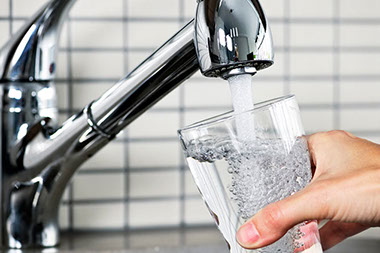
    Image of person filling up glass with tap water.

    Two-thirds of your body is composed of water, making it your body’s most vital nutrient. Water:

    *  Provides a valuable source of minerals, like calcium and magnesium.

    *  Helps digest food and absorb nutrients into the body.

    *  Carries nutrients to organs via the bloodstream.

    *  Moistens mucous membranes and lubricates the joints.

    *  Carries away bodily waste products.

    *  Cools the body through perspiration.

    Many people underestimate their need for water. The average adult should drink six to eight 8-ounce glasses of water (or its equivalent) a day. You can meet part of that quota by consuming high water content foods.

    Some examples include:

    *  Iceberg lettuce (95 percent water).

    *  Cantaloupe (91 percent water).

    *  Raw carrots (88 percent water).

    Page from A Year of Health Hints book by the American Institute for Preventive Medicine. www.HealthyLife.com. All rights reserved.

    © American Institute for Preventive Medicine

  • Don’t Be Afraid To Cry

    Stress Management

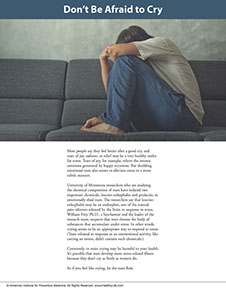
    Image of person with hands over face.

    Most people say they feel better after a good cry, and tears of joy, sadness, or relief may be a very healthy outlet for stress. Tears of joy, for example, relieve the intense emotions generated by happy occasions. But shedding emotional tears also seems to alleviate stress in a more subtle manner.

    University of Minnesota researchers who are studying the chemical composition of tears have isolated two important chemicals, leucine-enkephalin and prolactin, in emotionally shed tears. The researchers say that leucine-enkephalin may be an endorphin, one of the natural pain relievers released by the brain in response to stress. William Frey, Ph.D., a biochemist and the leader of the research team, suspects that tears cleanse the body of substances that accumulate under stress. In other words, crying seems to be an appropriate way to respond to stress. (Tears released in response to an unemotional activity, like cutting an onion, didn’t contain such chemicals.)

    Conversely, to resist crying may be harmful to your health. It’s possible that men develop more stress-related illness because they don’t cry as freely as women do.

    So if you feel like crying, let the tears flow.

    Page from A Year of Health Hints book by the American Institute for Preventive Medicine. www.HealthyLife.com. All rights reserved.

    © American Institute for Preventive Medicine
  • Develop Supermarket Savvy

    Weight Control

    A successful weight-control effort begins with smart food purchases. Here’s how to maneuver your way through the supermarket and also stay in control of your weight.

    *  Plan your low-fat meals and snacks in advance, then, using a list, shop only for what you need.

    *  Stay away from the aisles where pastries, potato chips, candies, or other potential problem foods are located.

    *  Shop for food after you’ve eaten, not when you’re hungry. You’ll choose food based on clear thinking, not hunger pangs.

    *  Choose fresh foods and vegetables over processed foods, which can deliver unwanted calories in the form of sauces and thickeners.

    *  Don’t try to rationalize buying high-calorie snack foods for others in the household. Having them around may very well undermine your weight-control efforts.

    *  Beware of high-calorie foods that, although advertised as “specials,” don’t do your diet any special favor.

    Selecting Snacks under 100 Calories

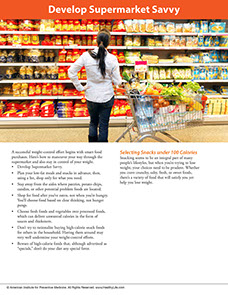
    Snacking seems to be an integral part of many people’s lifestyles, but when you’re trying to lose weight, your choices need to be prudent. Whether you crave crunchy, salty, fresh, or sweet foods, there’s a variety of food that will satisfy you yet help you lose weight. The table below lists 25 snacks that are all less than 100 calories each!

    Page from A Year of Health Hints book by the American Institute for Preventive Medicine. www.HealthyLife.com. All rights reserved.

    © American Institute for Preventive Medicine
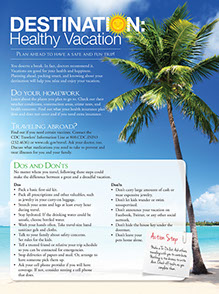
  • Destination: Healthy Vacation

    Healthy Travel

    Image of father and child playing in the pool.

    Plan ahead to have a safe and fun trip!

    You deserve a break. In fact, doctors recommend it. Vacations are good for your health and happiness. Planning ahead, packing smart, and knowing about your destination will help you relax and enjoy.

    Do your homework.

    Learn about the places you plan to go to. Check out their weather conditions, construction areas, crime rates, and health concerns. Find out what your health insurance plan does and does not cover and if you need extra insurance. No matter where you travel, following these steps could make the difference between a great and a dreadful vacation.

    Dos

    *  Pack a basic first-aid kit.

    *  Pack all prescriptions and other valuables, such as jewelry in your carry-on luggage.

    *  Stretch your arms and legs at least every hour during travel.

    *  Stay hydrated. If the drinking water could be unsafe, choose bottled water.

    *  Wash your hands often. Take travel-size hand sanitizer gels and cloths.

    *  Talk to your family about safety concerns. Set rules for the kids.

    *  Tell a trusted friend or relative your trip schedule so you can be contacted for emergencies.

    *  Stop deliveries of papers and mail. Or, arrange to have someone pick them up.

    *  Ask your cell phone provider if you will have coverage. If not, consider renting a cell phone that does.

    Don’ts

    *  Don’t carry large amounts of cash or wear expensive jewelry.

    *  Don’t let kids wander or swim unsupervised.

    *  Don’t announce your vacation on Facebook, Twitter, or any other social network.

    *  Don’t hide the house key under the doormat.

    *  Don’t leave your pets home alone.

    Traveling abroad?

    Find out if you need certain vaccines. Contact the CDC Travelers’ Information Line at 800.CDC.INFO (232.4636) orwww.cdc.gov/travel. Ask your doctor, too. Discuss what medications you need to take to prevent and treat illnesses for you and your family.

    Action Step

    Make a To-Do list. Ask others traveling with you to contribute. Nothing is too obvious to write down. Check off tasks as you complete them.

    Page image from Ways to Well-Being book by the American Institute for Preventive Medicine. www.HealthyLife.com. All rights reserved.

    © American Institute for Preventive Medicine