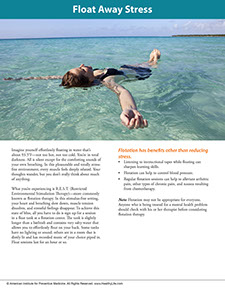
Author: AIPM

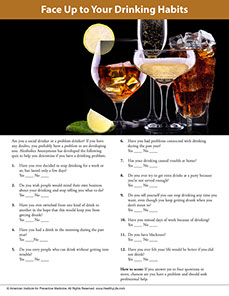
  • Face Up To Your Drinking Habits

    Substance Use & Abuse

    Are you a social drinker or a problem drinker? If you have any doubts, you probably have a problem or are developing one. Alcoholics Anonymous has developed the following quiz to help you determine if you have a drinking problem.

    1.  Have you ever decided to stop drinking for a week or so, but lasted only a few days?  Yes ____ No ____

    2.  Do you wish people would mind their own business about your drinking and stop telling you what to do?  Yes ____ No ____

    3.  Have you ever switched from one kind of drink to another in the hope that this would keep you from getting drunk?  Yes ____ No ____

    4.  Have you had a drink in the morning during the past year?  Yes ____No ____

    5.  Do you envy people who can drink without getting into trouble?  Yes ____ No ____

    6.  Had problems connected with drinking during the past year?  Yes ____ No ____

    7.  Has your drinking caused trouble at home?  Yes ____ No ____

    8.  Do you ever try to get extra drinks at a party because you’re not served enough?

    Yes ____      No ____

    9.  Do you tell yourself you can stop drinking any time you want, even though you keep getting drunk when you don’t mean to?  Yes ____ No ____

    10. Have you missed days of work because of drinking?  Yes ____ No ____

    11. Do you have blackouts?  Yes ____ No ____

    12. Have you ever felt your life would be better if you did not drink?  Yes ____ No ____

    How to score: If you answer yes to four questions or more, chances are you have a problem and should seek professional help.

    Page from A Year of Health Hints book by the American Institute for Preventive Medicine. www.HealthyLife.com. All rights reserved.

    © American Institute for Preventive Medicine

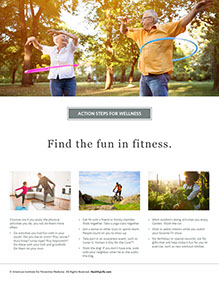
  • Find The Fun In Fitness

    Fitness

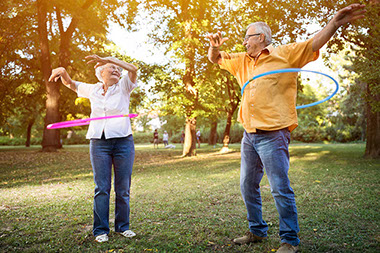
    Older couple hula hooping.

    Chances are if you enjoy the physical activities you do, you will do them more often.

    *  Do activities you had fun with in your youth. Did you like to swim? Play soccer? Hula hoop? Jump rope? Play hopscotch? Do these with your kids and grandkids. Do them on your own.

    *  Get fit with a friend or family member. Walk together. Take a yoga class together.

    *  Join a dance or other class or sports team. People count on you to show up.

    *  Take part in an awareness event, such as Susan G. Komen 3-Day for the Cure™!

    *  Walk the dog! If you don’t have one, walk with your neighbor when he or she walks the dog.

    *  Work outdoors doing activities you enjoy. Garden. Wash the car.

    *  Walk or pedal indoors while you watch your favorite TV show.

    *  For birthdays or special rewards, ask for gifts that will help make it fun for you to exercise, such as new workout clothes.

    Page from HealthyLife Weigh book by the American Institute for Preventive Medicine. www.HealthyLife.com. All rights reserved.

    © American Institute for Preventive Medicine

  • Hidden Signs Of Substance Abuse In Teens

    Substance Use & Abuse

    Some parents feel like they have to sleep with both eyes open when their children are growing up. Adolescence is a natural period of experimentation. Coupled with the profound physical and emotional changes kids undergo at this time, using drugs (including alcohol) is a potential problem-and a serious one.

    Aside from the obvious clues-like the smell of marijuana drifting from your son or daughter’s bedroom-other, more subtle signs of substance abuse include:

    *  Borrowing money frequently, or stealing.

    *  A short fuse; becoming easily irritated or frustrated.

    *  Sleeping or eating more or less than usual.

    *  Sudden, noticeable weight loss.

    *  Unusual moodiness or withdrawal.

    *  Lack of interest in appearance, or poor personal hygiene habits.

    *  Secretiveness about new friends or personal belongings.

    *  Decline in academic performance.

    If you notice any of these symptoms, don’t preach, lecture, or lash out. Instead, discuss the substance use calmly and frankly. Let your children know you’re concerned, and let them know why: Their use of alcohol and other drugs is not only illegal, it’s also not too smart. Be firm; tell your children what you intend to do if they continue to abuse alcohol or other drugs, and follow through.

    Warn Your Kids Not to Sniff Inhalants

    As unappealing as it may sound to adults, some children deliberately inhale the vapors from household products to produce a cheap and dangerous-yet legal-high. The sniffer’s repertoire includes glue, nail polish remover, paint, lacquer thinner, cleaning fluid, or plastic cement-precisely the types of products that usually carry a warning on the label saying, “Use in a well-ventilated area. Do not inhale fumes.”

    Alarmingly, the kids who are most likely to try this are usually about 12 years old. As parents, here’s what you can do.

    *  Look for signs of abuse-nausea, sneezing, coughing, disorientation, or evidence of hallucinations.

    *  Warn your child that deliberately sniffing toxic fumes can lead to leukemia, a fatal blood disease, or sudden death.

    Why Smoking Marijuana Is a Mistake

    Marijuana is the most commonly used illicit drug around. It’s a mild hallucinogen that may also produce euphoria, apathy, poor coordination, reddened eyes, increased appetite, increased heart rate, panic attacks, and short-term memory loss.

    Doesn’t sound like too much fun. So why do kids smoke pot? For the same reason they drink alcohol or smoke cigarettes: It’s wrong, it’s risky, and their friends coax them into it. The only way to persuade your kids not to try pot is to give them the facts. Tell them that:

    *  Driving when you’re high on pot is as dangerous as driving when you’ve been drinking.

    *  Smoking one joint is the equivalent of smoking 16 cigarettes in terms of reduced vital capacity.

    *  In males, marijuana decreases sperm count and lowers blood levels of testosterone (the primary male hormone)-in effect, reducing virility.

    *  In females, marijuana may increase the risk of miscarriage.

    *  In everyone, marijuana slows learning, impairs memory, and muddles your thinking and understanding, making you tired and fuzzy brained.

    Hopefully, marijuana won’t appeal to your youngsters once they realize how it affects their brains, lungs, hearts, and the rest of their bodies.
    Page from A Year of Health Hints book by the American Institute for Preventive Medicine. www.HealthyLife.com. All rights reserved.

    © American Institute for Preventive Medicine

  • Healthy Weight

    Weight Control

    Smiling man outside exercising.

    In a culture where “thin is in,” it can be a challenge to focus on being healthy at any weight.

    Healthy weight is not just about weight in pounds. It includes being physically active, eating nutritious foods, and following a mindful and healthy lifestyle.

    Persons at a healthy weight have a lower risk for diabetes, heart disease, high blood pressure, and other chronic diseases.

    If you are overweight, losing 10% of your weight will help lower your risk for many

    chronic diseases.

    (Your weight in lbs) ÷ 10 =

    (lbs to lose 10% of your weight)

    Not getting enough sleep can change the body’s metabolism, making it harder to lose weight. Less sleep leads to less energy to exercise and more time for snacking. Aim for 7 to 9 hours of quality sleep a night.

    Page from HealthyLife Weigh book by the American Institute for Preventive Medicine. www.HealthyLife.com. All rights reserved.

    © American Institute for Preventive Medicine

  • Go For The Good Oils

    Nutrition

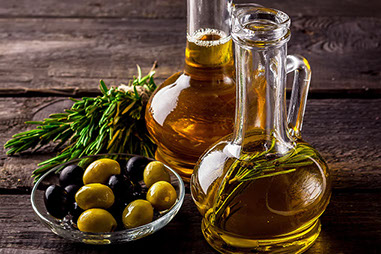
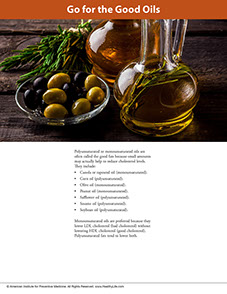
    Image of olive oil and olives.

    Polyunsaturated or monounsaturated oils are often called the good fats because small amounts may actually help to reduce cholesterol levels. They include:

    *  Canola or rapeseed oil (monounsaturated).

    *  Corn oil (polyunsaturated).

    *  Olive oil (monounsaturated).

    *  Peanut oil (monounsaturated).

    *  Safflower oil (polyunsaturated).

    *  Sesame oil (polyunsaturated).

    *  Soybean oil (polyunsaturated).

    Monounsaturated oils are preferred because they lower LDL cholesterol (bad cholesterol) without lowering HDL cholesterol (good cholesterol). Polyunsaturated fats tend to lower both.

    Page from A Year of Health Hints book by the American Institute for Preventive Medicine. www.HealthyLife.com. All rights reserved.

    © American Institute for Preventive Medicine

  • Get Up & Go With Better Breakfasts

    Nutrition

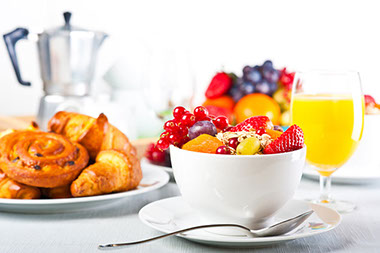
    Image of breakfast with fruit and orange juice.

    Could you expect to get very far driving a car that is low on gas? Of course not. Yet many people start the day’s activities without eating breakfast, not even thinking about its effect on their performance. The American Dietetic Association says, “Tests prove that the physical skills, intellectual performance, and attitude toward achievement all suffer in people who don’t eat breakfast.”

    If you could do better with breakfast but don’t seem to have the time or the appetite for a morning meal, try these strategies.

    *  Plan your breakfast the night before, so you don’t have to take time in the morning when you’re rushed or half awake.

    *  Pack a quick breakfast “to go” the night before. Bag a couple of cheese cubes, some crackers, and a piece of fruit and eat them on the way to work or school.

    *  Don’t limit yourself to traditional breakfast foods like toast and cereal or ham and eggs. Any nutritious food is fine if it appeals to you. If you prefer pita bread stuffed with tuna fish and tomato wedges, for example, help yourself.

    *  If you don’t have much of an appetite in the morning, eat small portions. Have half a slice of toast or half a bowl of cereal with a few ounces of milk, for instance. Then eat a piece of fruit or a cup of plain yogurt later, when your appetite wakes up.

    *  Start your day with a good source of vitamin C. Strawberries, grapefruit, and oranges are refreshing wake-up foods, and one serving will meet the recommended allowance for vitamin C.

    *  Include a good source of protein with your breakfast. Research suggests protein foods can help keep you alert. Milk with cereal or toast is better than just fruit or fruit juice. So is a glass of milk and an English muffin topped with pineapple bits and sprinkled with cinnamon. Limit ham, sausage, and eggs, though; they’re high in saturated fat and, in the case of eggs, cholesterol. Avoid commercial pastries, croissants, and muffins; they tend to be high in sugar, fat, and calories.

    Page from A Year of Health Hints book by the American Institute for Preventive Medicine. www.HealthyLife.com. All rights reserved.

    © American Institute for Preventive Medicine

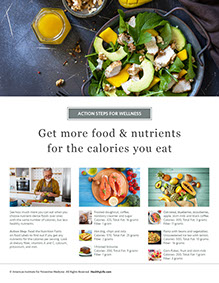
  • Get More Food & Nutrients For The Calories You Eat

    Nutrition

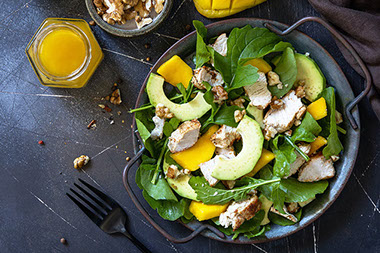
    Salad with walnuts, mangos, chicken and avocado.

    See how much more you can eat when you choose nutrient-dense foods over ones with the same number of calories, but less healthy nutrients.

    Frosted doughnut, coffee, nondairy creamer and sugar

    Calories: 325; Total Fat: 16 grams

    Fiber: 1 gram

    Hot dog, chips and cola

    Calories: 570; Total Fat: 25 grams

    Fiber: 2 grams

    1 frosted brownie

    Calories: 200; Total Fat: 9 grams

    Fiber: 1 gram

    Oat cereal, blueberries, strawberries, apple, skim milk and black coffee

    Calories: 300; Total Fat: 3 grams

    Fiber: 11 grams

    Pasta with beans and vegetables. Unsweetened ice tea with lemon.

    Calories: 500; Total Fat: 10 grams

    Fiber:  16 grams

    Corn flakes, fruit and skim milk

    Calories: 200; Total Fat: 1 gram

    Fiber: 3 grams

    Action Step:Read the Nutrition Facts on food labels to find out if you get any nutrients for the calories per serving. Look at dietary fiber, vitamins A and C, calcium, potassium, and iron.

    Page from HealthyLife Weigh book by the American Institute for Preventive Medicine. www.HealthyLife.com. All rights reserved.

    © American Institute for Preventive Medicine

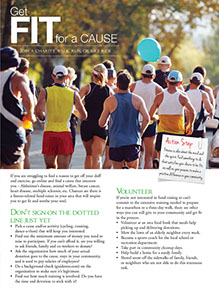
  • Get Fit For A Cause

    Fitness

    People running a marathon for charity.

    Join a charity walk, run, or bike ride.

    If you are struggling to find a reason to get off your duff and exercise, go online and find a cause that interests you – Alzheimer’s disease, animal welfare, breast cancer, heart disease, multiple sclerosis, etc. Chances are there is a fitness-related fund-raiser in your area that will inspire you to get fit and soothe your soul.

    Don’t sign on the dotted line just yet.

    *  Pick a cause and/or activity (cycling, running, dance-a-thon) that will keep you interested.

    *  Find out the minimum amount of money you need to raise to participate. If you can’t afford it, are you willing to ask friends, family and co-workers to donate?

    *  Ask the organization how much of your actual donation goes to the cause, stays in your community, and is used to pay salaries of employees?

    *  Do a background check (www.guidestar.com) on the organization to make sure it’s legitimate.

    *  Find out how much training is involved. Do you have the time and devotion to stick with it?

    Volunteer.

    If you’re not interested in fund-raising or can’t commit to the extensive training needed to prepare for a marathon or a three-day walk, there are other ways you can still give to your community and get fit in the process.

    *  Volunteer at an area food bank that needs help picking up and delivering donations.

    *  Mow the lawn of an elderly neighbor every week.

    *  Become a sports coach for the local school or recreation department.

    *  Take part in community cleanup days.

    *  Help build a home for a needy family.

    *  Shovel snow off the sidewalks of family, friends, or neighbors who are not able to do this strenuous task.

    Action Step

    Fitness is also about the mind and the spirit. Find something to do that satisfies your desire to be fit, as well as your passion to make a positive difference in your community.

    Page image from Ways to Well-Being book by the American Institute for Preventive Medicine. www.HealthyLife.com. All rights reserved.

    © American Institute for Preventive Medicine

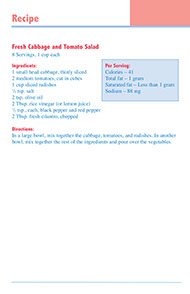
  • Fresh Cabbage And Tomato Salad

    Nutrition

    8 Servings, 1 cup each

    Ingredients:

    1 small head cabbage, thinly sliced

    2 medium tomatoes, cut in cubes

    1 cup sliced radishes

    1/4 tsp. salt

    2 tsp. olive oil

    2 Tbsp. rice vinegar (or lemon juice)

    1/2 tsp., each, black pepper and red pepper

    2 Tbsp. fresh cilantro, chopped

    Directions:

    In a large bowl, mix together the cabbage, tomatoes, and radishes. In another bowl, mix together the rest of the ingredients and pour over the vegetables.

    Per Serving:

    Calories – 41

    Total fat – 1 gram

    Saturated fat – Less than 1 gram

    Sodium – 88 mg

    Page from HealthyLife Weigh Recipe book by the American Institute for Preventive Medicine. www.HealthyLife.com. All rights reserved.

    © American Institute for Preventive Medicine