Author: AIPM

  • Hepatitis: Causes & Types

    MEDICAL NEWS

    Middle age man smiling.

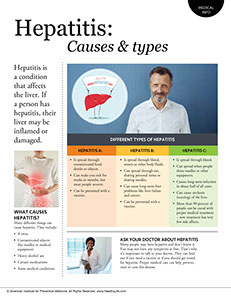
    Hepatitis is a condition that affects the liver. If a person has hepatitis, their liver may be inflamed or damaged.

    What causes hepatitis?

    Many different things can cause hepatitis. They include:

    *  A virus

    *  Contaminated objects like needles or medical equipment

    *  Heavy alcohol use

    *  Certain medications

    *  Some medical conditions

    Different types of hepatitis

    Hepatitis A:

    *  Is spread through contaminated food, drinks or objects.

    *  Can make you sick for weeks or months, but most people recover.

    *  Can be prevented with a vaccine.

    Hepatitis B:

    *  Is spread through blood, semen or other body fluids.

    *  Can spread through sex, sharing personal items or sharing needles.

    *  Can cause long-term liver problems like liver failure and cancer.

    *  Can be prevented with a vaccine.

    Hepatitis C:

    *  Is spread through blood.

    *  Can spread when people share needles or other equipment.

    *  Causes long-term infection in about half of all cases.

    *  Can cause cirrhosis (scarring) of the liver.

    *  More than 90 percent of people can be cured with proper medical treatment – new treatment has very few side effects.

    Ask your doctor about hepatitis

    Many people may have hepatitis and don’t know it. You may not have any symptoms at first. That’s why it’s important to talk to your doctor. They can find out if you need a vaccine or if you should get tested for hepatitis. Proper medical care can help prevent, treat or cure this disease.
    © American Institute for Preventive Medicine

  • Healthy Weight, Healthy Kids

    HEALTHY EATING

    Young child smiling eating vegetables.

    Many kids struggle to be at a healthy weight. They may be overweight or obese. Childhood obesity can cause serious health problems now and later in life.

    There is no simple fix, but there are ways we can help children get or stay healthy.

    What is childhood obesity?

    In adults, a BMI of 40 or higher is considered obese. It’s not the same with children. A child’s age and gender must be considered when calculating their BMI. In children, this is called BMI-for-age. This is because children’s body fat amounts vary as they grow.

    Percentiles matter when looking at a child’s BMI. A child whose BMI is at or above the 95th percentile may have obesity. This means their BMI is higher than 95 percent of other children of their age and gender. Your child’s doctor can help you calculate their BMI.

    Why is it unhealthy?

    Children with obesity are at a higher risk of:

    *  Asthma

    *  Sleep apnea

    *  Type 2 diabetes

    *  Bone and joint problems

    *  High blood pressure

    *  Unhealthy cholesterol levels

    What can adults do?

    *  Take them for regular doctor checkups. Your child’s doctor can offer eating and exercise advice.

    *  Allow them to eat fruits and vegetables in place of processed foods high in fat and sugar.

    *  Have them drink water in place of juice or soda.

    *  Aim for one hour of activity each day. This can be walking, biking or dancing. Choose things they enjoy!

    *  Make sleep a priority. Most children need at least eight hours. Ask your child’s doctor about this.

    Sources: Centers for Disease Control and Prevention, U.S. Department of Health and Human Services

    © American Institute for Preventive Medicine

  • Health News: Sorting Fact From Fiction

    WELL-BEING

    Older man on reading on a tablet.

    Misinformation is rampant in the internet age. While technology allows us to stay up to date and connected, it can also amplify false information and spread confusion.

    Finding reliable health information is especially important as you want to make good choices for your long-term health. But, it is all too easy to get tripped up by pseudo-science and unqualified individuals who present themselves as experts.

    So, how do you sort fact from fiction?

    Know how to spot reliable sources

    *  Look for .gov, .org, and .edu websites as most reliable.

    *  Check the authors’ credentials.

    *  Compare suspicious information to the information onmedlineplus.gov.

    *  Be skeptical of information on social media or .com sites that you can’t verify from a more reliable source.

    Ask good questions

    *  Does it sound too good to be true?

    *  Is the source linked to a reputable national or global health institution?

    *  What is your emotional reaction?

    *  Are the headline and content straightforward or sensationalized?

    *  Can the information be verified by other trusted sources?

    Dig a little deeper

    A quick internet search can tell you know the kinds of websites that are sharing the information. Check for .gov, .org, or .edu sites on the first page of results. You can also go to a fact-checking website such as:

    *Snopes.com

    *Factcheck.org

    *Quackwatch.org

    *Healthnewsreview.org

    Keep an open mind

    We all have a health philosophy that guides our choices. This can be useful, but it becomes a problem when we only believe information that aligns with our bias. This prevents us from learning and growing, and from changing our minds if our bias turns out to be incorrect.

    Instead of immediately accepting or rejecting new information, stay curious. Be open to the possibility there is more to learn.

    © American Institute for Preventive Medicine

  • Get Up To Date On Vaccines

    MEDICAL NEWS

    Smiling man showing bandaid on upper arm where he got a vaccine shot.

    Vaccinations aren’t just for kids. Adults need them too.

    How they work

    Vaccines stimulate your immune system to create antibodies against common diseases. Antibodies are specialized proteins that recognize and neutralize viruses or bacteria. If you are exposed to the disease, your body will be ready to fight it.

    Why they matter

    Some people are more vulnerable to diseases such as COVID-19 or the flu, even if they are vaccinated. When you get vaccinated, you protect your loved ones and vulnerable people in your community.

    Vaccines you need

    Your doctor is the best resource for information on the vaccines you need. Here are a few your doctor may recommend:

    *  Seasonal flu

    *  Tdap or Td (Tetanus, diphtheria, and pertussis)

    *  COVID-19

    *  Shingles

    *  HPV (Human papillomavirus)

    © American Institute for Preventive Medicine

  • Get The Facts About Stuttering

    MEDICAL NEWS

    Adult helping child with speech.

    Speech is an important part of communicating. Yet millions of people cope with a speech disability every day.

    What is stuttering?

    Stuttering is a problem that affects how your speech flows. People who stutter may:

    *  Stretch words out for too long when speaking

    *  Have pauses where they can’t get a word out

    *  Repeat whole words or parts of words

    *  Have uncontrolled movements when speaking, such as trembling in the jaw or excessive blinking

    Scientists don’t fully understand why stuttering happens. But we do have plenty of facts about this speech disorder. Learn more about what it is and how you can help someone who has it.

    FACT #1: Stuttering isn’t related to intelligence.

    Stuttering isn’t a problem with being confused or less intelligent. In fact, many intelligent and successful people have dealt with this speech disorder.

    FACT #2: Finishing a word or sentence for someone is not helpful.

    People who don’t understand stuttering may get frustrated or impatient when someone stutters. They may just want to say the word for them so they can keep talking. This is not helpful and could make stuttering worse.

    FACT #3: Stuttering is not caused by stress or being tense.

    Experts believe that people who stutter may have some brain differences. These  differences affect how a person’s brain works when they speak. But it’s not caused by anxiety, stress or a mental health condition. However, being stressed could make stuttering worse for a person who already has the disorder.

    FACT #4: Stuttering is more common in children.

    Many children stutter while they are learning how to speak and understand others. Most of the time, children stop stuttering before they become adults. They may need help from their doctor and a speech-language pathologist. If you’re concerned about your child’s stuttering, talk to their pediatrician.

    If you have concerns about stuttering, finding words or other speech issues, talk to your doctor about seeing a licensed speech-language pathologist.

    Sources: American Speech-Language-Hearing Association, National Institutes of Deafness and Other Communication Disorders

    © American Institute for Preventive Medicine

  • Get More Of These 4

    HEALTHY EATING

    Dishes filled with berries, nuts and fruits.

    The 2015-2020 Dietary Guidelines for Americans state that four nutrients are a “public health concern.” Many people are not getting enough:

    *  Calcium

    *  Fiber

    *  Potassium

    *  Vitamin D

    Try these tips to get more:

    1.  Eat more vegetables, fruits and legumes. These foods are rich sources of fiber and potassium. High-fiber bran cereal and shredded wheat also pack a fiber punch.

    2.  Eat more yogurt and drink milk. Both are good sources of calcium, potassium and vitamin D. Avoid sweetened yogurt. Instead, buy plain yogurt and add fresh fruit.

    3.  Eat seafood that’s high in vitamin D. This includes salmon, trout, whitefish, herring and tuna. Pregnant and nursing women should ask a doctor how much seafood they can eat.

    4.  Consider healthy foods that have vitamin D added, like soy milk, orange juice, dairy products and cereals.

    © American Institute for Preventive Medicine

  • Fun Ways To Reduce Family Stress

    SUCCESS OVER STRESS

    Grandfather, father, and young son playing basketball.

    Spending time with people you care about can be a powerful stress reliever. This is true for every person in your family. Finding activities you all enjoy can strengthen family bonds, reduce everyone’s stress, and bring more fun into your life. Here are some stress-relieving activities that can work for the whole family.

    Plan a craft night

    Creative activities are a great way to relax together. Put on some music and get out crafting, drawing, or painting supplies. If you’re not much of a crafter, consider signing up the family for a class or a night out at a local craft shop.

    Play a sport

    Find a sport you all enjoy. Plan a weekly or monthly time to play together as a family. Keep it low stakes and focused on fun. Being active as a family can relieve stress and put everyone in a more positive mood.

    Watch a comedy

    Turn on a show everyone finds funny or look up some silly online videos. Instead of each family member retreating to their own screens, make time to watch something together. Choose something that will get everyone laughing to reduce stress and promote family bonding.

    © American Institute for Preventive Medicine

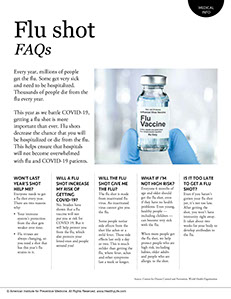
  • Flu Shot Faqs

    MEDICAL NEWS

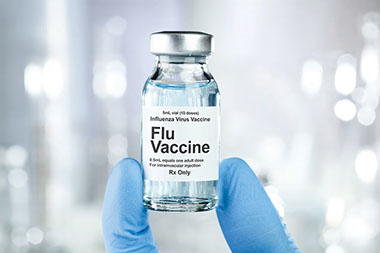
    Flu vaccine in bottle.

    Every year, millions of people get the flu. Some get very sick and need to be hospitalized. Thousands of people die from the flu every year.

    This year as we battle COVID-19, getting a flu shot is more important than ever. Flu shots decrease the chance that you will be hospitalized or die from the flu. This helps ensure that hospitals will not become overwhelmed with flu and COVID-19 patients.

    Won’t last year’s shot help me?

    Everyone needs to get a flu shot every year. There are two reasons why:

    *  Your immune system’s protection from the shot gets weaker over time.

    *  Flu viruses are always changing, so you need a shot that has this year’s flu strains in it.

    Will a flu shot increase my risk of getting COVID-19?

    No. Studies have shown that a flu vaccine will not put you at risk for COVID-19. But it will help protect you from the flu, which also protects your loved ones and people around you!

    Will the flu shot give me the flu?

    The flu shot is made from inactivated flu virus. An inactivated virus cannot give you the flu. Some people notice side effects from the shot like aches or a mild fever. These side effects last only a day or two. This is much milder than getting the flu, where fever, aches and other symptoms last a week or longer.

    What if I’m not high risk?

    Everyone 6 months of age and older should get the flu shot, even if they have no health problems. Even young, healthy people – including children – can become very sick with the flu.

    When more people get the flu shot, we help protect people who are high risk, including babies, older adults and people who are allergic to the shot.

    Is it too late to get a flu shot?

    Even if you haven’t gotten your flu shot yet, it’s not too late. After getting the shot, you won’t have immunity right away. It takes about two weeks for your body to develop antibodies to the flu.

    Source: Centers for Disease Control and Prevention, World Health Organization

    © American Institute for Preventive Medicine

  • Filing For A Tax Extension

    FINANCIAL HEALTH

    Women on computer.

    A federal tax extension allows you extra time to file your taxes. You can request an extension for any reason and receive an additional six months to complete your return. Here’s what you need to know.

    *  You must request an extension before your filing deadline. Don’t delay or you risk a penalty.

    *  Submit the form via mail or electronically by your regular tax return deadline, usually April 15th.

    *  To avoid any potential penalties, pay estimated taxes at the time you submit the form.

    *  If you cannot pay what you owe, you can request a payment plan. Visit the IRS website to learn more.

    *  Use the extra time to file your return. The IRS does not allow a second extension, so don’t let the time slip away.

    *  Fill out the Application for Automatic Extension of Time To File U.S. Individual Income Tax Return available atirs.gov.

    © American Institute for Preventive Medicine