Author: AIPM

  • See Your Fitness Progress

    BE FIT

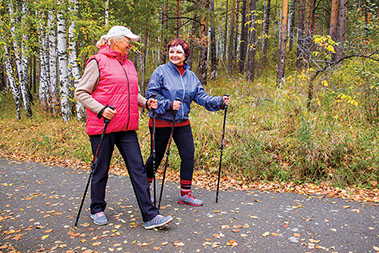
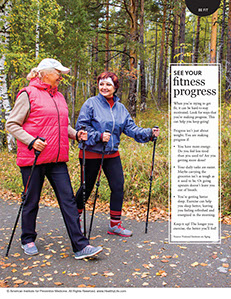
    Two women walking with walking sticks.

    When you’re trying to get fit, it can be hard to stay motivated. Look for ways that you’re making progress. This can help you keep going!

    Progress isn’t just about weight. You are making progress if:

    *  You have more energy. Do you feel less tired than you used to? Are you getting more done?

    *  Your daily tasks are easier. Maybe carrying the groceries isn’t as tough as it used to be. Or going upstairs doesn’t leave you out of breath.

    *  You’re getting better sleep. Exercise can help you sleep better, leaving you feeling refreshed and energized in the morning.

    Keep it up! The longer you exercise, the better you’ll feel!

    Source: National Institute on Aging

    © American Institute for Preventive Medicine

  • Safe Travels

    WELL-BEING

    Group of friends with luggage, wearing face masks, ready to travel.

    COVID has changed many things in recent years, including the way we travel. No one wants to end up sick on vacation or pass an infection to those around them. Thankfully, there are ways to make travel safer for everyone. A few simple precautions are all it takes.

    *  Get updated on your vaccines, including COVID and any specific vaccines recommended by your destination country.

    *  Check the COVID situation at your destination. If community spread is high, you may want to take extra precautions.

    *  Find out if there are any testing, vaccine, or other documentation requirements at any stage of your journey.

    *  While masks are not required everywhere, the CDC recommends masking up on public transportation.

    *  Consider getting a COVID test when you return if you were in an area with a high risk of exposure.

    *  Be patient and flexible. Everyone wants to get to their destination safely.

    © American Institute for Preventive Medicine

  • Recipe: Sweet Potato Cheesecake

    HEALTHY EATING

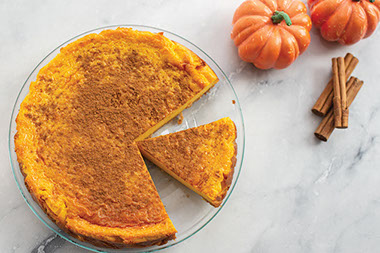
    Sweet potato cheesecake with a couple pieces missing.

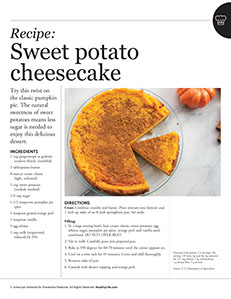
    Try this twist on the classic pumpkin pie. The natural sweetness of sweet potatoes means less sugar is needed to enjoy this delicious dessert.

    Ingredients

    1 cup gingersnaps or graham crackers (finely crumbled)

    3 tablespoons butter

    8 ounces cream cheese (light, softened)

    1 cup sweet potatoes (cooked, mashed)

    1/3 cup sugar

    1-1/2 teaspoons pumpkin pie spice

    1 teaspoon grated orange peel

    1 teaspoon vanilla

    5 egg whites

    1 cup milk (evaporated, reduced-fat 2%)

    Directions

    Crust:Combine crumbs and butter. Press mixture into bottom and 1 inch up sides of an 8-inch springform pan. Set aside.

    Filling:

    1.  In a large mixing bowl, beat cream cheese, sweet potatoes, egg whites, sugar, pumpkin pie spice, orange peel, and vanilla until combined. DO NOT OVER BEAT.

    2.  Stir in milk. Carefully pour into prepared pan.

    3.  Bake at 350 degrees for 60-70 minutes until the center appears set.

    4.  Cool on a wire rack for 45 minutes. Cover and chill thoroughly.

    5.  Remove sides of pan.

    6.  Garnish with dessert topping and orange peel.

    Nutrition Information: (14 servings). Per serving: 139 kcals, 6g total fat, 3g saturated fat, 137 mg sodium, 17g carbohydrates, 1 g dietary fiber, 5 g protein.

    Source: U.S. Department of Agriculture

    © American Institute for Preventive Medicine

  • One Pot Broccoli Skillet

    HEALTHY EATING

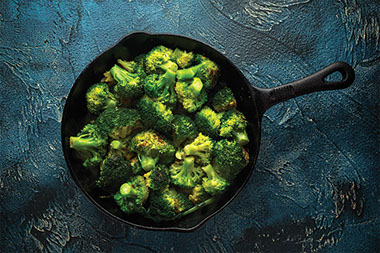
    Large skillet filled with broccoli.

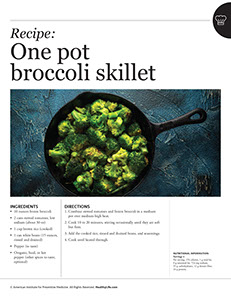
    Ingredients

    *  10 ounces frozen broccoli

    *  2 cans stewed tomatoes, low sodium (about 30 oz)

    *  1 cup brown rice (cooked)

    *  1 can white beans (15 ounces, rinsed and drained)

    *  Pepper (to taste)

    *  Oregano, basil, or hot pepper (other spices to taste, optional)

    Directions

    1.  Combine stewed tomatoes and frozen broccoli in a medium pot over medium-high heat.

    2.  Cook 10 to 20 minutes, stirring occasionally until they are soft but firm.

    3.  Add the cooked rice, rinsed and drained beans, and seasonings.

    4.  Cook until heated through.

    Nutritional Information: Servings 4

    Per serving. 276 calories, 1 g total fat, 0 g saturated fat, 724 mg sodium, 55 g carbohydrates, 12 g dietary fiber, 16 g protein.

    © American Institute for Preventive Medicine

  • Recipe: Banana Walnut Oatmeal

    HEALTHY EATING

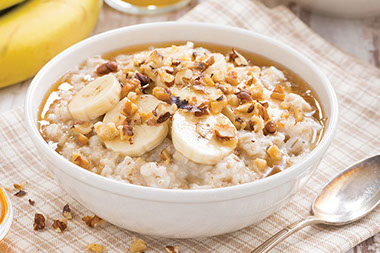
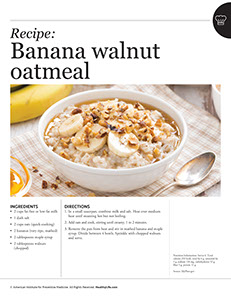
    Bowl of banana walnut oatmeal.

    Ingredients

    *  2 cups fat-free or low-fat milk

    *  1 dash salt

    *  2 cups oats (quick-cooking)

    *  2 bananas (very ripe, mashed)

    *  2 tablespoons maple syrup

    *  2 tablespoons walnuts (chopped)

    Directions

    1.  In a small saucepan, combine milk and salt. Heat over medium heat until steaming hot but not boiling.

    2.  Add oats and cook, stirring until creamy, 1 to 2 minutes.

    3.  Remove the pan from heat and stir in mashed banana and maple syrup. Divide between 4 bowls. Sprinkle with chopped walnuts and serve.

    Nutrition Information: Serves 4: Total calories 292 kcals, total fat 6 g, saturated fat 1 g, sodium 118 mg, carbohydrates 52 g, fiber 5 g, protein 11 g.

    Source: MyPlate.gov

    © American Institute for Preventive Medicine

  • Quick Healthy Heart Habits

    WELL-BEING

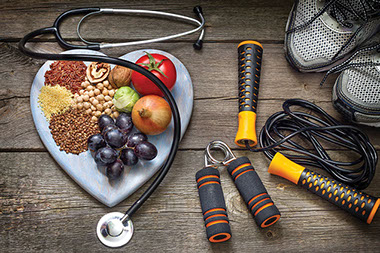
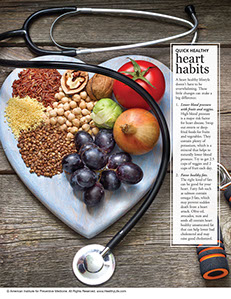
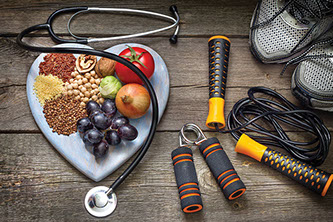
    Image of heart plate with heart healthy foods and fitness gear.

    A heart healthy lifestyle doesn’t have to be overwhelming. These little changes can make a big difference:

    1.  Lower blood pressure with fruits and veggies. High blood pressure is a major risk factor for heart disease. Swap out sweets or deep-fried foods for fruits and vegetables. They contain plenty of potassium, which is a mineral that helps to naturally lower blood pressure. Try to get 2.5 cups of veggies and 2 cups of fruit each day.

    2.  Favor healthy fats. The right kind of fats can be good for your heart. Fatty fish such as salmon contain omega-3 fats, which may prevent sudden death from a heart attack. Olive oil, avocados, nuts and seeds all contain heart healthy unsaturated fat that can help lower bad cholesterol and may raise good cholesterol.

    © American Institute for Preventive Medicine

  • Quick & Easy Grain Bowls

    HEALTHY EATING

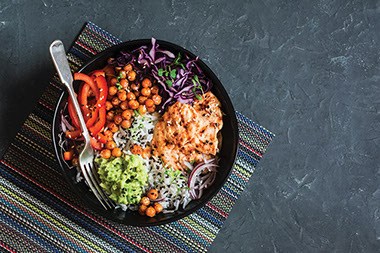
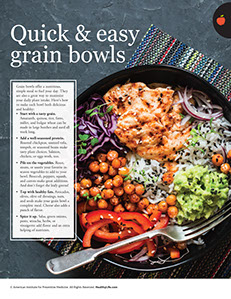
    Homemade grain bowl.

    Grain bowls offer a nutritious, simple meal to fuel your day. They are also a great way to maximize your daily plant intake. Here’s how to make each bowl both delicious and healthy:

    *Start with a tasty grain.Amaranth, quinoa, rice, farro, millet, and bulgur wheat can be made in large batches and used all week long.

    *Add a well-seasoned protein.Roasted chickpeas, sauteed tofu, tempeh, or seasoned beans make tasty plant choices. Salmon, chicken, or eggs work, too.

    *Pile on the vegetables.Roast, steam, or sautée your favorite in-season vegetables to add to your bowl. Broccoli, peppers, squash, and carrots make great additions. And don’t forget the leafy greens!

    *Top with healthy fats.Avocados, olives, olive oil dressings, nuts, and seeds make your grain bowl a complete meal. Cheese also adds a punch of flavor.

    *Spice it up.Salsa, green onions, pesto, sriracha, herbs, or vinaigrette add flavor and an extra helping of nutrients.

    © American Institute for Preventive Medicine

  • Q&A: Diversity In The Workplace

    WORK LIFE

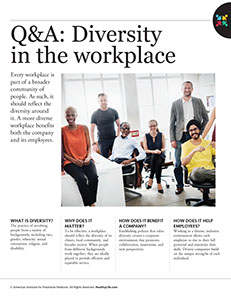
    A diverse group of co-workers sitting around at the office.

    Every workplace is part of a broader community of people. As such, it should reflect the diversity around it. A more diverse workplace benefits both the company and its employees.

    What is diversity?

    The practice of involving people from a variety of backgrounds, including race, gender, ethnicity, sexual orientation, religion, and disability.

    Why does it matter?

    To be effective, a workplace should reflect the diversity of its clients, local community, and broader society. When people from different backgrounds work together, they are ideally placed to provide efficient and equitable service.

    How does it benefit a company?

    Establishing policies that value diversity creates a corporate environment that promotes collaboration, innovation, and new perspectives.

    How does it help employees?

    Working in a diverse, inclusive environment allows each employee to rise to their full potential and maximize their skills. Diverse companies build on the unique strengths of each individual.

    © American Institute for Preventive Medicine

  • Prevention Is Key: Hpv & Cervical Cancer

    MEDICAL NEWS

    Image of 4 female doctors.

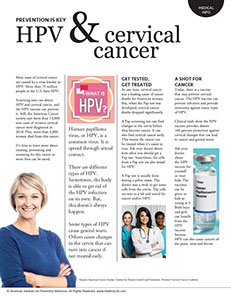
    Most cases of cervical cancer are caused by a virus known as HPV. More than 79 million people in the U.S. have HPV.

    Screening tests can detect HPV and cervical cancer, and the HPV vaccine can prevent it. Still, the American Cancer society says more than 13,000 new cases of invasive cervical cancer were diagnosed in 2018. Plus, more than 4,000 women died from this cancer.

    It’s time to learn more about treating, preventing and screening for this cancer so more lives can be saved.

    What is HPV?

    Human papilloma virus, or HPV, is a common virus. It is spread through sexual contact.

    There are different types of HPV. Sometimes, the body is able to get rid of the HPV infection on its own. But, this doesn’t always happen.

    Some types of HPV cause genital warts. Others cause changes in the cervix that can turn into cancer if not treated early.

    Get tested, get treated

    At one time, cervical cancer was a leading cause of cancer deaths for American women. But, when the Pap test was developed, cervical cancer deaths dropped significantly.

    A Pap screening test can find changes in the cervix before they become cancer. It can also find cervical cancer early. This means the cancer can be treated when it’s easier to cure. Ask your doctor about how often you should get a Pap test. Sometimes, the cells from a Pap test are also tested for HPV.

    A Pap test is usually done during a pelvic exam. The doctor uses a swab to get some cells from the cervix. The cells are sent to a lab and tested for cancer and/or HPV.

    A shot for cancer

    Today, there is a vaccine that may prevent cervical cancer. The HPV vaccine can prevent infection and provide immunity against many types of HPV.

    Clinical trials show the HPV vaccine provides almost  100 percent protection against cervical changes that can lead to cancer and genital warts.

    Ask your doctor about the HPV vaccine for yourself or your kids. The vaccines can be given to kids as young as 9. Both boys and girls can benefit from the HPV vaccine because HPV can also cause cancers of the penis, anus and throat.

    Sources: American Cancer Society, Centers for Disease Control and Prevention, National Cervical Cancer Coalition
    © American Institute for Preventive Medicine